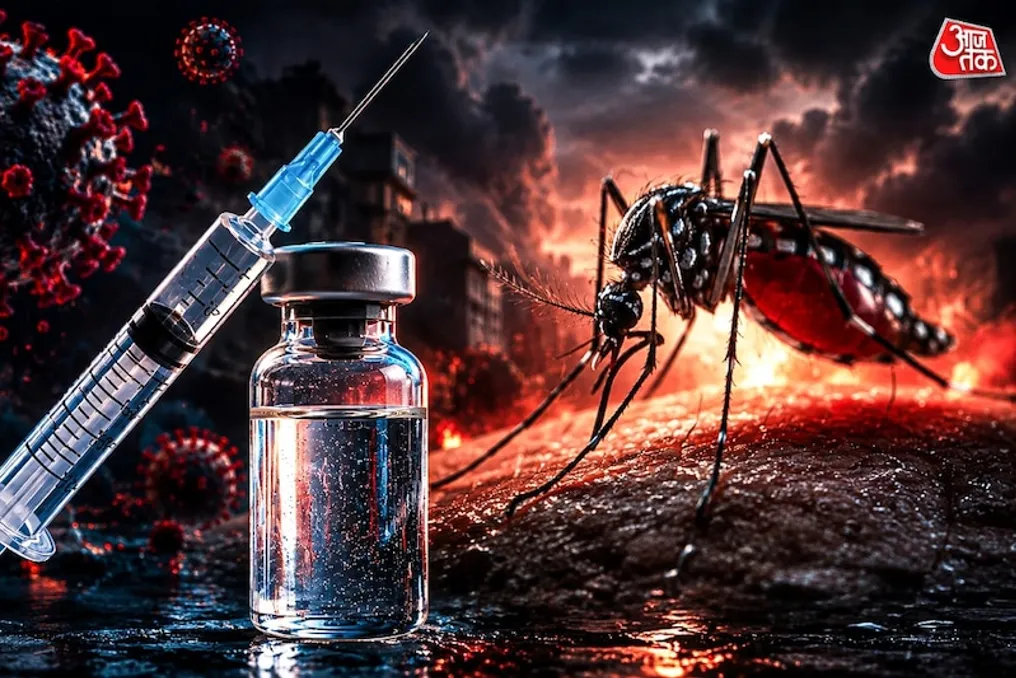
The Dengue vaccine Qdenga has received approval in India. However, questions remain regarding the start date of mass vaccination, the drug's mechanism of action, and the advisability of its use. These aspects were analyzed in detail by public health policy expert Dr. Chandrakant Lahriya.
Evolution of the Dengue Threat
Previously, when mosquito-borne diseases caused the most fear, people worried about malaria, and Dengue was considered a less dangerous ailment. Nevertheless, the situation has drastically changed over the last two decades: Dengue is actively spreading not only in India but also in many other countries worldwide.
In India, cases of this disease are often recorded during and after the monsoon season, leading to the hospitalization of a large number of patients and, in some cases, fatalities. The main problem lies in the lack of specialized antiviral drugs for treating Dengue. This is why developing a vaccine has always been a complex task for scientists. Although various vaccines have appeared before, each had certain limitations related to scientific data, safety, or scope of application.
Significance of Qdenga Approval
In this context, receiving permission to use the Qdenga vaccine from the Drug Controller General of India (DCGI) is a significant step forward. Dr. Chandrakant notes that for a country like India, this vaccine could become a new tool in the fight against Dengue, as the disease is no longer limited to just one season but now spreads rapidly in cities, returning again and again.
However, the expert emphasizes that regulatory approval of the vaccine and its successful integration into the public health system are two different processes. Even if the vaccine proves effective, its impact will be limited if it is too expensive, does not reach the necessary population groups, or remains inaccessible to the general public. Currently, Qdenga is permitted for sale, but it is expected not to appear on the market for the next six months; the first batch is projected for early 2027.
Scale of the Problem in India
According to Dr. Chandrakant, India is among the countries bearing the greatest burden of Dengue morbidity globally. Estimates suggest that India accounts for approximately one-third of all global Dengue cases. Over the past two decades, the number of Dengue cases in the country has increased by more than 11 times.
Official data shows that in 2025, around 120,000 cases and 131 deaths were registered in the country. The history of vaccination in this region demonstrates the need for extreme caution. The Dengvaxia vaccine from the French company Sanofi was initially seen as a major achievement, but it later turned out that people who had never previously had Dengue could have an increased risk of developing severe illness upon subsequent infection. This phenomenon is called antibody-dependent enhancement. Because of this, testing for prior infection became necessary before vaccination, which complicated its widespread application.
The scandal that occurred in the Philippines also affected public trust. This experience taught a lesson: instead of rejecting Dengue vaccines, it is necessary to deeply understand the complex nature of the Dengue virus and the immune system. Therefore, excessive enthusiasm should not be shown until scientific evidence is obtained.
Advantages of the Qdenga Vaccine
Dr. Chandrakant points out that the Qdenga vaccine differs from other preparations. It is a live, but attenuated vaccine, providing protection against all four serotypes of the Dengue virus. Its basis is the attenuated DENV-2 virus, into which genetic information from the other three Dengue virus types was added. In India, it is approved for individuals aged 4 to 60 years and is administered in two doses with an interval of three months.
The main advantage of Qdenga is that no prior testing for previous Dengue infection is required for its administration. Clinical trials showed encouraging results: after one year, the vaccine was effective against confirmed Dengue cases by approximately 80 percent. Some analyses demonstrated an efficacy of over 90 percent in reducing the risk of hospitalization. After about four and a half years, its effectiveness in preventing hospitalization remained at about 84 percent, and protection against general Dengue infection was about 61 percent. These data raise hope but require a balanced approach.
The expert believes that this vaccine provides more effective protection against severe forms of the disease and hospitalization than complete prevention of infection, which in itself is a great success. After its introduction in India, continuous monitoring, transparent reporting, and conducting local studies across different states, age groups, and virus types are crucial.
International Recognition and Production
Qdenga has received preliminary qualification from the World Health Organization (WHO) and has been approved in over 40 countries. Takeda plans to co-produce this vaccine in India with the Indian company Biological E from Hyderabad. This will allow for the annual production of about fifty million doses, with the goal of reaching global production of 100 million doses per year by 2030, potentially making India a major center for Dengue vaccine production.
Vaccination Implementation Strategy
India needs to decide exactly how to utilize this vaccine. Launching a universal vaccination program across the entire country would neither be economically simple nor scientifically sound, as the risk of Dengue is unevenly distributed geographically. It is much more appropriate to begin phased introduction of the vaccine in regions where the disease burden is highest.
The government should consider state procurement for high-risk groups, establishing different prices for the public and private sectors, and ensuring accessibility through local manufacturing. Alongside vaccination, the surveillance system must be strengthened: collecting accurate data at the district level, ensuring full reporting from private hospitals and laboratories, and determining which specific strain of the Dengue virus is circulating in each region. Without such scientific data, the vaccination program cannot be effective. Prioritizing a limited number of vaccines in the most affected areas will be far more beneficial than uniform distribution across the country.
Need for Mosquito Control
It is important to remember that the arrival of the vaccine does not mean the end of the need for mosquito control. The most effective way to protect against Dengue remains the elimination of mosquito breeding sites. It is necessary to prevent water accumulation in homes and around them, improve drainage systems, apply larvicides where necessary, and conduct fumigation based on scientific principles. People must also continue to use repellents, mosquito nets, window screens, and clothing that covers the entire body, while timely diagnosis, adequate hydration, and proper treatment can prevent many deaths from severe Dengue.
Responsibility also lies at the individual level. When the vaccine becomes available to people aged 4 to 60, and its cost and other necessary information are clear, they can consider vaccination after consulting a qualified doctor. Those who can afford the vaccine privately are not obliged to wait for the national program to start, but it is important to understand that the vaccine is only an additional layer of protection. It is not a reason to ignore water collected in barrels, coolers, pots, or drains.
Currently, the Dengue season has begun in North India. Qdenga is undoubtedly an important achievement, but its real success will depend on how accessible it is, how it is implemented, who receives it, and how strong the control over its use will be. India has gained a new and effective weapon in the fight against Dengue, but whether it will become real protection for millions of people will be determined not by the moment of approval, but by subsequent actions.