The price of a barrel of Brent crude oil has exceeded the $100 mark.
The price of a barrel of Brent crude oil has exceeded the $100 mark.
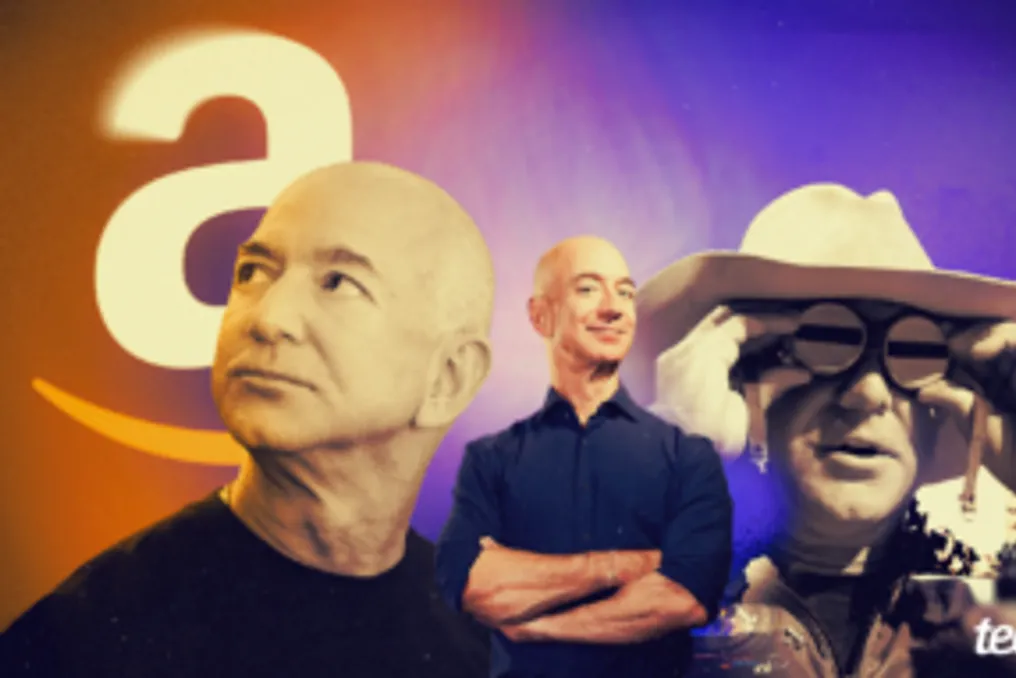
Amazon founder Jeff Bezos is looking to transform Prime Video into a platform that serves as a showcase for the company's artificial intelligence capabilities. According to Reuters, the goal is to create a fully integrated experience using voice commands, icons, and AI-generated content tracks.
Under Jeff Bezos' supervision, Prime Video could undergo a significant overhaul. Reuters points out that the Amazon founder has pressured the streaming platform's managers to develop a new AI-centric interface. Bezos expressed dissatisfaction with the update plans presented by Mike Hopkins, then head of Prime Video, demanding greater focus on algorithm-driven personalization features. This pressure led to the start of what is internally called Project Lighthouse.
This initiative aims to convert the service, which has over 200 million subscribers, into a major technological showcase to demonstrate the power of big tech. The basis of this project is the implementation of a system capable of learning user preferences, offering a highly personalized experience, including strong support for voice commands.
One of the interfaces under discussion involves the use of AI-generated icons and content sequences. Instead of browsing generic genre categories, the subscriber would receive very specific suggestions, such as pre-defined collections like '80s action movies' or 'Christmas romantic comedies,' depending on their individual profile. The final version of this new design is still being tested with a limited group of users. Internally, there is a debate about aesthetics: while some advocate for more detailed carousels, other sources indicate a preference for icons with minimal text, aiming for a more direct and clean look.
To unify the ecosystem, Amazon is also considering directly integrating the Alexa virtual assistant into the streaming search functionality. It is relevant to note that the company has already launched a version of its generative AI-based assistant. Despite these innovations focused on content discovery, traditional functionalities, such as the search bar and the top screen space for highlighting premieres and live sports broadcasts, will be maintained. Amazon expects these changes to increase the time users spend in the app.
The restructuring faces a considerable commercial hurdle. The current Prime Video model relies on paid advertising from major studios, which acquire valuable spots on the homepage to promote their releases. Audiovisual experts warn that excessive personalization based on subscriber taste could decrease the visibility of these advertising campaigns, destabilizing a financial pillar of the platform.
Bezos' high level of involvement in Project Lighthouse has drawn attention. Since stepping down as Amazon CEO in 2021, the businessman has dedicated himself to other ventures, such as the aerospace company Blue Origin and Prometheus, an AI startup he co-founded and which is currently valued at approximately US$ 41 billion (about R$ 210 billion, in direct conversion). His intervention in Prime Video reflects Amazon's urgency to enhance its image in the AI sector. To diversify investments and ensure access to advanced technologies, the company has already invested US$ 23 billion (more than R$ 117 billion) in a collaboration with OpenAI and Anthropic, with the potential to raise this amount to US$ 40 billion (R$ 204 billion).
Uber announced the layoff of ten percent of its customer service employees, justifying this reduction in staff by the growing focus on the adoption of Artificial Intelligence (AI), as reported by Bloomberg.
An Uber spokesperson told the publication that the layoffs were carried out with the aim of 'simplifying operations, strengthening in-person collaboration, and continuing the incorporation of AI.'
The division affected by these cuts is Community Operations, which functions as a global customer support network, serving various languages and Uber businesses.
This area has specialized teams in specific regions and countries, interacting directly with partner drivers and local businesses. Megha Yethadka, Uber's Vice President of Global Community Operations, explained the need for this change in an internal communication to her team, stating that 'our organization has become too complex and siloed.'
Yethadka emphasized that although the department has made certain advances in the use of AI, an 'effective organization is needed to overlay AI' to expand its use on a larger scale.
Although Bloomberg did not specify the exact generative AI functions that motivated the layoffs, AI agents focused on customer service have shown notable improvements recently.
AI voice technology has constantly evolved in its ability to interact naturally with users, capable of understanding and responding to both requests and complaints. In addition to the announcement of cuts, Uber also required employees who worked remotely to return to central offices (hubs), aligning with the company's policy of returning to in-person work. The company had previously signaled a slowdown in hiring due to the use of AI.
With this decision, Uber joins a growing number of corporations that use the advancement of AI as a reason for layoffs. In June, Oracle laid off twenty-one thousand employees worldwide, citing the 'adoption and implementation of AI technologies.'
In April, Snap terminated about one thousand jobs, supposedly to be replaced by AI-based solutions.
More recently, Meta also reduced its workforce by ten percent, impacting eight thousand positions, and relocated seven thousand employees to new units dedicated to developing AI tools.
The International Monetary Fund (IMF) assessed that the impact of tariffs imposed by the United States on the Brazilian economy tends to be limited. This containment is due to the fact that the US represents 11% of Brazilian exports, and several products, such as coffee, beef, energy, and aircraft parts, were exempt from the surcharge.
The report indicated that in August 2025, North American tariffs on most Brazilian imports reached 50%, raising the effective rate to 29.1%, a level higher than the average applied to other nations. However, the IMF highlighted that there were reductions in rates in November 2025 and February 2026, which brought the effective rate down to 12.2%.
Although Brazilian exports to the US fell after the tariff increase in 2025, the international body observed a gradual recovery starting in November of the same year. Part of this recovery capacity is attributed to increased soybean sales to China and growing exports to other regions.
Despite the scenario of trade tensions, the IMF emphasized that the Brazilian external sector maintains factors of solidity. Among these factors are international reserves, which totaled 358 billion dollars at the end of 2025, and the existence of a flexible exchange rate regime. The IMF also mentioned that Brazil has been seeking to diversify its trading partners, citing the Mercosur-European Union agreement, already ratified and in the implementation phase, as an element that can strengthen economic resilience against external shocks.
The IMF warned, however, that an intensification of global trade disputes could affect foreign investment and international trade. The agricultural sector is considered particularly vulnerable to supply chain disruptions, especially concerning fertilizers. The Fund stressed that the primary risk lies in the escalation of geopolitical tensions, notably in the Middle East, which could raise inflation and, due to tighter financial conditions and lower global demand, decrease economic activity.
In the overall analysis, the institution maintained a growth forecast of 2.4% for the Brazilian economy in 2026 and 2.5% in the medium term, classifying the country as 'notably resilient' to external shocks, despite existing fiscal and productivity challenges.
To improve the situation, the IMF suggested that 'a more ambitious fiscal effort' would be necessary to put public debt on a consistent downward trajectory and free up resources for priority investments, proposing, for example, the reduction of tax benefits deemed ineffective. The Fund assesses that the current fiscal adjustment is insufficient to reduce public debt and advocates for complementary measures, such as reserving part of the additional revenue from oil and making the budget less rigid.
According to the Fund, the gross debt of the Brazilian Government should reach 97.8% of GDP in 2026 and stabilize at around 106% of GDP by 2035, using the institution's methodology. Furthermore, the report projects that inflation will reach 5.6% by the end of 2026, slowly converging to the 3% target only by mid-2028.
In response to the report, the Brazilian Central Bank stated that the IMF team recognizes the role played by the inflation targeting regime and the country's economic policy framework.