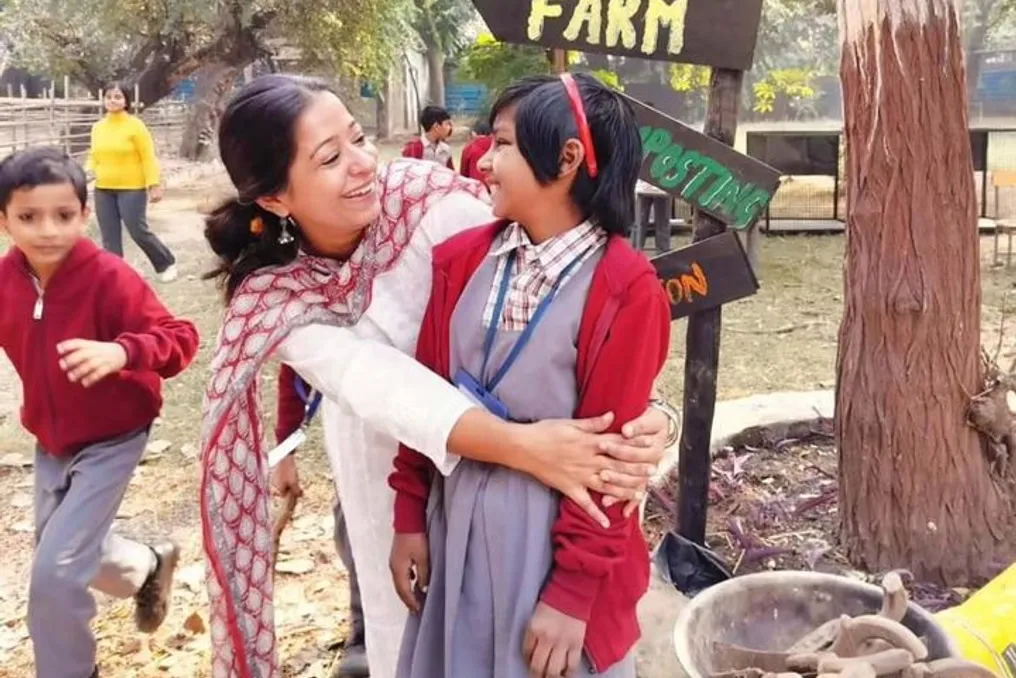
On the rooftops of sunny Delhi, children exchange notebooks for pots. When tiny sprouts appear, they absorb knowledge about food, nature, and responsibility in ways that cannot be taught only in a classroom.
The Origin of the Idea
Pragati Chaswal did not initially aim to change the education system. Her initial goal was for her son to eat more vegetables. However, a small home garden gradually turned into something much larger.
Everything changed when she watched her son care for the plants. She notes: 'He began to feel a connection to the soil, watching the plants grow and understanding that plants, just like him, need care. It was a world of learning that textbooks could never teach.'
Creating the Educational Program
Inspired by this experience, Pragati founded the 'SowGood Foundation' and developed a three-year curriculum. Today, 78,000 children in 28 schools are learning the principles of urban farming.
Children do not just read about composting or climate change; they grow food daily, prepare compost, and gain practical experience in sustainable development. Pragati emphasizes: 'The experience of interacting with nature is learning in its purest form.'
Integration into the Curriculum
Any unused space—from hallways and rooftops to classroom windows and recycled bottles—can become a healthy learning garden. She reminds schools: 'There is always a way to find a place.'
Fast-growing crops such as microgreens, mint, and spinach maintain children's interest. They harvest fresh produce, cook it at home, and proudly share their experiences in class.
The gardens become living classrooms where lessons in science, mathematics, and language come alive. Measuring plots, tracking growth, and keeping observations give meaning to every lesson.
Developing Children's Responsibility
As children water, compost, and tend to their plots, they begin to make decisions and solve problems together. Pragati explains: 'When children feel that the farm belongs to them, they start taking responsibility.'
For Pragati, the ultimate goal is not a single gardening event but long-term change. She believes that schools should start small but remain committed to the cause, making farming a permanent part of education.