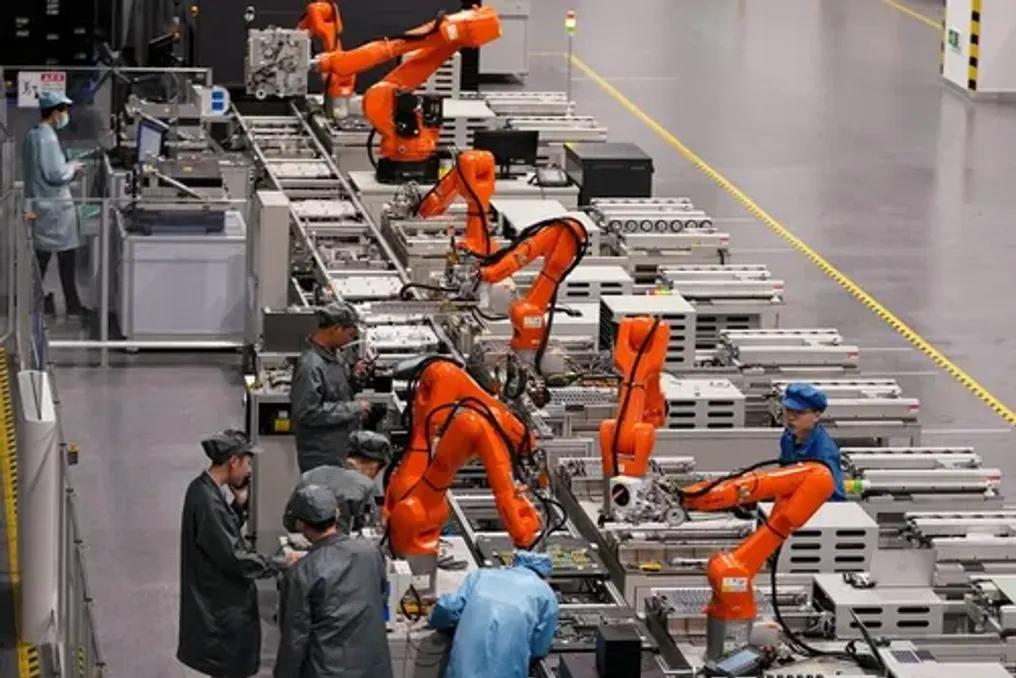
Experts warn that South Africa's drive to modernize production through digitalization could undermine the country's reindustrialization goals if workers do not receive appropriate information and skills.
Context of Modernization
The country is accelerating its production modernization strategy, but concerns are arising that the focus on digitalization ignores the need to equip workers with the necessary knowledge to operate in more advanced manufacturing environments. This warning came after the Manufacturing Indaba event, where digitalization was recognized as one of the key pillars of South Africa's reindustrialization strategy.
Priorities and Concerns
Deputy Minister of Trade, Industry and Competition John Steenhuisen named digitalization as one of three central elements for restoring the country's industrial base, alongside diversification and decarbonization. Nevertheless, there are concerns that discussions around Industry 4.0 are too heavily focused on robotics, artificial intelligence, and automation, while overlooking the personnel who maintain these systems.
Comments indicate that professional training discussions mainly concern curricula and equipment, whereas existing factory employees receive significantly less attention. Indaba participants noted that the discussion of this pillar often boils down exclusively to robotics, AI, and automation on the production line, and conversations about workforce readiness revolve around curricula, while frontline employees working in modern factories are rarely mentioned.
Infrastructure and Economic Challenges
This problem is exacerbated by South Africa's attempts to reverse decades of production decline while implementing large infrastructure investment programs that will require a significant increase in technical specialists. Minister of Electricity and Energy Kgosiyenso Ramokgopa highlighted the scale of this task, noting that the planned expansion of power lines worth 430 billion rand will require a large number of skilled technical workers.
According to analysts, implementing this program requires 'a significant number of technical people' at the peak of construction, while acknowledging that developing such skills from scratch will take years, which the program simply does not have. The urgency of the situation is underscored by the long-term decline in the contribution of manufacturing to the South African economy. Manufacturing's contribution to South Africa's GDP has fallen from 22% in 1994 to approximately 12% today, demonstrating that the country cannot wait for future talent while continuing to insufficiently inform those it already has.
Focus on Current Personnel
Instead of focusing only on graduates entering the sector, manufacturers are advised to invest in current production line employees, providing them access to up-to-date information, digital tools, and continuous on-the-job training. The comment asserts that technology alone is insufficient to revive South Africa's industry.
It is emphasized that digitizing machines is just one, perhaps even the simplest part of the process. The real revival of industry will depend on how quickly the people managing these digital machines receive the necessary information to keep them running. As manufacturers increasingly implement artificial intelligence, automation, and smart factory technologies to boost competitiveness and productivity, the success of South Africa's overall reindustrialization strategy will likely depend less on the complexity of the equipment and more on the effectiveness of supporting the workforce that operates this equipment.