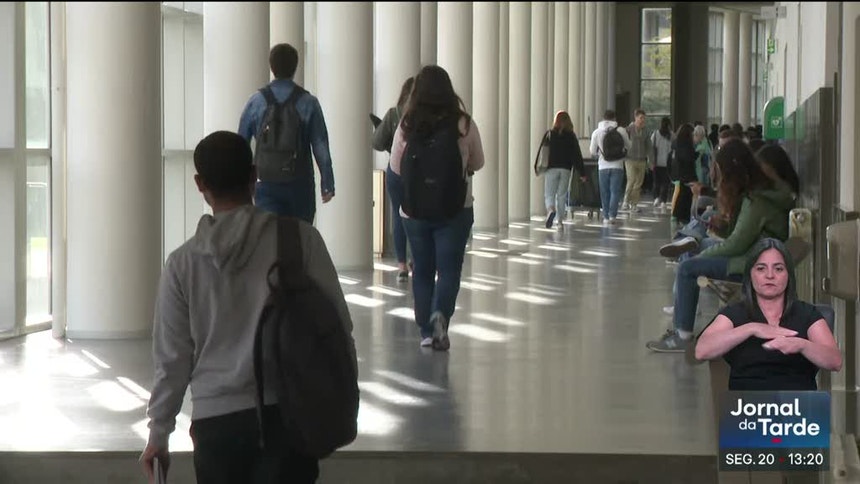
The national competition for access to Higher Education began this Monday, offering a total of over 56 thousand vacancies for candidates.
The national competition for access to Higher Education began this Monday, offering a total of over 56 thousand vacancies for candidates.
Every year, tens of millions of students worldwide take entrance examinations that can drastically change their lives. Due to the high significance of these tests, ensuring their integrity has become a matter comparable to conducting the exams themselves.
Even one leak of exam papers or an attempt by an impersonator to take the test for another person can undermine months of hard work and cause public distrust in the entire selection process.
In India, over two million students take the NEET-UG exam annually, which is one of the largest medical entrance examinations globally. Different nations have developed their own protection systems for such critical tests, employing measures reminiscent of national security operations.
The Gaokao exam in China is the country's most important entrance examination. Although it is not exclusively for admission to medical universities, high scores are necessary to secure places in the most competitive medical colleges. The security measures for this exam are among the most advanced in the world.
Recently, all 13.35 million candidates taking the test underwent identity verification using facial recognition, fingerprints, or iris scanning to prevent impersonation. Radio frequency jammers and metal detectors are used to detect hidden communication devices, including tiny wireless headphones.
AI-powered cameras monitor the examination halls and flag suspicious behavior, such as whispering or frequent glances between applicants. To prevent misuse of AI, major Chinese tech companies, including Alibaba, ByteDance, and Tencent, temporarily disable image recognition and question-answering features in their chatbots during the four-day examination period.
South Korea employs a different, nationwide approach. During the listening section of the College Scholastic Ability Test (CSAT), known as Suneung, civilian and military flights, including those operated by US forces in Korea, are suspended for about 35 minutes so that aircraft noise does not interfere with more than 500,000 students taking the exam.
On this day, the country's stock market opens one hour later than usual, and late students can request free police escort to arrive at the testing center on time. Since many of South Korea's top graduates enter medical colleges, this exam plays a crucial role in accessing this profession.
The Turkish Higher Education Examination (YKS), administered by the Measurement, Selection, and Placement Center, attracts around 2.4 million participants. To prevent cheating, authorities may use signal jammers inside the examination centers to block unauthorized communication devices. Candidates are required to leave all personal electronic devices before entering the hall.
Each room is under video surveillance. If the video recording later shows a violation of exam rules, the candidate may be disqualified, even if the incident was not noticed during the test itself. Furthermore, officials ask residents living near the testing centers to minimize noise on the day of the test so that students can concentrate.
In the United States, security relies heavily on biometric technologies. Candidates taking the Medical College Admission Test (MCAT) at Pearson centers undergo identity verification using palm vein recognition. This technology uses near-infrared light to map the unique pattern of veins beneath the skin. Candidates are scanned again every time they leave and re-enter the testing room, which helps rule out impersonation during the exam.
Although these countries use diverse methods, their common goal is to ensure equal opportunities for every student. Traditional safeguards, such as sealed answer sheets and secure storage, are now supplemented by biometrics, AI monitoring, and enhanced technological guarantees. As the scale of entrance exams grows, so do the efforts to protect the hopes of millions of students who depend on these tests.
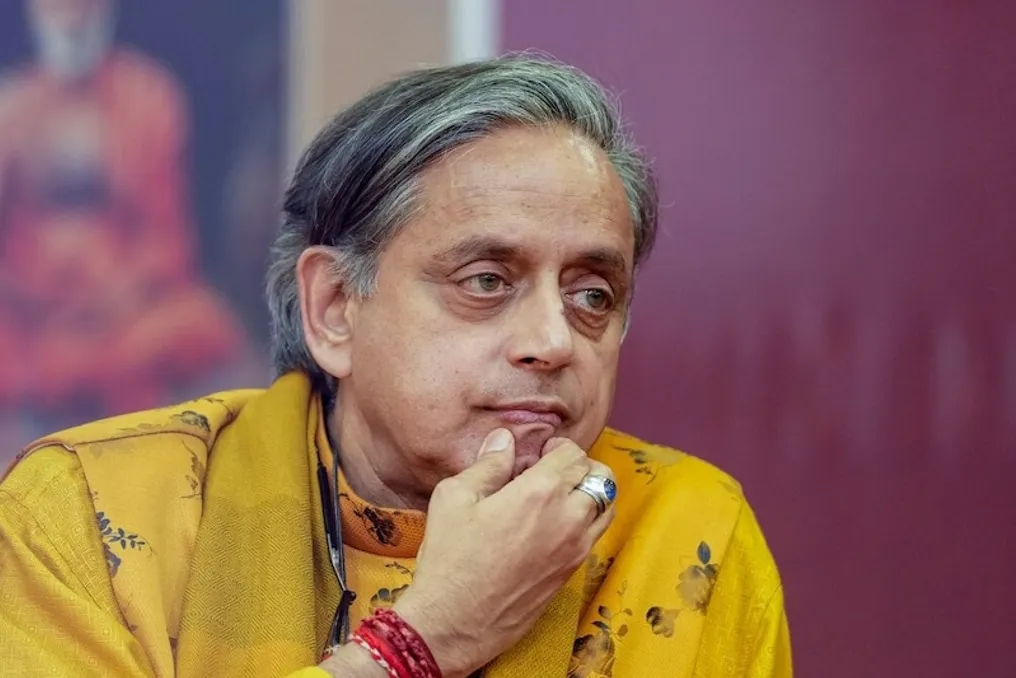
Congress MP Shashi Tharoor raised sharp questions to the government regarding the UGC-NET system, Junior Research Fellowship (JRF) stipend, and the overall system of research scholarships. He noted that the Ministry of Education's response was limited to general information about the existing UGC scholarship system and did not provide clear answers to the main issues.
Tharoor stated that he had requested statistical data from the government on the number of candidates taking UGC-NET and the annual number of JRFs provided, but the government failed to provide annual figures. Instead, the ministry only informed about existing programs and alternative funding options for research.
The MP also questioned whether the government had studied the reasons for the growing discrepancy between the number of qualified candidates who passed UGC-NET and JRF, and the available number of scholarships. He asked if the government was considering increasing the number of JRFs or making changes to the selection criteria. Tharoor emphasized that financial support for students engaged in research is a critical issue requiring clear policy.
Shashi Tharoor specifically drew attention to the UGC stipend unrelated to NET. He pointed out that its amount is 8000 rupees per month and has remained unchanged for a long time. In his view, this amount has been roughly the same since 2006, whereas it should have been regularly reviewed considering inflation and research needs. He reminded that this issue was raised during the Zero Hour of Parliament in 2023, but the government has yet to present any concrete plans or timelines for changing this amount.
According to Tharoor, simply increasing the stipend amount is insufficient to improve the country's research ecosystem. It is necessary to strengthen research infrastructure in institutions, ensure better academic guidance, and create an effective mechanism for resolving student grievances. He called for a comprehensive review of the scholarship system in India to incentivize research so that researchers receive support commensurate with their qualifications and efforts.
The UGC-NET and JRF exams are of great importance to higher education and the research sector in the country. Candidates who receive JRF receive financial assistance for conducting scientific work, while a large number of deserving candidates face financial difficulties due to the lack of scholarships. This imbalance has fueled discussions about the number of scholarships, their amount, and the research support system.
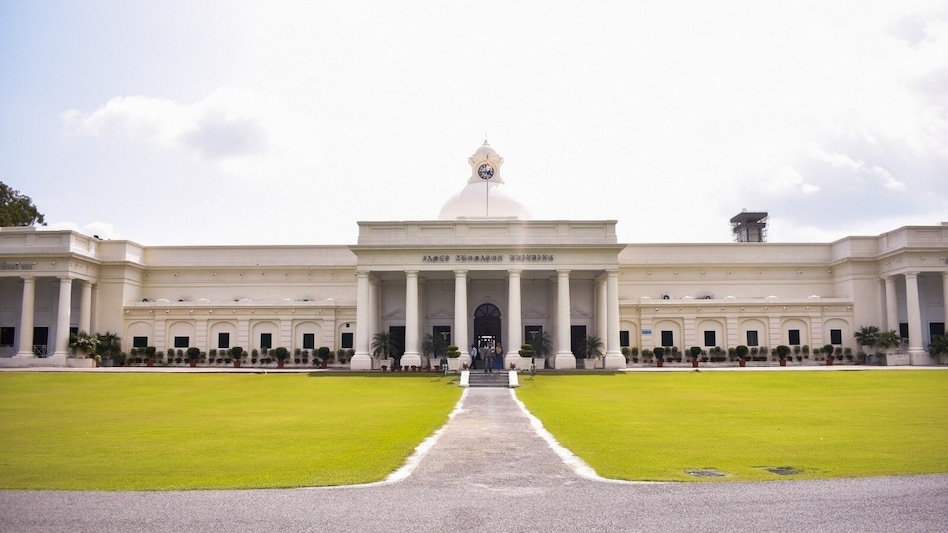
The IIT Rurikov Institute issued a clarification regarding a supposed email sent to students aimed at preventing protests, stating that many media reports on the matter are erroneous. According to the institute's information, the recommendation sent to students and staff concerning social media and public activity was not a new directive but part of a regular annual internal consultation.
IIT Rurikov rejected the claim that this recommendation constituted a restriction on students' right to express opinions or participate in protests. The institute emphasized that the main goal of such guidelines is to maintain safety on campus, protect the academic environment from potential violations, and ensure the uninterrupted operation of the institution.
The institution expected all students and personnel to use social media responsibly and avoid any actions that could negatively affect the order or safety of the institute. Previously, some student organizations and social media posts claimed that the institute had banned participation in online and offline protests.
Following the emergence of these reports, IIT Rurikov officially provided clarifications, noting that the recommendation was presented out of context. The institute reaffirmed its respect for students' freedom of expression but insisted that all actions must be conducted in compliance with legislation, institute rules, and campus safety measures. Thus, the recommendation is intended to promote responsible behavior and preserve the academic atmosphere, not to restrict legal rights.