The air cargo terminal in Tashkent is undergoing significant changes due to the rapid development of e-commerce and its strategic location as a logistics hub. Operations at this facility adhere to high international standards, especially in the handling of dangerous goods, and staffing needs are met through a transparent recruitment process.
Development of Cargo Infrastructure
The terminal plays a critically important role as a transit point between Europe and Asia, which stimulates its development and requires the implementation of large-scale infrastructure projects to meet growing demand. The new cargo terminal began operating in March 2025, responding to the rapid growth in freight volumes.
Previously, the cargo complex, which operated from 1994 to 2000, had a design capacity of 30 thousand tons of cargo and mail annually. However, according to 2024 results, 79,910 tons of cargo and mail passed through it, nearly triple the planned throughput and confirming the need to update the cargo base.
Cargo Complex Characteristics
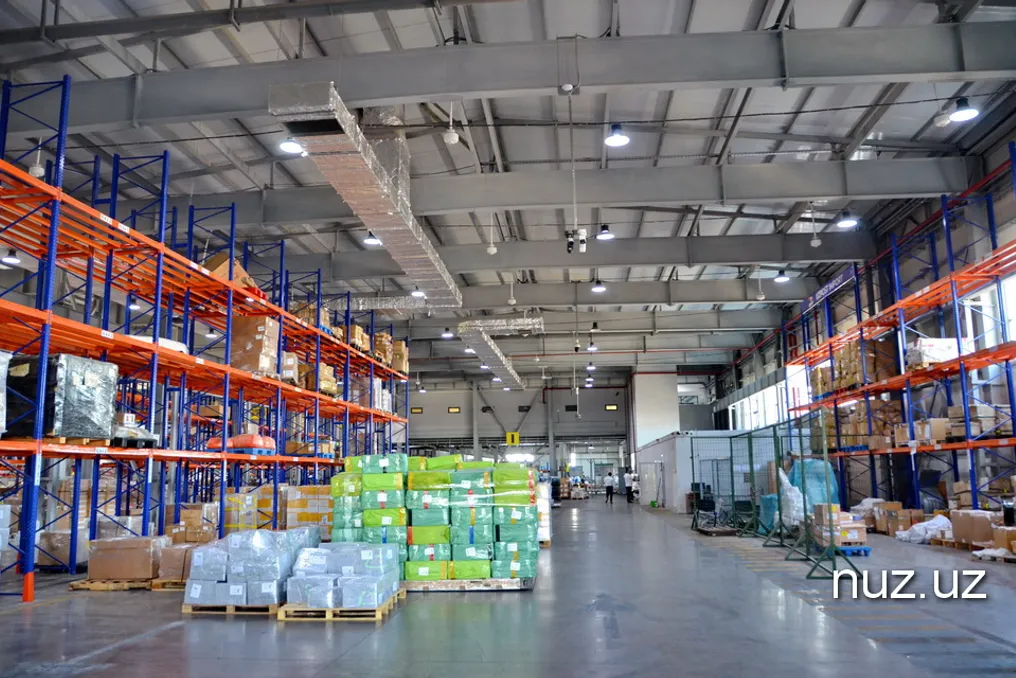
The total area of the cargo complex is 5.2 hectares. It includes a three-story administrative building with an area of 3,000 square meters, a warehouse complex measuring 8,500 square meters, and cold and freezer chambers totaling 500 square meters. Additionally, parking for passenger and freight transport is provided.
The warehouses are equipped with special zones for storing various categories of goods, including plants, live animals, medicines, foodstuffs, and valuable items. All these premises are equipped with modern temperature control systems. Modern packaging, racking, material handling equipment, as well as automation, accounting, and security systems compliant with global standards have been acquired for the terminal's operation.
Capacity and Operational Statistics
The design capacity of the new terminal reaches 120 thousand tons of cargo and mail per year, four times the capacity of the old complex. By the end of 2025, 88,080 tons of cargo and mail were processed here. Forecasts indicate that this figure will rise to 92 thousand tons in 2026. In the first half of the current year, the terminal processed 48,189,606 kilograms of cargo and mail, which is 33.2% more than in the same period last year, or 12,023,812 kilograms more.
Requirements for Goods Handling
The handling of specific goods, particularly dangerous ones, is strictly regulated by protocols. Special, approved conditions are maintained at the facility for storing such materials, ensuring safety at all stages. Staff training is a fundamental element of the operation and covers all employees involved in the cargo process, including drivers.
Umid Khamraev, Head of the Cargo Transport Department of Tashkent International Airport, emphasized that 'there are specially written rules and conditions for storing dangerous goods.' The focus on safety is reinforced by mandatory certification: every employee dealing with hazardous materials must possess the appropriate qualification obtained from accredited training centers following established norms.
According to Khamraev, 'every employee has their own certificates for handling and working with dangerous goods.' The department head also noted that despite the apparent simplicity of the process, it is complex work requiring compliance with numerous strict requirements: 'all of this seems very simple at first glance, but in reality, it is a very big job, and there are serious requirements.'
Staff Recruitment System
To ensure staffing for growing operations, Uzbekistan airports have implemented a centralized and clear personnel selection system. All open vacancies in republican airports are published on a single specialized portal for potential applicants.
The process begins with an online application, making it accessible to all interested parties. Candidates can apply for any suitable vacancy through the official HR website. As representatives explained, 'for us everything is quite simple and transparent.' After submitting an application, HR departments conduct the selection, ensuring the effective and fair hiring of qualified specialists. They note that 'if the candidate is worthy, we accept them without hesitation. And believe me, this is practiced here. We have a transparent recruitment process.'
Impact of Online Commerce
Significant changes in the structure of transported goods are due to the explosive growth of online shopping after the COVID-19 pandemic. The volume of goods arriving from major e-commerce platforms is increasing at unprecedented rates. Today, almost the entire spectrum of air cargo passes through the cargo terminal.
Since the beginning of 2026, 1,179 tons of agricultural products have been sent for export. In the import direction, 15,147 tons of general cargo, 4,689 tons of perishable goods, and 1,198 tons of live animals have been processed. These figures demonstrate the wide range of goods and the terminal's ability to handle shipments requiring special storage and transportation regimes.
Platforms like Uzum, AliExpress, and Temu play a key role in this trend, as consumers increasingly make online purchases, acquiring a wide range of goods—from electronics to clothing. Warehouse representatives confirm the rapid growth of such shipments. Innovative logistics solutions, such as the 'Truck to Air' program, have been introduced to manage this flow. According to Umid Khamraev, goods from AliExpress and other platforms are delivered by trucks from China to Uzbekistan, and then sent by plane to Europe and Asia.
Tashkent's Transit Potential
The Tashkent cargo terminal serves not only as a final destination but also as a vital transfer and transit hub for international freight. The current infrastructure is designed to handle large volumes, with a cargo capacity of 120,000 tons per year. Daily, the terminal processes between 400 and 500 tons of diverse cargo, depending on seasonal demand.
Nazim Shaimardanov, Head of Cargo Transportation Organization at Tashkent International Airport, emphasized that the facility is 'our Tashkent cargo hub,' fulfilling both transfer and transit functions. Uzbekistan's geographical location provides a huge advantage, forming a natural bridge between two continents, making Tashkent a convenient route for goods moving between Europe and Asia.
The rapid growth in demand for transit services is the main driver for developing new infrastructure, including new terminals and the airport itself. As part of the expansion, construction continues on two additional covered hangars with a total area of 6,042 square meters: 4,950 sq. m is designated for import cargo, and 1,092 sq. m for export cargo. The introduction of these facilities will increase process efficiency, boost throughput, and protect cargo from bad weather. The principle of 'demand creates supply' defines the future of Uzbekistan's air cargo, strengthening its position in world trade.