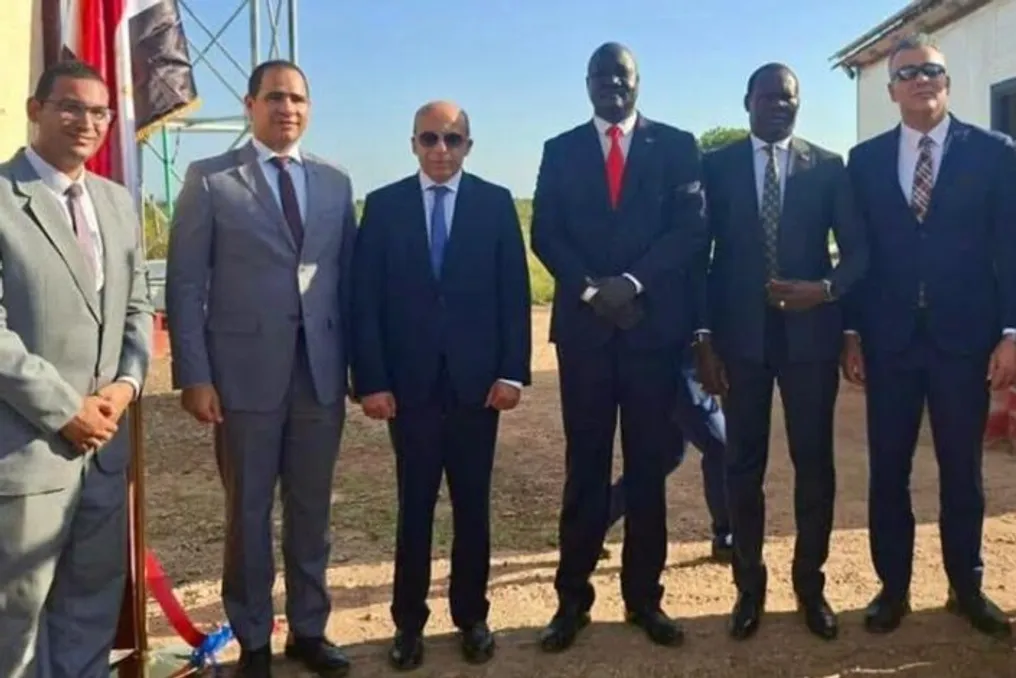
The Minister of Water Resources and Irrigation, Hani Sevilam, announced the opening of the SOMBA underground water station at Jubba University in South Sudan. He emphasized that this event reflects deep historical and fraternal ties between the two states, as well as Egypt's commitment to providing technical and developmental support to South Sudan for promoting sustainable development and improving public services.
Funding and Goals of the Project
Sevilam's statements came after receiving a report on the station's opening from Aref Garib, head of the Nile Water Sector. This station was financed by an Egyptian grant, aligning with the political leadership's directives in Egypt to strengthen cooperation with countries in the Nile basin and support improving living standards and sustainable development.
Inauguration Ceremony
The inauguration ceremony was conducted by the Minister of Water Resources and Irrigation of South Sudan, James Mawich Makwach. Present were the Egyptian Ambassador to South Sudan, Hazem Mamdouh, the head of the Egyptian irrigation mission in South Sudan, Shaaban Abdul Fethouh, representing the Egyptian Ministry of Water Resources and Irrigation, as well as officials from both countries.
Significance for Infrastructure and Health
Sevilam noted that this facility is an important addition to South Sudan's water supply system, providing clean and safe water to students and staff at Jubba University, as well as residents of nearby settlements. This contributes to improving environmental conditions and public health while supporting the educational process.
Extensive Cooperation in Water Resources
The Minister stated that cooperation between Egypt and South Sudan in the field of water resources has been ongoing for many years and continues to expand through joint projects. These projects cover drinking water provision, water resource management, restoration of waterways, establishment of forecasting and early warning centers, as well as training and capacity-building programs. He added that such interaction is based on the principle of mutual benefit.
Other Initiatives of Bilateral Partnership
Sevilam specified that this project is part of a broader framework of bilateral cooperation implemented by the Egyptian Ministry of Water Resources and Irrigation in South Sudan. Among these initiatives are the construction of solar power stations for drinking water, with 28 such facilities completed, each serving over 3000 families. Furthermore, work is underway to clear the bed of the Bahr el Ghazal River in Bentiu, dams are being built to collect rainwater in case of drought, monitoring stations for water level and discharge are being installed to collect data for research, a forecasting center is being established at the South Sudan Ministry of Water Resources and Irrigation, and knowledge exchange and professional development programs are being organized.