Significant efforts are being made in many African countries to reduce waste volume and protect the environment. However, despite increased funding and public awareness, a serious problem persists: how to implement and sustain daily recycling habits in local communities?
Approach to Waste Management
The charitable organization Sustainable Seas Trust (SST) asserts that a common mistake in waste management projects is assuming that communities require entirely new structures. Through its local initiative, Operation Clean Spot (OCS), the organization discovered a simpler truth: local areas already possess the necessary foundations. They merely require improved coordination, funding, and communication.
From Classrooms to Recycling Centers
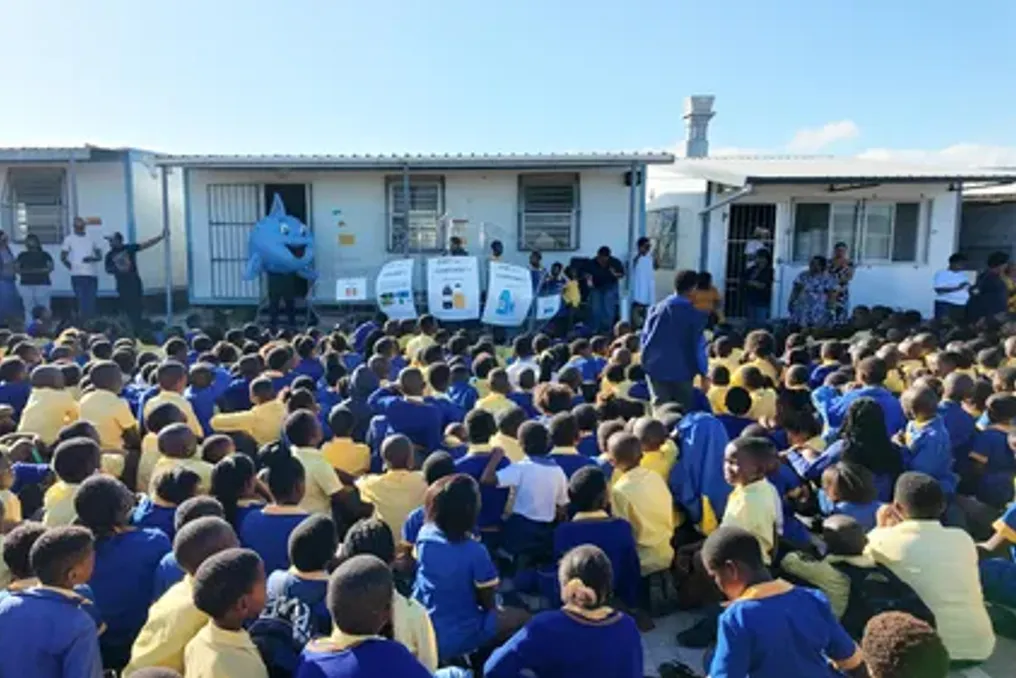
Both the OCS initiative and SST's Munch program are based on similar principles. These projects aim to activate existing local networks by integrating structured waste separation and recycling directly into the school routine. This is achieved by connecting classrooms, households, local waste collectors, and recycled material supply chains.
The Munch program demonstrates that schools already function as active drivers of environmental action at the community level. SST emphasizes that transforming schools into recycling centers is not a universal solution, as infrastructure, leadership capabilities, available resources, and school schedules vary greatly. Therefore, success depends on 'effective implementation, which relies on continuous engagement, feedback, and the willingness to adjust operational strategies in response to real local conditions.'
The Role of Schools in Infrastructure
Although schools are often associated exclusively with education, SST calls for them to be viewed as a vital contribution to public infrastructure. In this context, they serve as a crucial link connecting local leadership, daily routines, and the relationships necessary for sustainable behavioral change. The SST project development team states: 'Policy can set the direction, but communities must own the path,' reflecting a significant shift in circular economy development efforts.
Integrating the Informal Sector
A common misconception in international development communities is that scaling up a project means perfectly replicating it everywhere. Sustainable Seas Trust's (SST) experience shows that while core ecological principles must remain constant, their implementation models must adapt to local conditions. Precise integration into already successful circular economy interventions does not require replacing these information systems; it must support and integrate them. Schools have the potential to unite households and students within an existing waste management network, translating national green policies into practical, everyday community habits.
Program Participants and Schools
Currently, the program is being implemented in 14 primary schools across three major regions of South Africa:
In the Nelson Mandela Bay region (Eastern Cape), 9 schools are participating: John Masiza, Walmer, Khulile, Fumisikoma, Elundini, Elufefeni, Enkwenkwezini, Dumani, and Siyaphambili (starting July 31).
In Cape Town (Western Cape), 3 schools are participating: Nomzamo, Christmas Tinto, and Solomon Qatanya (soon).
In Durban (KwaZulu-Natal), 2 schools are involved: Christianenburg and uDumo.