Scientists from Germany, the USA, Czechia, and South Africa have identified a volatile compound—isopropyl myristate—found only in the secretions of queen naked mole-rats, which inhibits the reproduction of other females in the colony.
Scientists from Germany, the USA, Czechia, and South Africa have identified a volatile compound—isopropyl myristate—found only in the secretions of queen naked mole-rats, which inhibits the reproduction of other females in the colony.
This substance, found exclusively in the secretions of the queens and not in other colony members, causes an increase in prolactin levels in worker females, leading to the blocking of ovulation. Although eusociality is rare in the animal kingdom, naked mole-rats (Heterocephalus glaber) exhibit a system where one female acts as the breeding queen, and the others serve the colony.
After the death or removal of the queen, the other females quickly regain their ability to reproduce. For a long time, it was unclear how the queen suppresses the reproductive function of her subordinates. It was hypothesized to be a chemical signal similar to those used by bees and ants, but the specific substance remained unknown.
A team of scientists led by Gary Liu from the Max Delbrück Center for Molecular Medicine managed to find this substance and experimentally confirm its action. Analysis of the scents of 351 naked mole-rats of various ranks using thermal desorption gas chromatography-mass spectrometry revealed isopropyl myristate, present in the samples of queens but absent in males and worker females.
Isopropyl myristate was found in the secretions of vaginal, anal, and salivary glands, as well as in the feces and on the body surface of the queens. The level of the compound peaked during ovulation but sharply decreased during lactation and pregnancy, although it remained higher than in non-breeding females.
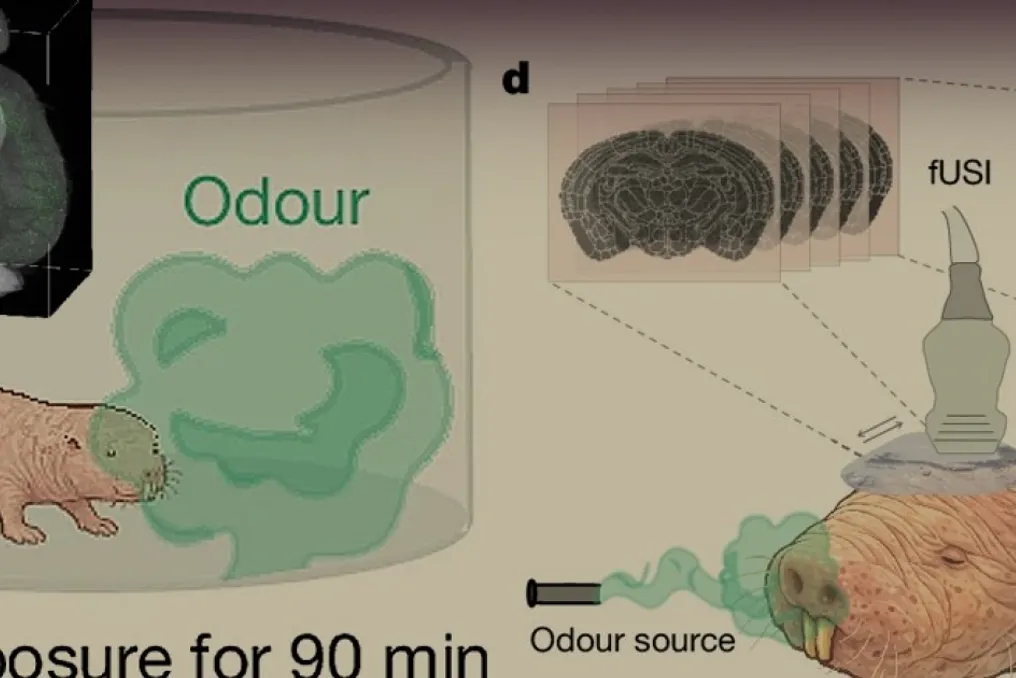
Exposure to isopropyl myristate activated the olfactory epithelium of deceased animals, unlike dimethyl sulfoxide, which was used as a solvent. During breathing of live mole-rats, exposure to this compound for an hour and a half showed increased activity of neurons in the olfactory bulb. Ultrasound scanning of the brains of anesthetized animals showed that the compound enhances blood flow in the amygdala, pars opercularis, and other olfactory areas, which did not occur when exposed to the solvent.
Additional tests showed that human olfactory receptors react weakly to isopropyl myristate. Researchers also studied the substance's effect on the colony's behavior and hormonal profile. Prolactin levels in worker females peaked during the queen's ovulation and pregnancy, coinciding with periods of increased isopropyl myristate secretion by the queen. When worker females were isolated from the queen's scent, their plasma prolactin levels decreased.
In experiments where the queen was removed but isopropyl myristate was added daily to the bedding, colony members behaved as if the queen were still present: no one reproduced, female prolactin remained high, and progesterone metabolites in the feces were low, and no new queen emerged.
However, a week after the cessation of scent addition, high-ranking females became aggressive; one died in a fight, and another surviving dominant female became pregnant a couple of weeks later and became the new queen, giving birth to offspring.
The authors concluded that isopropyl myristate functions as a queen pheromone, similar to what occurs in social insects. Nevertheless, they admitted that they could not identify the specific olfactory receptor responding to this scent and did not rule out the involvement of other mechanisms in suppressing reproductive function. Previous attempts to isolate individuals and provide them with contact with the queen's scent did not result in suppression, which initially led to the conclusion that the physical presence of the queen was necessary. This study refuted that conclusion, linking the contradictions to the low volatility of isopropyl myristate, fluctuations in its concentration during the queen's cycle, and its absence in the urine used in previous studies.
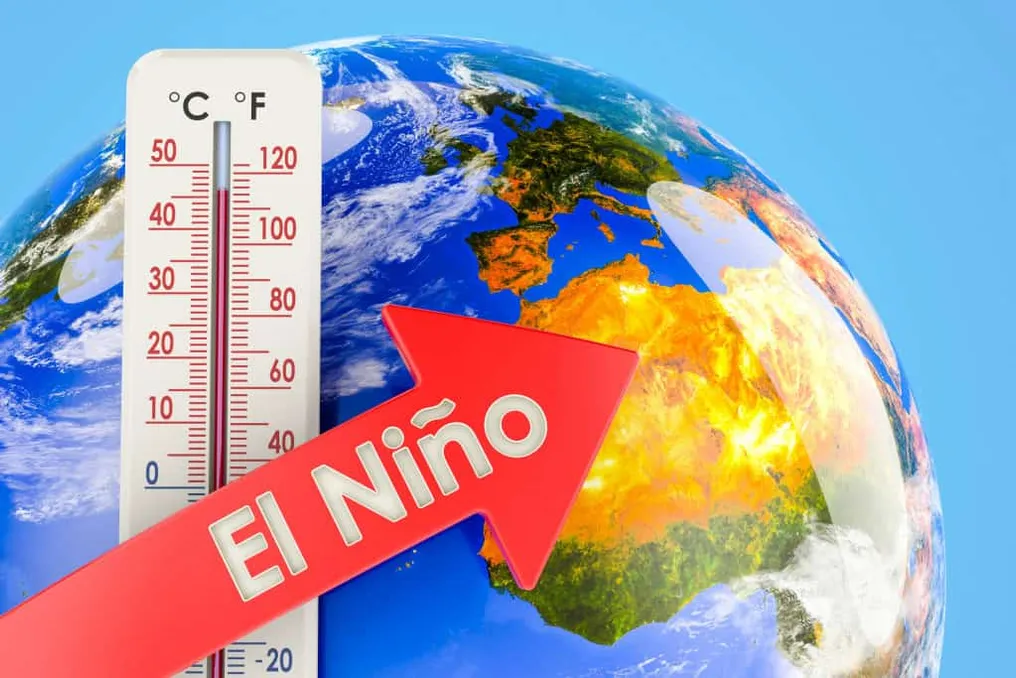
Researchers are projecting that the current El Niño phenomenon could become the most intense ever documented. If these forecasts prove correct, the event could lead to record ocean temperatures, intensification of extreme weather in various parts of the globe, and an increased risk of humanitarian crises, especially in more vulnerable nations.
Zeke Hausfather, a researcher at Berkeley Earth and author of the IPCC's Seventh Assessment Report, points out that climate models assign about a 90% chance that the 2026-2027 El Niño will be the most powerful since reliable records began. The study suggests that temperatures in the tropical Pacific Ocean area could rise by approximately 3.6°C above average, far exceeding previous records. However, scientists warn that it is still premature to define all the effects of the phenomenon with exactness.
El Niño, which was officially declared on June 11, represents the warm phase of a natural climate cycle that unfolds over several years. This phenomenon is known for raising the global average temperature and promoting extreme events such as droughts, floods, and heatwaves. According to projections from the World Meteorological Organization (WMO), the event is expected to rapidly evolve into a strong condition between July and September. Furthermore, the NOAA Climate Prediction Center estimates a probability greater than 80% that the phenomenon will reach the very strong category by the end of the year, positioning this El Niño among the largest ever observed.
Emily Black, Professor of Terrestrial Processes and Climate at the University of Reading and senior researcher at the UK's National Centre for Atmospheric Science, emphasizes the importance of these projections. She told Live Science that the forecasts are impressive. While acknowledging that El Niño predictions always carry uncertainties, she stresses that the high consensus among models and the already visible warming in the tropical Pacific require the scenario to be treated with great seriousness.
According to Black, an extremely strong El Niño considerably raises the chance of destructive weather events occurring. She highlights that a very strong El Niño would substantially alter the probabilities of harmful weather events in many parts of the world, with a special impact on the Global South and its livelihoods.
The International Rescue Committee has also expressed concern about the worsening of the phenomenon. The organization indicates that the predicted conditions could trigger severe droughts and floods in regions of East Africa and Asia, affecting highly vulnerable communities.
During the El Niño period, warmer waters accumulate in the eastern part of the Equatorial Pacific Ocean, which modifies atmospheric circulation and shifts the jet stream southward. In the United States, this typically generates warmer and drier conditions in the Northeast, while increasing the risk of flooding on the Gulf Coast and in the Southeast. On a global scale, the additional warming of the oceans adds more heat to the atmosphere, compounding the temperature increase caused by anthropogenic climate change.
Black underlines that the current context makes the phenomenon even more alarming. She explains that although El Niño is a natural process, it is occurring on an already warmer planet. This is relevant because a strong El Niño releases heat and energy into an already warmed environment. However, she warns that the impacts cannot be attributed solely to El Niño or only to climate change; the two factors interact. El Niño can potentiate droughts in certain areas, floods in others, marine heatwaves, monsoon disruptions, and exceptionally high global temperatures. Climate change, in turn, makes heat extremes more severe and can intensify heavy rainfall, as a warmer atmosphere retains more moisture.
Hausfather reinforced the projections after an update to climate models in July. This analysis integrated 667 simulations from 14 different seasonal models. The results suggest not only a high probability that the phenomenon will be the most intense ever recorded but also that it may surpass the previous record by a notable margin. He stated that, with the July simulations, it seems that this year's El Niño has a high chance of being the strongest event since the beginning of reliable records, potentially being the strongest by a truly impressive margin.
NOAA defines El Niño conditions when the temperature in the tropical eastern Pacific region remains at least 0.5°C above the historical average, accompanied by changes in winds, atmospheric pressure, and precipitation. The phenomenon is classified as weak, moderate, strong, or very strong. Events with temperatures exceeding 2°C above average informally receive the name 'super El Niño,' although this is not an official scientific classification. The July models indicate that the anomaly could exceed 3.5°C by the end of the year.
According to Hausfather, the median of the projections indicates a peak of about 3.6°C, which represents approximately 0.8°C above the record set during the 2015-2016 El Niño, when the anomaly reached 2.75°C. About 91% of the simulations indicate that the current event will surpass the 2015-2016 record.
Despite the robust projections, Black insists that the models are mere estimates and not guarantees. She stated that it is plausible for this to become a record-breaking El Niño, and recent forecasts make this possibility real, not distant. However, she advises caution when treating any probability estimate as a settled fact. She justifies this prudence by citing two points: first, the event has not yet reached its peak, and El Niños generally reach their maximum intensity closer to the end of the year; second, the definition of 'the strongest ever recorded' depends on the index, the dataset, and the reference used.
Intense El Niño episodes have generated significant consequences in various parts of the planet. The 2015-2016 event, for example, was linked to a record hurricane season in the Central North Pacific, as well as severe droughts in the Caribbean and Ethiopia, and exceptionally high global temperatures. If current projections materialize, the phenomenon could equal or surpass both this episode and the notorious super El Niño of 1877-1878, which occurred before modern records. This historical event likely contributed to an extreme drought that fueled the Great Famine of 1876 to 1878, resulting in the death of over 50 million people. Researchers, however, point out that this tragedy was exacerbated by colonial agricultural policies of the time, demonstrating that humanitarian crises arise from the combination of environmental and socioeconomic factors.
Even with the profound transformations that have occurred since the 19th century, experts warn that a super El Niño could still cause strong repercussions on global food systems. The concern is greater given that researchers point out that food insecurity is no longer limited to low-income countries, and climate change is putting pressure on agriculture in multiple regions. The climate cycle known as El Niño-Southern Oscillation (ENSO) alternates between the El Niño and La Niña phases every two to seven years, with a typical duration of nine to twelve months. According to Carbon Brief projections, 2026 should be the second hottest year ever recorded, and the strengthening of El Niño raises the probability of 2027 becoming the hottest year in history.
Black concludes that the record intensity of the phenomenon is secondary to its effects on the population. She states that even if the phenomenon does not set a new absolute record, its consequences can still be severe. Finally, she observes that these forecasts are worrying, but also useful, as they give societies time to anticipate potential impacts and act before the worst effects manifest.
As part of India's clean energy mission, the first and deepest geothermal well in the country was launched in the Puga valley. These works will be carried out by ONGC Energy Centre in the state of Ladakh.
According to V. K. Saxena, Deputy Governor of Ladakh, the results achieved in the Puga valley will serve as a model for India to achieve its net-zero emissions goal and will significantly help make Ladakh an environmentally sustainable and carbon-neutral region.
The launch of two wells at a depth of 1000 meters at an altitude of over 14,000 feet will significantly advance Ladakh towards the status of a clean energy hub. These geothermal wells are crucial for the successful implementation of the 1 MW pilot geothermal project in Puga, which will be the first demonstration project for geothermal energy in India.
Project engineers reported that the successful completion of the work will allow for reservoir assessment, power plant planning, and ultimately the commercialization of Ladakh's geothermal resources. A maximum temperature of 135 degrees Celsius was recorded during drilling at a depth of 400 meters. Further tests are currently underway, and specialists hope to achieve even higher temperatures for operating the pilot project and subsequent commercial exploration of geothermal energy.
Despite difficulties related to geothermal activity, complex underground conditions, and operational issues, the first of the two wells was successfully drilled to the target depth of 1000 meters on May 22, 2026. Subsequently, the second well was started on June 3 and successfully drilled and completed to a depth of 1000 meters in just over a month by July 8.
Previously, the project faced a serious delay after the expiration of a tripartite memorandum of understanding between the Ladakh administration, the Ladakh Autonomous Hill Development Council—Leh, and ONGC Energy Centre. Saxena intervened to ensure the extension of this memorandum for another five years, after which work resumed.
The ReLiMa project, an international initiative designed to reduce the amount of marine debris through cleanup activities, recycling, and environmental education, was launched today in Cabo Verde. It covers islands such as Santiago, Maio, and Fogo.
Januário Nascimento, President of the Association for Environmental Protection and Development (ADAD), stated during the official launch of the project in Praia that the main goal is to mobilize partners to combat marine debris in Cabo Verde. The ReLiMa project, which focuses on reducing marine litter in small island developing states of the Atlantic, also includes Guinea-Bissau and São Tomé and Príncipe, as well as the academic community, businesses, and civil society to prevent and increase the value of marine waste.
Januário Nascimento specified that this initiative goes beyond routine beach cleanups, also involving interventions on the seabed using new technologies. Initial actions will focus on the islands of Santiago, Maio, and Fogo, although the project plans to extend its activities to São Vicente, Santo Antão, and São Nicolau, and conduct technical knowledge exchange with Brazil and Germany.
Collected waste will be directed to recycling through the ADAD center in Praia. Nascimento explained that waste from Fogo and other islands will be transported for recycling, and some waste will be sent to other countries for further processing.
When asked about the estimated volume of waste the project intends to remove from the environment, Januário Nascimento reported that this target still needs to be determined at the partners' technical meeting. The President of ADAD acknowledged that combating marine debris remains a 'complex challenge' and called for more active participation from municipalities, as well as the allocation of funds from environmental and tourism funds to improve sanitation and landfill management.
Rafael Kreiser, Technical Director of the German company Black Forest Solutions, emphasized that the project aims to develop solutions adapted to the realities of Cabo Verde. She noted that the positive impact on Cabo Verde lies precisely in developing practices for raising awareness, technology, and infrastructure to prevent such waste from entering the ocean.
Rafael Kreiser assured that the situation regarding waste accumulation in the protected area of Santa Luzia Island, the only uninhabited archipelago and turtle nesting site, will be monitored within the framework of the project. She added that this case will be closely studied to understand how to act and prevent the accumulation of this waste on the island.
The ReLiMa project has a total budget of five million euros and is planned for approximately four years. According to Januário Nascimento, funding of about 480 thousand euros is allocated for Cabo Verde. The initiative aims to strengthen cooperation between Cabo Verde, Guinea-Bissau, and São Tomé and Príncipe in the field of marine ecosystem protection and promoting more sustainable waste management.