Starting September 1, 2026, the institute for retraining and advanced training of specialists in adaptive physical culture and sports, which is affiliated with the Association of Adaptive Sports of Uzbekistan, will be integrated into the structure of the Tashkent Branch of the A. I. Herzen State Pedagogical University.
Goals and Status of Integration
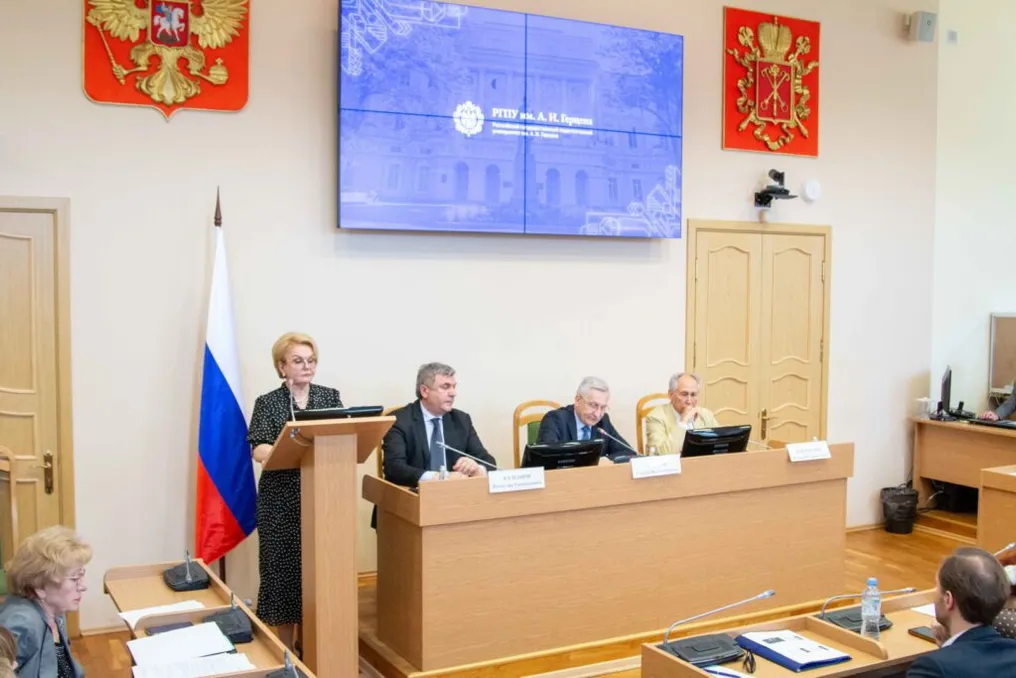
The main mission of this institute is to support and develop adaptive sports in the country, train specialized personnel, create methodological materials, and conduct various forums and festivals. The Director of the Tashkent Branch, Sergey Barchenko, announced this at a meeting of the university's academic council.
The Rector of the A. I. Herzen State Pedagogical University, Sergey Tarasov, noted that including the institute in the branch's structure elevates the division to a new organizational level. The branch gains the status of a full national competence center in the field of inclusive education and adaptive physical culture. Furthermore, by decree of the republic's president, the division has been granted the status of a basic organization, demonstrating a high level of state support.
Educational Model and Focus
According to Tarasov, this working model promotes the formation of a continuous educational trajectory that covers the entire path of professional growth—from initial bachelor's courses to regular advanced training for practicing coaches and educators. Simultaneously, the research and methodological base is strengthened. The Rector emphasized that a human-centered approach, focused on people with special needs, is maintained in this environment.
New Directions and Partnership
Sergey Barchenko informed that due to obtaining the status of a basic organization for the development of adaptive and inclusive sports, the Tashkent Branch has begun offering new programs in adaptive physical culture at the bachelor's and master's levels, which are in high demand among applicants. Plans also include launching programs in physical rehabilitation and other promising areas of social work.
The branch's key partner is the Agency for Social Protection under the President of Uzbekistan. With the participation of this agency, the branch organized the first Festival of Adaptive Sports in the country, as well as advanced training courses in defectology, in which teachers from the institute of defectological education and rehabilitation participated. Additionally, together with specialists from the Institute of Psychology, the Tashkent Branch participates in the development of palliative and hospice care. Starting in September, courses on psychological support and education are planned, which will be attended by about 400 specialists by the end of the year.
Branch Activities and Plans
Sergey Barchenko presented a report on the work for the 2025/2026 academic year. Currently, over 1,000 bachelor's and master's students are studying at the Tashkent Branch, and approximately 1,300 students are expected to enroll from the beginning of the new academic year. Annually, the division trains more than 250 specialists for the systems of social protection, education, and inclusive development in Uzbekistan. The university employs 128 teachers from Russia and 53 Uzbek educators.
During the summer period, the completion of the design and equipping of the new campus premises, including the library, canteen, and dormitory, is planned. It should be recalled that in February 2025, a memorandum of cooperation was signed between the Herzen University, subordinate to the Ministry of Education of Russia, and the National Agency for Social Protection under the President of Uzbekistan in the field of adaptive sports and inclusive education. This cooperation provides for scientific research in the fields of correctional pedagogy, psychology, and adaptive physical culture, as well as the launch of educational programs.
Last year, the Center for Adaptive Physical Culture and Sports was opened at the Tashkent Branch, which serves as a platform for practical, scientific, and educational activities, combining specialist training, physical rehabilitation, and international cooperation, allowing up to 150 specialists to be trained annually.