Uzbekistan Presents Experience in Healthcare Digitalization and AI in Turkey
Read more
UzDaily
uzdaily.uz

Uzbekistan Presents Experience in Healthcare Digitalization and AI in Turkey

The Ministry of Health reported that Uzbekistan demonstrated its experience in healthcare digitalization and the application of artificial intelligence in medicine at an international conference held in Turkey.

Report on Healthcare System Development

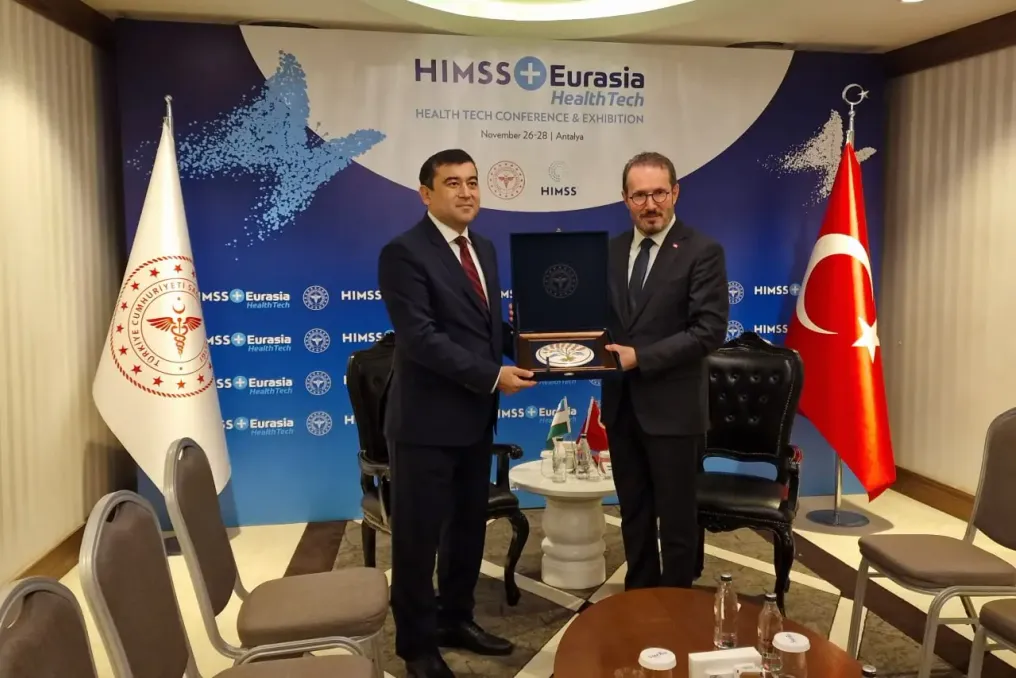
Deputy Minister of Health Jaloliddin Asomutdinov spoke at the HIMSS + Eurasia HealthTech 2026 conference in Antalya. The event gathered representatives from state bodies, international organizations, medical institutions, and technology companies from various countries.

Asomutdinov provided a detailed account of the creation of a unified digital healthcare system in Uzbekistan and efforts to establish information exchange between medical institutions. He also presented work related to the implementation of artificial intelligence in disease diagnostics.

Special attention was paid to the DMED platform, which was developed jointly by the Ministry of Health and UZINFOCOM. This system allows users to make appointments with doctors, store test results in electronic health records, and receive electronic prescriptions and referrals.

The conference also discussed issues such as creating 'smart' hospitals, secure exchange of medical data, and the use of artificial intelligence in radiology and laboratory diagnostics. Uzbekistan's experience was presented in a separate discussion panel on medical data management.

Delegation Meeting

On the second day of the conference, the Uzbek delegation, led by Asomutdinov, met with Shuayip Birinchi, Deputy Minister of Health and Chairman of the Congress of Turkey. The parties reached a preliminary agreement to hold an international event on digital healthcare in Uzbekistan in 2027. Furthermore, they discussed preparing a joint roadmap for cooperation.
Similar stories

Uzbekistan expands digitalization of the healthcare system
Read more
uzdaily.uz

Uzbekistan expands digitalization of the healthcare system

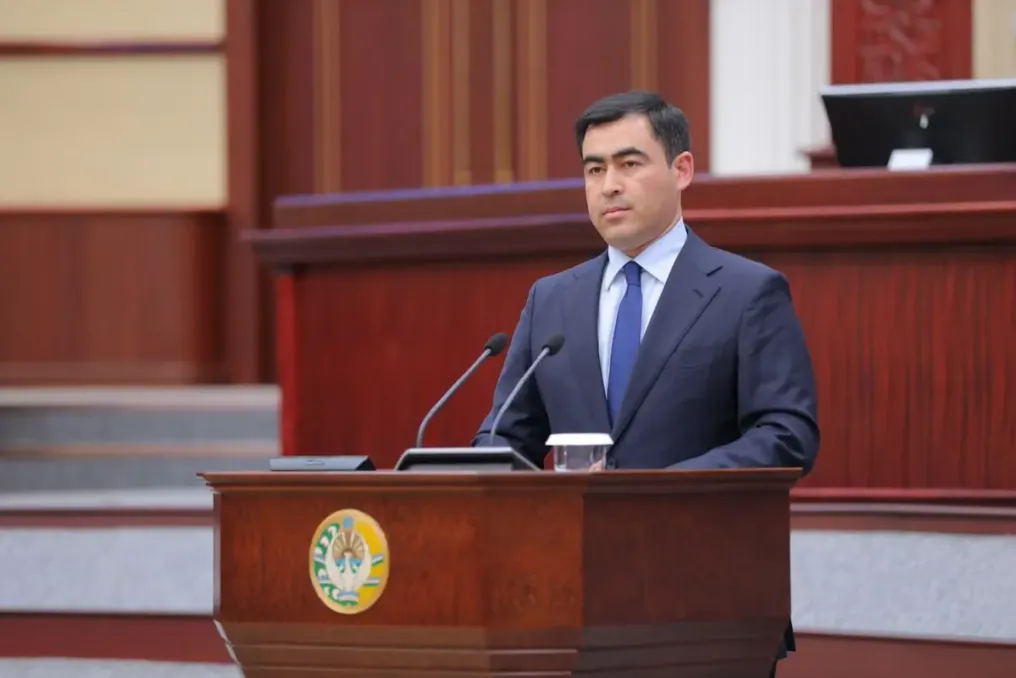
The Minister of Health of Uzbekistan, Eldor Adilov, presented a report to the Legislative Chamber of the Oliy Majlis on the implementation of digital technologies in healthcare and the problems affecting their use.

The unified information system DMED remains a key tool for digitizing medical institutions. This system integrates services such as electronic hospitals, inpatient treatment, laboratory tests, prescription issuance, warehouse management, rehabilitation, and referrals.

Between 2025 and 2026, 491 initiatives were implemented to improve DMED. The system has enabled the issuance of over 148,000 preferential electronic referrals and generated more than 65 million records of medical examinations and tests for doctors.

Furthermore, 126 electronic forms and registries, as well as 28 national reports, have been converted to digital format. According to the minister, over 20 functional modules and services have been developed, covering more than 4,000 state medical institutions, about 6,000 private clinics, over 11,000 pharmacies, and more than 38 million citizens.

To equip medical institutions, 96,301 computers and 43,520 tablets were purchased. More than 44 million laboratory test results have also been digitized.

Another area of work is the application of artificial intelligence in medical practice. The AI TOP3-CDSS system analyzed over 6,000 cases, and AI Med-STT converted more than 2,500 conversations between doctors and patients into text format. The AI MAMMO system processed over 54,000 mammography results, while AI Stroke handled more than 2,500 stroke-related cases.

By the end of 2026, six artificial intelligence systems are planned to be fully launched, and three more will be introduced in pilot mode. The Ministry believes that these solutions will help detect diseases at early stages, accelerate diagnosis, and reduce the burden on medical personnel.

Work is also underway on the DHP platform, designed to integrate healthcare information systems. It is being developed based on the international standard HL7 FHIR. According to the estimates presented, implementing this platform will reduce administrative burden by 30%, repeat examinations and medical errors by 20%, and reporting preparation time by 90%.

Nevertheless, legislators pointed out persistent problems in the implementation of digital solutions. Specifically, DMED is not yet fully operational in all state medical institutions, and the ministry's digital platforms are insufficiently integrated with private healthcare providers.

The meeting also discussed the use of funds from the State Medical Insurance Fund and the difficulties citizens face when obtaining preferential referrals to republican scientific and practical medical centers. Legislators proposed measures to eliminate the identified problems, ensure the full and consistent functioning of digital services in all medical institutions, and simplify public access to medical services. Following the discussion, the minister's report was noted, and the Legislative Chamber decided to continue parliamentary oversight on this issue.

Uzbekistan's Ministry of Education to Study Digital Solutions from Turkish Companies
Read more
uzdaily.uz

Uzbekistan's Ministry of Education to Study Digital Solutions from Turkish Companies

The Ministry of Education and Science of Uzbekistan held discussions on implementing digital technologies in the system of school and vocational education with representatives of two Turkish companies: Exploristan Ar-Ge and Edutes Eğitim Teknolojileri.

According to the ministry, the negotiations took place on November 19. The central element of the discussion was the LETAR platform, which utilizes extended reality (XR) and digital twin technologies.

These solutions allow students to master the operation of industrial equipment in a virtual environment, thereby minimizing risks associated with practical training. Furthermore, the platform provides interactive three-dimensional models for studying school subjects.

Participants reviewed issues of localizing educational programs into the Uzbek language and adapting them to national curricula. Discussions also covered improving teachers' qualifications and involving employers in assessing students' professional skills.

During the meeting, the possibility of conducting pilot testing of these technologies in several educational institutions in Uzbekistan was addressed. Following the negotiations, the parties agreed to conduct an expert evaluation of the demonstration versions of the software and prepare proposals for further cooperation.

Electronic medical policies are being introduced and the list of free medicines is being expanded in Uzbekistan
Read more
podrobno.uz

Electronic medical policies are being introduced and the list of free medicines is being expanded in Uzbekistan

A comprehensive plan for reforming the healthcare system in Uzbekistan has been approved, covering the period from 2027 to 2031. These changes will affect the procedure for providing medical care, the medical insurance system, and the provision of medicines to citizens.

According to the reform program, by 2031, the state medical insurance system should cover all households in the country. Between 2027 and 2030, citizens will be able to access electronic policies through personal accounts on the my.gov.uz portal. Through these policies, they can check their insurance status and find information about free medical services and medicines; additional information will be provided via SMS notifications.

There are also plans to expand the free drug supply program: the number of included medications will increase from 28 to 69 items. Patients will be able to receive medicines from the established package at pharmacies using electronic prescriptions, with expenses covered by the state Health Insurance Fund.

In parallel, authorities intend to increase state spending on healthcare: from 3.2% of GDP in 2027 to 5% by 2031. Significant attention will be paid to disease prevention, and a personalized schedule of medical examinations will be developed for every resident, taking into account their gender, age, and existing risk factors.

Furthermore, by the end of 2026, the Ministry of Health and the National Agency for Social Protection must submit proposals regarding the compensation of transport costs for patients who regularly undergo hemodialysis. Plans were previously announced to transition another hundred districts of Uzbekistan to an updated primary healthcare model.

Popular