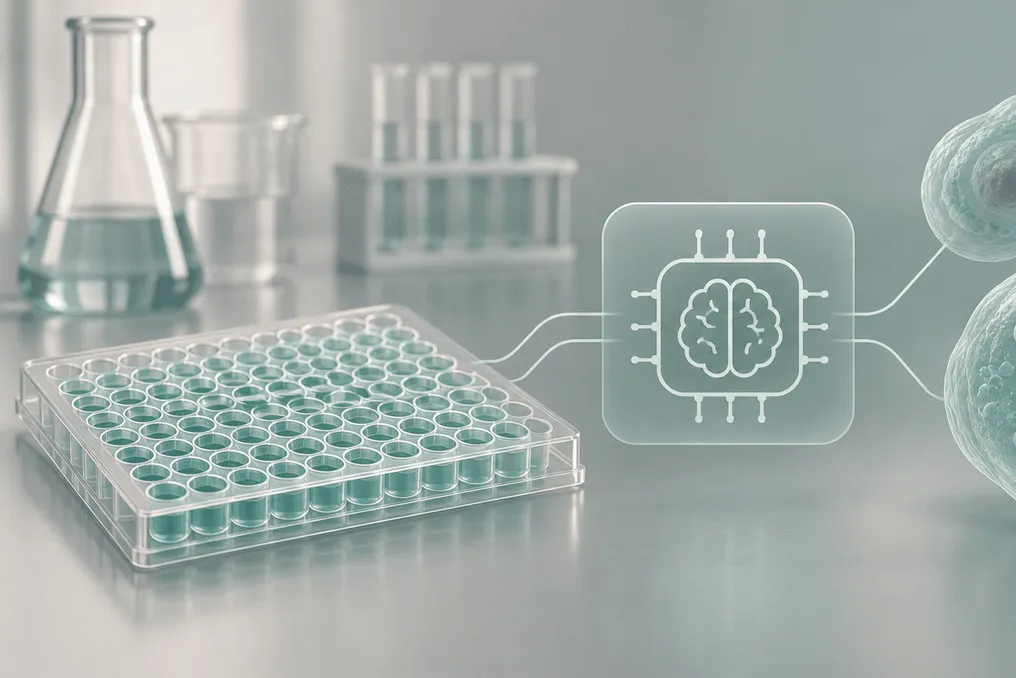
Agilent sees opportunity for business growth in India's shift to biopharmaceuticals
Read more
Business Standard
business-standard.com

Agilent sees opportunity for business growth in India's shift to biopharmaceuticals

Agilent Technologies, a United States-based company, views India's transition from a major generic drug manufacturing hub to the production of biopharmaceuticals and biosimilars as a significant growth opportunity. The company anticipates an increased demand for advanced quality control and testing systems as domestic drug manufacturers scale up their operations.

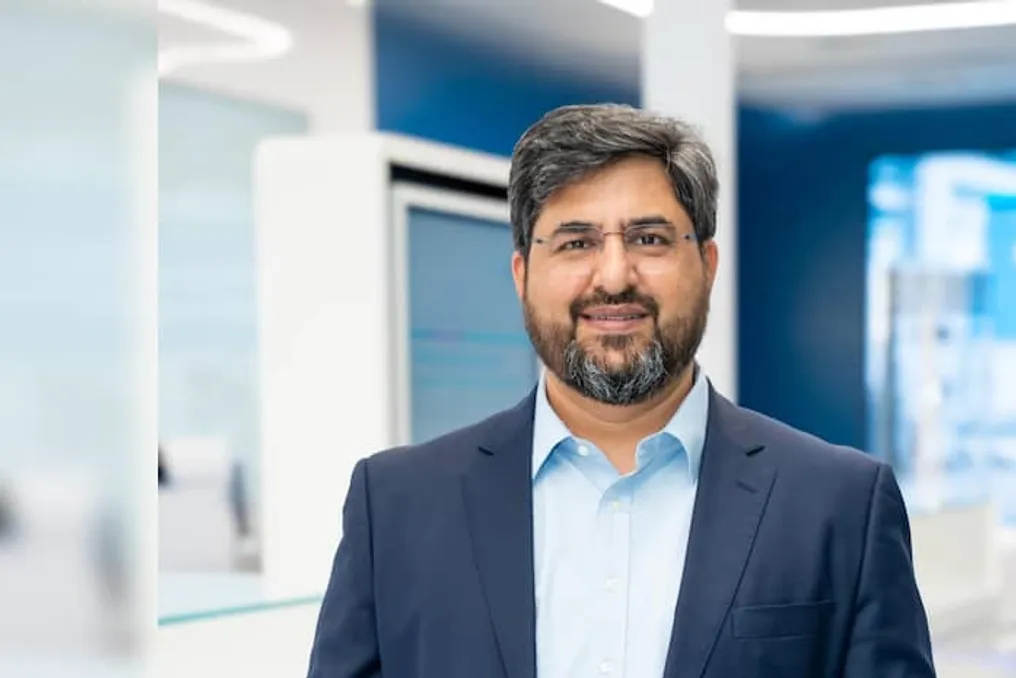
Bharat Bhardwaj, Vice President and General Manager of Agilent Technologies for the Asia-Pacific region, noted that the pharmaceutical and biopharmaceutical sectors remain the strongest areas for the company in India. This success is supported by the country's established position in generic drug manufacturing and growing investments in biopharmaceuticals.

Bhardwaj emphasized that while India was previously a strong player in generics, biopharmaceuticals represent the 'next chapter for India.' He stated that Agilent is observing large pharmaceutical clients in India expanding their operations and seeking partners capable of providing the necessary expertise and technologies, including complex quality control systems and trained personnel for high-tech laboratories.

The shift to biopharmaceuticals also requires drug manufacturers to strengthen testing infrastructure to meet global regulatory and quality standards when entering international markets. Bhardwaj added that the company is capable of providing these technologies to Indian manufacturers, offering them unique solutions during the scaling process.

Over the past two years, the company has strengthened its client infrastructure in India by opening customer service centers, Indian solution centers, and a service and repair center. Nevertheless, Agilent does not currently plan to establish additional manufacturing or research facilities in the country; the investments made over the last two years will lay the foundation for the next stage of growth.

In addition to pharmaceuticals, Agilent is monitoring opportunities arising from India's ambitions in semiconductor manufacturing, as well as increasing investments in environmental and food testing. Bhardwaj pointed to the shortage of qualified scientific personnel as a key challenge, noting that the pace of skill development is not keeping up with industry ambitions. In this regard, Agilent is collaborating with industry partners and clients to bridge this gap.

Furthermore, demand is rising from companies modernizing outdated laboratory equipment to technologies that support automation, data integration, and artificial intelligence-based workflows.

Similar stories

The Contribution of Computing in the Discovery of New Drugs and Its Current Limitations
Read more
super.abril.com.br

The Contribution of Computing in the Discovery of New Drugs and Its Current Limitations

The development of new drugs is a complex process, which can take ten to fifteen years from the identification of a promising molecule to the availability of a treatment. During this journey, it is essential to investigate how the substance works, how it is absorbed, distributed, and metabolized by the organism, as well as to evaluate any toxic effects it may cause.

It is crucial to weigh the relationship between benefits and risks, especially when dealing with substances capable of fighting cancer cells, as they can also affect healthy tissues. This process requires considerable time, robust infrastructure, and a large volume of financial resources, making it essential to select, right at the beginning, which molecules among thousands deserve investigation.

Computational biology has played a vital role in this initial selection process. By using simulations and mathematical models, computers can process vast amounts of data, indicating which substances have the greatest potential to be candidates for new drugs. Furthermore, these technologies can be used to find new uses for existing medicines, which significantly accelerates development.

A notable example is the case of halicine, one of the first antibiotics discovered entirely with the aid of artificial intelligence. Initially developed to treat diabetes, it was unsuccessful in tests and archived. In 2020, researchers from the Massachusetts Institute of Technology (MIT) in the United States recovered halicine. They applied a computational model to analyze thousands of chemical compounds present in medical databases, discovering that halicine had the potential to fight antibiotic-resistant bacteria.

Subsequently, this theory was validated in laboratory assays and animal infection models. The substance showed efficacy against various bacteria, including the one causing tuberculosis. Although it is not yet an approved drug, the case illustrates the potential of computing in the search for promising compounds.

Computational tools enable the investigation of molecular properties even before laboratory experiments are conducted, through processes called virtual screening. In these procedures, algorithms examine large collections of substances.

There are two main approaches. One starts with an already known molecule to determine which proteins in the body could interact with it, a strategy called pharmacological target identification, or target fishing. This helps formulate hypotheses about possible mechanisms of action and therapeutic applications.

Alternatively, research can begin with the biological target. Scientists choose a protein relevant to the development of a disease and then look for molecules that have the necessary chemical characteristics to interact with or block that protein.

In postgraduate studies at UNIFESP, the author uses the first mechanism to study Parkinson's Disease, investigating the neuroprotective potential of natural compounds. He seeks to identify molecules from these compounds that act on specific targets of the disease, focusing on interactions with proteins related to cerebral inflammatory response and neuronal degeneration. To do this, he combines computational tools with experimental models, selecting compounds for in-depth study based on these predictions.

It is important to note that, whether starting from the target or the substance, computational prediction only serves as a starting point, indicating a possibility but not proving the actual occurrence of the interaction in the organism.

After identifying potential targets, it is necessary to investigate how a molecule can interact with a protein. For this, computational tools such as docking (molecular anchoring) and molecular dynamics are used. Both are established techniques in Parkinson's research.

Docking simulates the various ways a molecule can fit into a protein, allowing for the estimation of which chemical interactions would be most favorable. This information aids in creating hypotheses about how a substance can activate or inhibit a specific protein, although further steps are needed to prove this happens in practice.

Molecular dynamics, on the other hand, allows simulating the movement and conformational change of molecules and proteins over time under certain conditions, offering a more dynamic view of the system, but without fully replicating biological complexity.

Although these techniques can be complemented by Artificial Intelligence, they do not necessarily depend on it. Together, they provide crucial data for selecting compounds and planning the next experiments.

Even though they are sophisticated, computational predictions alone do not confirm the efficacy or safety of a substance. A molecule may show promising interactions in a simulation but fail in the organism due to being rapidly metabolized, failing to reach the target tissue, or causing unwanted effects.

For this reason, predictions must be validated by experimental evidence obtained in appropriate models for each research question. Cell cultures and other experimental systems help test the hypotheses generated in simulations. When necessary, animal studies investigate aspects inaccessible in cell models. However, even positive results from these tests do not guarantee human benefit, as this depends on clinical trials.

Recognizing these limitations is vital to avoid hasty conclusions, since no model is perfect for replicating all the complexity of an organism; the strength of research lies in the combination of different methodologies.

Computational biology expands the possibilities in the search for new drugs, but it has restrictions. The credibility of predictions depends on the quality of the data and the choice of methods, requiring qualified professionals and adequate infrastructure. Although free and open-source tools exist, some analyses require specialized computational resources and are not always accessible to all research groups.

By prioritizing more promising candidates, identifying potential risks, and guiding experimental planning, these tools make research more efficient, helping to avoid unnecessary studies and potentially reducing the use of animals.

However, computational models do not dispense with the work of researchers nor replace the infrastructure necessary to validate their predictions. Laboratories, equipment, cell cultures, and, in specific phases, animal models remain indispensable for converting a hypothesis into evidence.

For those who expect Artificial Intelligence to eliminate practical testing, it is essential to understand its barriers. There is still a long scientific path, involving infrastructure and validation, between a promising molecule and a safe treatment available to patients.
BioMap presents AI-based drug safety assessment system
Read more
pandaily.com

BioMap presents AI-based drug safety assessment system

On November 19, BioMap launched a drug safety assessment system using artificial intelligence. This system combines virtual cell models, toxicity prediction, and non-clinical assessment services.

According to information published by the company via Leiphone, this development is intended to help researchers prioritize candidate molecules and safety concerns before they start spending resources on animal studies.

Key Components and Capabilities of the System

One of the key elements is the xTrimoTox toxicity prediction model, which BioMap created based on a cellular world model. The company is also exploring the possibility of virtual dosing through safety prediction models called 'virtual monkeys' to extend predictions beyond cellular reactions to the level of animal impact. It is emphasized that this approach remains a model and requires experimental verification, and is not an approved substitute for animal testing.

BioMap reports AUROC scores of 0.9637 for drug-induced liver injury and 0.8918 for hERG-related cardiotoxicity on selected benchmarks from the Therapeutics Data Commons. Separately, the company cites a score of 0.9076 in a blind test for liver injury involving 47 drugs. It is important to note that these are discrimination metrics claimed by the company itself, not results from clinical trials, diagnostic accuracy percentages, or proof of drug safety or efficacy for patients.

On the Tox21 test set, it claims an average ROC-AUC of 0.8598 for 645 molecules and 12 toxicity endpoints, which is higher than the 0.8470 achieved by DeepTox. These figures have not been independently reproduced for this article, and the comparison relates to the specified benchmark conditions, not universal superiority in safety assessment.

Integration into Non-Clinical Workflow

The product is designed to support several stages of the non-clinical workflow. Before starting research, BioMap integrates laboratory toxicology data, small animal information, and historical data from larger animals or related molecules to determine species selection, dosage groups, and potential target organ risks. During testing, the system analyzes parameters such as body weight, food consumption, lab measurements, and toxicokinetic data to identify signals requiring further investigation.

Regarding pathology and reporting, the company describes features for whole slide preliminary screening, annotation of suspicious areas, and checking data consistency from various sources, report tables, and submission materials. These features assist researchers and pathologists but do not replace their professional judgment.

BioMap has announced partnerships with over 30 contract research organizations and laboratories that are already beginning to participate in projects with the relevant capabilities. Within the proposed feedback loop, partners' animal studies verify the risks noted by the models, and the resulting experimental data is used to refine subsequent predictions. Thus, the launch pertains to an AI-supported research workflow, not proof of confirmed clinical efficacy or regulatory approval.

Indian drug manufacturers bring the fight for generic semaglutide to foreign markets
Read more
business-standard.com

Indian drug manufacturers bring the fight for generic semaglutide to foreign markets

Indian pharmaceutical companies are actively bringing the competitive battle for generic semaglutide to international markets. Some of them have already started selling this bestseller for diabetes treatment and weight loss in foreign countries, while others are working on obtaining regulatory approvals and concluding marketing partnerships.

This active export push comes as the domestic market, which experienced a wave of generic launches after the expiration of the Novo Nordisk patent in March, adapts to increased competition, lower prices, and higher inventory levels in distribution channels.

Among the pioneers of this movement are Dr Reddy's Laboratories, Sun Pharma, and Hetero. Meanwhile, Lupin, Biocon, and Ajanta Pharma are striving to enter international markets through partnership agreements.

Dr Reddy's Laboratories launched generic semaglutide in Canada earlier this year and received approval from Brazil's health regulator, ANVISA, at the beginning of this month. The company reported receiving permits in 10 countries. However, supplies to Canada were disrupted due to a product recall related to an impurity exceeding specifications, as well as a separate error in packaging and labeling.

Dr Reddy's aims to supply 6–7 million semaglutide pen injectors to 10 markets in the second half of fiscal year '27, with the majority of volumes expected from Canada. During an October earnings call, CEO Erez Israeli stated that supplies should resume in November, provided the product validation is successful.

Despite the setbacks, the company remains optimistic about the Canadian market, noting that the market remains underserved due to insufficient generic competition. Israeli also pointed to opportunities in other markets, including Chile, where Dr Reddy's became the first generic player to receive approval.

Sun Pharma has also entered international markets, launching generic semaglutide in South Africa in July, and its local partner commercially launched the product in Brazil. During an October earnings call, Managing Director Kirti Ganorkar confirmed that semaglutide was commercialized in both markets. When asked if there was a price drop in these countries similar to India, Ganorkar noted that pricing decisions in Brazil are made by the local partner and declined to comment on the extent of the price reduction.

Meanwhile, Hetero has begun exporting the drug to African, Asian, and Middle Eastern markets under three brands, planning to eventually expand its presence to over 75 countries. Its manufacturing partner, Gufic Biosciences, reported during an August earnings call that both companies have applied for regulatory approvals in over 22 countries. In an November earnings call, Gufic indicated that revenue from these international registrations is expected in the first or second quarter of the next fiscal year, subject to receiving the relevant approvals.

This opportunity is attracting other Indian pharmaceutical companies. Lupin signed an agreement with Spanish company Galenicum for the commercialization of semaglutide in 23 countries. Biocon partnered with Ajanta Pharma to supply the drug for marketing in 26 countries across Africa, the Middle East, and Central Asia. However, Ajanta expects commercial sales to begin only in fiscal year '28 while the company goes through the process of obtaining approvals in these markets.

Foreign markets offer significant opportunities for Indian generic manufacturers, although the dynamics of competition vary across countries. In Canada, where Dr Reddy's has already launched the drug, nearly 12 million semaglutide injection pens are used annually, and the total GLP-1 analogue market is valued at $2.6 billion, according to Sandoz data. The semaglutide market for diabetes treatment in Brazil is estimated at approximately $245 million, according to IQVIA cited by Dr Reddy's.

However, the competitive environment in these two markets is developing differently. In Canada, Novo Nordisk managed to retain a substantial share of its business despite the patent expiry in January, partly due to delays in generic releases. In Brazil, however, a shift towards cheaper alternatives is already underway. Novo Nordisk acknowledged losing market share to more affordable competitors after the patent expired in March. The Danish manufacturer noted that price pressure in Brazil contributed to a 3 percent decline in sales in emerging markets in the September quarter.

Competition is also intensifying as Sandoz launched its injectable semaglutide in Brazil at the beginning of this month. In South Africa, where Sun Pharma launched its product, the GLP-1 market approaches $182 million, according to Aspen Pharmacare data. Nevertheless, most of this market is currently supported by tirzepatide, another widely used drug for diabetes treatment and weight control. The country is also attracting more generic semaglutide manufacturers. The South African drug regulator reviewed 12 generic applications in July, and Aspen received approval for its injectable semaglutide at the beginning of this month. The entry of additional manufacturers may increase access to cheaper versions of the drug, although competition is expected to intensify as new products enter the market.

The domestic market situation is stabilizing after the initial frenzy following the expiration of the Novo Nordisk semaglutide patent in March. According to PharmaTrac data from Pharmarack, monthly semaglutide volumes grew from 1.14 lakh units in February to 4.34 lakh units in September. However, sales volume grew slower, increasing from 48 crore to 113 crore rupees, as cheaper generics gained popularity. In September, generic brands accounted for about 74 percent of the total semaglutide volume. Nevertheless, growth rates slowed after the first wave of launches. Monthly volumes jumped by 88 percent in April, then growth slowed to 12 percent in May and 4 percent in June. After remaining mostly stable in August, volumes rose by 7 percent in September.

The launch wave also led to significant inventory accumulation throughout the distribution chain. PharmaTrac data showed that inventory increased from 16 days in February to a peak of 26 days in May, before dropping to 23 days in August. Some individual brands recorded significantly higher inventory levels, reflecting a rush to stock up before actual demand.

Nirali Shah, a research analyst at Ashika Investment Managers, previously told Business Standard that the semaglutide market in India is transitioning from a 'frenzy phase' to a 'prescription habit phase,' as initial enthusiasm around generic launches gives way to the need for sustained patient demand.

Although domestic sales volumes continue to grow, the sharp increase in the number of generic brands is intensifying competition. For Indian pharmaceutical companies, foreign markets represent another path to growth, especially in countries where demand for semaglutide is already established, and cheaper alternatives can attract more patients. However, international expansion is not solely a reaction to inventory buildup in India; several companies began working on obtaining approvals in foreign markets and concluding commercial partnerships long before the domestic patent expired.

[

Popular