BAT plans to sell 6.3% of ITC Hotels shares as part of a deal worth 228.8 billion rupees
Read more
Business Standard
business-standard.com

BAT plans to sell 6.3% of ITC Hotels shares as part of a deal worth 228.8 billion rupees

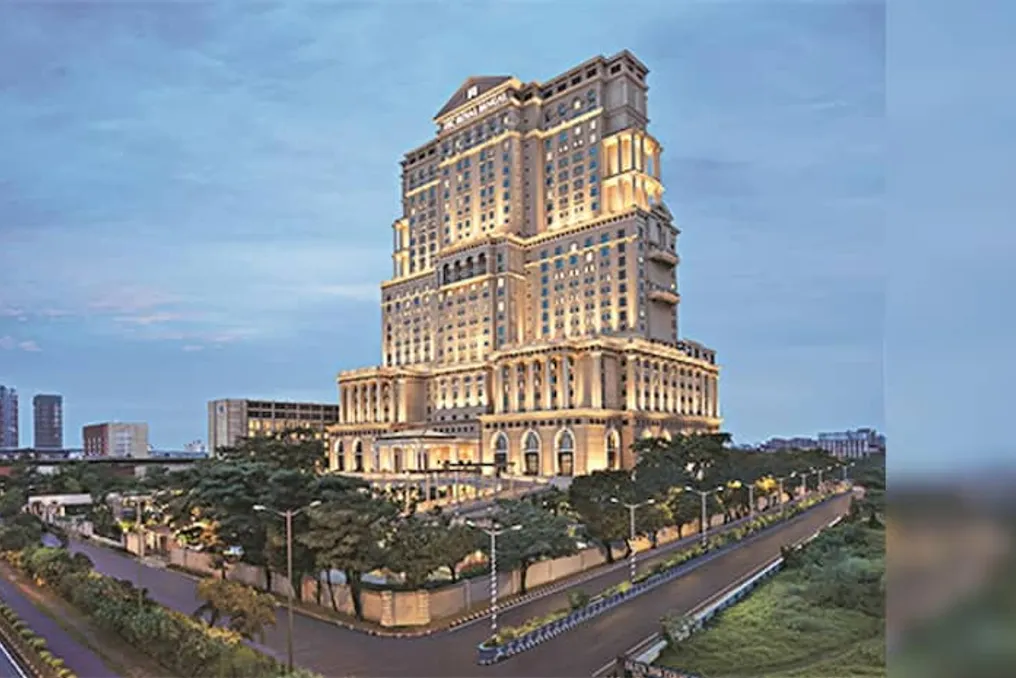
British American Tobacco Plc (BAT) is preparing to completely exit the major Indian hospitality company through a block deal. The sale involves divesting a 6.3% stake in ITC Hotels for US$246 million, equivalent to 228.8 billion Indian rupees.

According to terms of the agreement reviewed by Business Standard, the minimum offer price is set at 175 rupees, representing a 5.2 percent discount compared to the closing price on the NSE stock exchange last Friday. Jefferies India is acting as the sole lead arranger for the transaction. Requests sent to BAT and ITC Hotels on Sunday evening received no response.

Previously, BAT stated that it did not intend to become a long-term shareholder in the Indian hospitality business and planned to sell its stake by 2026, aiming to maximize shareholder value. BAT acquired its stake in ITC Hotels after the split of ITC and ITC Hotels last January. In December of last year, the company sold a 9% stake for over 380 billion rupees, thereby reducing its stake in ITC Hotels from 15.3% to 6.3%.

ITC Hotels is one of the leading companies in the Indian hospitality sector, with a market capitalization of 385 billion rupees. For the quarter ending September 2026 (Q2 of FY2027), the company recorded a net profit of 202.65 billion rupees, which is nearly 52 percent higher compared to the same period last year. Furthermore, revenue in Q2 FY27 increased by 25.6 percent, reaching 1054.14 billion rupees.

Similar stories

Major changes affecting fuel prices, credit cards, and other sectors come into force in the country starting December 1.
Read more
www.aajtak.in

Major changes affecting fuel prices, credit cards, and other sectors come into force in the country starting December 1.

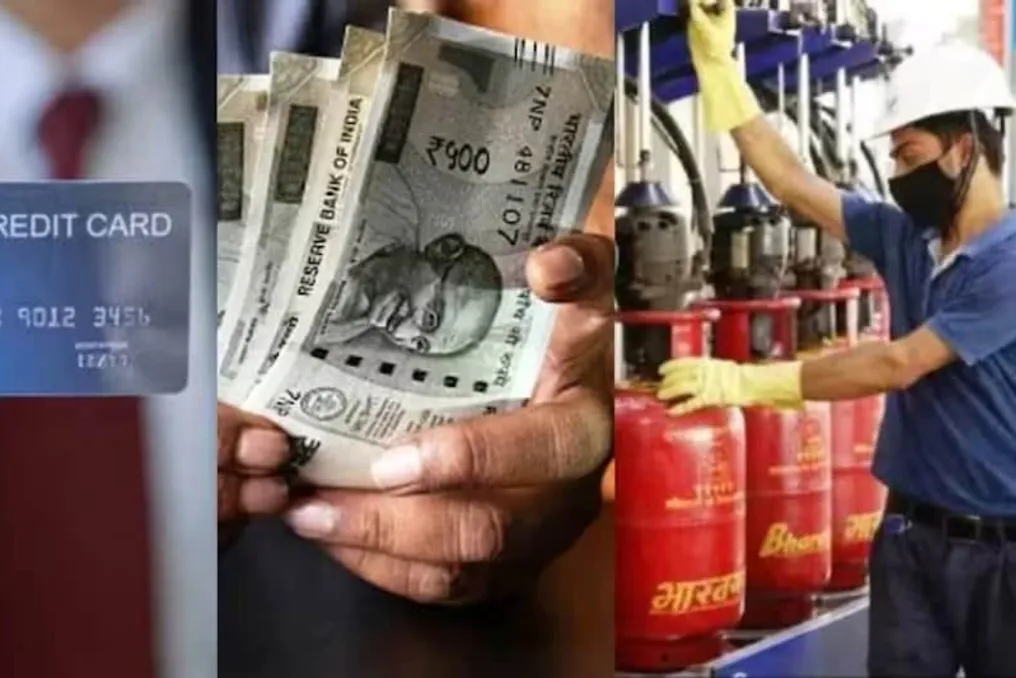
November is drawing to a close, and at the beginning of December, the country will face a number of significant changes (Rule Change From 1st December). These modifications will directly impact both household budgets and the use of credit cards. Furthermore, car buyers face a serious blow from the first day of the month. December will also be special for bank customers, pensioners, and taxpayers, as changes are being made to NPS rules.

The first change concerns the prices of Liquefied Petroleum Gas (LPG) cylinders and Aviation Turbine Fuel (ATF). Oil product marketing companies adjust the cost of LPG cylinders monthly, and this will happen on December 1, 2026. Any changes in the price of LPG can affect both household expenses and restaurant bills. Although the price of a 19 kg LPG cylinder has changed in recent months, the price of domestic gas in a 14 kg cylinder remains stable. Changes in the price of ATF are also possible.

The second change concerns credit card users and will take effect on December 1, 2026. SBI Card users will face a new condition: a 1% commission will be charged on transport transactions exceeding 30,000 rupees and on fuel expenses of 50,000 rupees. Moreover, holders of HDFC Bank's Black Metal credit cards must now spend at least 50,000 rupees in each statement cycle to activate accelerated rewards. The bank has also reduced the quarterly spending limit for vouchers from 500,000 rupees to 400,000 rupees. These revised conditions will start applying from December 21, 2026.

The third change is introduced by ICICI Bank at the beginning of December and will affect all its customers. Under the new structure, starting December 1, 2026, ICICI Bank savings account customers will receive three free cash deposit transactions and three free cash withdrawal transactions monthly. However, if the monthly complimentary limit of 100,000 rupees for deposits and withdrawals is exceeded, the applicable charge will increase from 3.50 rupees to 4 rupees for every 1000 rupees of transaction or 150 rupees, whichever is higher. Additionally, from December 11, 2026, ICICI Bank will increase the credit card replacement fee from 200 rupees plus GST to 300 rupees plus GST. And from December 15, ICICI Bank will stop providing INOX complimentary benefits associated with debit and credit cards.

The fourth change will affect car enthusiasts under the December 1 Rule Change. If you plan to purchase a Tata Motors car or SUV, a new price hike awaits you. Starting December 1, Tata cars will become more expensive. This price increase will affect all types of vehicles—from petrol and diesel to electric. Previously, on November 24, Tata Motors Passenger Vehicles announced this price increase for Tata cars. The price increase will vary depending on the specific variant, and reports suggest it could reach 0.5 percent.

The fifth change relates to commodity derivatives trading rules in the country. Starting December 1, 2026, SEBI is changing margin requirements, requiring traders to maintain initial margin based on commodity price fluctuations. Three categories have been defined: for commodities with small fluctuations, a 6% margin is required; for commodities with medium fluctuations, 8%; and for commodities with large fluctuations, 10%.

The sixth change is related to GST. The Central Board of Indirect Taxes and Customs (CBIC) has amended the Central Goods and Services Tax (CGST) Rules 2017, which were officially published on November 25. These changes concern the procedure for filing GST registration cancellation applications. Corresponding applications will be processed electronically through the common GST portal, while cases with delayed returns or unpaid amounts will be forwarded to the relevant official for verification.

Other changes in December

Not only this, but other amendments will also come into force during December. The Pension Fund Regulatory and Development Authority (PFRDA) has made changes to its structure for classifying and presenting schemes within the National Pension System (NPS). These changes relate to how MSF (Multiple Scheme Framework) or pension fund schemes should be named and displayed on websites and platforms used by subscribers to open NPS accounts.

Furthermore, the deadline for advance tax payment is set for December 15, and the deadline for filing deferred ITR is December 31. December 15 is the deadline for the third installment of advance tax, where concerned taxpayers must pay at least 75% of their total estimated annual tax liability. Deferred ITR for the financial year 2025-26 can be filed until December 31.

Uzbekistan Identifies Over 25 Product Types for Localization in Mining Industry
Read more
uzdaily.uz

Uzbekistan Identifies Over 25 Product Types for Localization in Mining Industry

The Agency for Industrial Cooperation and State Procurement of Uzbekistan reported that over 25 product categories have been identified whose production could potentially be established domestically to meet the needs of the mining and metallurgical industries.

Details of the Localization Expansion Project

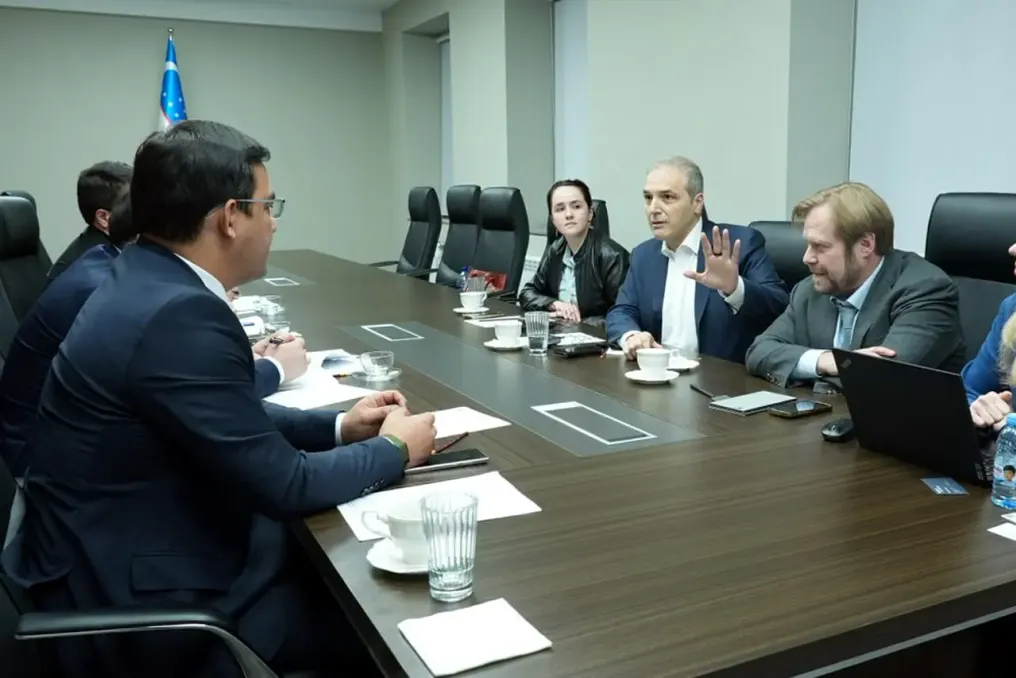
The Agency's Director, Bakhtiyor Khaydarov, met with representatives of the international consulting company McKinsey & Company. During this meeting, preliminary results of a project aimed at developing a strategy for expanding industrial cooperation and localization in the mining and metallurgical sectors were presented.

As part of this project, specialists conducted seminars directly at facilities, including the Navoi and Almalyk Mining and Metallurgical Complexes, the Uzbek Metallurgical Plant, the refractory and heat-resistant metals plant, Uzbegul, and Navoiuran. The project team also studied the production capacities of the enterprises and organized meetings with local manufacturers.

An analysis of procurement conducted by mining and metallurgical enterprises allowed for the identification of over 25 commodity groups whose production is possible in Uzbekistan. During discussions, the parties considered the possibility of creating working groups for promising product categories, stimulating demand for locally produced goods, and developing mechanisms to support suppliers.

Particular attention was paid to studying international experience in industrial cooperation and localization. Work on the project will continue in collaboration with the Agency for Industrial Cooperation and State Procurement.

Uzbekistan's National Investment Fund (UzNIF) reports net profit of 1.94 trillion soums for the first nine months of 2026
Read more
uzdaily.uz

Uzbekistan's National Investment Fund (UzNIF) reports net profit of 1.94 trillion soums for the first nine months of 2026

The National Investment Fund of Uzbekistan (UzNIF) has presented its unaudited quarterly financial statements, according to which the fund generated a net profit of 1.94 trillion soums in the first nine months of 2026. This figure significantly exceeds the 130.6 billion soums recorded in the previous year.

The fund's total unrealized profit from portfolio revaluation reached 2.17 trillion soums. The fund attributes this growth to the semi-annual portfolio valuation and reorganization conducted during the reporting period.

Operating expenses amounted to 282,843 million soums, of which 249,062 million soums were paid out as management company commissions to Franklin Templeton Asset Management. A significant increase in the value of the fund's assets occurred due to increased stakes in companies such as Uzbekistan National Electric Grids, Uzbektelecom, Thermal Power Plants, SQB Bank, and Regional Electric Networks. Meanwhile, valuations decreased for Temiryo'linfratuzilma, Hududgazta'minot, and Uzbekhydroenergo.

Net Asset Value and Portfolio Dynamics

As of September 30, the fund's Net Asset Value (NAV) stood at 31.55 trillion soums, higher than the 29.86 trillion soums recorded at the end of 2025, demonstrating a growth of 5.7%. NAV per share reached 6.2421 soums compared to 5.9082 soums, with the latter value being recalculated to account for stock consolidation in April.

The portfolio value increased by 6.4% in soum terms, reaching 32.05 trillion soums, and by 8.2% in dollar equivalent. The difference between portfolio growth and the increase in NAV per share is related to changes in non-portfolio items. Net liabilities, excluding the portfolio, rose from 259,150 million soums to 497,411 million soums.

No portfolio revaluation was conducted in the third quarter. The drop in NAV per share by 0.38% (from 6.2659 to 6.2421 soums) was attributed to balance sheet items not related to the portfolio, whereas the June revaluation increased this indicator by approximately 8.5%.

Dividend Income and Payments

Gross dividend income increased by 2.1 times, reaching 356,259 million soums. Four companies announced dividends for 2025: Thermal Power Plants (132,594 million soums), Uzbek Republican Commodity Exchange (116,935 million soums), Uzbektelecom (94,774 million soums), and Uzbekinvest (11,956 million soums).

As of September 30, the fund received 223,665 million soums in dividend payments. However, no payments were received from Thermal Power Plants. The company owes the fund 164.9 billion soums in dividends, including 32.3 billion soums for 2024 and 132.6 billion soums for 2025. The payment delay is linked to liquidity shortages; the management company is negotiating with the company and the Ministry of Economy and Finance.

Dividends received by the fund are exempt from personal income tax from January 1, 2026, to January 1, 2030.

Financial Position in October and Market Indicators

As of October 31, the NAV was 31.52 trillion soums, which is 0.1% lower than the level on September 30. NAV per share was 6.2359 soums, representing a growth of 5.55% since the beginning of the year. The portfolio value remained unchanged.

In dollar terms, the NAV decreased from 2.67 billion USD to 2.62 billion USD due to the weakening of the soum. The exchange rate rose from 11,821 to 12,023 soums per US dollar. At the close of trading on November 26, UzNIF shares on the Tashkent Republican Stock Exchange were priced at 6.64 soums. This is 6.48% higher than the NAV per share as of October 31 and 42.8% higher than the offering price of 4.65 soums.

The fund's Global Depositary Receipt (GDR) traded on the London Stock Exchange at a price of 33.15 USD, which is 1.50% below NAV and 32.6% above the offering price of 25 USD. The average daily trading volume in October was 0.04 million USD on the Tashkent Republican Stock Exchange and 1.74 million USD in London. The next independent portfolio valuation is scheduled for December 31, 2026.

Planned IPOs and Additional Share Issuance

According to the fund's data, a presidential decree provides for the Initial Public Offering (IPO) of six portfolio companies, which will constitute about 65% of the NAV by the end of 2028. Included in the program are Uzbekhydroenergo, Uzbekistan National Electric Grids, Regional Electric Networks, Hududgazta'minot, Uzbekistan Airways, and Uzbektelecom. No decision has been made yet regarding the launch of any offerings, and the fund's participation will be determined later.

After the reporting date, the supervisory board of Uzbekhydroenergo recommended paying dividends of 21.26 soums per share for 2025. If shareholders approve this proposal, the fund will receive approximately 66 billion soums. On November 6, the company also registered an additional share issuance totaling about 2.97 trillion soums. These shares will be distributed between the Ministry of Economy and Finance and UzNIF in proportions of 60% and 40% respectively, although the allocation of the fund's stake has not yet been confirmed.

Fund Structure and Ownership

UzNIF was established based on Presidential Decree No. PP-303 dated August 27, 2024, and was registered as a joint-stock company on December 24, 2024. Its portfolio includes stakes ranging from 25% to 40% in 13 companies, most of which are state-controlled. These companies operate in the transport, financial services, energy, utility infrastructure, and telecommunications sectors.

Franklin Templeton Asset Management was appointed as the fund's manager for a five-year term starting May 1, 2025. Trading of the fund's shares on the Tashkent Republican Stock Exchange and its depositary receipts on the London Stock Exchange began on May 18, 2026. The offering price was 25 USD for the GDR and 4.65 soums per share.

The Ministry of Economy and Finance sold about 31% of the fund's capital. After fully utilizing the additional issuance option, the share of sold shares increased to approximately 35.45%. The total revenue from the sale was about 691.5 million USD, which the fund did not receive. As of September 30, the ministry held 64.55% of the fund's shares, and depositary receipts accounted for 34.50%.

Before the issuance, the fund transferred all its stakes in Navoiyazot and Halk Bank to the ministry. In return, it received an additional 5% of Uzbektelecom shares, bringing its stake to 30%, as well as an additional 10% in SQB Bank and Uzbekinvest, increasing its stakes in these companies to 40%. These transactions were registered on March 19, 2026.
Popular