Samsung plans to unveil its first humanoid robot in January during CES
Read more
Olhar Digital
olhardigital.com.br

Samsung plans to unveil its first humanoid robot in January during CES

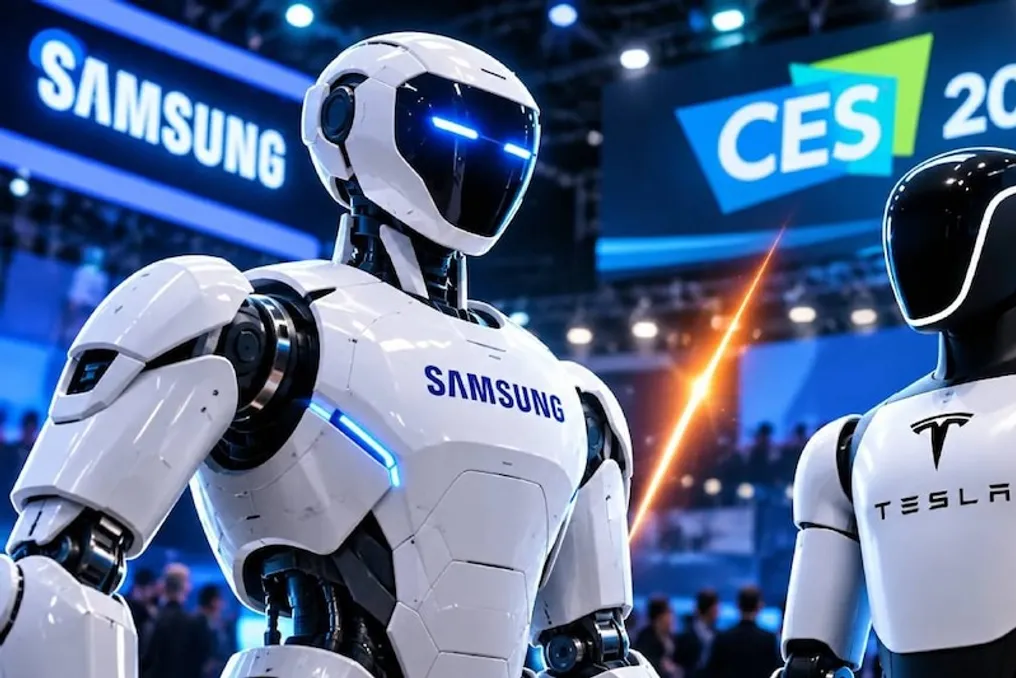
Samsung Electronics recently demonstrated a prototype of its first humanoid robot to the board of directors. According to sources familiar with the matter, the South Korean company intends to present this model to the public in January, during the Consumer Electronics Show (CES) in Las Vegas, United States.

This move positions the smartphone and memory chip manufacturer in a highly competitive market, where it competes with giants such as Unitree, Tesla, and Boston Dynamics, which belongs to Hyundai Motor.

An internal demonstration was held on Thursday at Samsung's robotics research facilities in Seoul, attended by Co-CEO TM Roh. The source, who requested anonymity because the prototype has not yet been officially launched, reported that the event focused on full body control and the ability to handle and grasp objects using arms and hands.

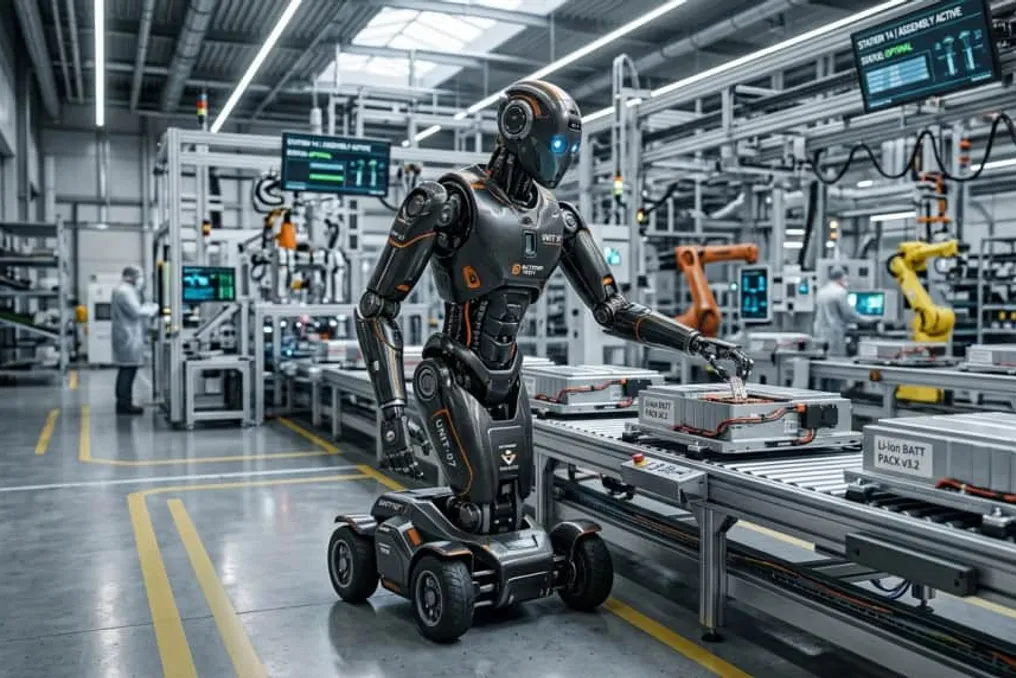
The development places great emphasis on manual dexterity, as this is one of the biggest challenges for humanoid robots that need to grip, rotate, and relocate items with precision to perform functions in factory environments.

In September, Kris Hauser, head of the robotics laboratory at Samsung's Robotics andXperience (RX) unit, detailed the high standard required by the sector, emphasizing the need for reliability so that such machines can be integrated into production lines. He stated: 'You go to the owner of a factory and say your robot has a 99% success rate, and he will still laugh, because it needs to be 99.99% for it to really put the robot on the production line. It is an extremely demanding challenge.'

However, Samsung's aspirations extend beyond the industrial context. Hauser also mentioned that the company's long-term plans include developing domestic robots designed to assist the elderly and perform tasks within the home.

The debut scheduled for January follows the creation of the Robotics andXperience (RX) division in July. This new division is responsible for the long-term strategy, research, development, and commercialization of robotic technologies, reporting directly to Co-CEO TM Roh.

Samsung's expansion into this segment covers several areas: the January presentation will be the first public display of the prototype, although the company has not yet disclosed technical specifications or details about the robot.
Similar stories

Samsung is preparing a humanoid robot that can compete with Tesla; debut expected at CES 2027
Read more
www.aajtak.in

Samsung is preparing a humanoid robot that can compete with Tesla; debut expected at CES 2027

According to reports, Samsung plans to present a prototype of its humanoid robot at the Consumer Electronics Show (CES) in January 2027. If this happens, Samsung will enter direct competition with companies like Tesla in the field of robotics.

Samsung recently presented a prototype of this humanoid robot to its board of directors and is preparing to launch it onto the global stage at the major technology event CES 2027. This event is scheduled for January 6-9, 2027, in Las Vegas, USA. Samsung has not yet provided official information about its robot, so details regarding its design and functions remain unknown.

Creation of a specialized robotics division

Samsung shows serious interest in robotics by creating a dedicated division called Robotics eXperience (RX). The leadership of this unit is overseen by company co-CEO TM Roh. The goal of establishing RX is to strengthen Samsung's position in the field of robotics. To work on this project, the company has recruited Lee Dong-koon, a former robotics strategy specialist from Hyundai Motor Group.

A challenge for Tesla Optimus?

There are already many major players in the humanoid robot market. Tesla is working on its Optimus robot, and other players in this market include Boston Dynamics from Hyundai and Unitree from China. Tesla's Optimus robot is being developed to perform tasks such as lifting loads and other operations in factories. Thus, Samsung's entry could make this competition even more exciting.

Focus on creating realistic hands

Developing a humanoid robot is a complex task, especially creating its hands so that they can manipulate objects, lift them, and place them in the correct positions, similar to a human. Robots operating in manufacturing require a very high degree of precision, as even a minor error can lead to significant losses. This sets a task for Samsung to make its robot reliable and perfect. It remains to be seen how impressive Samsung's robot will be at CES 2027. If successful, the company could lead to robots working side-by-side with humans in factories in the future.

XPeng plans to begin production of humanoid robot IRON in January 2027
Read more
technode.com

XPeng plans to begin production of humanoid robot IRON in January 2027

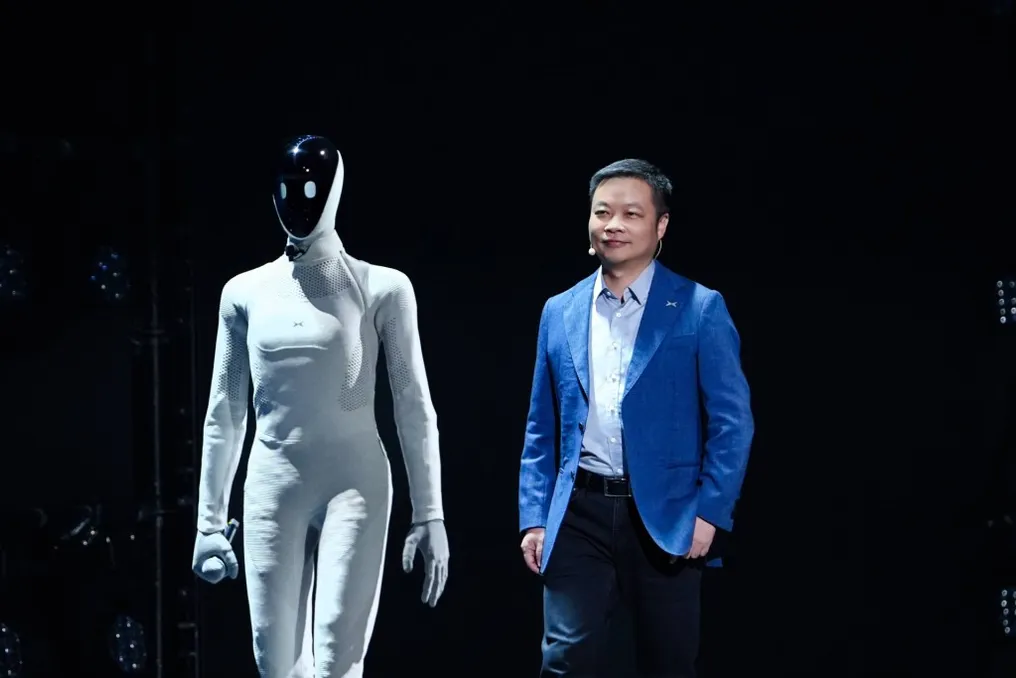
XPeng CEO He Xiaopeng announced at the company's technology event on Wednesday that XPeng intends to start manufacturing the hardware for its humanoid robot, IRON, in January 2027. The external launch is planned for the second quarter.

Initially, the robot will function as a sales assistant trainee in XPeng showrooms in China during the first quarter. During the event, IRON appeared on stage, delivered speeches in Chinese and English, and interacted with journalists.

XPeng stated that the demonstrations were conducted without human remote control. The initial operation of the robot is planned for stores and other workplaces, followed by an expansion of its functional capabilities.

He also presented a potential business model that combines hardware with software, token subscriptions, and services for performing specific tasks. XPeng plans to allow partners to distribute skills and models through its robot ecosystem.

He noted that wider integration of robots into daily life may occur around 2029 or later, citing safety requirements and the ability to perform practical tasks as necessary conditions.

Robots will dance with people at Guru Randhawa's concert in Delhi
Read more
www.aajtak.in

Robots will dance with people at Guru Randhawa's concert in Delhi

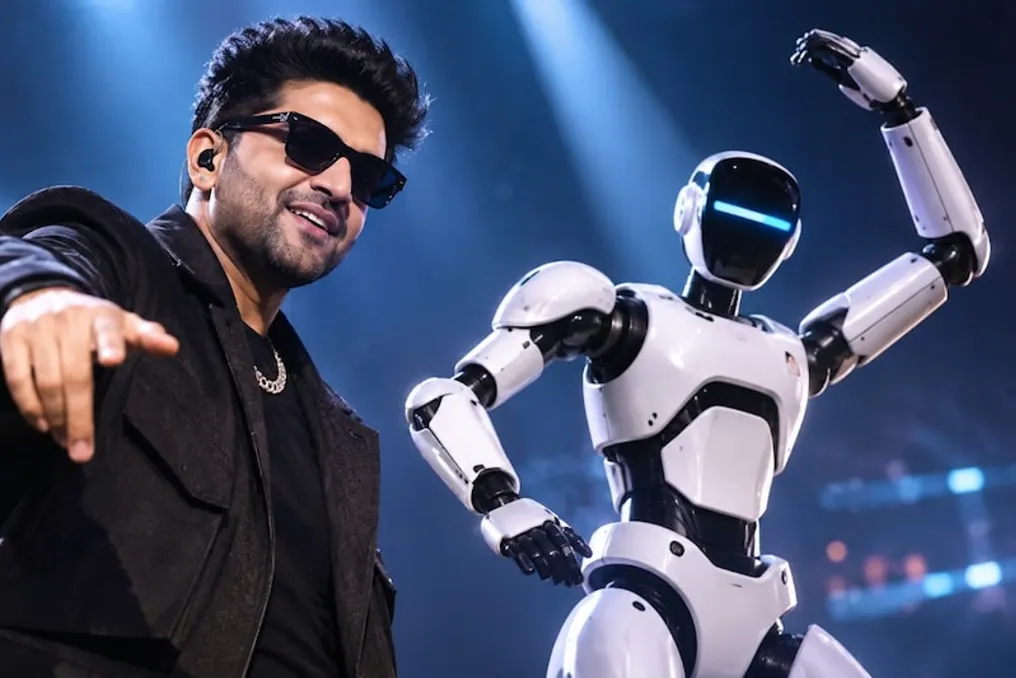
At the upcoming Guru Randhawa concert in Delhi, spectators will be able to see not only music and dance but also robot performances. Special robots are being prepared for the event 'The Sirra Era Live In Concert,' which will take place on December 12th at the Jawaharlal Nehru Stadium.

These mechanical devices are programmed to dance to the rhythm of the songs and interact with the audience. Guru Randhawa is returning to large live concerts in about three years, but the greatest interest is not in a new track or stage design, but specifically in the robots.

Videos of the testing and calibration of the robots for the upcoming concert at the Jawaharlal Nehru Stadium in Delhi have appeared on social media. According to reports, these robots will not just stand and watch the audience; they will dance along with the songs and communicate with people in the fan zone.

Guru Randhawa's management is collaborating with foreign technology experts to organize this show. The robots are being configured to perform movements precisely in time with the music. It is planned that the robots will be able to reproduce Guru Randhawa's signature gesture of rubbing hands.

Previously, a live concert was associated with a large stage area, impressive lighting, screens, dancers, and the artist's live vocals. However, modern entertainment companies strive to offer audiences an experience that goes beyond simply listening to music.

Robots are becoming part of these changes. A robot capable of dancing with an artist, moving across the stage, and approaching the audience for entertainment can make the concert more interactive. This can also benefit both artists and organizers, as ticket prices for large concerts are high, and viewers pay not only to see their favorite performer live but also for a unique experience unavailable when watching videos at home.

Robots, large LED screens, AI visualizations, and interactive stages can give this experience a completely new dimension.

In India, robot dancing is not an entirely new concept. Last year, at the Techfest 2025 event at IIT Bombay, a humanoid robot performed a dance to the viral song FA9LA from the movie 'Dhurandar.' This performance gained wide circulation on social media. The robot synchronized its arm and leg movements with the rhythm of the song, adopted various poses, and coordinated its body with the music. Attendees were amazed, and many recorded the performance.

At Techfest at IIT Bombay, this was a demonstration of robotics capabilities. According to the institute, balance, motion control, and coordination between different body parts are critically important in such shows.

Thus, robots are no longer limited to performing tasks in factories or laboratories; they are beginning to find a place in the world of music, cinema, and entertainment.

It is natural for a human to dance to a musical rhythm, but for a robot, it is an extremely complex task. The robot's body is equipped with numerous motors, sensors, and control systems. It needs to understand when to raise an arm, where to place a foot, how to lean, and then regain balance without falling.

When a robot moves its arms and legs quickly, the distribution of its body weight changes, requiring constant balance maintenance. This is why a robot's dance is not just a reproduction of recorded movements; it requires motor coordination, balance, and timing.

Sensors built into the humanoid robot help it perceive its surroundings and the movement of its own body. The control system determines the robot's next step and how to avoid falling.

The combination of robots and live music is not limited to India. In China, it has also been observed that humanoid robots perform alongside artists at major music events. At such shows, robots execute movements synchronously and are part of the choreography with humans. This allows robotics companies to demonstrate their technologies in real-world conditions.

A robot's performance on stage differs from laboratory tests. The stage presents many factors: bright lights, loud music, the stage surface, the presence of spectators, and the movements of other artists. The robot's operation in such an environment is a significantly more complex technical challenge.

Popular