Iran has been recognized as one of the ten global countries that possess the technology to create allograft tissue products. These products are actively used in a wide range of surgical interventions, including neurosurgery, orthopedics, urology, gynecology, maxillofacial and plastic surgery, as well as wound reconstruction.
Domestic production of allografts has significantly reduced the cost of certain medical procedures. Local analogues have replaced imported products, which previously cost around 20,000 euros, costing approximately 90 million rials (equivalent to about 42 euros), according to an ISNA report.
Masoumeh Majidi, a lecturer at Tehran University of Medical Sciences, explained that allograft products are derived from donor human tissues. The main source is donors who died of cardiac arrest, whose families consented to tissue donation.
After the removal of organs such as kidneys, heart, and lungs for transplantation, it is possible to restore, process, and prepare other tissues, including skin, bone, tendons, and muscle, for use in various operations. These tissues serve as biological material for surgeons during reconstructive surgeries and the replacement of damaged tissues.
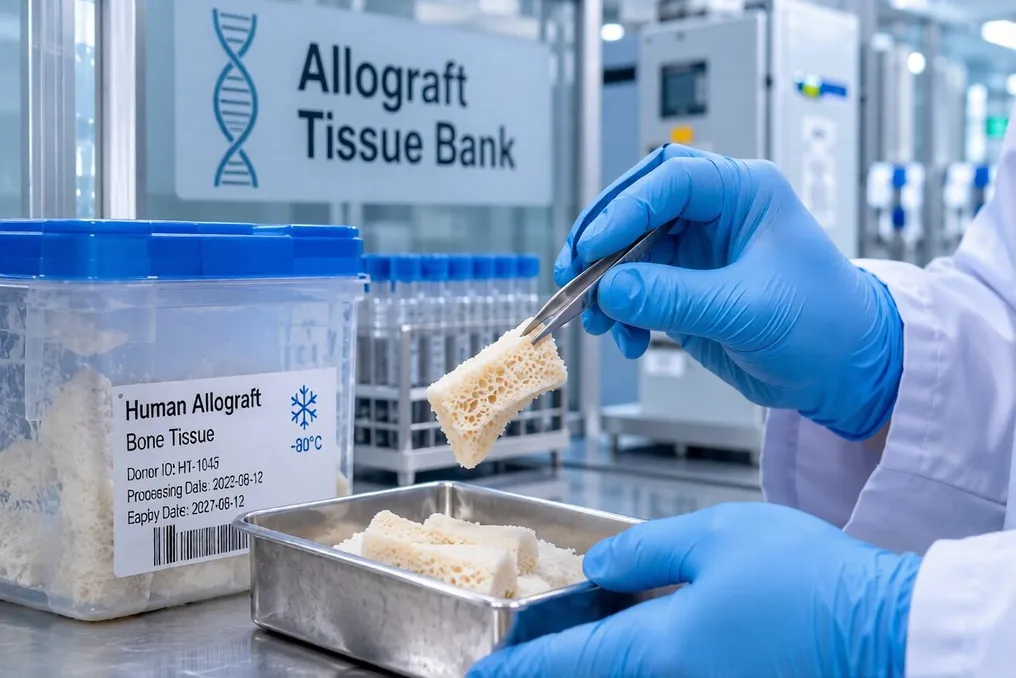
Majidi noted that bone grafts are produced in various forms and sizes and supplied to neurosurgeons, orthopedic surgeons, and maxillofacial specialists. This allows doctors to choose suitable materials according to patient needs and the requirements of specific operations. She added that approximately 3,000 transplant procedures are performed annually using these products.
Highlighting Iran's significant position in this field, Majidi stated that the technology for producing allograft tissues is also available in nine other countries, placing Iran among the top ten leading countries in this area.
Unlike synthetic materials made from polymers or plastics, allografts have a biological origin from human tissues and are prepared for transplantation into another person. Their biological nature makes them valuable material for procedures requiring tissue restoration, structural support, or the replacement of damaged parts.
However, as Majidi emphasized, preparing human tissues for transplantation requires complex scientific and technical processes; simply obtaining tissues is not enough to ensure a successful operation. The tissues must undergo specialized processing and preparation to guarantee their safety, quality, and suitability for transplantation while preserving the properties necessary for the intended clinical application.
The tissue banking and processing system in Iran has developed over many years, allowing for the production of diverse transplants, including bone, cartilage, skin, tendons, heart valves, and pericardial tissues. Research conducted by Iranian specialists has also documented the country's tissue processing infrastructure and procedures related to the extraction of donor tissues, donor screening, their processing, preservation, sterilization, storage, and distribution.
The development of local tissue transplant production has helped reduce dependence on imports and expand access to specialized surgical materials, especially in cases where suitable biological tissues are critically needed. Majidi concluded that the scientific experience and technical capabilities achieved in this field allow tissues donated by one person to be used for the therapeutic treatment of another, offering new treatment options to patients requiring reconstructive or restorative surgery.