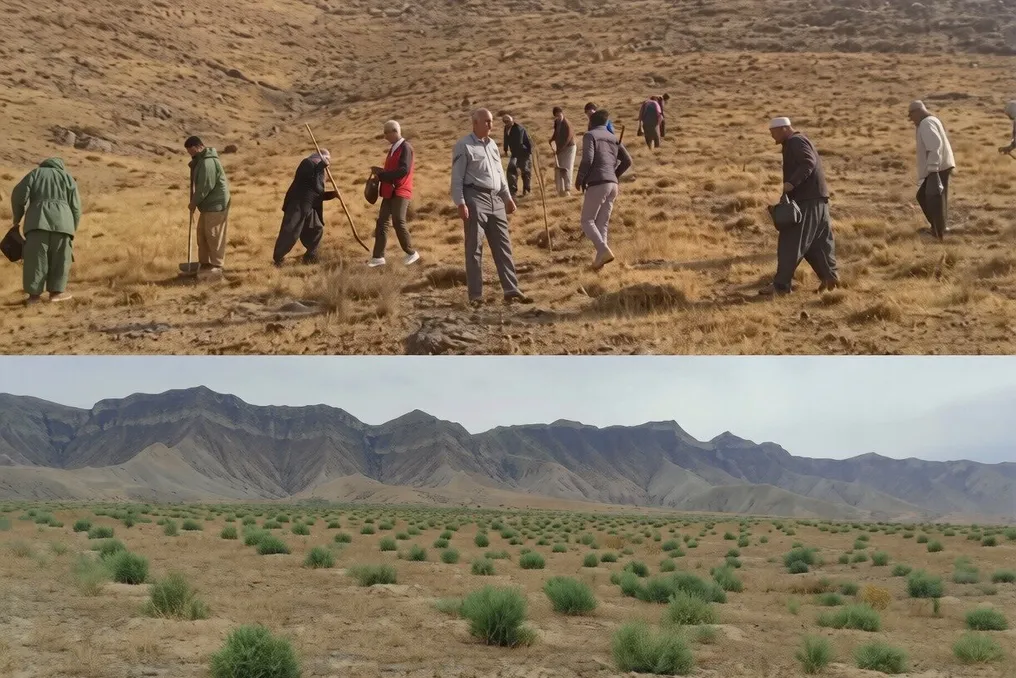
The Organization for Natural Resources and Water Management plans to launch a nationwide campaign to restore pastureland in approximately 400 districts on December 6. This initiative will involve herders, local communities, and environmental conservation enthusiasts.
According to Abolkasem Hosseinpour, an employee of the organization, the goal of the campaign is to restore about 2000 hectares of pastureland, utilizing favorable forecasts regarding precipitation levels and the start of the rainy season.
Hosseinpour emphasized the ecological and economic importance of pastures, noting that the average percentage of vegetation cover in these regions of the country is about 24%, which indicates the need to continue restoration efforts.
The campaign will incorporate methods such as pit seeding, direct seeding, and water conservation measures, which will be implemented using biological, biomechanical, and management approaches.
Pastures in Iran cover an area of 83 million hectares. As the country's largest ecosystem, they contain diverse species—local, medicinal, industrial, edible, and fodder. Hosseinpour added that these pastures play a crucial role in ensuring the nation's sustainable ecological and food security, supporting over one million households and 37 million authorized livestock units.
Given the vital role of pastures in food security, the water cycle, biodiversity conservation, and climate change resilience, their restoration is key to reversing desertification and increasing drought resistance.
Experts believe that healthy land is essential for the prosperity of economies and societies because it supports agriculture, provides food, and contributes to water and climate security. Pastures are among the most extensive yet most neglected ecosystems globally. They support the lives of approximately two billion people worldwide, including many pastoralists and indigenous peoples.
Unfortunately, every minute, an area of land equivalent to four football fields degrades, leading to biodiversity loss, increased drought risk, and community displacement. Global consequences include rising food prices, instability, and forced migration. Currently, up to half of the world's pastures are degraded or under threat, leading to serious implications for food and water security, biodiversity, climate resilience, and agricultural livelihoods.
Key factors exacerbating desertification include vegetation loss, climate change, agricultural practices, overgrazing, and deforestation for fuel or construction materials.
Desertification and drought represent global environmental problems affecting all regions of the world and require joint action from the international community to solve them. Increased desertification intensifies the amount of sand and dust that can be lifted by the wind, ultimately leading to dust storms with negative impacts on weather, which in turn worsens desertification.
Investments in sustainable land and water resource management, improved drought preparedness, and restoration led by local communities can help ensure the preservation of pastures and the people who depend on them.