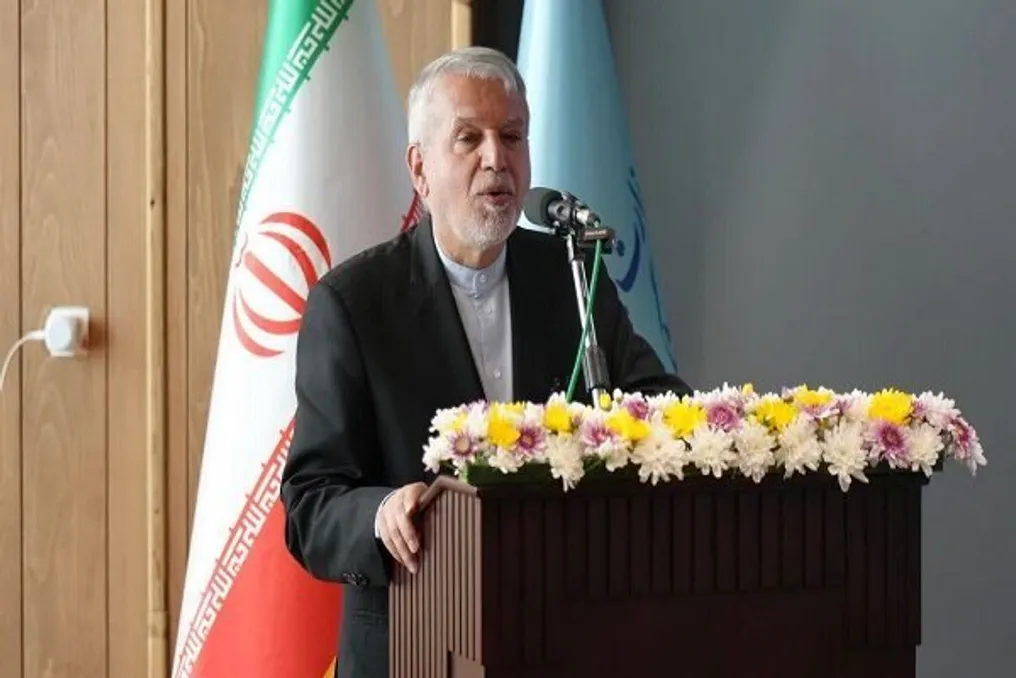
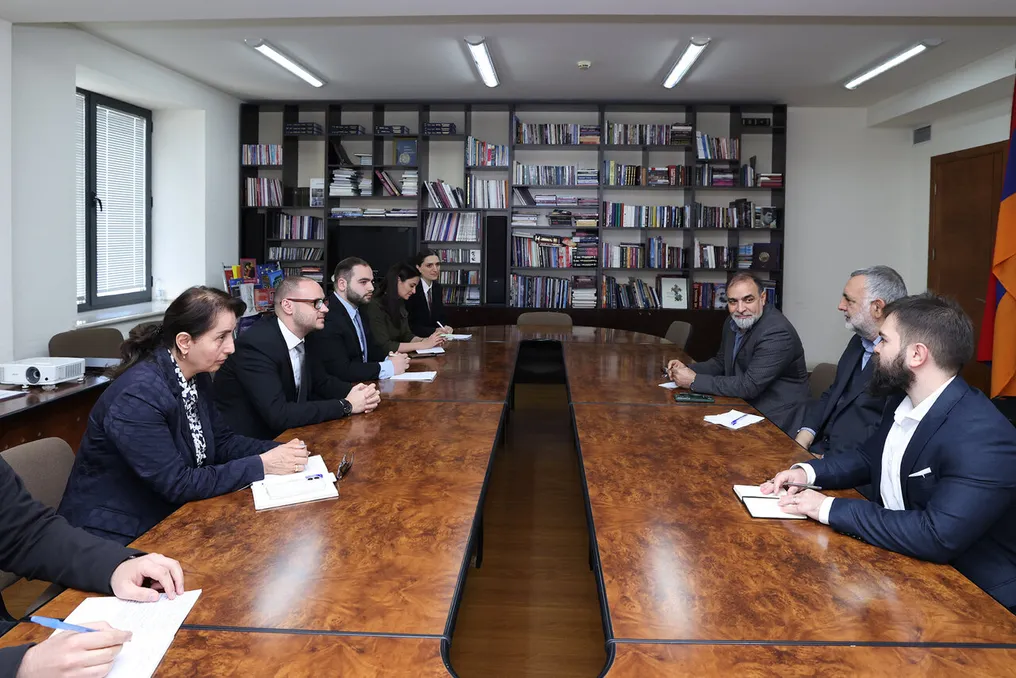
A specialized meeting was held in Yerevan where a high-level delegation from the Islamic Republic of Iran, led by Vice President Seyed Hamid Pourmohammadi, held talks with Armenian officials. Among those present was Alfred Kocharyan, Deputy Minister of Education, Science, Culture and Sport of Armenia. The parties discussed strategies for developing cultural ties between the two states.
At the beginning of the meeting, Kocharyan highly praised the centuries-old cultural ties between Armenia and Iran, emphasizing the importance of opportunities for their deepening in various fields. He noted the existing successful cooperation and stressed the need to implement joint programs in the field of intangible cultural heritage and contemporary art.
Mohsen Javadi, Deputy for Cultural Affairs at the Ministry of Culture and Islamic Guidance, also spoke at the meeting. He stated that the Iranian delegation is engaged in cultural matters to seek new opportunities and strengthen existing partnerships. Javadi noted that the main goal of these negotiations is not to create ties from scratch, but to develop, expand, and organize the cooperation that has already formed through the initiative of artists, cultural activists, and the people of both countries.
Javadi emphasized the rich historical and civilizational heritage of Iran and Armenia. He pointed out that the presence of enthusiasts of the Persian language, Iranianology researchers, and scholars familiar with Iranian culture in Armenia creates a favorable environment for the development of cultural interaction. He also insisted on moving from general discussions to concrete programs, suggesting that the topics discussed at this meeting be formalized through official correspondence, definition of priorities, and the development of executive agreements in subsequent stages.
Javadi invited Armenian cultural officials to visit Iran and proposed holding Armenian Cultural Weeks in Tehran, as well as in cultural centers such as Isfahan and Shiraz, alongside reciprocal Iranian Cultural Weeks in Yerevan. According to him, such events could include a wide range of cultural and artistic activities: book fairs, literary programs, film screenings, musical performances, exposure to fine arts, and specialized seminars.
Stressing the importance of broad public participation, Javadi noted that cultural weeks allow cultural ties to go beyond elites and professionals, enabling ordinary citizens, especially youth and families, to learn about the cultural achievements of another country. During the discussion among high-ranking officials, a proposal was put forward to select and translate a collection of outstanding works by Iranian and Armenian authors.
According to this proposal, works by prominent contemporary Armenian authors in the genres of fiction, poetry, art, science, and technology will be selected for translation into Persian, while a collection of works by Iranian writers and researchers will be presented for translation and publication in Armenian. The Deputy for Cultural Affairs noted that although a significant portion of the audience in Iran and Armenia is familiar with the names of classical writers from both countries, the works of young authors and new literary trends are less widely represented in the partner's language. He stated that expanding the translation of contemporary works could bridge this gap and provide a platform for the new generation to become acquainted with the thoughts, concerns, and socio-cultural development of both societies.
In this context, the need to develop cooperation between publishers, translators, universities, and research centers of the two countries was also highlighted. Another part of the negotiations was the expansion of mutual presence of Iranian and Armenian publishing houses at book fairs and festivals. Javadi suggested that the presence of Armenian publishers and writers at the Tehran International Book Fair should be strengthened, given its enormous potential for showcasing foreign authors. Subsequently, the Armenian side proposed studying the possibility of mutual visits to each other's international book fairs as 'Special Guests'. Based on this proposal, Iran and Armenia could achieve broader representation at each other's book fairs during certain periods by utilizing special exhibition spaces and organizing diverse cultural and literary programs.
During the meeting, the presentation of the prose translation of Ferdowsi's 'Shahnameh' into Armenian was noted as a prime example of cultural cooperation. This valuable work was translated by George Asaturyan, and scientific editing and writing the preface was done by Professor Harnik Astaryan, a renowned Armenian Iranianist. This translation is the result of many years of scientific and research activity and presents the narrative parts of the Shahnameh in the format of literary prose for Armenian readers. At the opening ceremony, the efforts of the translator and editor, as well as the contribution of Loris Tjeknavorian, a renowned Iranian-Armenian composer, were acknowledged.
For his part, Pourmohammadi, referring to the place of the 'Shahnameh' in Iran's cultural heritage and its influence on art and literature, proposed creating a 'Shahnameh House' in Armenia involving researchers and artists from both countries. Addressing the international recognition of Iranian cinema, Armenian officials noted the constant presence of Iranian filmmakers' works at the 'Golden Apricot' International Film Festival in Yerevan, calling the festival an effective platform for connecting cinematographers from the two countries. The meeting also touched upon the growing potential of the Armenian film industry and the need to utilize the professional experience of Iranian cinematography. In this regard, the expansion of teaching Armenian language, Armenian studies, and research related to Armenian history and culture in Iranian universities and academic centers became a subject of interest.
The Armenian side, mentioning joint cooperation in presenting cultural traditions and rituals, cited the joint file 'Tradition of Water and Rain Celebration: Tirgan/Vardavar', which was submitted by Iran and Armenia to UNESCO for consideration in 2026 and is on the list of files under review for inclusion in the Intangible Cultural Heritage of Humanity List.
Furthermore, at the meeting, Mohammad Asadi-Movahed, Cultural Attaché of the Islamic Republic of Iran in Armenia, shared his experience in organizing joint programs during his tenure, stating: 'The mission of the Iranian Cultural Center is not only to present Iran's cultural and artistic potential in Armenia; rather, the institution strives to promote the representation of Armenian culture, art, elites, and achievements to the Iranian community.' He described the Cultural Center as a common platform for developing cultural relations between the two nations and emphasized the need to maintain and strengthen both institutional and grassroots cooperation. The Iranian Cultural Attaché also mentioned the naming of the assembly hall in the historic Blue Mosque of Yerevan in honor of Egish Charents, a distinguished Armenian poet and connoisseur of Iranian culture and literature. This act, which took place during the Iranian delegation's visit and in the presence of the Iranian Vice President, aimed to immortalize Charents' literary status and his historical role in the cultural ties between the two countries. During the ceremony, Charents' passion for Iranian literature, especially Ferdowsi's 'Shahnameh', and his historical role in the protection of the Blue Mosque of Yerevan were noted.