Students visited the ruins of Belkeys to study cultural heritage preservation
Read more
Tehran Times
www.tehrantimes.com

Students visited the ruins of Belkeys to study cultural heritage preservation

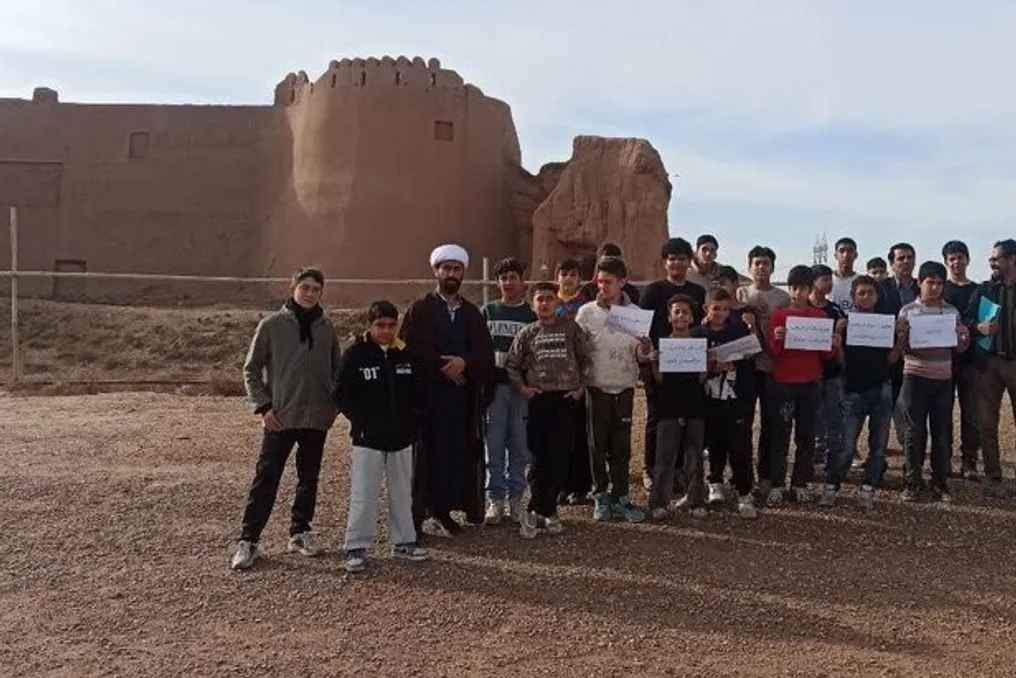
Students from a rural school in North Khorasan province made a trip to the historic city of Belkeys, located near Isfaraen. This educational initiative aims to raise awareness among the younger generation about the importance of protecting Iran's cultural heritage.

Hossein Rahmani, director of the National Cultural Heritage Site of Belkeys, stated that educating children and adolescents about historical monuments through organized excursions is one of the priorities of local heritage protection authorities, according to the news agency Miras Aria on Sunday.

During the visit, the students learned about the historical significance of Belkeys and the necessity of protecting archaeological sites from damage and destruction. Rahmani emphasized that preventive measures are critically important for preserving ancient monuments, calling education for children and adolescents one of the most effective ways to instill a sense of social responsibility towards cultural heritage.

The city of Shahre-ye Belkeys, located approximately two kilometers southwest of modern Isfaraen in North Khorasan province, is one of Iran's major historical mudbrick complexes. The archaeological site covers an area of about 180 hectares and contains the remains of a medieval city that was once an important settlement in the historical region of Khorasan.

The complex features a massive citadel, defensive walls, residential and commercial buildings, pottery workshops, reservoirs, and ancient water management systems. Archaeological finds, including imported Chinese ceramics, indicate the city's connections with broader regional and Eurasian trade networks.

Belkeys, which is often compared in scale and construction to the famous Arg-e Bam in Iran, is significant not only as a fortress but also as the remains of an extensive urban settlement, providing insights into the region's architecture, economy, and daily life.

Similar stories

Archaeological finds in Havarman indicate over 70,000 years of human history
Read more
www.tehrantimes.com

Archaeological finds in Havarman indicate over 70,000 years of human history

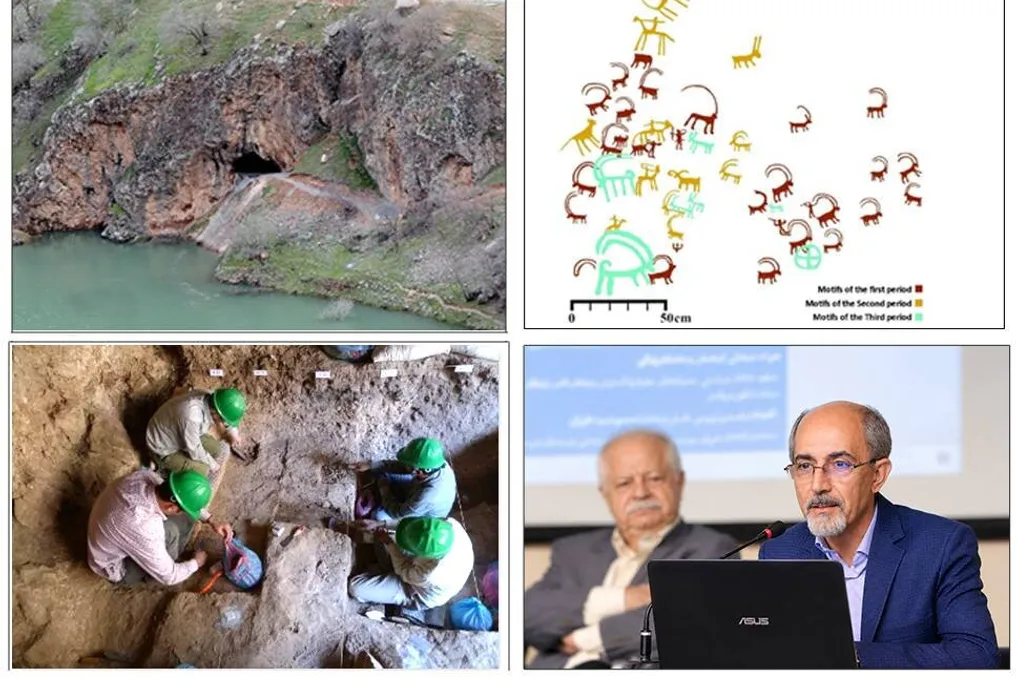
Archaeological research in the Sirvan Valley has uncovered evidence of human presence dating back more than 70,000 years. These discoveries shed light on the long history of regional settlement and its cultural development, according to an archaeologist from the National Museum of Iran. The valley is part of the Oramanat/Havarman Cultural Landscape, which is listed as a UNESCO World Heritage site in western Iran.

Fereydoun Biglari, head of the museum's Paleolithic Department, presented these findings at a conference titled 'Havarman: Oramanat Cultural Landscape,' held on Monday, November 23rd, at the Scientific Research Institute of Cultural Heritage and Tourism.

In his presentation, titled 'The Archaeological Landscape of the Sirvan Valley with Emphasis on Rescue Excavations near the Darian Dam,' Biglari reviewed the history of archaeological investigations in Havarman. He focused on surveys and rescue excavations conducted in the area affected by the Darian Dam project.

Archaeological surveys conducted in 2015 and 2016 identified over 70 archaeological and potential sites across the region. Discoveries included caves, rock shelters, open settlements, cemeteries, rock art sites, castles, bridges, and an ancient mountain road, highlighting the archaeological diversity of the Sirvan Valley.

Of these locations, 16 sites threatened by the planned reservoir underwent rescue excavations. These included open settlements, caves, rock shelters, and cemeteries. The research revealed evidence belonging to the Middle and Upper Paleolithic, Epipaleolithic, as well as the Middle and Late Chalcolithic, Iron, historical periods, and Middle and Late Islamic eras.

These findings confirm the presence of humans in Havarman for over 70,000 years, providing a long-term perspective on settlement patterns and cultural development in this mountainous area.

However, Biglari reported that 22 identified sites and potential archaeological locations within the project zone were ultimately submerged after the filling of the Darian Dam reservoir in the winter of 2015–2016. The submerged sites included nine confirmed archaeological sites and 13 potential ones.

He also outlined the scientific and research outcomes of the project, noting that his conclusions have already been published in 20 articles in Persian, English, and French.

The study was further discussed at the First National Conference on Havarman Archaeology, held at Kurdistan University in 2018, which focused on the Darian Dam rescue excavations. The event featured 12 presentations covering topics such as Paleolithic archaeology and early communal settlements, as well as the Bronze and Iron Ages and later historical periods.

Other papers addressed the geology and geomorphology of the region, archaeozoological evidence, and ethnoarchaeological studies.

The 'Havarman: Oramanat Cultural Landscape' conference was jointly organized by the Tourism Group of the Scientific Research Institute of Cultural Heritage and Tourism and the Society of Iranian Architectural Monuments. It brought together researchers, cultural heritage officials, and the public for two panel discussions dedicated to the Oramanat cultural landscape in the Kurdistan and Kermanshah provinces.

The Sirvan Valley is part of the Oramanat/Havarman Cultural Landscape, which was inscribed on the UNESCO World Heritage List in 2021 during the 44th session of the World Heritage Committee. This inscription increased Iran's total number of World Heritage sites to 26, recognizing the cultural and historical significance of the region and its long association with human communities.

Photographer Herbert Karim-Masighi explores Iran's cultural heritage beyond monuments
Read more
www.tehrantimes.com

Photographer Herbert Karim-Masighi explores Iran's cultural heritage beyond monuments

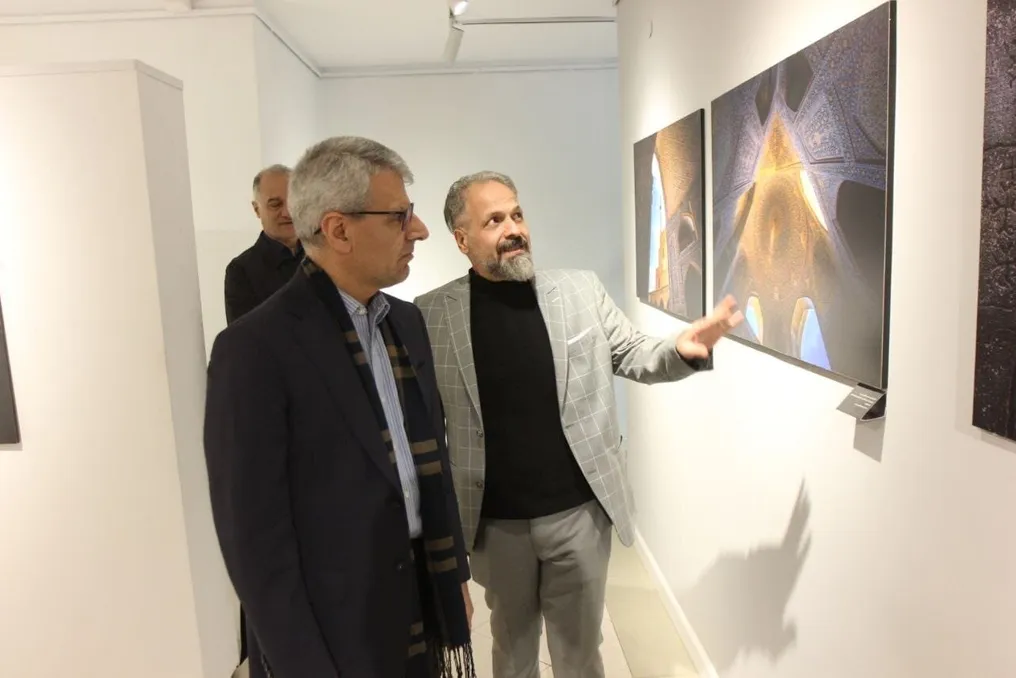
For photographer Herbert Karim-Masighi, the cultural heritage of Iran is not merely a collection of historical buildings and monuments. It is also the history of the people, cultures, and beliefs that have shaped the country over millennia.

In a recent interview with Tehran Times, Karim-Masighi noted: 'Iran is a living land that has embraced thousands of years of life, cultures, beliefs, and experiences of various peoples.' He added that everything formed on this land—from mosques, churches, and temples to palaces, villages, and the homes of ordinary people—is part of the identity of this land.

These reflections came after the presentation of his photo book, 'A Thousand Years, Iran,' last month. The book showcases various aspects of the country's historical, cultural, and architectural heritage. The official ceremony took place at the Bank Melli of Iran and was attended by the Minister of Tourism Seyed Reza Salehi-Amiri, the South Korean Ambassador to Iran Kim Joonpyo, Bank Melli CEO Mohsen Saifi Kafshgari, and the head of Bank Melli Publishing Company Amin Arefnia.

The event also gathered archaeologists, cultural heritage experts, members of parliament, and cultural officials, including Jabreal Nokandeh, head of the National Museum of Iran, Mohammad Mehdi Asgarpour, chairman of the board of directors of the Iranian House of Cinema, and Gholamareza Amirhani, head of the National Library and Archives of Iran.

Instead of focusing exclusively on famous landmarks, Karim-Masighi's photographs aim to capture the broader cultural landscape of Iran, encompassing different historical periods, religious traditions, communities, and daily life. He also prefers to leave many shots without detailed captions, allowing viewers to engage with them before encountering historical explanations or interpretations.

In a subsequent interview, he discusses the ideas behind his book, his approach to photographing Iran's diverse heritage, and the role of personal perspective in documenting the country's past and present.

When asked about the motivation for the project, he replied that he, Herbert Karim-Masighi, a photographer of this land, had traveled through Iran for many years, photographing quiet monuments and remote landscapes in search of something subtle: the continuity of life in a country that has repeatedly changed its appearance but never stopped moving forward.

From his perspective, Iran cannot be reduced to a single historical period associated solely with one ruling dynasty or defined by one religion. It is a living land carrying the accumulated experience of its people. He emphasized that the soil of Iran is sacred, and everything that has grown or been formed on it matters.

He makes no distinctions between buildings from the Achaemenid or Sasanian eras and those from the Safavid era, nor between Ilkhanid monuments and others. In his view, all of these are parts of a greater whole, which is Iran.

Regarding his approach to shooting different historical periods, Karim-Masighi strives to distance himself from ideological views and historical prejudices. For him, history is a combination of greatness and defeat, kindness and oppression. He does not wish to glorify one period due to personal convictions while ignoring another.

He believes that the inheritors are not only the Achaemenids and Sasanians but also all ethnic groups, languages, religions, cultures, and ways of life that have developed on this land throughout history. This is why he rarely feels the need to classify or label everything in his photographs, as he does not want to limit the viewer's imagination to a specific historical name or date before they see the image.

Karim-Masighi explained that he wanted the audience to first encounter the photograph itself before learning its name or background, because written explanations sometimes stand between people and what they see. He believes that the initial contact should belong to the image and the viewer.

Discussing the link between daily life and cultural heritage, he stated that history cannot be understood by looking only at magnificent buildings and archaeological remains. Sometimes history remains alive in the simplest actions of ordinary people. He recalled a visit to a village near Persepolis, where he observed a man cleaning a cattle shed, which reminded him of the continuity of traditional life.

He also recounted meeting a Japanese traveler who chose a difficult mode of transport, and remembered his response: many cultures are best understood among ordinary people. He asserts that Iran's heritage is not limited to stones and museums, but is present in the lives of people who continue traditions.

Speaking about the role of time, light, and patience, Karim-Masighi notes that photography, for him, is understanding time and discovering moments. He believes that a change in light can reveal a completely different meaning in a historical structure. He also stressed that patience and familiarity with the place are necessary, as sometimes understanding the rhythms of a place requires living there long enough.

Regarding the value of an image in an era of rapid technological development, he insists that what matters is not so much technical perfection as the photographer's vision and narrative. What remains in photography is what the author saw, why they decided to capture it, and what story lies behind the frame.

In conclusion, Karim-Masighi expressed hope that readers would see Iran again, free from prejudice and ideological constraints, with greater curiosity. He believes that Iran is the shared heritage of countless generations, and each of us is a storyteller of one of its chapters.
33rd Youth Visual Arts Festival Opens in Kermanshah City, Iran
Read more
www.tehrantimes.com

33rd Youth Visual Arts Festival Opens in Kermanshah City, Iran

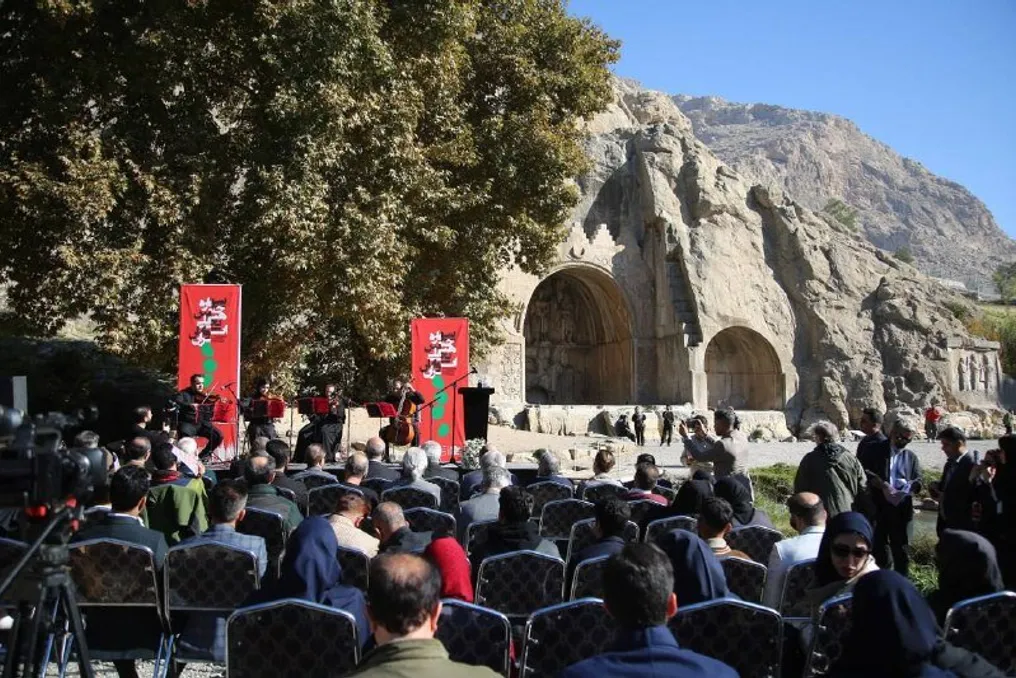
The 33rd Youth Visual Arts Festival of Iran opened on Sunday at the historical site of Tagh-e Bostan in Kermanshah. The event gathered 173 young artists, 11 masterclass instructors, and participants from Iraq and Oman under the slogan 'Do Not Cloud the Water.'

The opening ceremony was attended by festival officials, provincial authorities, cultural figures, and international guests. Among those present were Reza Sadeghazadeh, the festival secretary; Aidin Mahdizadeh, head of the festival policy development council; Jafar Vahidi, executive secretary; and Mozaffar Taymouri, head of the provincial organizing committee.

Also present at the event were Kermanshah Governor Manouchehr Khabibi, Deputy Governor for Political and Defense Affairs Bahram Soleimani, Kermanshah Mayor Bijan Moradi, and other provincial and cultural officials.

The ceremony included speeches by festival organizers and representatives of provincial authorities, as well as performances of traditional music from Kermanshah. After touring the historical complex of Tagh-e Bostan, the festival's masterclasses began at the Kermanshah Girls' Fine Arts High School.

Minister of Culture and Islamic Guidance, Seyed Abbas Salehi, addressed the festival, emphasizing the importance of discovering and supporting young artistic talents across the country. He highlighted the role of regional cultural events in promoting cultural justice and decentralizing national programs.

Salehi characterized Iranian young artists as heirs to the country's rich cultural and artistic heritage, insisting that ensuring equal opportunities for recognition, education, and professional growth is critical to unlocking their potential.

He noted that holding the festival in Kermanshah this year, a region whose ancient monuments attest to long-standing ties between art and Iranian identity, is more than just a change of venue. It also reflects the necessity of expanding national cultural events beyond major urban centers and creating greater opportunities for young talents nationwide.

The Minister expressed hope that the festival will transcend the scope of several days of competitions and exhibitions, becoming an effective platform for discovering new artists, connecting them with renowned masters, and ensuring continuous support for their creative development.

The 11 instructors leading masterclasses this year represent various disciplines of fine arts. They include: Maryam Khavand in graphic design, Maneli Manouchehri in illustration, Marzieh Takihani in ceramics, Zeinab Shahi in miniature painting, Jamshid Hakikatshenas in painting, Jamal Arabazadeh in design, Behnam Seddiki in photography, Mohammad Ali Gorbani in calligraphy, Jamal Rahmati in caricature, Mohammad Hossein Emad in sculpture, and Behnam Kamrani in new media art.

The masterclasses are scheduled from noon on Sunday until Tuesday, November 17th. Upon completion of the sessions, participants will present their work for evaluation by the festival jury.

The closing of the festival and the awarding of prizes will take place on Wednesday afternoon, November 18th, at the Entezar Cultural and Artistic Complex in Kermanshah.

The annual festival aims to identify and encourage emerging talents in various fields of fine arts, providing young artists with the opportunity to learn from experienced specialists and exchange creative ideas. Its 33rd edition also showcases the cultural and artistic potential of Iran's provinces by hosting a major national art event in the western region of the country.

Popular