Divya Prakash Dubey advises youth to live love stories rather than just writing them
Read more
Aaj Tak
www.aajtak.in

Divya Prakash Dubey advises youth to live love stories rather than just writing them

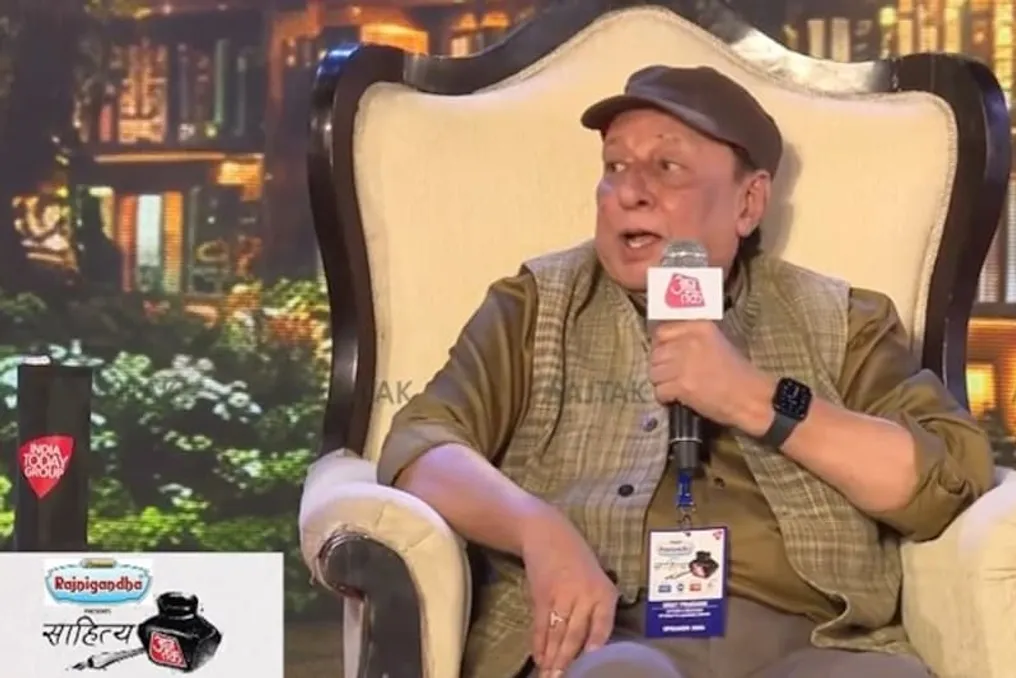
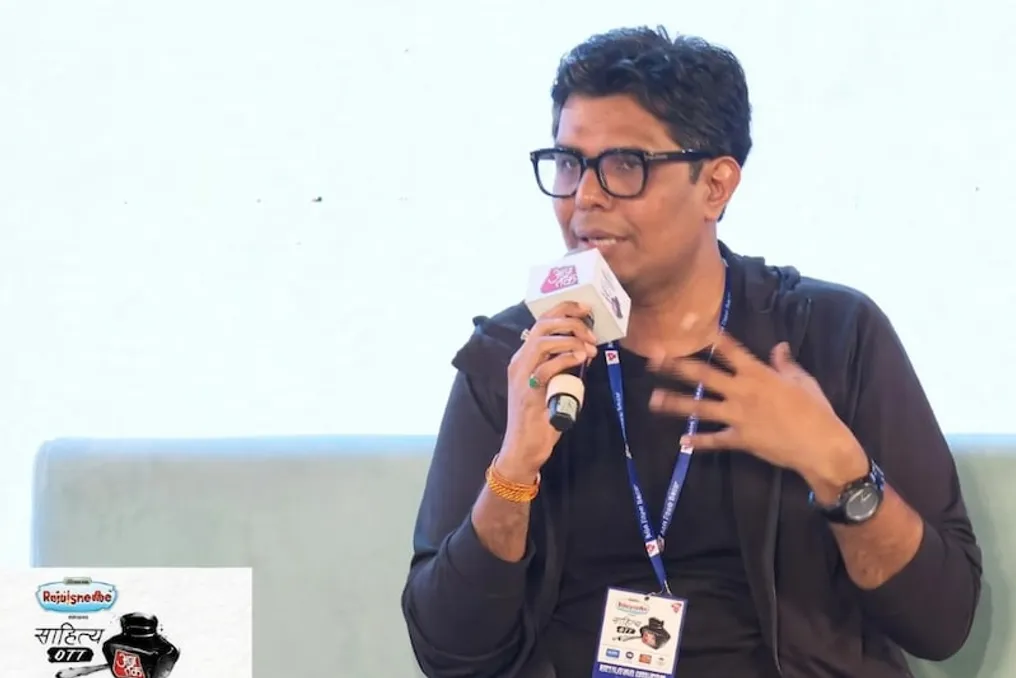
During the event 'Sahitya Aaj Tak' 2026, which marked the third and final day of the program, writer and storyteller Divya Prakash Dubey shared interesting stories about his book and creative journey.

Dubey recounted that his life path was unusual, as if he had stepped out of a dream. He advised against limiting oneself with dreams. He mentioned his first book, 'Musafir Cafe,' noting that while he was writing it in 2016, the 'Musafir Cafe' began opening in 2017. The first cafe opened in Himachal Pradesh, followed by branches in Delhi and other locations. He noted that people still send him photos of these cafes, which testifies to the continuous support for the book.

He also emphasized that people know you through your words. Someone once told him that the connection of words is built on understanding, and forming this understanding takes time.

Speaking about instances of 'Musafir Cafe' billboards near his home, he shared that he had moved through many cities, and no city remained the same. When he started writing in Hindi, success seemed impossible. He shared his experience regarding the English language, explaining that he studied in an environment where Hindi predominated because his father was posted in Ghaziabad and later moved to Hardoi, where he attended a local school. There, he was fined for speaking English.

In his family, the native language is Bodhpuri, and Hindi is essentially similar to English. In his neighborhood, there were people who believed that if you spoke just two words in English, you spoke very well. It was this atmosphere that inspired him to write in Hindi. He always felt that he would be accepted for who he was, so he did not antagonize the English language. Currently, he continues to perform publicly only in Hindi, which is a kind of response to those uncles from his neighborhood who said Dubey's son could do nothing.

Divya Prakash Dubey believes that the driving force in people's lives often stems from hatred or envy, meaning negative emotions are behind it.

Dubey reported that his son is 11 years old, and they do not speak English at home. His parents in Lucknow never spoke old Hindi (Khadi Boli); they communicated in Bodhpuri. They explained to the children that they needed to study and speak in school, but they should communicate in Hindi at home.

He also expressed concern about the pressure placed on children and the modern education system. Dubey stated that one cannot instill hatred in anyone, but one can teach love. He noted that modern parenting is often accompanied by excessive obsession with children, and parents do not want to see their children fail. However, in his opinion, children's failures are also necessary so that parents realize that their child is not a superman who will succeed at everything.

Currently, quiet book clubs are being held in different parts of the country where people read in Hindi. Now, people with Hindi books can be seen in the metro, airports, and public places. This means that shame and shyness are fading, and people are starting to step out of this zone.

Divya Prakash Dubey explained the concept of New Hindi. When they started writing, they needed to find a way to tell people that they were writing modern stories in Hindi and to do so in simple language. They needed a slogan that would announce their creativity and reflect their concerns. They did not change the Hindi language itself nor overload it with English words; they changed its attitude. Now, people can display Hindi books in the metro and airports. This new form of Hindi was the name of their internal concern: they wrote stories of ordinary people and intended to make people read them.

According to Divya Prakash Dubey, anyone who writes love stories on this land is guaranteed not to have their own love life. He asserts that living a love story is far more important than writing it. He believes that if the opportunity arises, even a bad love story can be lived, and that will be a great good, better than writing any beautiful book.

Similar stories

Authors Apra Kuchhal and Menaxi Choudhary Share Experiences of Creating Works About Non-Typical Characters within the 'Sahitya Aajtak' Program
Read more
www.aajtak.in

Authors Apra Kuchhal and Menaxi Choudhary Share Experiences of Creating Works About Non-Typical Characters within the 'Sahitya Aajtak' Program

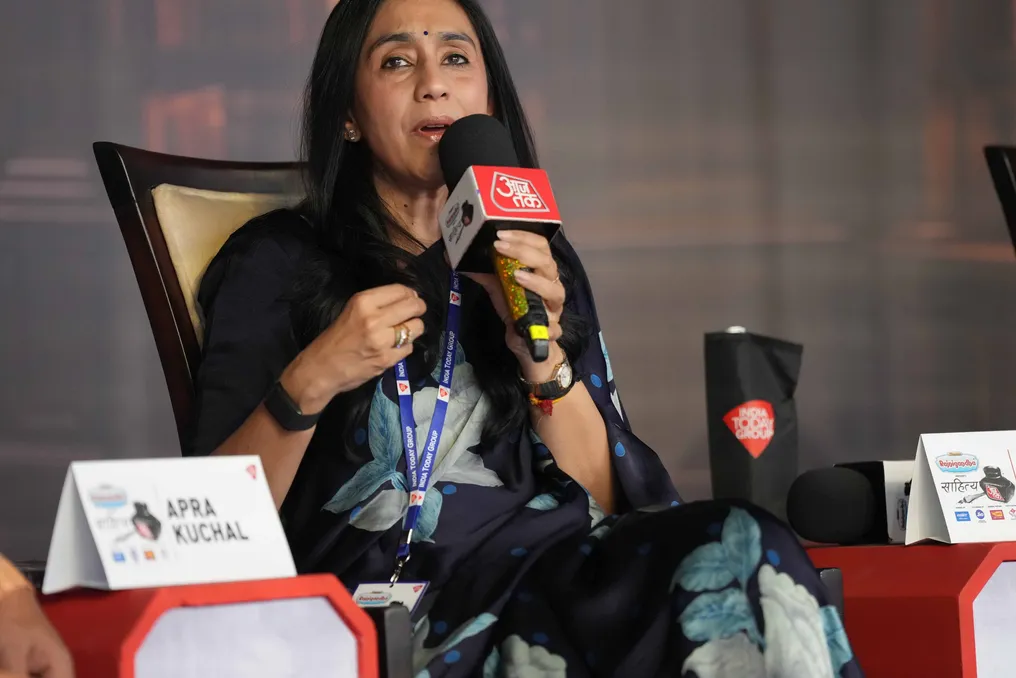
At the session 'How difficult it is to write about invisible but real characters' at the 'Sahitya Aajtak' 2026 event, writers Apra Kuchhal and Menaxi Choudhary participated. The moderator, Jay Prakash Pandey, asked both of them the first question regarding why their first book was dedicated to a character with many facets, who—them or the characters themselves—chose them, and about the process that turned them into authors.

Answering this question, Apra Kuchhal stated: 'We do not choose characters; characters choose us.' She recounted meeting Aryan Pasha through Lakshmi Narayan Tripathi. During her childhood in Panipat, where her ancestral home was located, Kinnaras often visited according to the tradition of teacher and student. About 10–12 years ago, she met Lakshmi Narayan Tripathi in Jaipur during an event where Aryan was also present. She was informed that Aryan is a trans man.

Apra Kuchhal continued that after she asked Aryan what trans men were, he began telling her his story. This inspired her greatly, and she realized that other people might be experiencing something similar. That is when she decided to write about it. Initially, she planned to write a short paragraph on Facebook but did not anticipate writing an entire book, which took six years to complete. She described this journey as very emotional.

Menaxi Choudhary, on the other hand, explained that she identifies more as a reader. Her path into literature began with reading, and this led her to 'Sanpa.' She started reading the books of Palival Ji and writing commentaries on them. Although they sometimes allowed themselves to criticize, she views him as a mentor because he is older. Thus, her path to 'Sanpa' was connected to Palival Ji.

Menaxi emphasized that after receiving support from an experienced author and picking up the pen, she developed a firm resolve not to stop. It was then necessary to bring Sanpa's story to life in words. She believes that if this story remains untold, it will be unfair not only to Sanpa herself but also to all those who have done something amazing in life but have not received recognition. People called Sanpa 'Savitri,' but Menaxi sees her as an ordinary woman, much like herself.

Apra Kuchhal noted that writing a true story places a huge responsibility on the author. Although fate plays an important role, the beginning must always be made by the individual. Menaxi Choudhary agreed that fate supports those who make an effort and suggested that fate was with Sanpa because she did not give up the fight, relegating fate to a secondary role.

During the 'Sahitya Aajtak' event, Apra Kuchhal also commented that people today have become too judgmental. They tend to judge on social media and spread their opinions about people's lives. She believes that if she can change someone's mind through a book or 'Sahitya Aajtak,' she will achieve her goal. She stressed the need for developing empathy.

Apra Kuchhal added that Aryan Pasha is an activist in transgender issues. He also manages the Transgender Sports League and works on employment schemes for transgender individuals. Menaxi mentioned that Sanpa's story begins where it seems it shouldn't. Throughout her story, there were many times when she felt like giving up. She spoke with a hundred women about the book, and each said she would have given up if she had reached such a level.

She shared that Sanpa writes a letter to God. When they wrote this letter in the book, it was a very difficult process, and rewriting it was painful. She expressed respect for this woman's struggle. She insists that Sanpa must be read because she never stopped hoping for doors to open, never stopped being patient, and never stopped believing in the better.

Famous writer Uday Prakash held a writing masterclass at the Sahitya Aajtak event
Read more
www.aajtak.in

Famous writer Uday Prakash held a writing masterclass at the Sahitya Aajtak event

The renowned writer and recipient of the Academy of Literature award, Uday Prakash, participated in the second day of the 'Sahitya Aajtak 2026' event.

As part of a session titled 'Uday Prakash Masterclass: From a Girl with a Yellow Umbrella to Today's Reality,' he shared his journey in literature. Furthermore, he gave several important tips on creativity to young writers.

Uday Prakash discusses the main secret of writing: one must stop and find their uniqueness
Read more
www.aajtak.in

Uday Prakash discusses the main secret of writing: one must stop and find their uniqueness

During the 'Uday Prakash Masterclass' held on the 'Sahiti Aajtak' platform in 2026, renowned writer Uday Prakash shared advice for the new generation on how to become an author and where to start writing. He answered questions about rushing to achieve success in the literary world, emphasizing that being able to pause, observe the surrounding world carefully, and maintain one's unique individuality is crucial for becoming a writer.

According to Uday Prakash, every author's work is their personal fingerprint. Speaking about his childhood and the beginning of his creative journey, he mentioned that he is from a small village. There, children studied by spreading mats on empty government sheds after the livestock went outside, and in winter, classes took place under the shade of trees. Modern writing tools were unavailable in those times.

He noted that when a new technology appears, people tend to criticize it and list its shortcomings. Therefore, he advised the younger generation not to resist technologies but to strive to understand them.

Uday Prakash observed that the modern generation strives to achieve everything very quickly, much like products spread rapidly across the world. However, in this race, it is important to realize what belongs to a person. He insisted that the author must carefully preserve their originality and personality; only then can their literature endure. Instead of constant running, the author should slow down and observe, because only in a state of calm can one grasp the pace and direction of the world's movement.

Literary responsibility, according to Uday Prakash, is connected not only to humanity but also to nature. He believes that changes are necessary, but they must not lead to the disappearance of villages, rivers, trees, and air in the pursuit of development. The primary task of the writer is to preserve the possibilities and conditions for life to exist.

Referring to his story 'The Girl in the Yellow Hat,' Uday Prakash explained how significant technological changes occurred around 1999, rapidly transforming both the world and language. In this work, he depicted love as a force capable of overcoming boundaries between old social categories and computer data.

The writer also reported that attempts were later made to ban this book from sale in India. Uday Prakash stressed that the author is forced to fight for their creativity at all levels. Discussing artificial intelligence, he stated that AI is within the capabilities of the human mind. In his opinion, technologies require understanding and careful use.

Popular