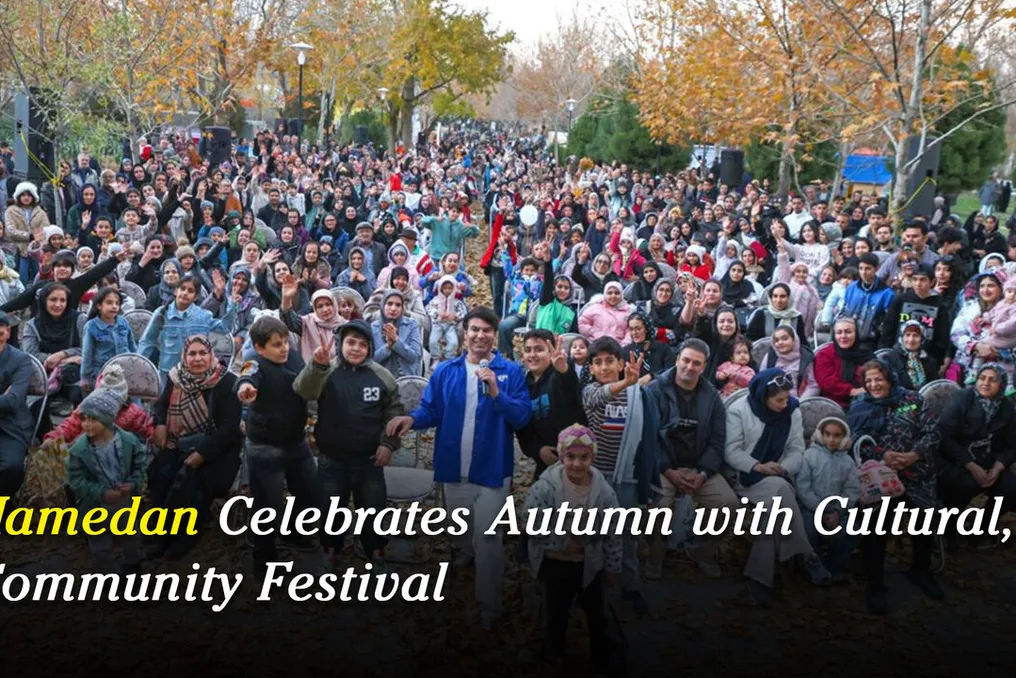
The fifth Bargrizan Hegmataneh Festival took place in the city of Hamedan from November 25 to 27, 2026. The event gathered families, local artists, craftspeople, and visitors to celebrate the arrival of autumn, regional customs, and the spirit of community.
Similar stories
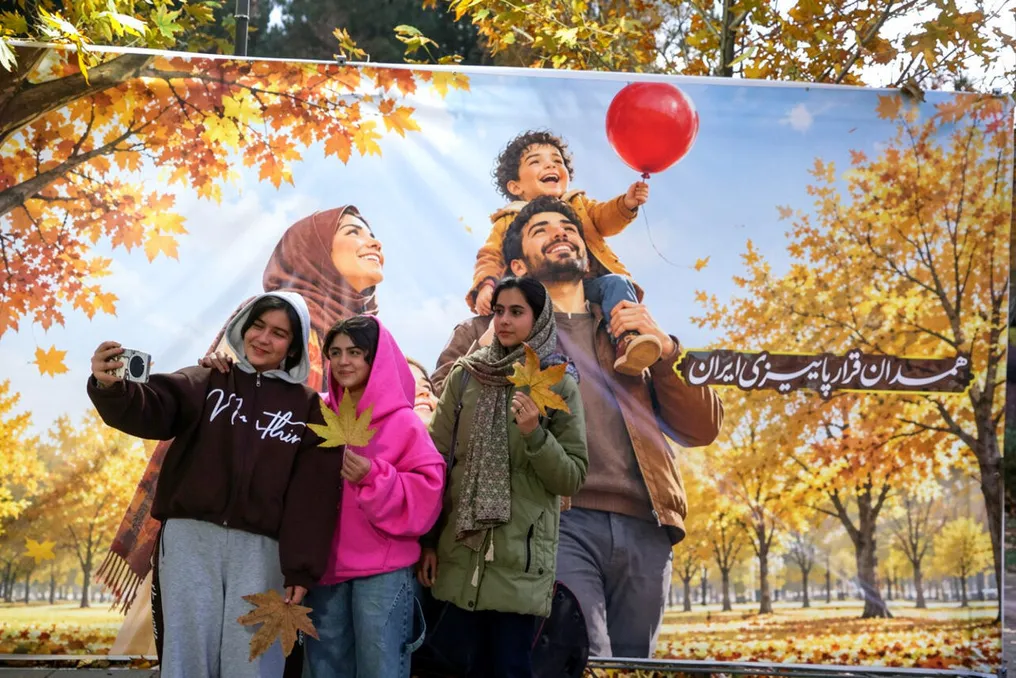
Barghizān Festival in Hamedan Gathers Regional Residents, Demonstrating Cultural Unity
The fifth Barghizān Hegmataneh festival took place in Mardom Park in Hamedan, scattered with autumn leaves, from November 25 to 27. This seasonal event has transformed into a large-scale celebration of nature, culture, and the city's residents.
Upon arriving at Mardom Park, the article's author expected to see a typical autumn celebration, but instead encountered a vibrant public gathering that brought together people of different generations, professions, and social strata. The park was filled with families, children, youth, elderly residents, local artisans, artists, and visitors.
The trees, colored in yellow, orange, and red tones, created a natural backdrop, while fallen leaves covered the paths, forming a landscape attractive to photographers. Visitors stopped under the trees to take pictures, strolled slowly, or simply admired the colors. Some came for the autumn beauty, others to spend time outdoors with family and friends.
Children were particularly noticeable, moving between entertainment zones, games, and family activities, which lent the park an infectious energy. Parents followed them through various sections, while groups of teenagers gathered for socializing and photos. The festival managed to make autumn an experience accessible to all ages, not just nature lovers or tourists.
One of the most interesting aspects of Barghizān was the effort to link the natural landscape with the cultural identity of Hamedan province, home to numerous natural and cultural treasures in west-central Iran. Stalls displaying local handicrafts, souvenirs, and regional products introduced visitors to the traditions and labor of the area. Zones dedicated to nomadic heritage and traditional lifestyles added another layer, reminding people that the region's identity is shaped not only by ancient history but also by living cultural practices.
The author stopped at one of the stalls selling local produce and spoke with the vendor about the event. The vendor noted: 'For us, these festivals are an opportunity to present our products to people who might otherwise never see them. It is also a chance to meet buyers directly and show them what is made here, rather than just selling goods.'
Nearby, a local artisan explained the specifics of traditional production to interested guests. Such brief encounters were considered among the most valuable moments of the festival, as they established direct contact between visitors and local producers, something advertising often fails to achieve.
The author also spoke with a family that had brought their children to the park. One parent said: 'We wanted to get the children outside and give them something other than the usual. They can play, admire the autumn colors, and learn a little about local traditions at the same time.'
The combination of leisure and cultural discovery lies at the heart of the Barghizān concept. In its fifth session, the festival adopted a national approach, aiming to attract attention beyond Hamedan while promoting the province's tourist attractions, local culture, crafts, and products.
However, for the author, the most striking feature of the event was not the stalls, performances, or even the autumn scenery, but the sheer diversity and number of attendees. In a country facing prolonged economic pressure and an uncertain political climate, where the population continues to cope with the consequences of international sanctions and financial restrictions, the sight of such a large public gathering holds particular significance.
Iran is going through a difficult period, which many describe as neither war nor peace. Economic instability has become part of daily life, affecting family budgets, employment, and people's ability to plan for the future. Against this backdrop, observing so many residents gathering in a public park, bringing their families and spending time at a cultural event, served as a powerful reminder of the importance of collective social life.
The author reflected on resilience. Not the abstract kind often used in official speeches, but the visible in ordinary people: parents making time for their children, youth enjoying the day with friends, artisans continuing their work, and families finding reasons to celebrate despite daily pressures.
An elderly visitor described the festival in simple terms: 'People need places like this. Life is not easy, but we still have to go out, meet each other, and enjoy the good things around us.'
Musical and cultural performances complemented the atmosphere, and the presence of local products and crafts added an economic dimension to the gathering. Hamedan, the provincial capital, is known for its historical and archaeological heritage, including its connection to Hegmataneh, a UNESCO World Heritage site and one of the most important centers of early Iranian civilization, known as Ekbatan in the West. However, its tourist appeal extends beyond historical monuments. Located near Mount Alvand, Hamedan also offers mountain landscapes, gardens, villages, and natural attractions that take on a special character in autumn.
The Barghizān Festival provides an opportunity to unite these diverse aspects. It can encourage visitors to look beyond the city's most famous historical sites and discover the entire province: from mountain landscapes to rural communities and cultural traditions.
Nevertheless, according to organizers, the goal is to transform a successful seasonal gathering into a sustainable tourism product. This requires more than just organizing events for a few days a year. Linking the festival with organized autumn walks, photo tours, local gastronomic experiences, village visits, and accommodation packages could encourage guests to stay longer and distribute the tourism benefits throughout the region.
As the author walked through Mardom Park at the end of the visit, the paths were still lively. Children played, families took photos, visitors browsed the stalls, and people gathered near the performance areas. Fallen leaves continued to cover the ground, sometimes lifted by the wind and passing footsteps. Beyond photographs, music, and colorful trees, it was a reminder that tourism is ultimately about people. And sometimes the most memorable part of a trip is not the landscape itself, but the community that welcomes you into it.
} , 3.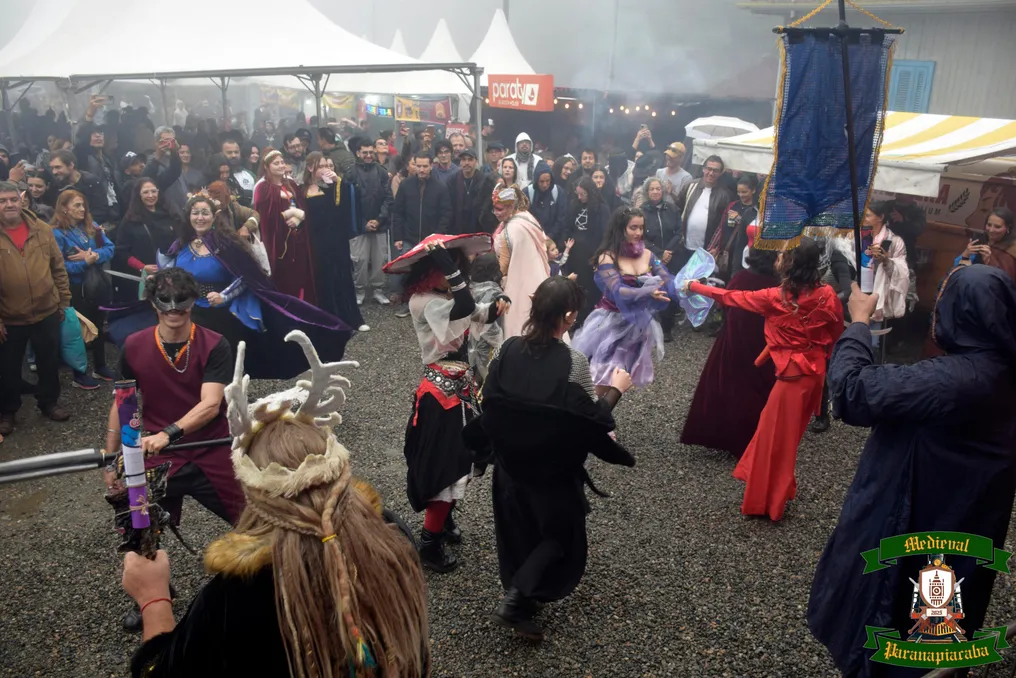
Historic village near São Paulo will host medieval festival with tournaments and music
The historic village of Paranapiacaba, located in the municipality of Santo André, in Greater São Paulo, will transform into a medieval atmosphere during the first weekend of December. On December 5th and 6th, the second edition of the Medieval Paranapiacaba festival will take place, which will be free to attend and will gather visitors with live music, gastronomy, craft beer, mead, and events inspired by the Middle Ages.
Among the planned entertainment are archery demonstrations, axe throwing, knight duels, and medieval fencing duels. Children can participate in soft combat classes, simulating battles using protective gear. Additionally, a Medieval Museum and a themed market will operate at the event.
The musical program is spread across both days and includes performances by eight bands on the Palco Magia Beer stage. Saturday (December 5th) features concerts by Hellbound Hymns at 12:00, Fianna at 14:30, Taberna Folk at 17:00, and Das Sehnsucht Rammstein at 19:00. On Sunday (December 6th), shows begin at 11:00 with Varia Fortuna, followed by Skaldduos at 13:00, Criasor at 15:00, and Narn at 17:00. The festival will also feature DJ Rodrigo Branco.
The event was originally scheduled for September but was postponed due to adverse weather forecasts. The new date has been officially confirmed by the Prefecture of Santo André.
The festival is also an opportunity to learn about Paranapiacaba—a railway village founded in the 19th century to house workers of the São Paulo Railway company, which managed the rail connection between Santos and Jundiaí. The area has preserved wooden and brick buildings that are a legacy of the British presence during the construction of the railway.
Among the attractions are the Castle Museum, the former residence of the chief railway engineer, the Funicular Museum dedicated to the history of the transport system crossing Serra do Mar, and the Station Clock, stylized like London's Big Ben. It is also recommended to walk through the streets of Parte Baixa, admire the architecture, and visit local restaurants and cafes.
Nestled in the Atlantic Forest, Paranapiacaba offers walking trails and nature tours, some of which require accompaniment by accredited guides.
The event will take place on December 5th and 6th, 2026, from 10:00 AM to 8:00 PM in the village of Paranapiacaba, Santo André (SP). Activities will be organized at Cine Lyra, Galpão das Oficinas, Padaria Locobreque, and Estação do Expresso. Entry is free, but consumption of food and beverages, as well as participation in commercial activities, is paid separately.

Hamnafas Inclusion and Accessibility Festival to Take Place in Tashkent with International Experts
The Hamnafas Inclusion and Accessibility Festival is scheduled to take place at the Republican Children's Library of Tashkent from November 27 to 29. The event will bring together children and adults to discuss methods for creating spaces that meet the needs of different groups of people, as well as ways to establish dialogue and seek support for social and cultural initiatives.
As part of the festival, experts from the Netherlands, Denmark, and Poland will present various formats: lectures, book clubs, and workshops for all ages.
On November 27, Jolanda van den Berg, curator of the Miffy Museum at the Central Museum in Utrecht (Netherlands), will hold a round table on inclusive spaces for children and their parents, as well as a lecture on how to design a museum for children. She will share experience in creating accessible cultural zones and how children can learn about the world through play.
On November 28, Michael Hansen, an artist and head of the creative workshop at the National Gallery of Denmark in Copenhagen, will organize two sculpture classes for children aged 2–5 and 6–12. Participants will try creative exercises and make sculptures from clay and paper.
Also on November 28, Olesya Radilova, founder of Spoko HUB and fundraising consultant, will conduct a masterclass titled 'How to Find Support for a Project.' In it, participants will learn how to create a map of potential partners, formulate cooperation proposals, and prepare letters to attract funding.
Anastasia Babicheva, coordinator of the community 'Conscious Support for Equals' and author of educational programs, will give a lecture on November 28 titled 'How to Speak So That You Are Heard.' This lecture will focus on effective communication, the ability to set tasks correctly, and finding solutions while considering the interests of the interlocutors.
On November 29, zoologist Elizaveta Ignatyeva will give a lecture for children about the world of bats, discussing the characteristics of chiropterans, their importance in the ecosystem, and the need for their conservation.
On the same day, spinal neurosurgeon David Kalendarev, together with artist Nigina Mirzadjanova, will hold a health workshop for children over 8 years old. The program includes studying the structure of the human body, after which participants will create their own model of the organism.
Furthermore, the festival will feature a public talk titled 'Social Initiatives of Tashkent.' Representatives of city projects TashAnimalCare, Hamroh, and Maqaal, as well as artist and restorer Ekaterina Kotin, will participate. Topics discussed include the emergence of social initiatives, finding like-minded people and sources of support, and factors contributing to the development of such projects.
On November 29, content producer Diyora Akhmedova will conduct a media literacy workshop for teenagers aged 12 and older. Participants will learn to analyze media publications and news, distinguish factual information from speculation, and create headlines while avoiding clickbait and judgmental language.
DJ ITNI will organize a DJing masterclass for children aged 8 and older on the same day. Participants will get acquainted with the mixer console and music programs, learn how to transition between tracks, and create a joint mix of popular compositions from different eras.
The program will conclude with an evening of French animation, organized with the support of the French Institute. Viewers will be shown short animated films addressing themes of acceptance, friendship, and mutual understanding, where characters learn to find common ground despite differences.
Registration for all planned events is open on the official website of the Republican Children's Library.