
Foreign investors return to FAR bonds, investing 9,535 crore rupees in November
Read more
Business Standard
business-standard.com

Foreign investors return to FAR bonds, investing 9,535 crore rupees in November

Foreign Portfolio Investors (FPIs) resumed investments in government securities through the Fully Accessible Route (FAR), channeling 9,535 crore rupees by November 27. This inflow occurred amid the strengthening of the rupee against the dollar and the decline in domestic bond yields. Data from the Corporate Credit Institutions of India (CCIL) indicates that these purchases mark a turnaround after two consecutive months of capital outflow.

The rupee appreciated by over 2 percent against the dollar in November and is poised to set its strongest monthly performance for 2026, supported by the influx of foreign funds. By mid-week, the exchange rate reached 92.24 per dollar, the highest level since March 12, before falling to 92.99 per dollar on Friday. The currency recovery increased yields for foreign investors using dollars, making Indian debt more attractive.

The November acquisitions increased the net inflow into FAR securities this fiscal year to 55,066 crore rupees, compared to 7,974 crore rupees during the same period last year. Previously, foreign investors had withdrawn 9,192 crore rupees in September and 5,609 crore rupees in October.

One market participant noted that the yield differential between Indian government bonds and US Treasury bonds became more favorable, boosting foreign investor interest in domestic debt. Furthermore, the relative stability of the rupee helped improve investor appetite.

The improved demand from foreign investors coincided with growth in the domestic government bond market. Yields on benchmark five-year and ten-year government securities decreased by approximately 15 basis points each in November, although the yield on 10-year bonds remains 23 basis points higher in the current fiscal year. Lower crude oil prices and lower US Treasury yields also influenced sentiment towards domestic bonds.

However, according to the ICRA-Assocham Capital Market Report, currency fluctuations and hedging costs remain significant factors for foreign investors. It points out that the net FPI inflow into debt instruments in FY2026 slowed mainly due to heightened global uncertainty, rising hedging costs, and the postponement of India's inclusion in the Bloomberg Global Aggregate Index.

The attractiveness of FAR securities was also supported by measures to expand foreigners' access to the government bond market. In June, the Reserve Bank of India expanded the range of available securities under this route, including new issuances of 15, 30, and 40-year government securities, as well as sovereign green bonds. The government also announced tax incentives on interest income and capital gains from investments in government securities for foreign portfolio investors starting April 1, 2026, as part of efforts to attract foreign capital.

The head of treasury at a private bank stated that foreign investors are likely to maintain caution regarding currency volatility when assessing the yield of Indian debt, and that a stable rupee alongside attractive bond yields will be crucial for sustaining foreign participation.

FAR securities allow foreign investors to invest in specific government bonds without quantitative restrictions. This route was introduced in April 2020 to increase foreign participation in the domestic government securities market. According to CCIL, on November 27, foreign assets in FAR-compliant securities amounted to approximately 3.66 trillion rupees, distributed across 51 securities.
Similar stories

Review of the best fixed deposit schemes (FD) with interest rates up to 8.5%
Read more
www.aajtak.in

Review of the best fixed deposit schemes (FD) with interest rates up to 8.5%

Bank fixed deposit programs are very popular due to the combination of investment reliability and significant returns offered to clients. Many banks offer attractive interest rates to attract depositors and ensure substantial profit from investments.

However, compared to large state or private banks, small finance institutions often offer higher interest rates on deposits, especially for senior citizens.

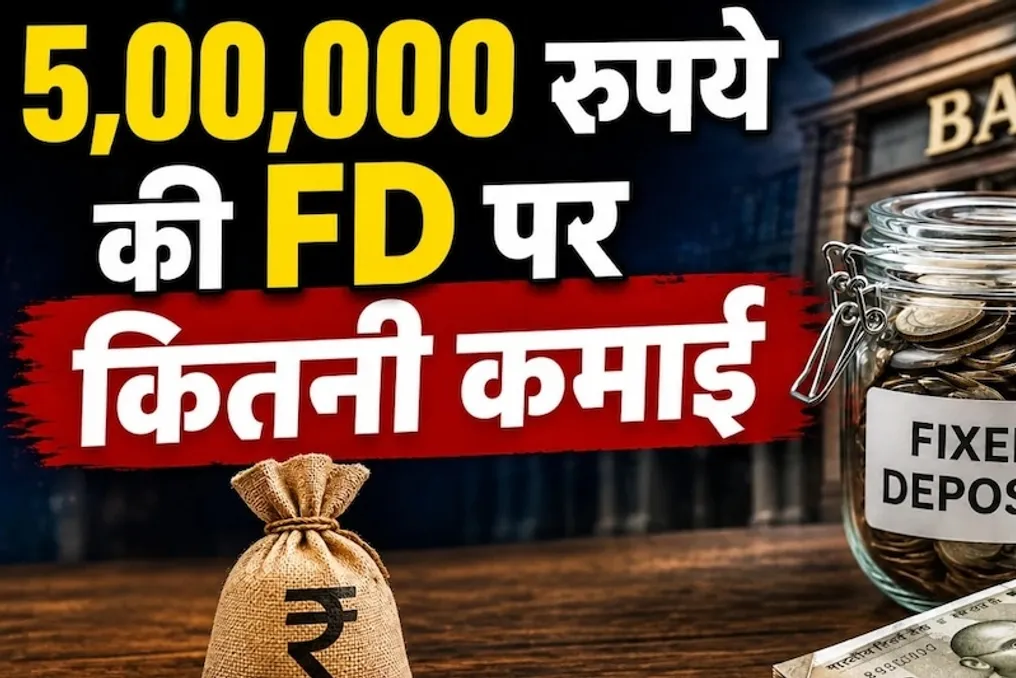
Let's look at what rates are available and where you can get the most benefit when placing a deposit of 500 thousand rupees.

People regularly set aside part of their income and plan investments in a way that yields high returns. This is especially true for older people who wish to receive stable and guaranteed income from pension savings; fixed deposits are an optimal choice. Nevertheless, interest rates vary significantly across different banks; small finance banks generally provide higher returns compared to large private and state lenders.

An example of such an offer is Suryoday Small Finance Bank, which offers senior citizens an annual rate of 8.5% on a five-year fixed deposit. In contrast, the State Bank of India (SBI) offers 7.05% for the same period.

Small finance banks offer the highest rates for senior citizens on five-year deposits. If we look at the rate table, small finance banks hold leading positions in terms of yield for a five-year term. Suryoday Small Finance Bank offers 8.5%, while Jana Small Finance Bank offers 8%.

Moving on to large private banks, it can be noted that DCB Bank provides its clients with more advantages regarding deposit rates than HDFC Bank and ICICI Bank, offering a rate of 8%.

State banks are also actively involved in providing favorable deposit terms alongside small finance and large private banks. Among them, the country's largest state bank, State Bank of India (SBI FD Rates), offers some of the highest percentages.

Let's calculate the benefit a senior person would receive by investing 500 thousand rupees for five years. Calculating based on the 8.50% rate from Suryoday Small Finance Bank, the amount at maturity will be 7,51,828 rupees, meaning a profit of 2,51,828 rupees solely from interest. If the 7.05% rate from the State Bank of India is used, the amount at maturity will reach 7,02,916 rupees, yielding an income of 2,02,916 rupees.

Foreign investors, crude oil prices, and RBI policy will be key factors in the Indian market this week
Read more
business-standard.com

Foreign investors, crude oil prices, and RBI policy will be key factors in the Indian market this week

Indian stocks interrupted a four-week uptrend due to the weakening banking sector, rising crude oil prices, and caution ahead of the Reserve Bank of India's (RBI) Monetary Policy Committee (MPC) decision, prompting investors to take profits.

Market analysts note that investor sentiment this week will be determined by the activity of foreign investors, fluctuations in crude oil prices, the release of macroeconomic data, and the RBI's interest rate decision.

Ajit Mishra, SVP Research at Religare Broking, stated that the RBI MPC meeting, scheduled for December 2 to 4, will be the main domestic event, with the policy announcement planned for Friday, December 4. Attention will also be paid to domestic economic reports, specifically GDP growth and industrial production for October. Furthermore, November PMI data for the manufacturing, services, and composite sectors will provide additional insight into the pace of economic activity.

He added that geopolitical factors and their impact on crude oil prices, the rupee, and foreign investment inflows will remain important elements shaping the mood in the domestic market.

In November, foreign investors made record investments in Indian stocks, channeling ₹1.54 lakh crore, marking the highest monthly inflow. This growth was driven by the global slump in artificial intelligence (AI) related stocks and strong earnings growth from domestic companies.

These record inflows follow consecutive outflows from Passive Portfolio Investors (FPIs), who withdrew ₹34,843 crore in October and ₹35,861 crore in September, according to NSDL data.

Ponmudi R, CEO of Enrich Money, noted that Indian stocks enter the upcoming week after a recent rally pause, and the market's ability to hold key support levels will likely determine the next direction. Global events will maintain their influence, especially changes in US tech stocks and shifts in investor positioning regarding AI-related investments.

Domestically, the focus will shift to the RBI's monetary policy decision on December 4, as investors closely monitor the bank's assessment of inflation, currency pressure, and liquidity conditions.

Last week, the BSE Sensex index fell by 580.45 points, or 0.69 percent, while the NSE Nifty dropped by 193.4 points, or 0.74 percent.

Hariselvan Radhakrishnan, founder and CEO of HST Wealth, reported that several important domestic economic and political triggers are expected this coming week. Quarterly September GDP data and October Industrial Production (IIP) data are due to be published on November 30, followed by November manufacturing PMI on December 1, and services PMI on December 3. The RBI MPC meeting will take place from December 2 to 4, with its decision scheduled for Friday, December 4.

Investors gained 34.61 trillion rupees amid Sensex index growth in November
Read more
business-standard.com

Investors gained 34.61 trillion rupees amid Sensex index growth in November

Stock markets showed sharp growth this month, with the BSE Sensex index rising by almost 11 percent. This growth led to an increase in investor wealth by 34.61 trillion rupees, supported by strong inflows from foreign funds, lower crude oil prices, better-than-expected second-quarter reports, and a decline in global artificial intelligence stocks.

The BSE Sensex index, comprising 30 stocks, increased by 7,976.46 points, representing 10.71 percent as of November 23. Thanks to this upward trend in the stock market, the market capitalization of companies listed on the BSE grew by 34.61 trillion rupees, reaching 508,98,444.87 crore rupees ($5.48 trillion) this month.

The main driver of this market surge was foreign investors, whose net investments exceeded the 1 trillion rupee mark, reaching 1.27 trillion rupees in November, the highest monthly inflow. These significant inflows occurred after Foreign Institutional Investors (FIIs) withdrew 34,843 crore rupees in October and 35,861 crore rupees in September, according to NSDL data.

V K Vijayakumar, Chief Investment Strategist at Geojit Investments Limited, noted that 'the dramatic shift in FII stance towards India, the strengthening of the rupee, and impressive earnings growth exceeding expectations have combined to boost market sentiment, which is strongly supported by fundamental indicators. As of this month, India is the best performing large market globally.'

Globally, stock markets faced a sell-off driven by the fall in AI-related stocks. The global Brent crude oil benchmark trades at $88.90 per barrel, providing support to the overall positive investor sentiment.

This sharp rise in the market appears particularly notable after the Sensex reached its annual low of 71,292.88 points on October 1 of this year. Currently, the BSE Sensex is 3,723 points away from its all-time high of 86,159.02 points, achieved on December 1 of last year. Last week, the BSE index rose by 2,327.26 points, or 2.85 percent, and the Nifty rose by 656.3 points, or 2.61 percent. However, on Monday, markets experienced a strong profit booking, falling by almost 2 percent after a four-week rally.

Popular