Bertelsmann India Investments forecasts six deals per year and optimism regarding Indian IPOs
Read more
YourStory [india, en]
yourstory.com

Bertelsmann India Investments forecasts six deals per year and optimism regarding Indian IPOs

Bertelsmann India Investments (BII) plans to execute around six investments annually during the 2027 and 2028 fiscal years. Furthermore, Managing Director Pankaj Kakkar stated that he expects more companies from BII's portfolio to enter the Indian market over the next two to three years.

BII maintains a highly optimistic view of the domestic Initial Public Offering (IPO) market for technology companies, which, according to Kakkar, is one of the main drivers of growth and exit for Indian startups.

He cited Shiprocket, a company in BII's portfolio, whose IPO opened this year with a 35% premium. Kakkar noted that the company does not tie its investments to a fixed annual plan but invests when a suitable opportunity arises, anticipating about six such deals per year in the specified fiscal years, depending on the quality of the offerings.

Kakkar told PTI in an interview that they expect BII companies to undergo Indian listings in the next two to three years as they aim for Indian companies to confidently increase value for Indian investors.

Shiprocket was listed on the NSE in August of this year at a price of 131 rupees per share, which was 35.05% higher than its issue price of 97 rupees.

BII evaluates approximately 1000 startups per year, investing in a small fraction of them. The company provides initial cheques ranging from $5 to $15 million to early-stage enterprises whose product and model are already established, while also reserving capital for subsequent investments as the business develops.

According to Kakkar, India is a large consumption economy, and consumer-focused internet companies continue to show strong potential. He also highlighted the growing importance of deep technology companies in areas such as healthcare, Industry 4.0, and space, especially in connection with the transition to AI-based technology implementation. Overall, AI services also remain a sector of great interest to venture capitalists over the next two years.

Kakkar noted that the AI field is underfunded and identified two major trends in India. The first is the sovereign AI stack, many parts of which need to be developed domestically for national independence. The second is AI services, which combine human and AI work. In the AI services segment, he said India has a distinct advantage due to its low-cost labor market, which is also strong in AI product development. Both these directions will continue to show 'huge opportunities.'

Among BII's own deep technology projects, over 50 PhDs at Scimplify, a company engaged in scientific materials production, are working on more than 200 molecules annually, using AI to design new molecular structures that can be commercially produced. Firma Inito, specializing in healthcare and wellness, holds over 20 patents and a database of 30 million fertility hormone tests, and is also developing AI-designed antibodies for at-home hormonal status and health diagnostics.

Similar stories

Indian Investors Show High Interest in Anthropic's Initial Public Offering
Read more
business-standard.com

Indian Investors Show High Interest in Anthropic's Initial Public Offering

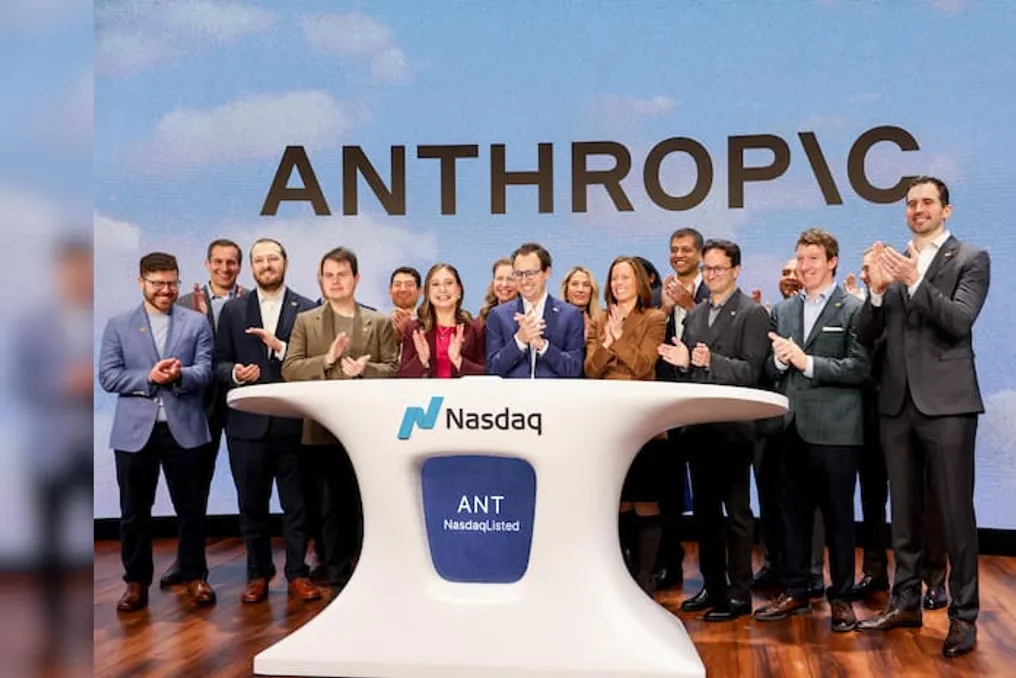
Investors from India showed significant interest in Anthropic's shares following its debut on the US market. The company, which develops artificial intelligence (AI), has become one of the most traded stocks on Indian investment platforms such as INDmoney and Vested.

Trading activity on these platforms indicated substantial interest from retail investors in this offering, as they sought access to the AI boom. Anthropic's initial public offering raised $81.3 billion with a valuation of $1.5 trillion, making it the largest public offering globally to date.

View this article

On the INDmoney platform, Anthropic accounted for 40 percent of all activity on Thursday, with the average transaction value nearly double the platform's average. Ashish Kashyap, founder of INDmoney, noted that the offering attracted investors from various professions, including engineers, financiers, and media representatives, many of whom were already using the company's Claude products.

Kashyap emphasized that 'Anthropic's listing faced unprecedented demand, largely driven by Claude users.' He also added that the overall theme of AI continued to attract strong investor interest.

On Vested, Anthropic represented about 11 percent of the total trading volume and 9 percent of all transactions during the session. A firm representative reported that almost 84 percent of stock trades occurred within the first two hours of trading. The stock became the second highest in trading volume on the platform, trailing AMD but surpassing Nvidia. Over the session, Anthropic was traded seven times more than Nvidia.

The average buy order on Vested was around $1,100, and about 20 percent of the platform's active traders purchased Anthropic shares on Thursday. For some investors, the appeal was not only the IPO hype but also familiarity with the product itself. One Indian-origin investor residing in the US applied for shares worth over $130,000 but received less than 5 percent of the requested amount, stating that he invested despite the recent decline in AI stocks. He attributed this to the hype and the long-term value the company generates.

This investor noted: 'I bought Anthropic because I use it in my daily life, and it is quite useful for automating work and saving time. It allows me to generate more results than I could in a short period.'

Tanvi Kanchan, Client Relationship Director at Anand Rathi Share & Stock Brokers, reported observing a sharp increase in client inquiries regarding the Anthropic listing, significantly exceeding typical figures for US IPOs.

For many Indian investors, this was the first opportunity to directly own shares in a leading AI model company. On Thursday, Anthropic shares closed at $97.17 per share, higher than the offering price of $83.

Bengaluru leads in AI startup funding in India, according to 2026 report
Read more
yourstory.com

Bengaluru leads in AI startup funding in India, according to 2026 report

Bengaluru's position as India's technology hub is increasingly defined by artificial intelligence and deep technologies. The city accounts for 36.3% of the domestic funding for AI startups in the country and has been the location for 71% of India's unicorns in AI and deep tech since 2023.

These figures are presented in the 'Bengaluru Innovation Report 2026,' which was released on November 18 by Priyank M. Hardge, Minister for Information Technology and Development of Karnataka, at the 29th Bengaluru Tech Summit 2026 held at the Bangalore International Exhibition Centre (BIEC).

The report, prepared by the Karnataka Digital Economy Mission (KDEM) in collaboration with 3one4 Capital and data from Tracxn, analyzes the Bengaluru startup ecosystem across aspects such as capital, talent, unicorns, policy, and six advanced technology sectors.

Since 2010, 1556 deep tech startups have been founded in Bengaluru, of which 1319 remain active and funded. These companies have collectively raised $3.77 billion. Additionally, 799 domestic AI startups are registered in the city, 764 of which are active and receiving funding. Bengaluru's share in national AI funding exceeds that of any other city.

The overall Bengaluru startup ecosystem has attracted approximately $85 billion since 2010, representing 47% of all venture funding received by Indian startups. There are 3810 active, funded startups based in the city since 2010, compared to 1982 in Mumbai. The city's 57 unicorns are valued at $211 billion, corresponding to 44% of India's total unicorns and 55.3% of their aggregate valuation. Bengaluru is also home to 212 'near-unicorns,' making up 36% of the total in India.

The report highlights the growing participation of domestic investors: about 52% of the capital attracted by Category I and II Alternative Investment Funds (AIFs) comes from local investors. Bengaluru hosts 75 Category I AIFs, accounting for 21% of the total in India, while approximately 300 venture funds operate in Karnataka.

Since November 2024, 16 listings of companies associated with Bengaluru have been registered in the city, with a total listing value of approximately $42 billion at the time of listing. The average exit period for startups from the ecosystem is 8.2 years, which is less than the global average of 11.1 years.

Women entrepreneurs also play a significant role in this ecosystem. Nearly 30% of active, funded startups led by women in the deep tech and domestic AI sectors were founded in Bengaluru. These companies have collectively raised $323.65 million.

The report also examines the state's efforts to expand its technological base beyond the capital. Since 2017, the ELEVATE grant program has supported 1479 startups with a total amount of ₹393.58 crore, with 38.6% of beneficiaries located outside Bengaluru. Karnataka has also established the 'Beyond Bengaluru Cluster' Seed Fund worth ₹75 crore and is developing Global Technology Hubs in Mysuru, Gubbali, and Belagavi.

The Local Economic Acceleration Program (LEAP), valued at ₹1000 crore, aims to create five hundred thousand jobs within five years. Speaking at the report presentation, Hardge stated that Karnataka's next priority is to spread its technological strengths to other parts of the state.

He noted: 'The Bengaluru Innovation Report 2026 shows how far Karnataka's founders have come and how much more they can build. Our next task is to ensure that a world-class company in AI, quantum technologies, or semiconductors can grow just as well in Kalaburagi, Gubbali, or Mangaluru.' He added that deep tech requires patient investment, and Karnataka will continue to support this sector.

Shri Sharath Bavchewada, Chairman of KEONICS, stated that the findings confirm Karnataka's leadership in AI and deep technologies while pointing to opportunities for innovation expansion across the state. Dr. Manjula N, Secretary of the Department of Electronics, IT, BT and S&T, emphasized that the focus is now on helping startups transition from early-stage support to scaling through government procurement, patient capital, and strengthening research commercialization. BV Naidu, Chairman of KDEM, reported that the report provides investors, Global Capability Centers (GCCs), and founders with data on Karnataka's technological ecosystem.

Where Will Venture Capital Flow in Indian Fintech Over the Next Two Years
Read more
yourstory.com

Where Will Venture Capital Flow in Indian Fintech Over the Next Two Years

India spent the last decade solving the problem of market penetration. Thanks to UPI, Aadhaar-based onboarding, and the Jan Dhan initiative, payment tools have reached almost every adult, and an entire generation of companies was built on this distribution. This problem has largely been solved. Now, a more complex question arises—how to serve these hundreds of millions of customers profitably by offering products that measurably improve their financial standing—and this is where the next cycle of venture capital will be directed.

Funding data already reflects this shift. According to Fintech Global, Indian fintech attracted $3.5 billion in 2024 across 216 disclosed deals, and $2.9 billion in 2025 through 156 deals, which is about 10% less capital with 27% fewer transactions. This indicates a trend toward placing smaller numbers of, but larger cheques into a narrower set of theses. Nevertheless, fintech remained the largest sector by funding volume in 2025, accounting for 22% of all Indian startup capital, approaching 26% in the first half of 2026. Capital is not leaving the sector; it is becoming much more selective about where it is deployed.

Three main themes are most likely to absorb capital over the next 24 months:

Indian financial institutions operate on outdated infrastructure developed decades ago. Core banking, lending, and policy administration systems in most banks, NBFCs, and insurance companies were built for a world managed by branches, batch processing, and end-of-day data reconciliation, not for real-time mass payments, continuous underwriting, or products assembled on the fly from dozens of data sources. Every new feature is bolted onto this base, and each addition costs more than the last as the architecture ages.

Indian financial institutions require a technology overhaul, creating one of the largest infrastructural opportunities in the sector. Most legacy systems are not designed for the speed and flexibility required by institutions today. The next generation of technology must be cloud-based, modular, and API-driven, simplifying the interaction between different systems. Banks and financial organizations aim to launch products in weeks, quickly adjust pricing, and add new data sources or distribution partners without needing to rebuild their core systems. Most of their existing technology does not support these requirements.

Opportunities extend beyond just core banking systems. Financial institutions also need more sophisticated tools for regulatory compliance, managing AI models and their risks, preventing fraud and money laundering, and protecting against cyber threats. They also need infrastructure that allows non-financial enterprises to offer financial products such as loans, cards, and escrow accounts. These capabilities are vital for delivering new financial products while adhering to regulatory norms.

Regulation makes these investments more urgent. Since February 2025, SEBI has placed responsibility on regulated intermediaries for the outcomes of their use of artificial intelligence and machine learning tools, including those provided by third parties. In August 2025, the RBI's FREE-AI committee issued 26 recommendations, followed by draft guidelines on model risk management and data governance. Meanwhile, significant obligations under India's Personal Data Protection Law concerning consent, notifications, and individual data rights are set to take effect in May 2027. Financial institutions will need to demonstrate that their AI systems and data handling methods comply with these requirements. For many, purchasing proven technologies will be a more practical solution than developing them in-house.

For venture investors, this creates an attractive opportunity: companies can generate recurring revenue from financial institutions by having relationships with clients who become hard to replace as their software integrates into daily operations. Investors can also benefit from the growth of financial services technology without trying to predict which consumer brand will win.

A less obvious opportunity lies in India's Account Aggregator ecosystem. Between March 2025 and May 2026, the number of entities consuming financial data grew by approximately 66%, exceeding 1000, while the number of data providers remained relatively stable at around 176. Demand for consent-based financial data is growing much faster than supply. Building the infrastructure to bridge this gap could be a significant opportunity in itself.

Structural growth factors are no longer debatable. According to ICRA Analytics, mutual fund assets reached 85.76 lakh crore in July 2026, compared to 46.4 lakh crore three years earlier. In its annual report, SEBI noted that mutual fund investors exceeded 6.1 crore people, an increase of 13% in one fiscal year, with Tier III cities now making up more than half of the investor base. The number of unique demat accounts stands at 12.18 crore versus 3.3 crore in April 2020. Households show clear rotation: household net savings grew from 27% of household savings in FY23 to 33% in FY25, and household outflows to securities markets more than doubled as a share of GDP, from 0.99% to 2.17%.

However, there is a sharp gap between having an investment account and receiving investment advice, and this is where the opportunity lies. In FY2025-26, 7.2 crore new SIPs were registered, while 6.8 crore were cancelled or matured, according to SEBI. This is an almost complete outflow. This is not a distribution failure, as distribution worked. Rather, it is an advisory failure.

The supply explains the reason. There are approximately 1042 legal entities registered with SEBI as investment advisors, compared to nearly 1.99 lakh mutual fund distributors registered with AMFI—about 191 commission-earning distributors per advisor, and one advisor for every 58,500 mutual fund investors. Human consulting at this ratio cannot cover the mass market, as the economics of servicing a portfolio worth 5 lakh per consultant has never worked anywhere.

This is where the Account Aggregator (AA) framework and AI intersect, making something new plausible. India's AA networks collectively executed 493.5 million consents among 314.5 million linked accounts by June 2026, roughly tripling in fifteen months, and now cover 16 categories of financial information, including deposits, mutual funds, stocks, insurance, pension savings, and GST filing. For the first time, the platform can gain a consolidated, machine-readable, near-complete picture of a household's finances. Overlaying AI on this reduces the marginal cost of creating a truly personalized recommendation—one previously only available to private banking clients—by an order of magnitude.

The third theme is the broadest, and this is where discipline matters most. Almost every fintech company claims to use AI. It is important to distinguish between AI as a feature—a chatbot attached to an existing product—and AI as the reason the business model works at all.

There are three sustainable options. First, consumer financial co-pilots, which combine savings, investing, borrowing, and insurance solutions in one interface. Their viability depends entirely on the combination of AA plus AI mentioned above; without consolidated data, the assistant is merely a friendly search engine.

Second, redesigning workflows within financial institutions. Underwriting, payment collection, KYC remediation, claims processing, and internal auditing are high-volume, rules-heavy functions where agent automation has a clear economic rationale, and buyers have measurable expenses to target.

Third, and perhaps the underrated option—India as a center for providing professional-grade services with AI support for the entire world. The IT industry was built on labor arbitrage in software; the same institutional muscle—managed delivery, regulatory compliance discipline, scale customer trust—can be directed towards legal review, auditing, fund management, and medical operations, with AI compressing the cost base rather than increasing headcount. Given India's current position in global services, this could be the largest of the three options.

Payments proved that Indians will adopt digital finance. The next 24 months will test whether the ecosystem can make this adoption profitable, well-advised, and secure, which strongly justifies supporting layers, not surfaces: better technology for financial institutions, affordable financial advice for households, and AI that makes both processes economically viable.

Popular