AI App Builder Rocket.new Ceases Operations on December 31
Read more
YourStory [india, en]
yourstory.com

AI App Builder Rocket.new Ceases Operations on December 31

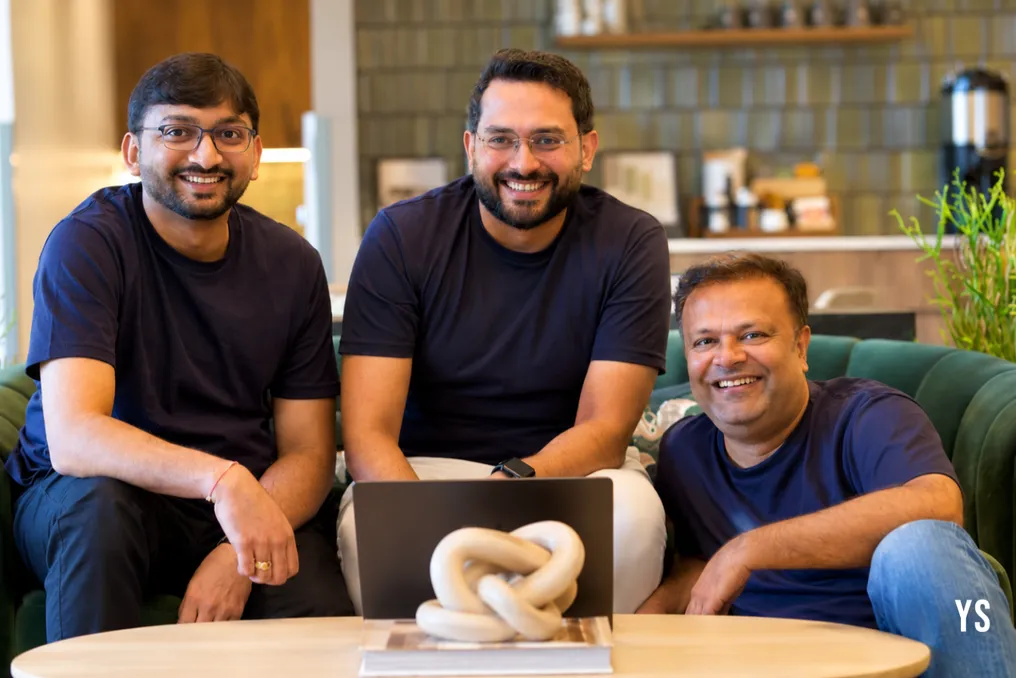
Rocket.new, an Indian developer of AI applications competing with services such as Lovable, Bolt, and Emergent, has announced the closure of its platform on December 31. Users were informed via an email dated November 28, which was shared by some users on LinkedIn. Consequently, the company has stopped accepting new registrations, subscriptions, and renewals.

The company was founded in 2021 in Surat by Vishal Virani, Rahul Singhal, and Dipak Dhanak under the name DhiWise. Initially, DhiWise created tools to automate parts of the software development process. Later, the company shifted to developing AI applications and launched Rocket.new in beta mode in June 2025. This platform allows users to create web and mobile applications simply by describing the desired functionality in plain language.

When Rocket.new announced a $15 million funding round in September 2025, it stated that it had reached an audience of 400,000 users across 180 countries, including over 10,000 paid subscribers. The lead investor in this round was Salesforce Ventures, with participation from Accel and Together Fund. According to Tracxn, the company, which secured Series B funding, raised $25.2 million over six rounds. Its investors also included India Quotient and Dholakia Ventures.

Media reports indicate that negotiations for an additional $40–50 million fell through after due diligence revealed alleged discrepancies in Rocket.new's financial performance. The company denied any inconsistencies in its reported revenues and stated that the round was postponed due to the unavailability of co-founder and CEO Vishal Virani for health reasons. It was also noted that the due diligence process was not yet complete.

Existing users can spend their remaining credits until December 5. Starting December 6, Rocket.new will disable app creation features and other credit-using capabilities. Users will be able to download their projects, sync them with GitHub, and download Android installation files before the platform completely shuts down. Websites hosted on Rocket.new, including those using custom domains, will stop functioning after the cessation of operations.

Clients wishing to keep their websites operational will need to migrate them to another hosting service. Rocket.new has notified that subscribers who paid for access after December 5 will receive a refund for the unused portion of their subscription. The company plans to process refunds to the original payment method by December 31 and has stated that the support team will assist users in exporting their projects during the transition period.

Similar stories

AIVC raised $112 million to create AI-based companies and transform enterprises
Read more
ventureburn.com

AIVC raised $112 million to create AI-based companies and transform enterprises

AIVC, an artificial intelligence-driven value creation firm based in New York, has completed a strategic investment round totaling $112 million USD. The round was led by an undisclosed family office, with participation from the AIVC founders' team.

These funds will be allocated to support four key areas of the company's operations: enterprise transformation, AI infrastructure, company incubation, and long-term ownership. The company asserts that it helps organizations integrate AI into daily operations to achieve tangible results.

AIVC's model differs from automation vendor models. It involves implementing corporate AI that delivers the highest value, freeing employees from routine and knowledge-intensive tasks, allowing them to focus on client interaction, decision-making, and higher-level responsibilities.

The AIVC platform connects operational data with enterprise transformation and reusable technological infrastructure. Company employees collaborate closely with industries to identify opportunities and then develop solutions that can have a broader range of applications.

The team includes operational leaders, engineers, and scientists. Former team members have worked at companies such as Citadel, Millennium, Palantir, BCG, Nike, Lemonade, Airbnb, and American Express. AIVC founder Jason Tse, who previously worked in hedge funds, brings experience in this field.

RC Willenbrock, co-founder and CEO of AIVC, was previously a partner at BCG and headed the firm's AIxPE practice. AIVC positions itself as an AI company whose goal is to augment human productivity, not replace human judgment.

The majority of the new investment will go into AIVC Studio. The group plans to launch three to five separate ventures annually, most of which will arise from identifying business opportunities with confirmed commercial demand.

The company emphasizes that its focus is on outcomes, not just on AI itself. Its specialists seek clients willing to pay for solutions and workflows that can genuinely provide value. They assess the scalability of technologies and the feasibility of developed solutions.

Financial, operational, and technological resources for young companies will be provided through the Studio. This structure is intended to become a standard for de-risking startup creation in the traditional sense, while also enabling talented founders to leverage existing operational and technological expertise.

AIVC intends to develop its business based on validated hypotheses rather than unproven ideas, believing this approach will lead to more sustainable commercial success.

AIVC stated that the billion-dollar valuation reflects the deal opportunities identified within its current project portfolio and expects that most of the value creation will come from growth. This valuation has not been independently verified.

The company believes that the unique blend of venture building and corporate execution ensures sustainable commercial value. This hybrid model combines corporate consulting, technology development, incubation, and ownership. This approach allows not only for transforming companies but also for creating new ventures based on knowledge of how to manage them.

Remanence raised $30 million to help companies train and own their own AI models
Read more
ventureburn.com

Remanence raised $30 million to help companies train and own their own AI models

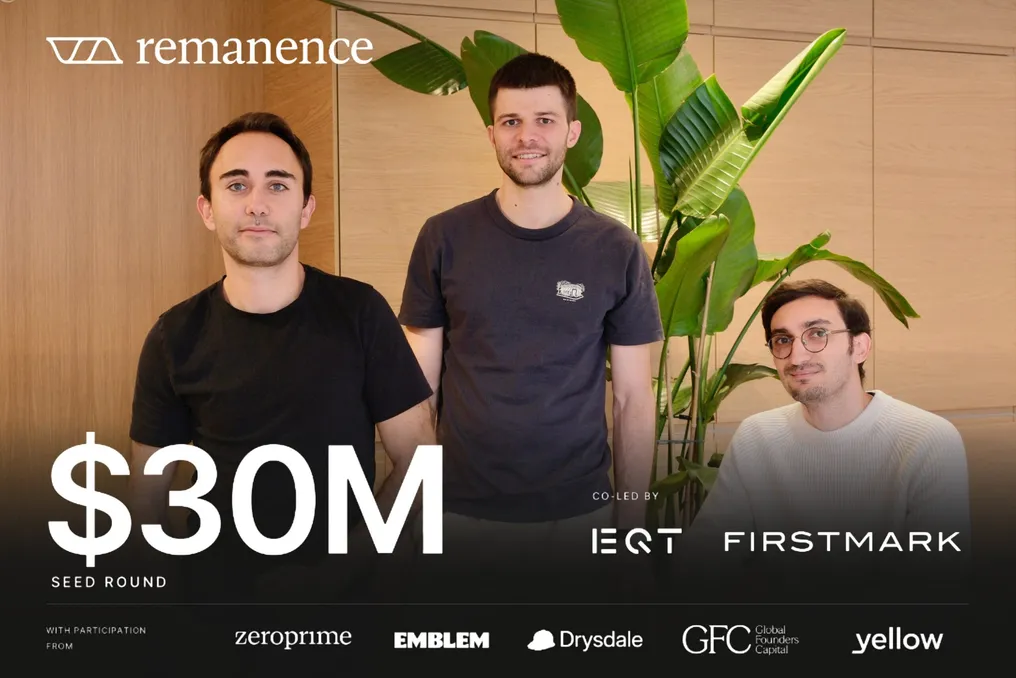
Every time a business uses an artificial intelligence agent, it pays for the services in the form of credits, and the more the agent is used, the higher the bill becomes. To solve this problem, the startup Remanence has raised $30 million in a seed round.

This Parisian startup helps businesses train and own their own AI models. It offers a simple solution: instead of renting, companies can start owning their own models. This round is significant for teams developing products using AI agents.

The round was led by EQT Ventures and FirstMark. Other participants included Zero Prime Ventures, Emblem, Drysdale Ventures, Global Founders Capital, and Yellow. Prominent figures such as Olivier Pomel (Datadog), Philippe Corrot (Mirakl), Romain Niccoli (Pigment), and Mehdi Ghissassi (AI71) also participated in the round.

Information about Remanence's seed round was leaked beforehand because the founders were seeking $30 million. This is a substantial amount for seed funding for a company just emerging from stealth mode.

Most companies today use AI models that run on rented services. The more intensively an AI agent is used, the higher the costs. Furthermore, the data generated by these agents often remains unused. Remanence views this data mass as a valuable asset.

The company claims that businesses can independently train their models based on their own workflows and become owners of them. Remanence's mission is to ensure high performance, low latency, and low costs.

This is achieved by specializing a general model for a specific application. However, Remanence's goal is to make the process of creating and owning AI agents, which was previously complex for most companies, more accessible and cheaper.

Remanence integrates with existing business AI systems. It captures the trace logs of these systems and converts them into individual training configurations. Then, Remanence applies reinforcement learning—a trial-and-error method that rewards good outcomes to improve open models. The parameters of these models are published, making their operation less expensive compared to closed models.

The more agents work, the smarter the proprietary model becomes. Data remains relevant instead of companies simply storing their data in archives. The founders are familiar with the AI field. Three founders previously worked at the French AI company H Company. Cedoz is a Google DeepMind alumnus. Hamza Bensekroun, a former leader at InstaDeep, is a Moroccan entrepreneur. The team is supplemented by Axel Moyal.

Remanence is not the only player in this race. Recently, investors have begun betting that model ownership will be the next step in AI development, as businesses prefer to own rather than rent. In August, River AI raised $1.1 billion to help companies train and own their own models.

To compete, Remanence will direct new capital towards computing infrastructure and hiring additional engineers. Funds will also be used to open offices in London and San Francisco, although the company is currently based in Paris. There are no officially named clients or pilot projects yet, so Remanence's proof is still ahead. Nevertheless, if you have paid for AI at work or created products based on it, this round is a preview of where costs and control may move in the future.

Popular