Education extends beyond simply reading textbooks and passing exams; understanding one's society, language, culture, and people's lives is an integral part of learning. Folk songs preserve the experience and feelings of past generations, while journalism allows insight into the inner life of prisons. During the session 'From Heart to Heart: A Journey of Words' in 2026, participants discussed exactly these themes.
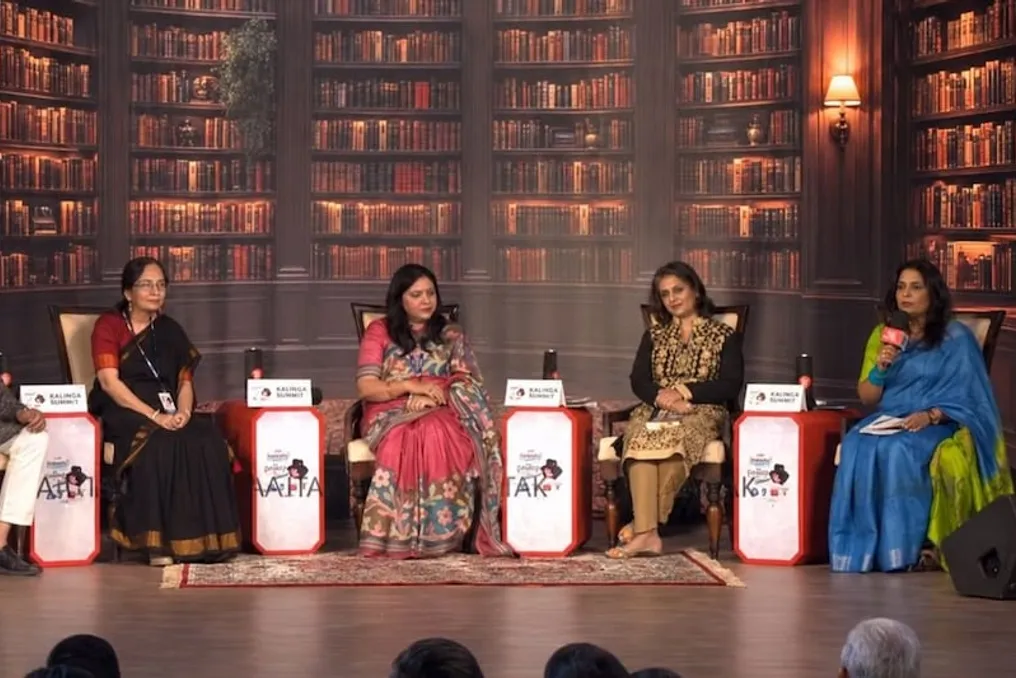
Dr. Manorama Mishra emphasized the need to convey folk songs to the younger generation, while Dr. Vartika Nanda shared her experience reporting from prisons.
Vandana Vajpayee and Joya Ahmed Hussain also participated in the session.
Dr. Manorama Mishra noted that folk songs are not just entertainment but a repository of the breath and life experience of ancestors. They reflect the labor, dialogues, and joys and sorrows of grandmothers, grandfathers, and mothers. For example, a song sung by a farmer while working in the field conveys his efforts and emotions.
She explained that folk songs were passed down orally from generation to generation. Although some have been documented, mere recording is insufficient; it is crucial to understand their emotional content and pass it on.
Dr. Mishra expressed concern that many new songs today are written to film melodies, causing the true rhythm and deep sensibility of traditional folk songs to fade away. She cited an example from her childhood when a farewell song performed by her mother at a wedding in a neighboring house moved all the women around to tears. In her opinion, that song contained not only the sorrow of one family but the entire societal involvement in that feeling. Today, such deep emotions are less common at weddings amidst pop music.
During the session, Dr. Vartika Nanda recounted that she first began her reporting work at Tikhad Jail in 1993. After that, she visited jails for many years to closely study and describe life inside. Her book 'Tinka Tinka Tikhad' was published in 2013.
The book featured many inmates and female prisoners. When the book turned ten years old, it was re-released at Tikhad Jail in 2023. One of the inmates connected with her work for 13 years was present at this event. She shared how the pen and paint changed her life in prison.
Dr. Nanda stated that people have fears and various perceptions about prisons, but it is important to understand their world. She also added that sometimes people living outside are themselves trapped by their own thoughts, greed, or delusions, often without realizing it. According to her, through 'Tinka Tinka', an attempt was made to present the world of prison and the experience of people there.
Besides Tikhad, she worked on materials about Dasna jails and jails in Madhya Pradesh, including the experiences of inmates serving life sentences in Dasna.
Vandana Vajpayee began her session by discussing the process of creative writing. She said that a writer always has words in their soul, but a story or poem is born only when some emotion or pain deeply affects them. She explained that when feelings such as happiness, grief, hope, and despair constantly trouble the mind, the author wishes to clothe them in words and preserve them on the pages. This is how the creative process develops.
An interesting moment occurred during this session when Sanjay Sharma revealed that Dr. Manorama Mishra and journalist-writer Joya Ahmed Hussain attended the same school and class in Allahabad during their childhood. They recognized each other as old acquaintances during a backstage conversation. This meeting on the literary stage after years lent an emotional tone to the session.
Joya Ahmed Hussain shared that she has remained in journalism until now and is now starting a new chapter as a writer. Her book 'Bahari Zindagi' contains seven stories. She also shared old memories of her journalistic days with Sanjay Sharma.