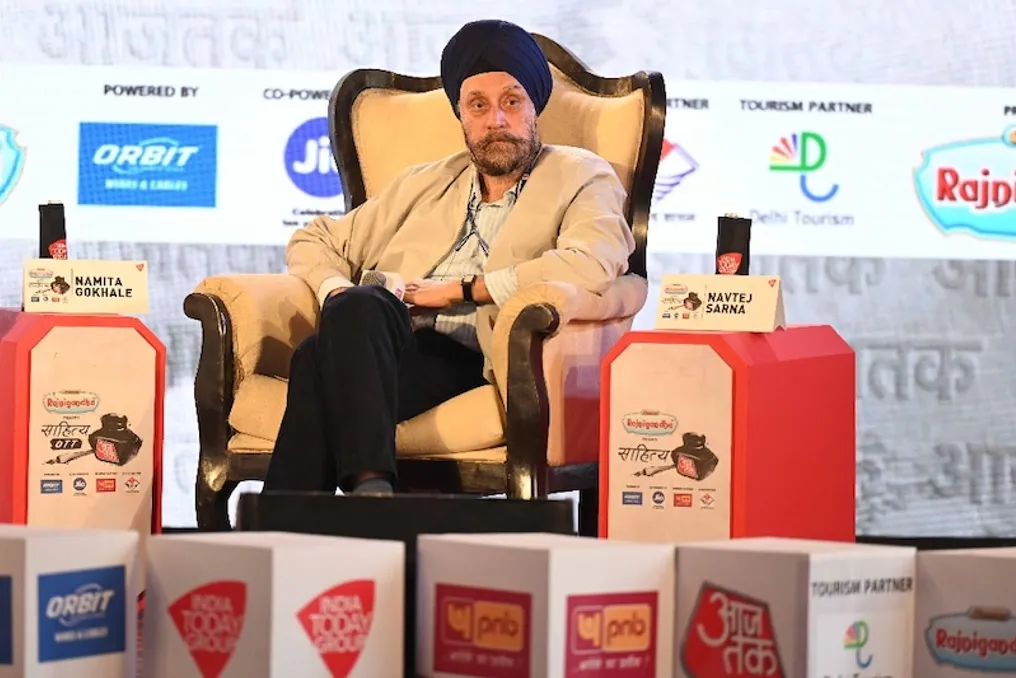
Navatej Sarna speaks on the Jallianwala Bagh and Koh-i-Noor Uprisings, stating that empires do not apologize for their past
Read more
Aaj Tak
www.aajtak.in

Navatej Sarna speaks on the Jallianwala Bagh and Koh-i-Noor Uprisings, stating that empires do not apologize for their past

During literary discussions held on the third day of the 'Sahitya Aajtak' event in 2026, several authors shared their thoughts on various topics. The session dedicated to the question, 'Why does the past attract writers?' garnered particular interest. Participants included former diplomat and writer Navatej Sarna, renowned writer Namita Gokhale, and former diplomat and writer Lakshmi Puri.

During the conversation, all three highlighted plots from their books and touched upon numerous non-obvious aspects of history, mythology, Indian culture, colonial legacy, and women's empowerment. Important issues were raised concerning the tragedy at Jallianwala Bagh, the return of the Koh-i-Noor, forgotten characters from the Mahabharata epic, the ecological crisis in the Himalayas, and the role of women in Indian traditions.

The authors emphasized that the past enriches not only their creativity but also provides perspective for understanding the present and improving the future.

Former diplomat and award-winning author of the 'Sahitya Akademi,' Navatej Sarna, presented his views on questions such as: 'Why has the British government still not offered an official apology for the Jallianwala Bagh tragedy? Why has the Koh-i-Noor not been returned to India?' He discussed British colonialism, lesser-known pages of history, and the responsibility of writers through the lens of his works in detail.

Refusal of the Koh-i-Noor Project

Navatej Sarna recounted that he was initially supposed to be the third author of a book about the Koh-i-Noor, written by William Delrimple and Anita Anand. He was slated to write the third book, and the contract had already been signed. However, during this period, he was appointed as the High Commissioner of India in Britain. This placed him in a moral dilemma: if he wrote such a book and traveled to Britain, it could complicate the task assigned to him by the Government of India. For this reason, he withdrew from the project himself.

Cannot Wait for Apologies

Addressing the Jallianwala Bagh tragedy and the return of the Koh-i-Noor, Navatej Sarna noted that the injustice committed during colonial rule cannot be denied. Nevertheless, he stated that one cannot simply wait for the Koh-i-Noor to return or for an apology for Jallianwala Bagh to be issued in order to move forward. He recalled that Britain expressed deep regret on the centenary of the Jallianwala Bagh tragedy. At that time, he wrote an article arguing that a mere expression of regret is insufficient. Sarna concluded that it is sad that empires do not apologize for their past. He added that India's dignity lies in the fact that regardless of whether the opponent apologizes for its mistake or not, India must move forward.

Justifications for Refusing the Return of the Koh-i-Noor

Navatej Sarna pointed out the numerous arguments put forth by Britain regarding the return of the Koh-i-Noor. The question arises as to whom it should be returned, since it belonged to Maharaja Ranjit Singh and was associated with Lahore. Pakistan and Afghanistan have also made claims regarding this. He noted that regardless of whether the Koh-i-Noor is returned, future generations can be told where, how, and under what circumstances it was acquired.

Translating His Father's Stories

Navatej Sarna also shared his experience translating his father's stories about the partition of India. His father wrote about a hundred stories on the partition, from which Sarna selected thirty. Sarna said, 'If you cried reading these stories, I cried translating them. I heard my father's voice.' He explained that his father personally experienced the tragedy of partition and lost his sister. The main goal of his work was to show that there are good and bad people in every religion, and that hope in humanity should not be lost even in the toughest times.

Historical Date of Flags

In his new book, which mentions the history of the national flag, Navatej Sarna clarified that the commonly held belief that the tricolor was hoisted over the Red Fort on August 15, 1947, is incorrect. According to him, the flag was hoisted over the Red Fort on August 16, 1947. The day before, on the evening of August 15, the flag was publicly hoisted at Prince Park near the India Gate. He urged people to respect the national flag and observe the related rules.

Similar stories

Devadhatta Patnaik discusses the transformation of deity worship traditions in India from temples to music
Read more
www.aajtak.in

Devadhatta Patnaik discusses the transformation of deity worship traditions in India from temples to music

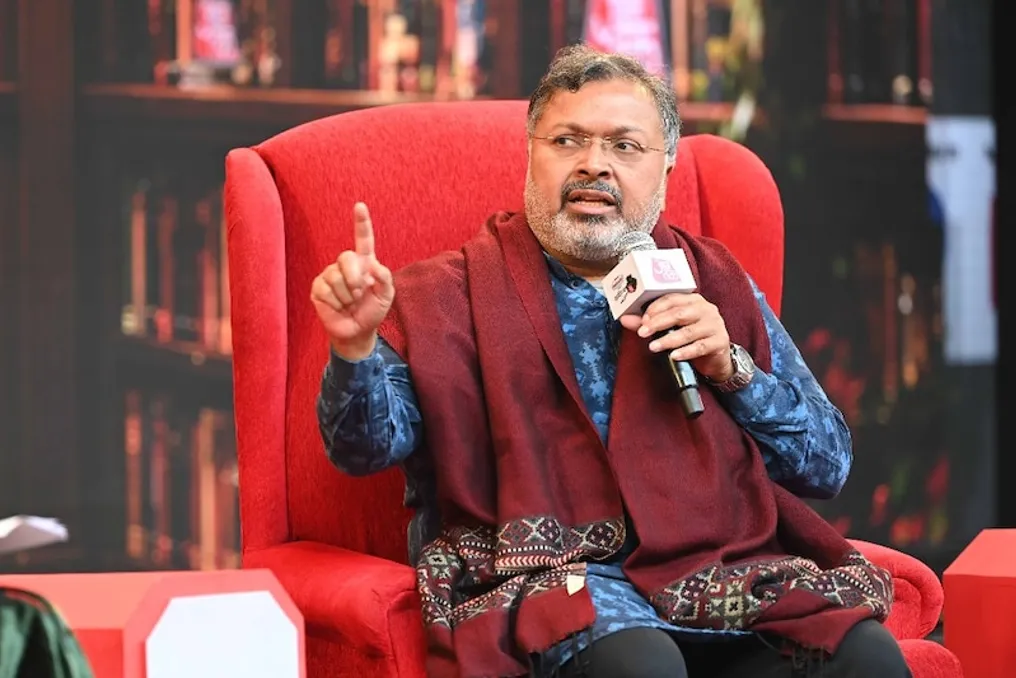
During the session 'Hinduism: Religion, History and Myths' on the Sahitya Aajtak platform in 2026, renowned mythologist, writer, and artist Devadhatta Patnaik shared his views on religion, Indian traditions, the Vedas, history, and philosophical debates. He also commented on modern trends such as the rise of religious events, bhajan clubs, and television debates.

Devadhatta Patnaik noted that while bhajan clubs have their value, they do not contribute to the increase of knowledge. Curiosity, dialogue, and philosophical disputations (shastrartha) are necessary for gaining knowledge.

When asked whether contemporary religious events, where kirtans and bhajans are gaining popularity, will include philosophical debates and religious dialogues, Patnaik replied that bhajan clubs are for some people, and shastrartha is for others. He emphasized that some people dislike participating in shastrartha, even if they are connected to this tradition.

He refused to deem bhajan clubs wrong, stating that bhajan club sessions will also be held in temples in the future. In a humorous manner, he mentioned that nowadays people engage in bhajan clubs while consuming sattvic food. He added that if a child tells their parents they are going to a club, they might not approve, but if they say they are going to a bhajan club and will eat sattvic food, the parents will gladly agree.

'People are afraid because they do not believe in their religion'

Stressing the need to read one's own scriptures, Patnaik stated that he has observed that people lack sufficient understanding of Indian history and modernity. He gave an example, noting that Indian history is considered ancient, around 5000 years old, whereas the rule of Muslim sultans lasted approximately 500 years, and British rule lasted about 200 years. In his opinion, these periods should be viewed in the context of the entire history.

He believes that when people discuss these eras, it indicates their distrust in their own religion and traditions. They are so frightened that they lack knowledge of their sacred texts. Patnaik concluded that understanding Indian tradition requires knowing its long history and tradition of knowledge.

Explaining the difference between debate and dialogue in the context of religious discussions, Devadhatta Patnaik noted that the technique of debate is called argumentative and has roots in Greek tradition. According to him, this style of debate entered the Indian tradition after Alexander's arrival in India, through Greek intellectuals.

He asserted that there was originally a tradition of dialogue in India. As an example, he cited Janaka Sabhu, where people gathered not to defeat each other, but to find out how much knowledge each person possessed and what a new person could contribute.

He quoted the thought: 'Saraswati is born from curiosity.' In his view, the Upanishads, Brahmanas, Aranyakas, and Vedas gatherings show a tradition of dialogue, where questions were asked, opinions were listened to, and new knowledge was sought.

When asked if the freedom of doubt and argumentation within Hinduism can be considered a specialty, Patnaik replied that the concepts of 'right' and 'wrong' are not part of the Vedas. He linked this to Western thinking, explaining that in Indian philosophy, a person does not possess complete knowledge of the whole truth. He referred to Shankara's statement: 'The world is an illusion, Brahman is the truth,' asserting that every person possesses only partial truth. One may be an expert in one field, and another in another, so curiosity must be shown to learn from each other's experiences and knowledge.

Giving the example of journalism, he said that if he sits with a journalist, he must be curious about their experience and life. Similarly, the journalist can ask questions about the interviewee's topic. Thus, both can learn from each other and expand their knowledge.

Commenting on social media discussions, Patnaik noted that arguments begin when curiosity disappears. In his opinion, in today's debates, people strive to defeat their opponent rather than understand them. When he watches television debates, he sees egoism, not soul. He also mentioned disputes between gurus and religious figures on social media, calling languages like 'panchd khim', 'dibenkd khim', and 'slapd khim' a language of violence, not knowledge and dialogue.

Devadhatta Patnaik concluded that ignorance breeds egoism. Although bhajan clubs can excite people's emotions and bring them pleasure, the real question is whether they enhance intellect and knowledge.

Discussion of Literature, Fiction, and Female Entrepreneurship at Aajtak Event
Read more
www.aajtak.in

Discussion of Literature, Fiction, and Female Entrepreneurship at Aajtak Event

The second day of the 'Sahitya Aajtak 2026' event, organized by India Today Group at Major Dhyan Chand Stadium in New Delhi, was successful. In the session titled 'Beyond the Pages: Fiction, Yatharth aur Imagination,' award winners from the Sahitya Akademi Prize, Dr. Anamika, writer Shindhji Kumar, and screenwriter Anu Singh Choudhary participated.

The participants discussed a wide range of topics, including literature, cinema, feminist issues, and freedom of expression.

Sonia Gandhi's book discussed at literary forum: Comments by Chief Minister Himanta Biswa Sarma
Read more
www.aajtak.in

Sonia Gandhi's book discussed at literary forum: Comments by Chief Minister Himanta Biswa Sarma

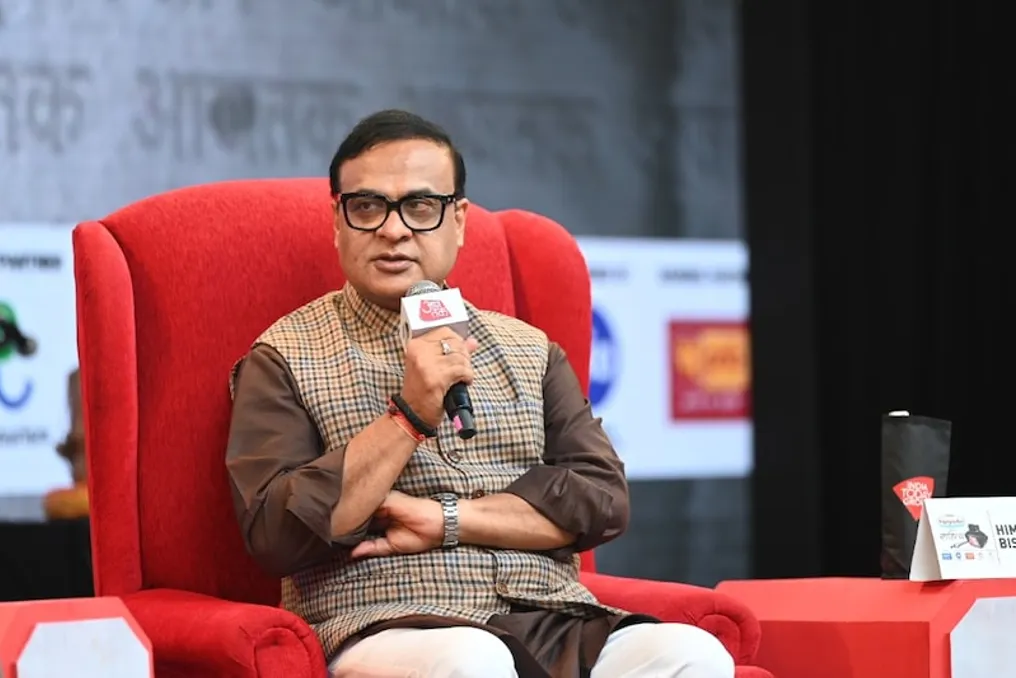
At the 'Sahitya Aajtak' 2026 event, there was a discussion with Assam Chief Minister Himanta Biswa Sarma about political memoirs and autobiographies. The question of the degree of truthfulness when politicians write about their lives was raised, as well as whether a memoir is used to improve one's image or advance a political agenda. Sonia Gandhi's memoirs were also mentioned during the discussion.

On this matter, Chief Minister Himanta Biswa Sarma noted that there are two possible motives for writing memoirs. The first is promoting one's own ideology and agenda to gain an advantage in someone's future political life. The second is presenting the truth about one's own life to the public. In his opinion, it is crucial for someone writing an autobiography to have the courage to speak the truth about themselves.

'It is not enough just to write about the good things'

Himanta emphasized that every person's life contains both positive and negative aspects, and no one always acts correctly. Therefore, when compiling an autobiography, the author must have the courage to reveal their mistakes and weaknesses. He stated that a book in which the author presents themselves as flawless has little value. Memoirs are considered acceptable only when they reflect both sides of life.

Himanta's comments on Sonia Gandhi's book

Commenting on Sonia Gandhi's memoirs, Chief Minister Himanta Sarma stated: 'This is my personal opinion, but many questions remain unanswered in it.' He added that when writing about one's life, a person must think completely impartially and objectively. If the author is guided by the thought that their book will help gain votes in the next election or ease their son's path in politics, then they cannot write true memoirs.

According to Himanta, the author of an autobiography needs the courage to write the truth about their life, separate from their current political or personal interests.

Popular