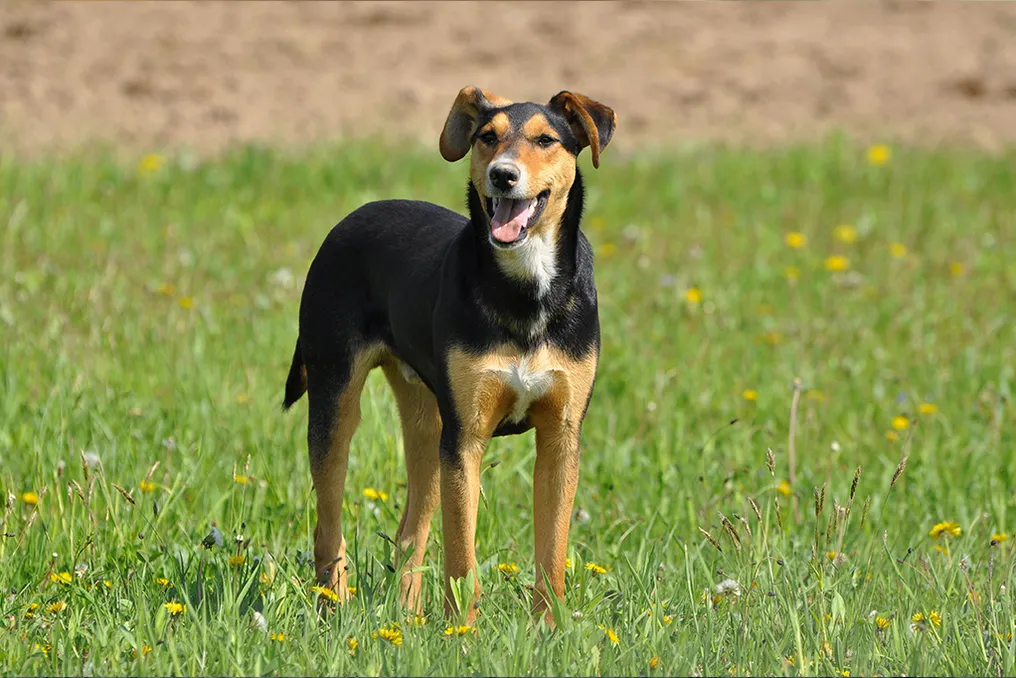
The Huntaway, classified as a New Zealand herding dog, has a peculiar history, being notorious for emitting extremely loud barks. This article, originally published on The Conversation website, details the origin and development of this breed.
In various parts of New Zealand, events known as 'bark-ups' are frequent in commercial establishments and agricultural fairs. At these gatherings, the Huntaway breed is presented, and the central purpose of the 'bark-up' is to determine which dog can produce the most powerful bark.
To external observers, the question arises as to why a competition focused on the volume of a herding dog's bark would be held. The answer lies not only in the sheep farms where the Huntaway was bred but also in the context of the country's colonization, given that herding dogs are lineages originating from the British Empire.
The modern herding dog has roots in the Victorian era. Queen Victoria herself showed an appreciation for the collie, acquiring high-quality specimens on the border between England and Scotland. These dogs were crucial to the emergence of herding dog competitions in the early 20th century.
During this period, herding dogs began to incorporate the moral values of the Victorian era. The ideal dog model should exhibit discipline, intelligence, moderation, obedience, and dedication, and above all, maintain silence during work—characteristics that were also expected of human shepherds.
Entities such as the International Sheep Dog Society helped consolidate these ideals. Under the direction of its influential honorary secretary, James Reid, the Border Collie was conceived not only as an efficient working animal but as the pinnacle of canine improvement. Exported to all British colonies, the breed became a symbol of the empire, carrying specific concepts about flock management, ethical character, and agricultural modernity. Reid even stated that the herding dog constituted the basis of the pastoral economy, whose intellect and labor sustained the success of the British Empire.
Scottish settlers had already introduced their herding dogs to New Zealand in the mid-19th century. However, it was James Lilico, a native of Northumbria, who revolutionized New Zealand herding dogs. Upon arriving in 1894 to work as a shepherd, he quickly requested his dog, Captain, back home, expressing dissatisfaction with the 'useless vagrants' provided to him for work.
Thus, a fifty-year period began of importing the best herding dogs that Lilico could find, often champions. This earned him the nickname 'King of New Zealand Collies.' Lilico imported dogs bred with the quality called 'look' (herding through a penetrating gaze), which gained great value among competitors. In developing them, Lilico advocated for the supremacy of what he called 'border dogs' in his weekly column in the New Zealand Farmer magazine.
Lilico's practices were not universally accepted, especially his criticisms directed at herding dogs and shepherds operating in the mountainous areas of New Zealand. For the shepherds in those regions, the intense-gaze dogs promoted by Lilico were considered slow, excessively delicate, and insufficiently vigorous. From their perspective, the sheep needed to be guided, not hypnotized.
Their counterproposal was the Huntaway. The distinguishing factor of the Huntaway compared to the Border Collie was its bark. In open environments, without physical barriers, the bark became an essential tool for shepherds. Before gathering the sheep, shepherds would gather their dogs and train them to bark. This bark—similar to those seen currently in bars—served to direct the sheep from a distance, allowing the flock to already be moving when the shepherds arrived.
Although the bark defined the Huntaway, its physical appearance contrasted sharply. Old photographs show a diversity of shapes and types: from small and adorable dogs to more robustly built collies. However, as sheep farming expanded from the South Island to the mountainous regions of the North Island, the Huntaway underwent a process of evolution.
To give the Huntaway greater power, enabling it to handle stubborn Romney sheep, its bark was intensified. Breeding experiments involving mastiff, Rottweiler, Labrador, hunting dogs, and other breeds aimed to improve the strength of the bark. Larger Huntaways became more common, but even today, the breed remains resistant to standardization, preserving its ability to bark continuously.
Fundamentally, despite the advancement of New Zealand agriculture being part of a scientific 'pasture revolution,' the scientists involved had little connection with herding dogs. The Huntaway, on the other hand, represented the spirit of the farmers, being a 'practical dog for practical men.' Scientists and breeders' associations remained distant, fearing they would harm the purity of the breed.
In 2013, the New Zealand Kennel Club recognized the Huntaway as a distinct breed, although its origins remain uncertain. Recent genetic research indicates that it shares kinship with the Border Collie and other breeds imported in the 19th century. The genetic traits of the working breeds are harder to trace, which strengthens the mythology surrounding the breed.
It is also possible that the trademark of the Huntaway—its bark—is not merely a New Zealand invention, but rather a reflection of its past. In Scotland, in 1935, James Reid delivered a speech celebrating the fact that the Border Collie had surpassed all other herding dog breeds. Its popularity led to the decline of other barking herding dogs used throughout Wales and southern England, relegating them to history.
When James Lilico wrote about the Huntaway in one of his three books, he received correspondence from a shepherd from North Wales suggesting that the Huntaway did not differ much from the dog known as ci hanos, a dog that used barking to guide sheep to the hills during spring. Lilico intended to import one of these dogs as part of a breeding project. Such an experiment could be even more relevant today, given the narrowing of the Huntaway's gene pool: the closure of large sheep farms in New Zealand is making genetic selection difficult. This raises existential questions about herding dogs themselves, because without sheep, there will be no herding dogs.