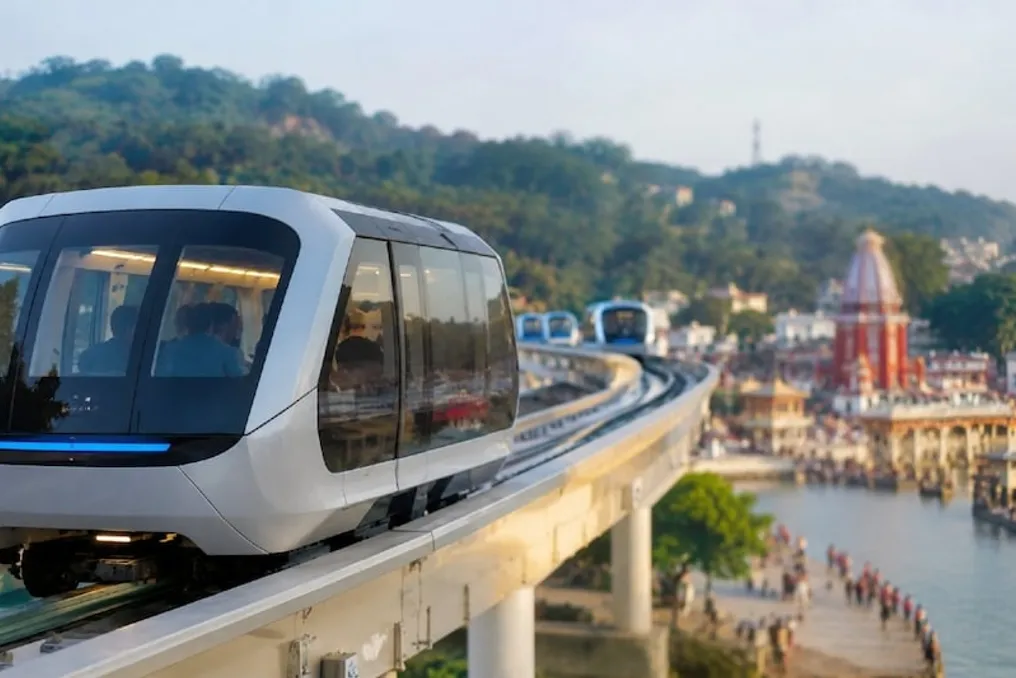
The city of Haridwar is preparing to introduce a new transport system—driverless capsule taxis. This initiative is aimed at solving problems with traffic jams, congestion, and difficult movement in the area of popular tourist and religious sites, such as Haridwar Kai Puri, Mansa Devi, and the Daksha temple.
It is planned that the system will consist of capsules that will move along an elevated steel track without the involvement of drivers. This mega-project, overseen by the government of Uttarakhand state, is estimated to cost about 3028 crore rupees.
At the Uttarakhand State Cabinet meeting on November 27, the 'Haridwar Darshan' project—a Personal Rapid Transit (PRT) system—was approved. According to this scheme, driverless capsules will transport pilgrims and tourists between various points in the city, moving along viaducts built above the road surface.
The 'Haridwar Darshan' project represents a PRT system that will cover three separate corridors in the city. The total length of these three routes will be 21.08 kilometers, and the construction of 21 stations is planned.
The capsules will operate autonomously, using battery power, and will travel along steel viaducts installed on pillars within the city limits. Each capsule is designed to carry from four to six passengers, and the estimated average speed of movement is from 40 to 60 kilometers per hour. The goal of the system is to provide convenient and comfortable transport between major tourist and religious sites.
A network transport structure will be created to implement the project. Three main routes have been identified. The first and longest corridor will run from Sitapur to Bharat Mata Temple, measuring 15.58 kilometers and featuring 15 stations. The second corridor will connect the City Hospital with the Daksha Temple, spanning 3.10 kilometers and having four stations. The third route is planned between Ganeshpur and DAV School, with a length of 2.40 kilometers and two stations.
The initially proposed route faced local resistance, leading to changes in its alignment. Preparations for the launch of the project continue under the revised scheme. The capsule system requires a plot of land measuring 6.9555 hectares, of which 6.1171 hectares belong to state land and 0.8384 hectares to private land. Additionally, adjacent to the planned PRT control center in Sitapur, temporary use of 2 hectares of land for five years is provided for construction needs, including the placement of building materials and equipment.