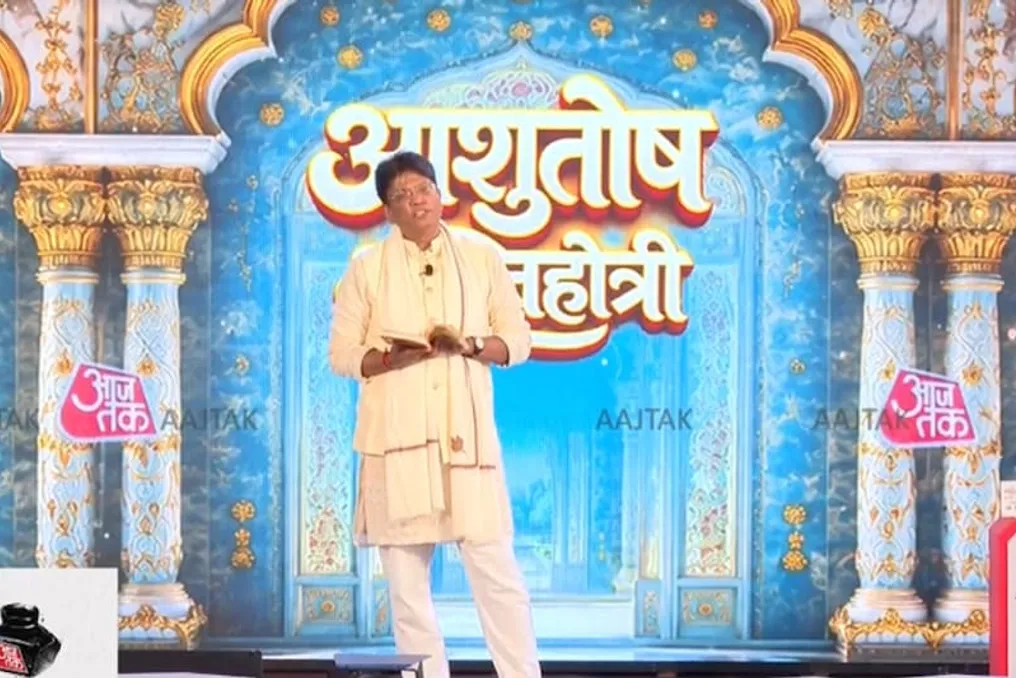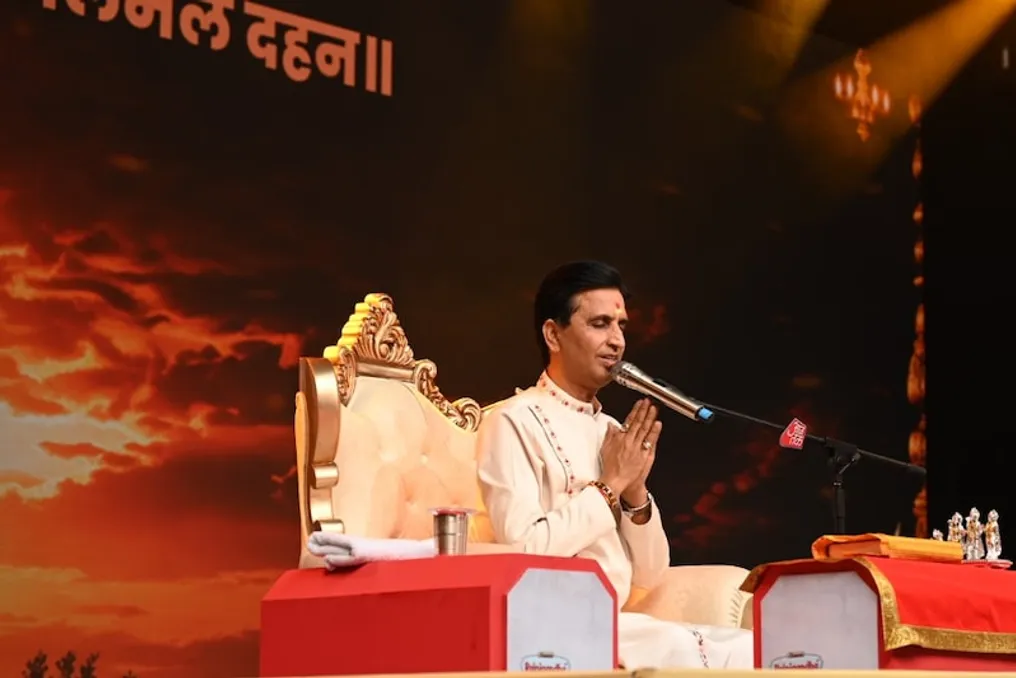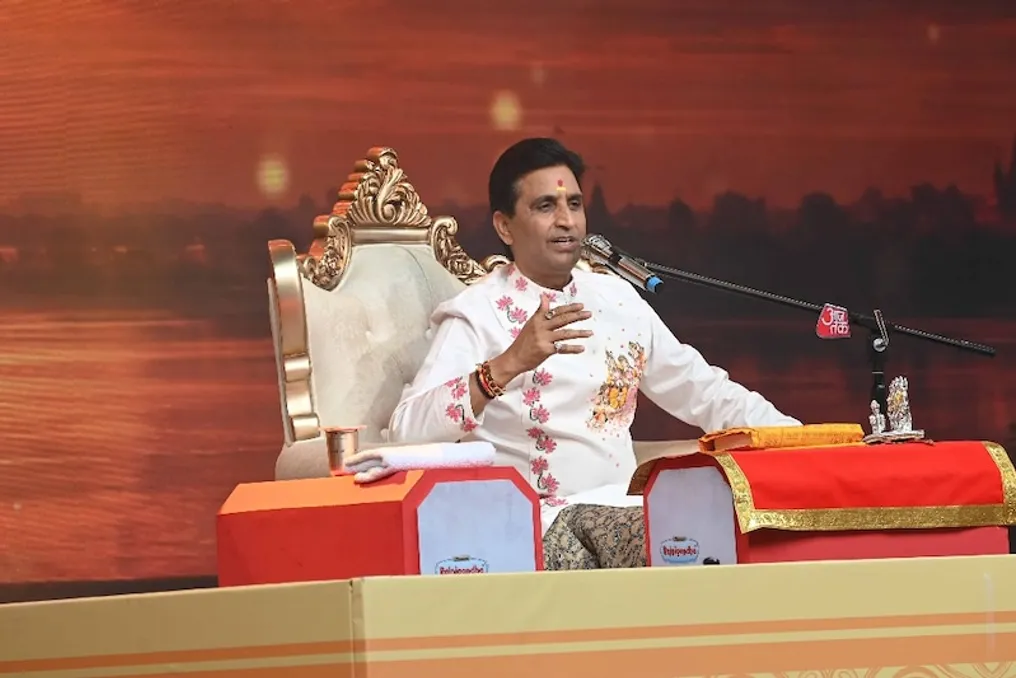
At the 'Sahitya Aajtak' event, poet Kumar Vishwas continued his series of speeches titled 'Swoi-Swoi Ramas,' dedicated to Ramakatha. In these addresses, he touched upon themes of social harmony, religious accord, family bonds, and the current political situation.
Discussing the dispute between temples and mosques, Vishwas emphasized the necessity of mutual love in society, yet noted that this love should not be one-sided. He stated that everyone must acknowledge the fundamental nature of Indian and national traditions and values.
Regarding the dispute over Diptam, the poet opined that actions taken by court order should have been carried out with mutual consent. He suggested that those holding opposing views should have initiated the proposal themselves, suggesting lighting the lamp of their deity, which would foster social harmony.
Kumar Vishwas highly praised the power and grandeur of Kals Pant, questioning if anyone in the world had seen a Gurdwara built on the ruins of another religious structure. Citing the Jain community as an example, he raised the issue of building mosques on the site of destroyed temples, asserting that every resident of India must accept that such an occurrence should not have happened.
To illustrate the idea of religious unity, Vishwas used an example from the film 'Amar Akbar Anthony.' He explained that a father whose sons practice different religions ultimately turns out to be the same person. The poet declared: 'India is that Kanhaiya Lal whose sons belong to different religions. Everyone built their homes separately, chose their own methods of worship, and established their own festivals.' He added that the diversity of worship methods does not change the connection of a person to their homeland, much like one father might celebrate festivals in the houses of four sons on different dates; this is mutual affection.
Clarifying the differences between Rama and Krishna, Vishwas linked this to contemporary politics. He observed that the country needs to show interest in both Rama and Krishna. According to him, during Atal Bihari Vajpayee's tenure in the Indian National Party, Ramkala prevailed, whereas now the Krishnakala has arrived. Kumar Vishwas reminded that Atal stated in the Lok Sabha that he does not accept a government that is saved by buying a seat, as this violates the boundaries of dignity, which was Ramkala. Now, regardless of securing seats, they will build a government, which aligns with Krishnakala, and the time demands that Krishna also evolves.
Vishwas explained that Rama had to leave home due to conspiracies, while Krishna neutralized every conspiracy from his home. Rama endured suffering while upholding ideals, but Krishna never fell into the traps of intrigue. He contrasted them: Rama freezes upon seeing his brother unconscious, whereas Krishna is willing to risk the life of his beloved nephew Abhimanyu to defend the truth. Speaking of the battle of Abhimanyu, Vishwas noted that when everyone wished for Abhimanyu to live, Krishna wished for his glory. He concluded that a person's glory is more important than life or death, and that being 'Krishna' is as necessary as being 'Rama.'
Highlighting the contrast between Rama and Ravana, Kumar Vishwas asserted that both are not merely characters but rather manifestations of certain trends. He mentioned that in Satya Yuga, gods and demons lived in separate worlds; in Treta Yuga, they were in different countries; in Dwara Yuga, they became part of one dynasty (Yudhishthira and Duryodhana); and in Kali Yuga, gods and demons inhabit one heart. In his view, Ravana dominates people, while Rama governs humanity. Ravana relies on arrogance, whereas Rama trusts himself. For Ravana, knowledge breeds hubris, while for Rama, knowledge is an antidote to arrogance.
Vishwas analyzed the figure of Kaiki's mother in the context of Rama's exile. He said that every family has a person like Shiva who absorbs all the poison of the family but does not let it penetrate his heart. He argued that Kaiki absorbed the poison of the Ikshaku lineage. He added that with proper study of Ramakatha, it becomes clear that the fault does not lie with Kaiki. Rama understood that all this happens for the welfare of the entire world.
Quoting the dialogue between Rama and Kaiki in Chitradju, Kumar Vishwas noted that Rama vindicates his mother, praising her as the mother who bore a brother like Bharat.
He addressed the youth, stating that Kaiki suffered insults for years. He advised young people aspiring to achieve great things or do good for society to be prepared for criticism. However, he warned that any activity should not pursue personal goals. One must act not to make their Bharat a king, but for Rama's exile, to destroy the demons.
Finally, Kumar Vishwas advised students studying journalism and mass communication to draw lessons from Ramakatha while mastering the art of communication.