Poem 'Sab Par Ram Tapasvi Raja' was read at Sahitya Aajtak
Read more
Aaj Tak
www.aajtak.in

Poem 'Sab Par Ram Tapasvi Raja' was read at Sahitya Aajtak

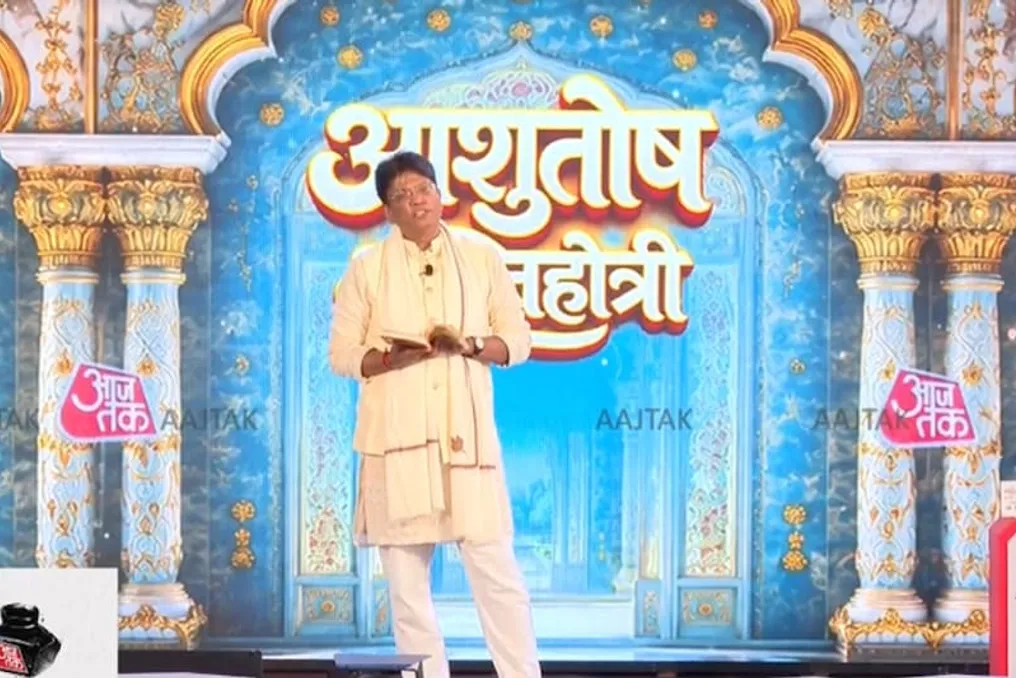
Various events dedicated to literature, poetry, and ideas took place at the Sahitya Aajtak venue on the last day of 2026 at the National Stadium Major Janchhand in Delhi. As part of these events, the poet, writer, and IAS officer Ashutosh Agnihotri recited his poetic work 'Sab Par Ram Tapasvi Raja' during a poetry reading session.

Through this work, various aspects of Rama's character, his ideals, and Indian cultural consciousness were presented through poetry. This book was included in the shortlist for the 'Sahitya Aajtak Sahitya Jagriti Kavita Samman' 2026 award, which featured five collections of poems.

Ashutosh Agnihotri's performance served as an example of a dialogue between literature and Indian cultural traditions. The main point of this presentation was the endeavor to examine the character of Rama and the values associated with him in a contemporary context through poetry.

The reading of this work took place at the conclusion of a three-day literary festival, where themes related to literature, history, culture, poetry, and Indian traditions were discussed and presented. Thus, the reading of 'Sab Par Ram Tapasvi Raja' became an important part of the discussions on literature and Indian culture at the festival.

In this poetic work, an attempt is made to understand the human, moral, and cultural aspects of Rama, rather than viewing him solely as a religious or mythological figure. The publisher's description of the book also emphasizes that Rama is an integral part of the Indian socio-cultural consciousness.

Similar stories

The Quintessence of Ramakatha: Kumar Vishwas on Rama's Sovereignty Over Humanity
Read more
www.aajtak.in

The Quintessence of Ramakatha: Kumar Vishwas on Rama's Sovereignty Over Humanity

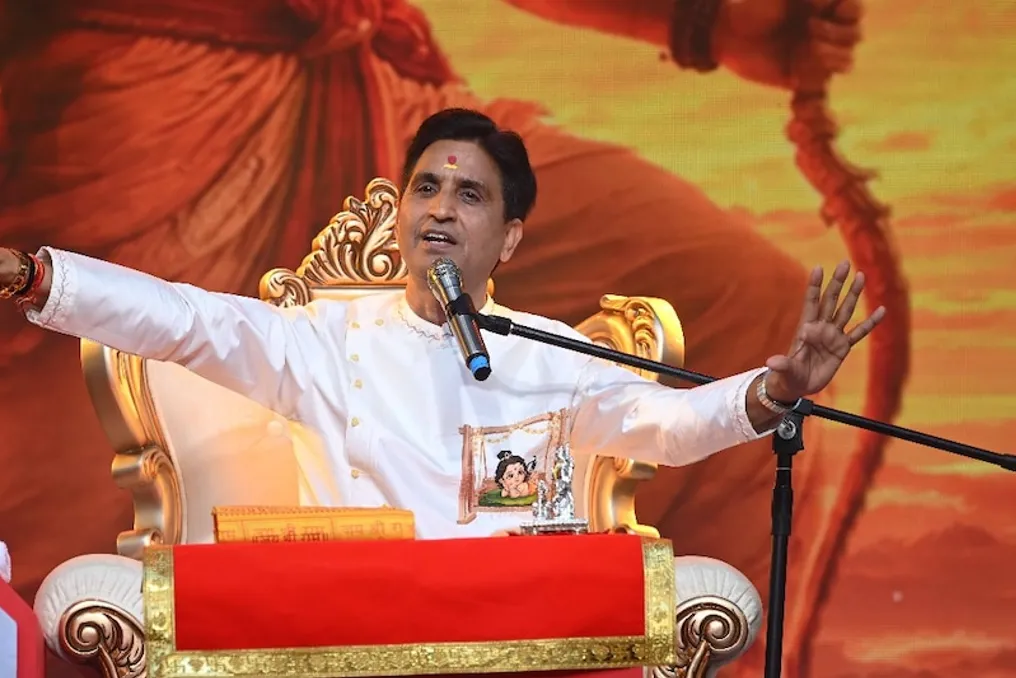
At the 'Sahitya Aajtak' event, poet Kumar Vishwas continued his series of speeches titled 'Swoi-Swoi Ramas,' dedicated to Ramakatha. In these addresses, he touched upon themes of social harmony, religious accord, family bonds, and the current political situation.

Discussing the dispute between temples and mosques, Vishwas emphasized the necessity of mutual love in society, yet noted that this love should not be one-sided. He stated that everyone must acknowledge the fundamental nature of Indian and national traditions and values.

Regarding the dispute over Diptam, the poet opined that actions taken by court order should have been carried out with mutual consent. He suggested that those holding opposing views should have initiated the proposal themselves, suggesting lighting the lamp of their deity, which would foster social harmony.

Kumar Vishwas highly praised the power and grandeur of Kals Pant, questioning if anyone in the world had seen a Gurdwara built on the ruins of another religious structure. Citing the Jain community as an example, he raised the issue of building mosques on the site of destroyed temples, asserting that every resident of India must accept that such an occurrence should not have happened.

To illustrate the idea of religious unity, Vishwas used an example from the film 'Amar Akbar Anthony.' He explained that a father whose sons practice different religions ultimately turns out to be the same person. The poet declared: 'India is that Kanhaiya Lal whose sons belong to different religions. Everyone built their homes separately, chose their own methods of worship, and established their own festivals.' He added that the diversity of worship methods does not change the connection of a person to their homeland, much like one father might celebrate festivals in the houses of four sons on different dates; this is mutual affection.

Clarifying the differences between Rama and Krishna, Vishwas linked this to contemporary politics. He observed that the country needs to show interest in both Rama and Krishna. According to him, during Atal Bihari Vajpayee's tenure in the Indian National Party, Ramkala prevailed, whereas now the Krishnakala has arrived. Kumar Vishwas reminded that Atal stated in the Lok Sabha that he does not accept a government that is saved by buying a seat, as this violates the boundaries of dignity, which was Ramkala. Now, regardless of securing seats, they will build a government, which aligns with Krishnakala, and the time demands that Krishna also evolves.

Vishwas explained that Rama had to leave home due to conspiracies, while Krishna neutralized every conspiracy from his home. Rama endured suffering while upholding ideals, but Krishna never fell into the traps of intrigue. He contrasted them: Rama freezes upon seeing his brother unconscious, whereas Krishna is willing to risk the life of his beloved nephew Abhimanyu to defend the truth. Speaking of the battle of Abhimanyu, Vishwas noted that when everyone wished for Abhimanyu to live, Krishna wished for his glory. He concluded that a person's glory is more important than life or death, and that being 'Krishna' is as necessary as being 'Rama.'

Highlighting the contrast between Rama and Ravana, Kumar Vishwas asserted that both are not merely characters but rather manifestations of certain trends. He mentioned that in Satya Yuga, gods and demons lived in separate worlds; in Treta Yuga, they were in different countries; in Dwara Yuga, they became part of one dynasty (Yudhishthira and Duryodhana); and in Kali Yuga, gods and demons inhabit one heart. In his view, Ravana dominates people, while Rama governs humanity. Ravana relies on arrogance, whereas Rama trusts himself. For Ravana, knowledge breeds hubris, while for Rama, knowledge is an antidote to arrogance.

Vishwas analyzed the figure of Kaiki's mother in the context of Rama's exile. He said that every family has a person like Shiva who absorbs all the poison of the family but does not let it penetrate his heart. He argued that Kaiki absorbed the poison of the Ikshaku lineage. He added that with proper study of Ramakatha, it becomes clear that the fault does not lie with Kaiki. Rama understood that all this happens for the welfare of the entire world.

Quoting the dialogue between Rama and Kaiki in Chitradju, Kumar Vishwas noted that Rama vindicates his mother, praising her as the mother who bore a brother like Bharat.

He addressed the youth, stating that Kaiki suffered insults for years. He advised young people aspiring to achieve great things or do good for society to be prepared for criticism. However, he warned that any activity should not pursue personal goals. One must act not to make their Bharat a king, but for Rama's exile, to destroy the demons.

Finally, Kumar Vishwas advised students studying journalism and mass communication to draw lessons from Ramakatha while mastering the art of communication.
Poetry Discussion at the Sahitya Aajtak 2026 Event in Delhi
Read more
www.aajtak.in

Poetry Discussion at the Sahitya Aajtak 2026 Event in Delhi

The third and final day of the Sahitya Aajtak 2026 event is taking place at the Major Dhyan Chand Stadium in Delhi. This three-day event gathers prominent figures from the worlds of literature, poetry, cinema, politics, music, and art. In the first two days, various sessions attracted public attention, and on the last day, diverse facets of poetry and literature were presented.

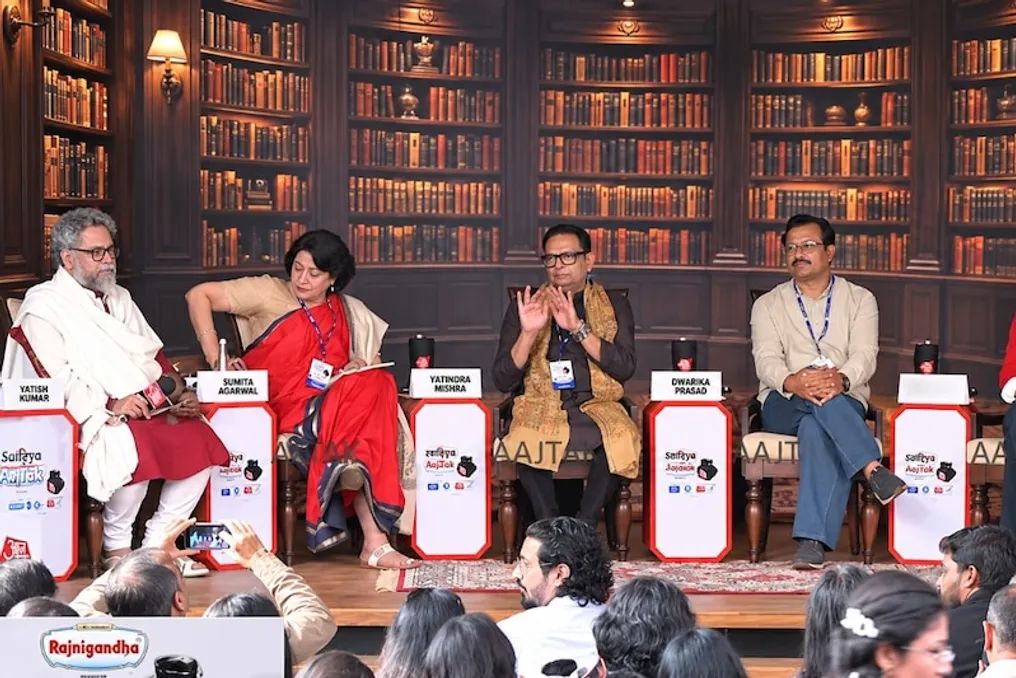
As part of the special session 'Today's Poetry, Current Poetry, Your Poetry' at Sahitya Aajtak 2026, renowned literary and poetic figures participated, including Dr. Sumita Mishra, Yatindra Mishra, Yatish Kumar, Dwarika Prasad Uniyal, and Anamika Anu. During the discussion, the process of creating verses, the creativity of the new generation, and the connection between poetry and the poet's personal experience were discussed.

Anamika Anu shared her journey in creating verses, recounting that her journey began in Bihar and continues in Kerala. She traveled from lemon groves to coconut plantations, and the transition from Maithili to Malayalam enriched her. It was among these diverse cultural ideas that her poetry was born.

Dwarika Prasad Uniyal spoke about the writing of the younger generation and methods of self-expression. He noted that the approach of the youth differs from previous generations. In his opinion, the youth read and write, but their manner of writing is more candid. He added that sometimes this youth can be 'politically incorrect,' and instead of suppressing their expression, they need to be guided in the right direction. He believes this is a 'real generation, not reels,' and emphasized the importance of directing their self-expression correctly. Uniyal also mentioned social media, noting that it has provided the youth with a large platform to express various viewpoints, and he is convinced that poetry remains a part of youth life.

Yatish Kumar discussed the interconnection between literature and humanity, stating that approaching literature makes a person better, and a better person becomes a better leader. He explained the difference between poetry and prose: poetry penetrates inward, whereas prose follows you. In his view, these are completely different things, and poetry is like grass growing on the soil of experience.

Yatindra Mishra revealed the power and influence of poetry, saying that poetry is like coal. He clarified that one cannot control whether this coal will turn into ash or a torch. Speaking about his literary journey, he mentioned starting literature at the age of 18 and interacting with his mentor and famous poet Kunwar Narayan. He recounted telling Kunwar Narayan about his desire to change the world with his thoughts, to which he replied that 'the country will not change through Ramayana-Mahabharata, but through your poetry.' According to Yatindra Mishra, Kunwar Narayan taught him to change himself and see this change through his poetry.

Dr. Sumita Mishra, an Indian Civil Services officer from the 1990 batch, writer, and poet who worked in senior administrative positions in the Haryana government, discussed the link between her work and poetry. She shared that many bitter experiences gained during her work became part of her poetry. She noted that some things she cannot say at work, she can express through poetry. She presented her experience through two lines of poetry and said that where there are limitations, poetry serves as her support for self-expression.

Throughout the session, poetry was viewed not merely as a genre of literature, but as something connected to experience, self-expression, and social change. The speakers demonstrated through their experiences how poetry penetrates a person, is born from personal experience, and how its form changes over time.

Sahitya Aajtak 2026 continues to showcase many facets of poetry and cinema. On the previous day, poets gathered audiences with their works at poetry evenings and mushairas. Poems on themes of humor, emotions, and daily life were performed on stage and highly appreciated by the audience. The three-day Sahitya Aajtak 2026 event takes place in Delhi at the Major Dhyan Chand National Stadium from November 27 to 29, providing a platform for the exchange of experiences and ideas with major figures from the worlds of literature, music, art, film, and thought.

Kumar Vishwas presented his Ramkatha at the 'Sahitya Aajtak' event
Read more
www.aajtak.in

Kumar Vishwas presented his Ramkatha at the 'Sahitya Aajtak' event

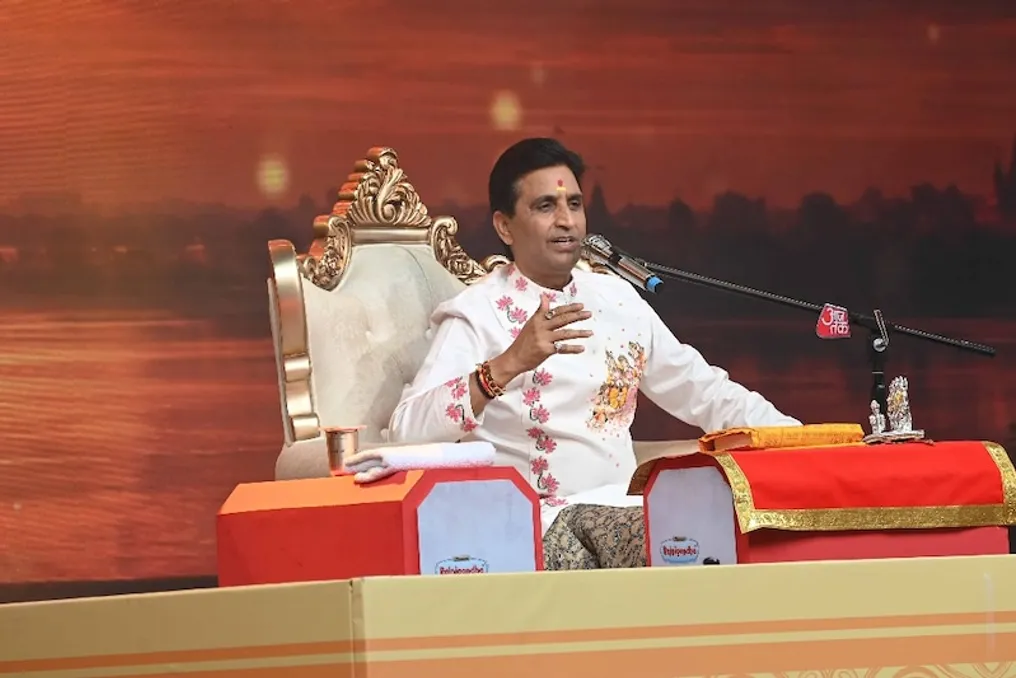
The 'Sahitya Aajtak' 2026 event began on November 27 in slightly cold weather, marking the start of a grand literary gathering. The commencement of this event was marked by a flow of Ramkatha that impressed the audience with its emotional impact. In his special presentation titled 'Apne-apne Ram,' Kumar Vishwas noted that the story of Shri Rama demonstrates the fine line between achieving success and attaining true meaning in life. This thought of the popular poet-thinker, who deeply understands the Ram history, was met with a thunderous ovation from the audience.

Kumar Vishwas discussed Ramkatha, the origin of literature, and the contribution of Maharishi Valmiki. He emphasized that literature is about involving everyone and expressing everyone's feelings. He called Ramkatha the greatest example of literature. During his speech, he also vividly explained the difference between God Rama and Krishna.

Vishwas stated that the Ramayana is the first poem and the first literature in the world; before it, there were only Vedic mantras, but no poetry. He recounted the story of the first verse uttered from the lips of Maharishi Valmiki. One morning, Valmiki emerged from the Tamsa river after bathing when he saw a pair of birds immersed in love. At that moment, the hunter shot an arrow at one of the birds. After the bird's death and hearing its mournful cry, a verse sounded from Maharishi Valmiki's mouth. This verse was written in the Anashtupa meter. Valmiki wondered how such rhythm and rhyme appeared in his words. He shared this story with Maharishi Narada. Narada told him that this was poetry, a divine gift, and the consciousness of art.

When Valmiki asked what to do with this talent, Devarshi Narada advised him to describe a person who would guide humanity in the future. For this, he suggested describing Rama, the son of King Dasharatha, born into the Ikshaku clan. Narada said that thanks to Maharishi Valmiki, feelings found language, and poetry appeared on the lips of the world. He also noted that Maharishi Valmiki was not an ordinary Rishi; even Lord Rama bowed his head before him and touched his feet. Kumar Vishwas mentioned the role of Maharishi Valmiki in the lives of Mother Sita and Lava-Kusha.

He uttered the words: 'It is Valmiki whose touch transforms a sorrowful verse. It is Valmiki whose creation brings Rama to the world.' Kumar Vishwas added that both Krishna and Rama are important in life. When asked about the difference between Rama and Krishna, he answers with one phrase: 'Rama is a dream, and Krishna is the self.' The audience reacted approvingly to this statement.

Explaining the significance of Ramkatha, he asserted that the Ramayana cannot be viewed merely as the biography of God Rama. Ramkatha is an elixir that strengthens the human soul. Kumar Vishwas insisted: 'If any foreigner calls Shrimad Valmiki's Ramayana a biography of Rama, tell him that Ramkatha is not a biography, but an elixir. If medicine is the immunity of the body, then Ramkatha is the immunity of the soul.'

Kumar Vishwas noted that there are over 300 Ramkathas worldwide, which various poets and writers depicted in their own ways. The great poet Maharishi Valmiki wrote Rama first. He was followed by authors such as Goswami Tulsidas, Kaviraja Kamban, Bhavabhuti, Kalidasa, Maharishi Vyasa, and Bhasa. He concluded that 'the dream that humanity has seen until now—the most meaningful, the most complete, and the most sublime—is the dream of Rama.'

To explain a person's relationship with God, Kumar Vishwas used the example of health. He explained that a doctor can name the symptoms of an illness and prescribe medicine, but health has no distinct signs. A healthy body is health itself. Using this analogy, he said that Rama cannot be perceived merely as a means of escaping troubles. Rama is not a cure, but health. Kumar Vishwas stressed that a person should not get used to remembering God only in difficult times; remembrance of God should be constant in life. The most important thing is the feeling of gratitude towards God.

During the event, he also shared an anecdote from his speech. A young woman asked him why she should pray if morning prayers take half an hour, and why she should bow her head before her mother (God). Through this incident, Kumar Vishwas clarified the importance of faith and gratitude towards God.

Popular