Dakhla City in Western Sahara Aims to Become a Major Tourist Hub with Moroccan Support
Read more
Middle East Eye
www.middleeasteye.net

Dakhla City in Western Sahara Aims to Become a Major Tourist Hub with Moroccan Support

More than ten years ago, when Mireille Malbos first arrived in Dakhla, she found a city that was largely in an unfinished state of development. She noted that she observed enormous progress and values the place for its tranquility, exceptional quality of life, and beautiful nature, including the sea, lagoon, and dolphins.

Malbos, a French entrepreneur and guesthouse owner, personally witnessed the transformation of Dakhla into one of the main tourist destinations in Western Sahara. Located on the southern cape of the territory stretching into the Atlantic Ocean, the city attracts an increasing number of foreign guests—from windsurfing enthusiasts to tourists seeking solitude and closeness to nature.

However, for many Sahrawis, this idyllic picture greatly diverges from their reality. Yahdi Essabi, a Sahrawi journalist and human rights activist, first encountered Dakhla not as a resort, but behind the bars of a prison cell. In 2021, Moroccan authorities arrested Essabi on charges of filming military sites in the region.

He recalls inhumane and degrading treatment in prison, including deprivation of food, water, and sleep, psychological violence, insults directed at his Sahrawi identity, and refusal of medical care. Essabi also mentions pressure and threats from prison staff, who forbade him from speaking about what was happening inside. Due to ongoing repression by Moroccan authorities against supporters of Sahrawi independence, Essabi was forced to leave Western Sahara for his own safety.

These sharply contrasting experiences reflect the coexisting contradictory realities of Western Sahara—a territory shaped by more than fifty years of conflict. Western Sahara is a territory not part of the UN, whose decolonization process remains unresolved. The region has been under Moroccan control since 1975, while the Polisario Front, the nationalist movement of the Sahrawi people, continues to strive for self-determination.

The issue of Western Sahara has once again attracted international attention after the UN Security Council did not renew the mandate of MINURSO, the mission monitoring the ceasefire between Morocco and Polisario, raising fears of renewed hostilities. This move came amid growing international support for Rabat's proposal of autonomy for the territory, which was rejected by the independence movement. To gain this support, Morocco seeks to demonstrate governance over the territory through a series of large-scale projects, presenting them as models of sustainable development. However, Sahrawi rights defenders question both the impact of this strategy and who ultimately benefits from it.

“Dubai of North Africa”

Dakhla has become one of the most prominent examples of this strategy. Over the last decade, the city has undergone radical changes, facilitated by billions of dollars in public and private investment. The plan envisions transforming Dakhla into a major ecotourism center, which some Moroccan officials have dubbed the “Dubai of North Africa.”

Nevertheless, this strategy, dependent on a wide range of foreign investors, including companies from Europe, the US, China, the UAE, and Israel, raises questions about compliance with international law and the consequences for Sahrawi rights. Rashid Sghir, a Sahrawi from Dakhla, notes: “There are places where Sahrawis cannot move freely. This is especially true for areas where natural resources and tourism activities are located.”

Andrea Maria Pelliconi, a lecturer in human rights and global justice law at the University of Southampton, told MEE: “Foreign investments are not automatically illegal, but they become so when they contribute to entrenching an illegal situation or undermining the right to self-determination, especially without the consent of the Sahrawi people.”

New resorts, residential areas, port infrastructure, and desalination plants are transforming the urban landscape and economy of the territory. However, this process often leads to the displacement or marginalization of Sahrawi communities and restricted access to land and resources. According to Rashid Sghir, a native of Dakhla, the indigenous Sahrawi population, which now constitutes a minority after decades of demographic change, is increasingly marginalized in terms of rights and economic opportunities.

Sghir told MEE: “We do not have full freedom of movement in our own territory. Restrictions apply not only within the city but also in surrounding areas.” He added: “There are places where Sahrawis cannot move freely. This is especially true for areas where natural resources and tourism activities are located.” He also emphasized: “The system does not just control the movement and activities of people; there is also constant psychological pressure.”

The 2024 report by UN Secretary-General António Guterres noted the economic marginalization of the Sahrawi population. It stated that “reports described investments as often prioritizing interests that do not meet the needs of the local Sahrawi population, exacerbating economic inequality and hindering fair development for all Sahrawis,” and also noted that natural resources are being exploited without significant consultation or participation from affected communities.

Concrete in the Desert

Today, Dakhla represents one massive construction site. Along the main road leading from the city center to the cape, towards bay-view tourist resorts, the desert landscape is dotted with buildings under construction and an expanding network of roads. Analysis of satellite images by the Placemarks project, which studies environmental changes in Africa, shows that urban expansion began in 2016 and accelerated sharply since 2023.

In one of the city's peripheral zones, for example, around 130 hectares—equivalent to more than 180 football fields—plots have already been divided. Approximately 100 hectares of this land could be built upon. Currently, buildings occupy only two hectares, but with full development, the building area could increase by more than thirty times.

Developers actively promote Dakhla to foreign investors through elite residential projects aimed at affluent buyers. The Blue Bay Residency billboard reads: “Immerse yourself in unparalleled luxury at our coastal villas, where crystal-clear water stretches to the horizon. This stunning residence offers spacious, elegant rooms, meticulously designed to provide breathtaking views of the surrounding landscape.”

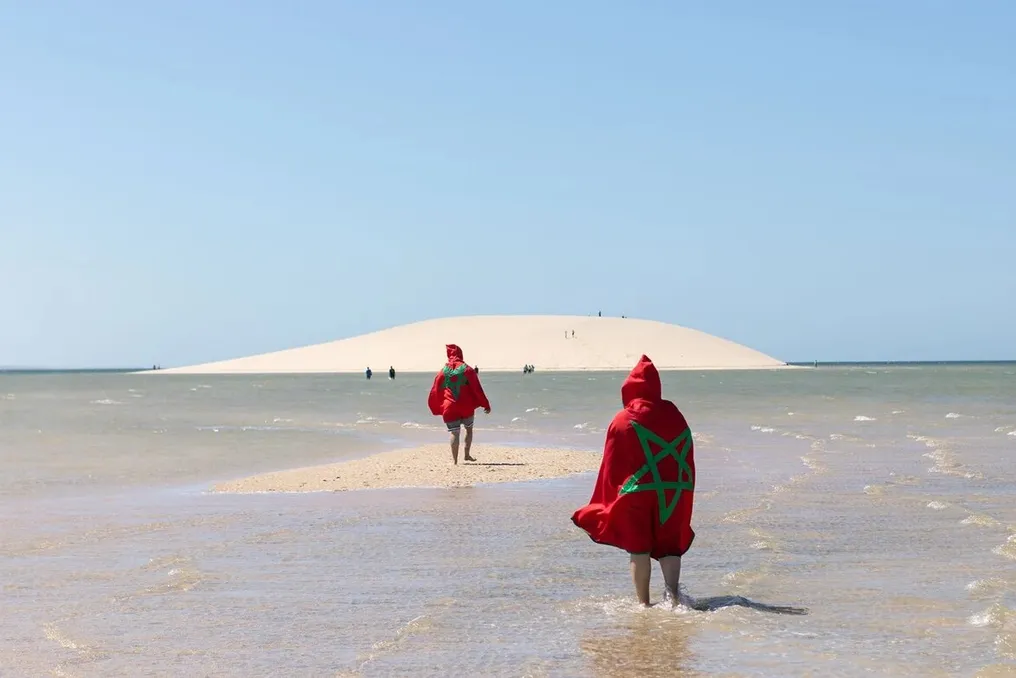
Along the bay, amidst sand dunes, numerous resorts offering all-inclusive packages have appeared in recent years, including windsurfing lessons, yoga sessions, and evenings with Moroccan cuisine and music, turning the coast into a tourist center primarily focused on foreign visitors.

However, the rapid pace of development raises concerns about its impact on the environment, including land degradation and increasing pressure on scarce water resources. Although Dakhla is advertised as a model of sustainable development based on ecotourism, renewable energy, and environmental restoration, the Moroccan document underpinning this strategy also warns that uncontrolled growth in tourism and infrastructure expansion could damage the fragile desert and coastal ecosystems of the region.

The document points out: “Today, population growth is suffocating the city, causing alarming levels of pollution, especially in the lagoon—which is a unique ecological and tourist attraction—as well as in other sensitive areas such as Sargha and White Dune.” One project near White Dune illustrates these concerns. A few meters from the White Dune eco-resort is the unfinished framework of what was supposed to be another eco-tourism complex covering about 3.5 hectares. Earthworks and terracing began in 2018 and continued until 2022, drastically changing the landscape, but the project was never completed due to financial disputes between investors. Today, instead of the planned tourist complex, the landscape above Dakhla's lagoon is crisscrossed with vast concrete surfaces.

Consolidation of Occupation

Between 2016 and 2025, the number of overnight stays in hotels increased from approximately 98,000 to 468,000, partly due to the introduction of new low-cost air routes connecting Dakhla with several European cities. International airlines such as Ryanair and Transavia, as well as accommodation and travel platforms including Airbnb, Booking.com, and Tripadvisor, are already positioning Dakhla as an integral part of Morocco, further blurring the disputed status of the territory.

Critics argue that Morocco's tourism plans in the region primarily serve a political agenda, shaping perceptions of the kingdom's presence in Western Sahara. A 2026 report supported by the Greens/EFA group of the European Parliament asserts that Rabat uses tourism development in Dakhla to strengthen its claims to the territory, presenting it as a sustainable tourist destination rather than occupied land.

Andrea Maria Pelliconi, a human rights lecturer, stated: “Tourism can help normalize Morocco's presence, presenting places like Dakhla as undeniably Moroccan.”

The report states: “Tourism under occupation does not require convincing visitors that Morocco has legitimate sovereignty over the territory. It can work much more easily: by creating an experience where this question almost never arises.”

This transformation is actively implemented through state policy, including allocating land belonging to private state property to investors at prices the report calls 'symbolic,' while depriving the indigenous Sahrawi population of control over their own resources. According to Pelliconi, “tourism can help normalize Morocco's presence, presenting places like Dakhla as undeniably Moroccan.”

He also noted to MEE: “Airlines, tour operators, online platforms, and international tourists can contribute to this process, often without intending to take a political stance. Many visitors may not even realize that Western Sahara is a territory not part of the UN, whose status remains unresolved.”

Thus, beneath the veneer of prosperity, tranquility, and natural beauty promoted by Moroccan authorities and experienced by many foreign guests, the transformation of Dakhla has become inseparable from broader issues of dispossession, representation, and self-determination for many Sahrawis. Sghir concluded: “It is painful for us to see other people come to our territory, enjoy its resources and landscapes, while the Sahrawi population remains marginalized.”
Similar stories

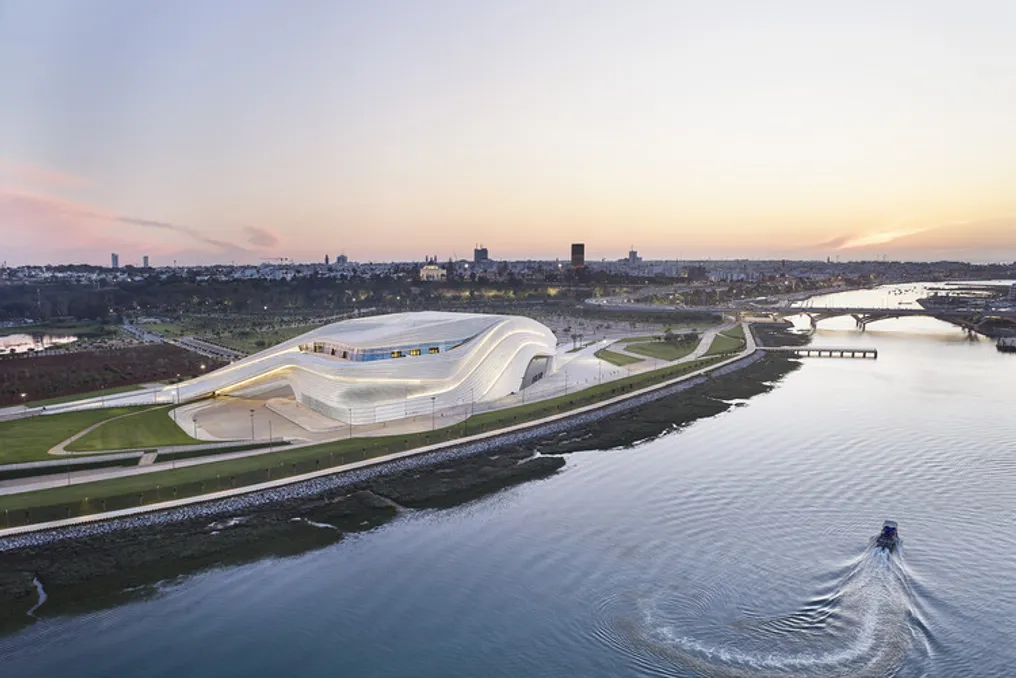
Rabat Grand Theatre, designed by ZHA in Morocco, is featured in photographs by Hufton+Crow
Read more
archdaily.com.br

Rabat Grand Theatre, designed by ZHA in Morocco, is featured in photographs by Hufton+Crow

The performing arts complex known as the Théâtre Royal de Rabat is located on the left bank of the Bou Regreg river in the city of Rabat, Morocco. This project was conceived by the Zaha Hadid Architects (ZHA) office in 2010. Partial inauguration took place in October 2024, and the public gained full access to the venue on April 22, 2026.

The work is part of a cultural promotion initiative promoted by King Mohammed VI and is located near the Mausoleum of Mohammed V and the Hassan Tower, a historical landmark. The management and cultural programming of the institution are supervised by the Foundation of the Théâtre Royal de Rabat, which covers activities such as theatre, dance, orchestral music, and concerts.

Shortly after its opening, ZHA released images captured by Hufton+Crow, detailing the building's architecture. Located between the historic cities of Rabat and Salé, on the riverbanks, the new Théâtre Royal de Rabat was designed to be a meeting point for both local and international artists.

According to ZHA, the project's design is inspired by the surrounding landscape. The Foundation reported that over 900 workers and artisans were involved in this first ZHA undertaking in Africa, with 90% of the construction carried out by Moroccan companies, prioritizing local procurement of materials and components.

The interior of the building is organized around a triple-height atrium, reminiscent of a canyon, where intertwined stairs function as the main corridor and social area before and after performances. On the upper level of the stairs, there is a restaurant offering views of the river valley and the medina.

The complex features three distinct performance areas: the Auditorium, an opera house with a capacity of 1,821 spectators; the Studio Theatre, an experimental space for rehearsals and performances with 250 seats; and the open-air Amphitheater, located east of the main building, capable of hosting 7,000 people for large festivals and public events.

The Auditorium presents faceted internal surfaces, inspired by the geometry of muqarnas, which are the vaulted ceilings characteristic of the region's traditional architecture. The acoustics were developed by Arup of New York, ensuring excellent sound quality in all seats. The Studio Theatre is a versatile environment, used not only for experimental performances but also for lectures, educational workshops, and community gatherings, featuring an adjustable audience from flat floor to proscenium stage.

Dame Zaha herself described the space in 2010, stating: 'It is inspiring to enter a grand space, a divine space. As a performance venue, the Théâtre Royal de Rabat is secular, but it has the capacity to transport the audience to imaginary spaces and times.'

ZHA implemented an environmental strategy focused on reducing energy consumption, which influenced the building's form, envelope, and systems, based on analyses of local solar radiation, winds, natural light, and external comfort. Heating and cooling are provided by aerothermal heat pumps with heat recovery, supplemented by a geothermal cooling system and a thermal labyrinth that pre-cools incoming air.

When necessary, adiabatic cooling provides additional low-energy climate control. Furthermore, heat stored in the groundwater serves to pre-warm fresh air, reducing the need for heating during colder months. Pipes embedded in the floors provide radiant heating and cooling, controlled by systems sensitive to schedules and occupancy levels.

In terms of water management, rainwater collected and stored underground is used to irrigate the landscaping and supply sanitary facilities. A local greywater recycling system further contributes to the complex's water efficiency. The internal public spaces were designed with natural ventilation, resulting from wind flow simulations.

Currently, ZHA is developing other large-scale projects in various regions, including Libya, Azerbaijan, and China. In Libya, the 'Next Generation City Plan' for Benghazi seeks to harmonize the identity characteristics of the old port city with the planning technologies necessary to guide its development until 2050 amidst rapid urbanization.

In Azerbaijan, a new urban district of 198 hectares in Baku encompasses the Baku Expo Center, situated in a pine forest area, and addresses the city's population increase observed in the last decade. Additionally, the construction of the new OPPO headquarters campus in Shenzhen, Greater Bay Area, is visibly advancing, planned to accommodate the company's growing workforce by integrating corporate functions with public access areas.

Portugal Pavilion will invite four African countries to the 2027 Venice Architecture Biennale
Read more
archdaily.com.br

Portugal Pavilion will invite four African countries to the 2027 Venice Architecture Biennale

The Directorate-General for the Arts of Portugal announced on November 16th the curatorial proposal that will represent the country at the 20th International Architecture Exhibition – The Venice Biennale in 2027. The selected project is titled «Mãos ao Chão (Hands on the Ground)», an artistic and curatorial initiative developed by Joanna Alice Helm, Remígio van Eys Chilaule, and Samuel de Brito Gonçalves.

This proposal was chosen after a restricted competition among three teams. The other candidates were «Analog Twins», presented by Alice Clanet-Hallard, Edgar Brito, Francisco Lobo, and Romea Mury, and «Matéria Viva — The materials of Portuguese construction and the knowledge that resists», by Helena Botelho. The evaluation was conducted by a committee composed of Álvaro Domingues, Andreia Garcia, João Gomes da Silva, Mariana Pestana, and Tânia Teixeira.

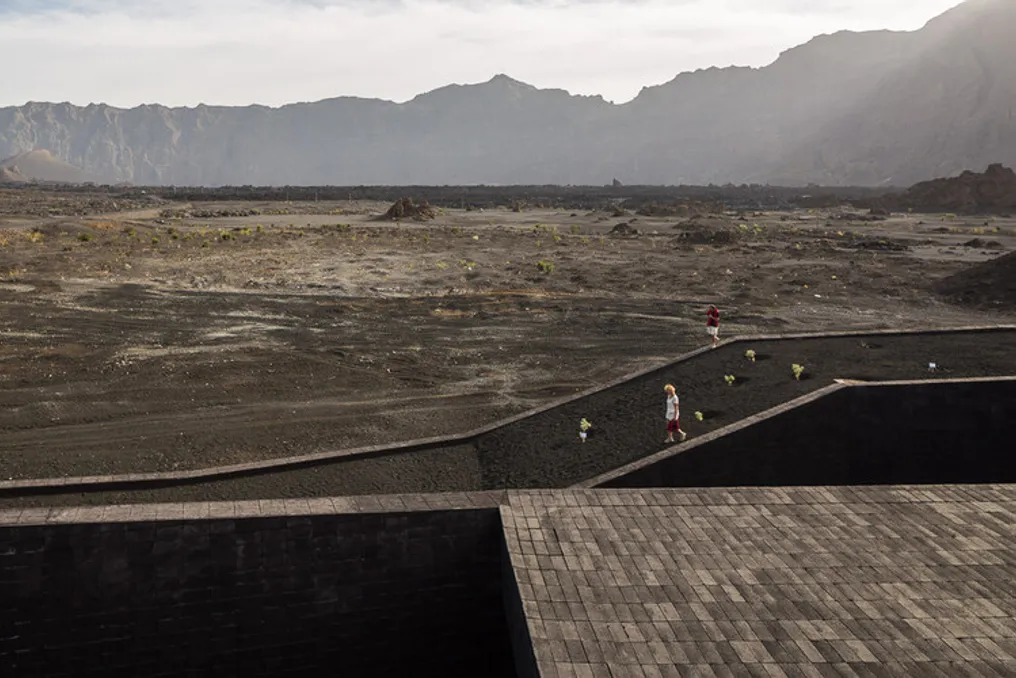
The «Mãos ao Chão» project extends a special invitation to Cape Verde, Guinea-Bissau, Mozambique, and São Tomé and Príncipe. These four nations, which do not have permanent representation at the Biennale, will be invited to occupy the Portugal Pavilion. These countries are former Portuguese colonies and currently maintain strong diplomatic, cultural, and economic ties with Portugal.

Since the 15th century, Portugal established trading posts, settlements, and colonies in these territories, exercising administrative authority until they gained independence in the 1970s. Together with Angola, these four members are part of the PALOP (Portuguese Speaking African Countries) and are part of the Community of Portuguese Language Countries (CPLP).

The invitation reflects a historical precedent set by Finland in 1976, when it ceded its space to exhibit Portuguese architectural knowledge. It is important to note that Portugal does not have a fixed national pavilion. The exhibition will take place at the Fondaco Marcello, a 15th-century palace located on the Grand Canal, a location that has already hosted the Portuguese representation at the 19th Venice Architecture Biennale in 2025.

«Mãos ao Chão» aims to position the African countries as «a source of learning, and not a distant object». The organization of the content will be done across six main thematic axes: extreme climates, local materials, passive responses, memory and innovation, modes of making, and the path to future construction. Local authors will be encouraged to create critical manifestos on these subjects in various formats.

Thus, the Portuguese exhibition will present the perspectives of the former colonies, aiming to highlight local building knowledge and promote a dialogue with critical and interpretive records that link their experiences to the principles of the Venice Biennale. The curatorial theme of the 20th edition, defined by Wang Shu and Lu Wenyu, is «Making Architecture — For the Possibility of Coexistence in the Face of a Real Reality», which encourages a return to the material aspect of architectural creation, under a critical analysis of the current distance between the discipline and real life.

For the curators of the Portuguese pavilion, this invitation represents a chance to show architecture as a creative act that unites land, craft, memory, and innovation, valuing the effort of cultural heritage conservation.

After the Biennale, the Portuguese exhibition will tour Portugal, Cape Verde, Guinea-Bissau, Mozambique, and São Tomé and Príncipe. Furthermore, the participation of the United States will focus on artisanal work and builders through «Earth Craft», an exhibition dedicated to American earth architecture in its various forms, such as brick, rammed earth, adobe, and concrete masonry.

The Nordic exhibition, which will be hosted in Sverre Fehn's modern pavilion, is called «Painted Matter» and will investigate the role of traditional decorative painting techniques in modern architecture. Finally, the Swiss pavilion will explore water as a territorial, ecological, and political factor, starting from the concept of Switzerland being the «water tower of Europe», while the Icelandic pavilion will analyze bathing culture from the perspective of architecture, public space, and social interaction.

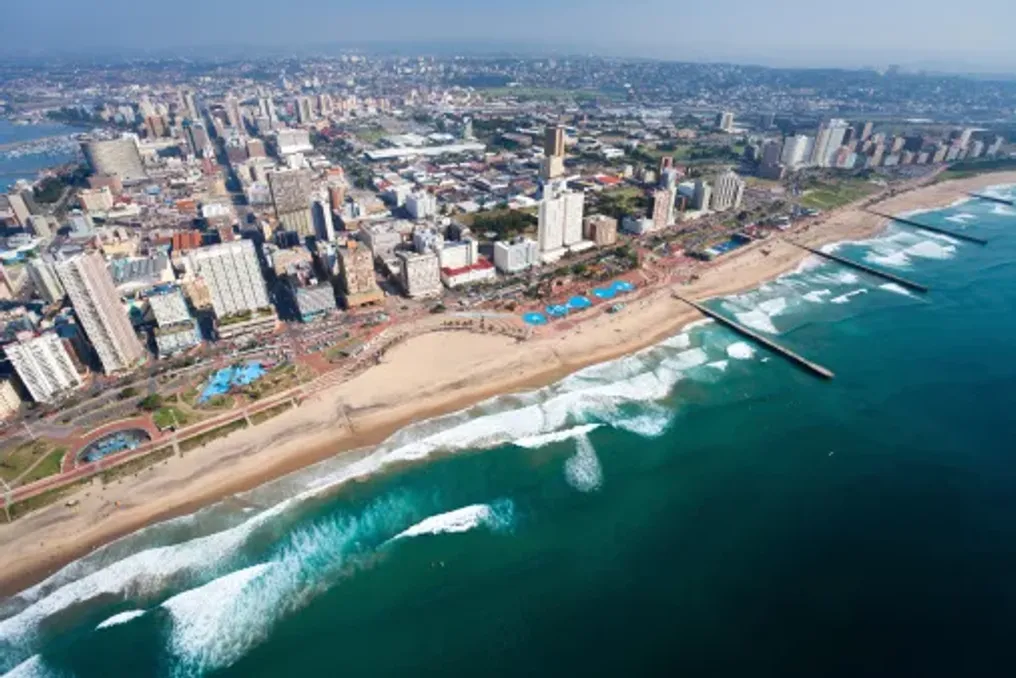
Durban plans to use yachting and major sporting events to develop tourism
Read more
getaway.co.za

Durban plans to use yachting and major sporting events to develop tourism

The city of Durban aims to expand its attractive potential as an international tourist center by planning to increase offerings in marine tourism and host major sporting events as part of the city's latest development ambitions.

The coastal city of KwaZulu-Natal is exploring opportunities to attract sailing enthusiasts, yacht owners, and marine investors. Simultaneously, the city is preparing to host international fans for the ICC Cricket World Cup 2027.

These plans were discussed at the meeting of Working Group 4 (Tourism Revival) of the eThekwini Presidential Working Group, which took place at the Southern Sun Elangeni & Maharani hotel on Thursday, November 12, according to IOL.

One of the initiatives in the city's tourism agenda is the YARE on Tour symposium, scheduled for November 26 and to be held at Moses Mabhida Stadium. This event will focus on studying the potential of yachting and marine tourism, aiming to position Durban as a destination for sailing enthusiasts, yacht owners, investors, and international maritime participants.

Thanks to its extensive coastline and operational port, Durban has good chances to grow its marine tourism sector and attract visitors interested in sailing and other ocean experiences.

Sport is also a significant part of Durban's tourism goals. According to IOL, the city is preparing to host six matches of the ICC Cricket World Cup 2027 at the Kingsmead Cricket Stadium. The tournament is expected to bring international fans, players, and tourists to South Africa, allowing Durban to showcase its beaches, hotels, restaurants, and other tourist attractions to a global audience. For guests visiting the city for the matches, the tournament will also provide an opportunity to explore more of KwaZulu-Natal.

In addition to the Cricket World Cup, Durban is considering a much larger international sporting opportunity. The city was selected as South Africa's preferred candidate to host the 2036 Olympic and Paralympic Games. Director of the Executive Committee of Public Works, Dr. Wusi Mazibuko, presented the city's capabilities for hosting such events during a recent working group meeting.

If successful, Durban could become the first African city to host the Olympic and Paralympic Games, with the final decision on the host country expected in 2029. Mazibuko emphasized the city's existing sports infrastructure, tourism offerings, and experience in hosting international events as key advantages.

These discussions are part of the broader efforts of the eThekwini Presidential Working Group to revive tourism, stimulate investment, and strengthen public-private sector collaboration. For Durban, the combination of marine tourism opportunities, international sporting competitions, and long-term Olympic aspirations can help attract new visitors and investment while showcasing the city's coastal attractions to a wider public.

Popular