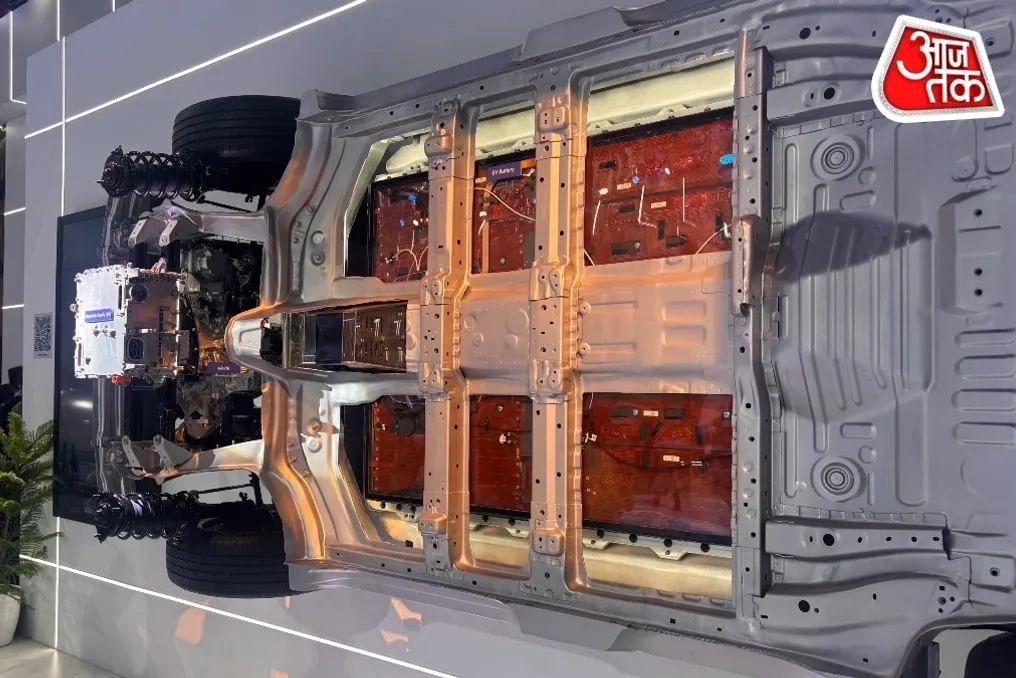
Suzuki plans to produce LFP batteries for electric vehicles, reducing dependence on rare metals
Read more
Aaj Tak
www.aajtak.in

Suzuki plans to produce LFP batteries for electric vehicles, reducing dependence on rare metals

In the world of electric vehicles, the battery is both the biggest need and the weakest link. Approximately 40–45 percent of any electric vehicle's cost is solely attributed to the battery. Consequently, rising production costs for batteries make it difficult to control car prices. However, significant changes in battery technology are expected for Suzuki in the near future.

The Japanese automaker Suzuki is preparing to create batteries that will not depend on expensive and rare minerals such as lithium, as well as nickel, cobalt, and manganese. The company plans to begin manufacturing lithium iron phosphate (LFP) batteries directly in Japan, setting a deadline for October 2029. This step will not only improve the supply of batteries for electric vehicles but also help reduce dependence on raw material imports from other countries. There is hope that Maruti Suzuki will use this technology in its future electric models, which will lead to lower car prices.

Suzuki announced this plan on Thursday. The company's goal is to create a battery supply chain that is not dependent on any single country. In fact, Japan imports many important rare earth metals used in battery production from other nations. If any country imposes export restrictions on these metals, it will affect both battery production and their cost.

According to a Suzuki representative, the company aims to form a supply chain that is not tied to a specific country. This will allow it to minimize risks associated with future raw material availability.

The LFP battery, or lithium iron phosphate, primarily uses iron and phosphorus. Compared to three-metal batteries based on nickel, manganese, and cobalt, it is considered cheaper and safer. This is why the use of LFP batteries for electric vehicles is rapidly growing worldwide.

By implementing these batteries, Suzuki intends to promote this technology in Japan. It is important to note that the company will not limit the use of these batteries only to electric vehicles; in the future, they may be used for home energy storage.

To develop the LFP battery technology, Suzuki will collaborate with the Japanese battery manufacturer Eliiy Power. Both companies are jointly working on creating this safe and low-energy consumption battery technology. As part of this project, Suzuki plans to build a new battery manufacturing plant in Kosai City, Shizuoka Prefecture, Japan. The Japanese government will provide a subsidy of up to 18.7 billion yen, which is about 117.3 million US dollars.

Currently, most automakers in Japan use three-metal batteries in their electric vehicles. These batteries contain minerals including nickel, manganese, and cobalt. Their main advantage is high energy density, which allows electric vehicles to travel long distances on a single charge. However, the supply of many necessary rare earth metals for the production of these batteries comes from only a few countries, among which China is also an important part of this supply chain. If these countries impose export restrictions, Japanese companies will find it difficult to source raw materials.

In the Indian market, the only electric vehicle from Maruti Suzuki, the Maruti e Vitara, uses LFP (lithium iron phosphate) battery technology, offering two battery pack options: 49 kWh and 61 kWh. The company receives these dual-plate LFP batteries from the Chinese automaker Build Your Dream BYD (FinDreams). According to Maruti Suzuki, these batteries provide a claimed range of up to 543 km and come with an 8-year or 160,000 km warranty. Recently, Maruti Suzuki began producing lithium-ion battery cells and electrodes jointly with Toshiba and Denso at its Hansalpur, Gujarat, plant, but these cells are mainly intended for strong hybrid vehicles, not pure electric vehicles like the e Vitara. In India, Maruti Suzuki still relies on imported batteries for its electric vehicles.
Similar stories

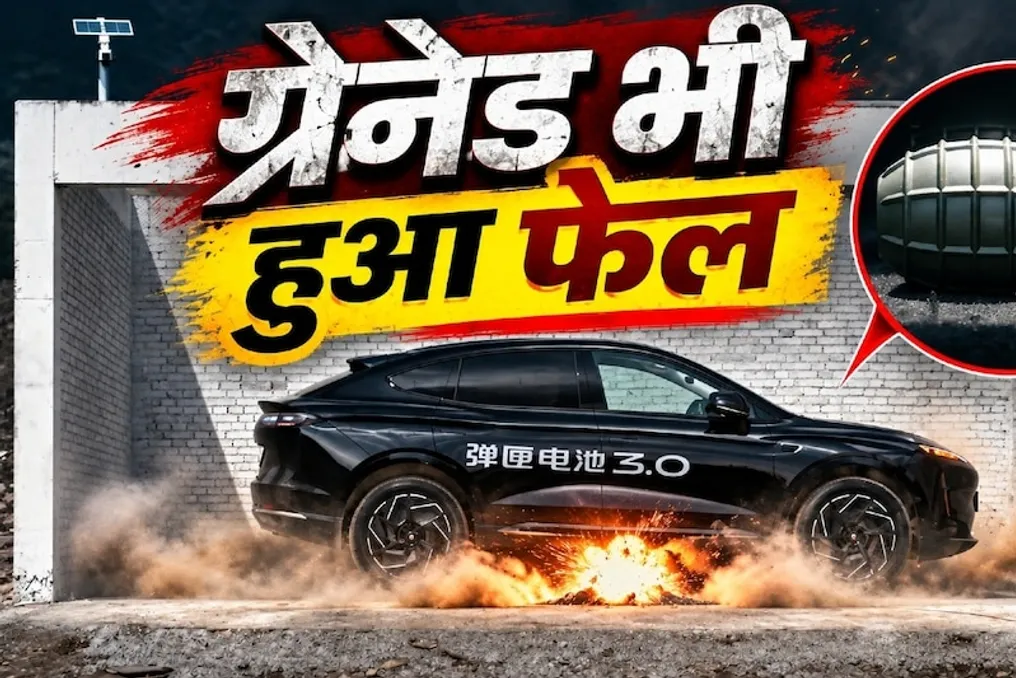
Electric Vehicle Battery from Chinese Company Withstands Grenade Explosion, Demonstrating High Durability
Read more
www.aajtak.in

Electric Vehicle Battery from Chinese Company Withstands Grenade Explosion, Demonstrating High Durability

The Chinese automotive company GAC demonstrated the exceptional strength of its new Danxia Battery 3.0 by conducting a series of tests that showed its resistance even to hand grenade explosions. During the test, a grenade exploded under the battery, but the battery did not catch fire, and the vehicle continued to function normally.

The company asserts that this technology provides a high level of safety. Typically, electric vehicle drivers fear damage to the battery packs located at the bottom of the car, as such damage can lead to failure or fire. Considering this problem, GAC developed a new battery technology that, according to the company, is capable of withstanding hand grenade explosions.

GAC states that its battery can withstand an impact from below with an energy level of up to 2000 joules, which is approximately 13 times higher than current Chinese safety standards. The company presented video recordings of the conducted tests to demonstrate the reliability of this new technology.

Chinese automaker GAC introduced the Danxia Battery 3.0 at an auto show in Guangzhou. The main focus of this battery is structural strength and safety. The name Danxia Battery can be roughly linked to the term 'firearm store'. GAC first introduced the Danxia Battery technology in 2021, and Danxia Battery 2.0 was released in 2023; the current version is the third generation, where the safety level has been further enhanced.

According to Wang Qingquan, head of GAC's battery system R&D department, this battery incorporates two key elements of the safety system. The first mechanism protects the battery from strong impacts from below. The company claims that this system can withstand exposure up to 2000 joules, whereas the established safety standard for batteries in China is only 150 joules. Thus, the new GAC battery significantly exceeds the established norms.

To confirm the reliability of the new GAC battery, GAC conducted a series of tests in collaboration with the China Automotive Engineering Research Institute (CAERI). During these tests, the strength of the bottom of the battery was checked by applying impacts at levels of 150, 300, 500, 1000, and 2000 joules. Additionally, collision scenarios simulating the battery pack rubbing against the road surface under a moving vehicle were tested.

The most impressive moment of all the tests was the grenade test. In this test, a Type 82-2 hand grenade was detonated under the vehicle's battery pack. According to the company, this grenade contained 62 grams of TNT. During the test, the battery did not ignite, and the vehicle did not move from its spot. The company emphasized that after this test, the vehicle continued to operate in a completely normal mode.

Numerous elastic wave sensors are installed in the lower part of the battery, which help detect situations of severe impact or strong vibration. The company notes that these sensors immediately trigger an alarm in case of significant battery damage.

The second element of the Danxia Battery 3.0 safety system is designed to protect against side impacts. According to the company, during a collision test with a pole at a speed of 32 kilometers per hour, the battery cell remained completely safe. This is achieved through a structure that absorbs energy, allowing it to easily handle any impact and distribute it across various parts of the battery structure, preventing severe stress on a single point.

Furthermore, GAC states that the new battery can detect a leak as small as 2 millimeters within three seconds, which helps minimize the risk of short circuits caused by fluid leakage inside the battery.

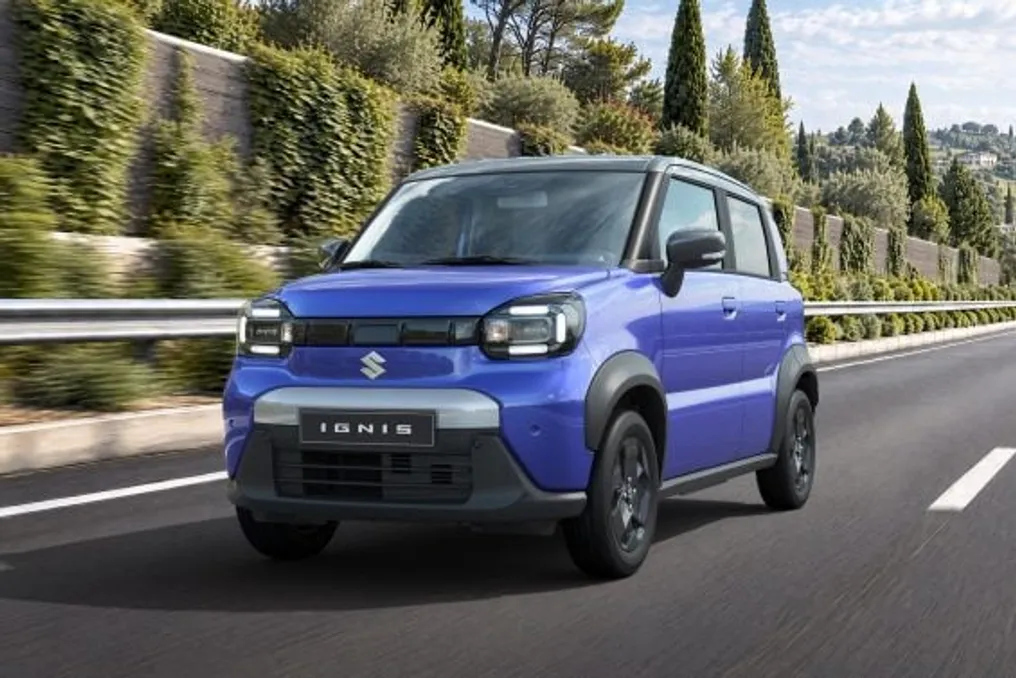
Suzuki launches new generation Ignis with electric motor, focused on urban mobility
Read more
autopapo.com.br

Suzuki launches new generation Ignis with electric motor, focused on urban mobility

Suzuki globally unveiled the new version of the Ignis during a virtual event held this Wednesday (25), marking the Japanese manufacturer's entry into the global market for compact electric vehicles. The commercial launch of this model is scheduled to occur gradually in Europe and other markets starting in the second half of 2027.

The vehicle's development was conceived to assist drivers transitioning from combustion engine cars or larger vehicles to the urban electric environment. The car underwent testing on public roads in both Europe and other regions, and the data obtained was crucial for adjusting power delivery and chassis structure according to local pavement characteristics.

Structurally, the new Ignis incorporates the exclusive HEARTECT-e platform, which allows the battery pack to be positioned under the floor. This architecture aims to keep the body light and robust while maximizing interior space and ensuring a minimum turning radius of 4.5 meters, thus facilitating maneuvers in urban environments.

The propulsion system consists of an integrated electric axle, named eAxle, which consolidates the motor, inverter, and gear reducer into one compact unit. Energy is supplied by a lithium iron phosphate battery, a technology selected due to its thermal safety and durability. For dynamic performance, the car uses a specific suspension and a braking system that combines energy recovery with hydraulic action, complemented by a vacuum electric brake and a pedal designed to replicate the feel found in gasoline models, except in certain configurations.

Visually, the subcompact stands out with its floating roof and an LED lighting signature inspired by digital numbers, present both at the front and rear. The interior features a continuous curved design, extending from the dashboard to the door trim, providing occupants with a greater sense of security. Furthermore, the instrument panel has a welcoming design, combining a large screen with a ceramic-inspired tray, which helps optimize cabin space, balancing comfort and functionality.

During the announcement, Toshihiro Suzuki, the brand's president, emphasized that the project reflects the Japanese philosophy Sho-Sho-Kei-Tan-Bi, which focuses on reducing weight and dimensions, integrating the company's vast experience with Japanese kei cars to achieve a balance between energy efficiency and internal utilization of the vehicle.

Popular