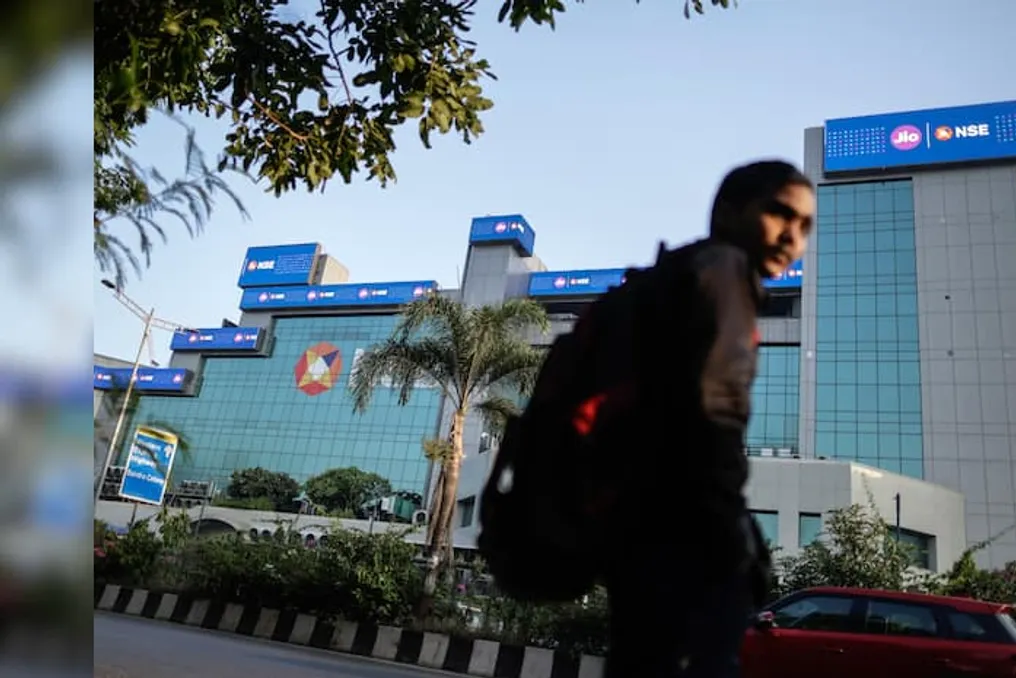
Foreign investors, crude oil prices, and RBI policy will be key factors in the Indian market this week
Read more
Business Standard
business-standard.com

Foreign investors, crude oil prices, and RBI policy will be key factors in the Indian market this week

Indian stocks interrupted a four-week uptrend due to the weakening banking sector, rising crude oil prices, and caution ahead of the Reserve Bank of India's (RBI) Monetary Policy Committee (MPC) decision, prompting investors to take profits.

Market analysts note that investor sentiment this week will be determined by the activity of foreign investors, fluctuations in crude oil prices, the release of macroeconomic data, and the RBI's interest rate decision.

Ajit Mishra, SVP Research at Religare Broking, stated that the RBI MPC meeting, scheduled for December 2 to 4, will be the main domestic event, with the policy announcement planned for Friday, December 4. Attention will also be paid to domestic economic reports, specifically GDP growth and industrial production for October. Furthermore, November PMI data for the manufacturing, services, and composite sectors will provide additional insight into the pace of economic activity.

He added that geopolitical factors and their impact on crude oil prices, the rupee, and foreign investment inflows will remain important elements shaping the mood in the domestic market.

In November, foreign investors made record investments in Indian stocks, channeling ₹1.54 lakh crore, marking the highest monthly inflow. This growth was driven by the global slump in artificial intelligence (AI) related stocks and strong earnings growth from domestic companies.

These record inflows follow consecutive outflows from Passive Portfolio Investors (FPIs), who withdrew ₹34,843 crore in October and ₹35,861 crore in September, according to NSDL data.

Ponmudi R, CEO of Enrich Money, noted that Indian stocks enter the upcoming week after a recent rally pause, and the market's ability to hold key support levels will likely determine the next direction. Global events will maintain their influence, especially changes in US tech stocks and shifts in investor positioning regarding AI-related investments.

Domestically, the focus will shift to the RBI's monetary policy decision on December 4, as investors closely monitor the bank's assessment of inflation, currency pressure, and liquidity conditions.

Last week, the BSE Sensex index fell by 580.45 points, or 0.69 percent, while the NSE Nifty dropped by 193.4 points, or 0.74 percent.

Hariselvan Radhakrishnan, founder and CEO of HST Wealth, reported that several important domestic economic and political triggers are expected this coming week. Quarterly September GDP data and October Industrial Production (IIP) data are due to be published on November 30, followed by November manufacturing PMI on December 1, and services PMI on December 3. The RBI MPC meeting will take place from December 2 to 4, with its decision scheduled for Friday, December 4.

Similar stories

Options traders show caution amid rise in Indian stocks in November
Read more
business-standard.com

Options traders show caution amid rise in Indian stocks in November

Despite impressive growth in Indian stocks, traders are beginning to show signs of caution. Following a period of low momentum, foreign investment outflows, and chaos caused by the introduction of a new trading closure system, Indian securities increased by over 11% in November, marking the most significant jump among major global stock indices.

However, this rise is accompanied by an increase in options demand, indicating broad risk hedging. Investors are returning to the Indian market to protect against the influence of artificial intelligence-related trading operations that are shaking markets in other regions. According to data from the country's leading stock exchange, traders spent the most on derivatives instruments in November compared to March.

Simultaneously, the NSE Nifty 50 Index and the NSE India Volatility Index moved more intensely than since December 2023, which is an unusual trend suggesting investors are increasing their options purchases.

Analyst Commentary

Forum Chad, founder of the research center ChartAnalytics based in Mumbai, noted: 'The sudden reversal of institutional foreign investor flows triggered a sharp short squeeze, while retail participation and the FOMO effect amplified the near-parabolic rally of the Nifty.' He added that investors were simultaneously seeking growth opportunities and buying protection against a fall to hedge against the risk of a sharp decline.

The average daily turnover of futures and options traded on the National Stock Exchange of India Ltd. reached 280 trillion rupees ($3 trillion USD) in November up to Friday, according to the exchange. This marks the third consecutive month of growth, compared to August when the new trading closure methodology led to strong volatility and widespread concern among traders. On the smaller BSE Ltd. exchange, options trading decreased by 5.6% in November after rising by 51% in October.

The market recovery brings some relief to an industry that has suffered from successive regulatory changes. These changes began with strict restrictions on speculation at the end of 2024. In February, the government raised taxes on equity derivative transactions, and in July, tightening rules on bank guarantees increased financing costs for proprietary trading firms.

The return of volatility signals a renewed interest in derivatives, which benefits brokers such as Angel One Ltd., Motilal Oswal Financial Services Ltd., and Nuvama Wealth Management Ltd., as well as exchanges. NSE stocks, which went through an IPO in September, have risen by over 40% from their October low, making the company the fourth largest exchange globally by market capitalization.

Further relief for derivatives traders may come on December 7th when revised trading closure rules take effect. They will restore a more familiar settlement mechanism where expiring contracts will no longer depend solely on prices set through auction—a feature that deterred market makers and proprietary trading firms when the new system was introduced.

Although some investors remain cautious about the latest Indian rally, the worst volume shock for derivatives is likely behind, according to Mourie Gelani, a derivatives strategist at Kai Securities in Mumbai. He stated: 'Volatility has returned, traders have adapted to the new funding environment, and changes in the trading closure system eliminate another major hurdle. After everything that has affected this market this year, a simple return of traders to screens will be a strong recovery. Conditions for volumes in 2027 are significantly better than three months ago.'

Oil price drop, rupee strengthening, and foreign investment inflow boosted Indian stock market
Read more
www.aajtak.in

Oil price drop, rupee strengthening, and foreign investment inflow boosted Indian stock market

Despite the end of Diwali, festive fervor continues in the Indian stock market, where active trading was observed on Tuesday. The Sensex index rose by more than 700 points, reaching a daily high of 82,897 points, while the Nifty climbed to 25,500, which occurred after approximately nine months.

The market was supported by falling crude oil prices, consistent purchases by foreign investors, and the strengthening of the rupee. As a result, the total market capitalization of companies listed on the Bombay Stock Exchange (BSE) increased from over 3 lakh crore rupees to approximately 512 lakh crore rupees, marking a significant increase in investor wealth in just one day.

Among the stocks that showed growth on the Sensex, Asian Paints led with a rise of over 3%. Axis Bank, State Bank of India (SBI), TCS, Trent, Eternal, and Indigo also demonstrated significant gains, each rising by approximately 2%. Meanwhile, Power Grid and Tech Mahindra shares declined by more than 1%.

Thanks to activity in the banking sector, the Nifty Bank index reached a record high of 61,979 for the first time. The indices for public sector banks (Nifty PSU Bank) and private banks rose by approximately 2% and 1% respectively. The Nifty Realty index also saw an increase of about 3%, along with rises in other sectors, including automotive. There was an inflow of purchases in small and medium-sized company stocks, with Nifty Smallcap 250 and Nifty Midcap 100 showing growth up to 0.6%.

On the National Stock Exchange (NSE), 2,023 stocks rose, while 1,404 stocks declined, and 108 stocks remained unchanged.

1. Drop in crude oil prices

India is heavily dependent on crude oil imports. Therefore, the decrease in oil prices leads to a reduction in the country's import bill and lowers inflationary pressure. On Tuesday, the price of Brent Crude fell by 0.7% to $91.8 per barrel, and American crude oil WTI dropped by 0.6% to $85.17 per barrel. The market received relief as oil supplies through the Strait of Hormuz recovered almost to pre-crisis levels, despite tensions in the Middle East. Furthermore, Goldman Sachs predicts that global oil supply will exceed demand in 2027, suggesting that daily supply next year could be 2 million barrels higher than demand, raising concerns about price pressure.

2. Consistent purchases by foreign investors

Foreign Institutional Investors (FIIs) are continuously investing in the Indian stock market. They made purchases for the 11th consecutive trading day on Monday. Their total net purchases during this period amounted to about 4,604 crore rupees. To date, foreign investors have acquired shares worth over 94,000 crore rupees. Previously, in the first 10 months of 2026, foreign investors withdrew a record 2.95 lakh crore rupees from the Indian market. The return of these funds strengthens the stock market, as increased foreign investment stimulates buying and can support the rupee.

3. Market support due to rupee strengthening

The impact of purchases by foreign investors and the fall in crude oil prices was also reflected in the rupee. On Tuesday, the rupee strengthened, reaching a level of 93.5775 per dollar. This is the best position for the Indian rupee against the US dollar in about seven months. The decrease in crude oil and other commodity prices reduced concerns regarding India's import bill, providing support to the rupee. Currency market experts predict that the rupee will remain in the range of 93.50 to 94.25, but the movement of the dollar and the risk environment in global markets will play a decisive role in determining the rupee's exchange rate.

4. Active buying of bank stocks

The rise in bank stocks also contributed to the market uptrend. Nifty Bank set a new record. After a decline earlier this year, activity in the banking sector has increased. Foreign brokerage firms are also maintaining a positive outlook on Indian banking and financial companies, believing that the financial health of these companies is stable and that some stocks remain attractively priced. The rise in bank stocks is attributed to the strong financial condition of the companies and the developing positive sentiment in the market.

Experts believe that the factors supporting the Indian market in November have strengthened. The drop in crude oil prices, the strengthening of the rupee, the return of foreign investors, and the good results of companies in the second quarter are supporting the market. In their opinion, the flow of portfolio investments from foreign investors also remained strong in November. On the other hand, stock sell-offs related to artificial intelligence (AI) companies were observed in US markets after the Nasdaq fell by 2.49% in a day. This also affected markets such as South Korea, Taiwan, and Japan. According to Vijayakumar, in such a situation, India may benefit as foreign investor interest may shift from other markets to Indian stocks.

According to experts, Nifty is currently trading in a limited range. Its recent range was between 25,054 and 25,384. If Nifty remains above 25,240, there is a possibility of it moving to 25,335 and then to 25,620.

Popular