
Road to Heaven in Gujarat: Landscapes of the White Salt Plateau and Open Sky
Read more
Aaj Tak
www.aajtak.in

Road to Heaven in Gujarat: Landscapes of the White Salt Plateau and Open Sky

India has numerous roads that offer unforgettable travel experiences. One such attraction is the 'Road to Heaven' in Gujarat, located in the Kutch region.

This road, spanning about 30 kilometers, passes through a white salt plateau. The endless white fields and open sky create an incredibly picturesque view, sometimes giving the impression that the road is passing over water. This route leads to the UNESCO World Heritage site of Dholavira, a monument of the Indus Valley Civilization.

'Road to Heaven' is not just a road, but a complete tourist experience. The neighboring salt flats and lakes give it uniqueness compared to other roads. At certain times of the year, the landscape looks as if the road is built over water. This is why the place is gaining popularity among photography enthusiasts and scenic view lovers.

Connecting Settlements

This road connects the village of Hawada with Dholavira. Hawada is known for its traditional crafts and proximity to the white salt plateau, while Dholavira is one of the most important archaeological sites of the Indus Valley Civilization. In 2023, this route attracted special attention during the G20 summit, after which it became a topic of discussion among tourists across the country.

How to Get There

Kutch can be reached from cities in Gujarat such as Rajkot, Ahmedabad, and Gandhinagar. The distance from Rajkot is approximately 229 kilometers, from Ahmedabad is 323 kilometers, and from Gandhinagar is about 330 kilometers. From there, the journey continues to Hawada and Dholavira by road. For train travel, the main option is Bhuj railway station; from there, further travel must be done by car. To reach Dholavira and 'Road to Heaven', it is recommended to arrange a taxi or private transport in advance. Bhuj Airport is also one of the nearest air options from which you can continue your journey by car.

Best Time to Visit

The most favorable time to visit 'Road to Heaven' is considered to be from November to February, when the weather is comfortable and the sky is clear. From March to June, it is very hot, and during the monsoon season, the trip may be complicated by rain. Sunrises and sunsets here are exceptionally beautiful sights, as the changing colors of the sky combined with the white salt plateau create magnificent pictures. Therefore, those planning a visit are advised to arrive early in the morning or closer to the evening.

Similar stories

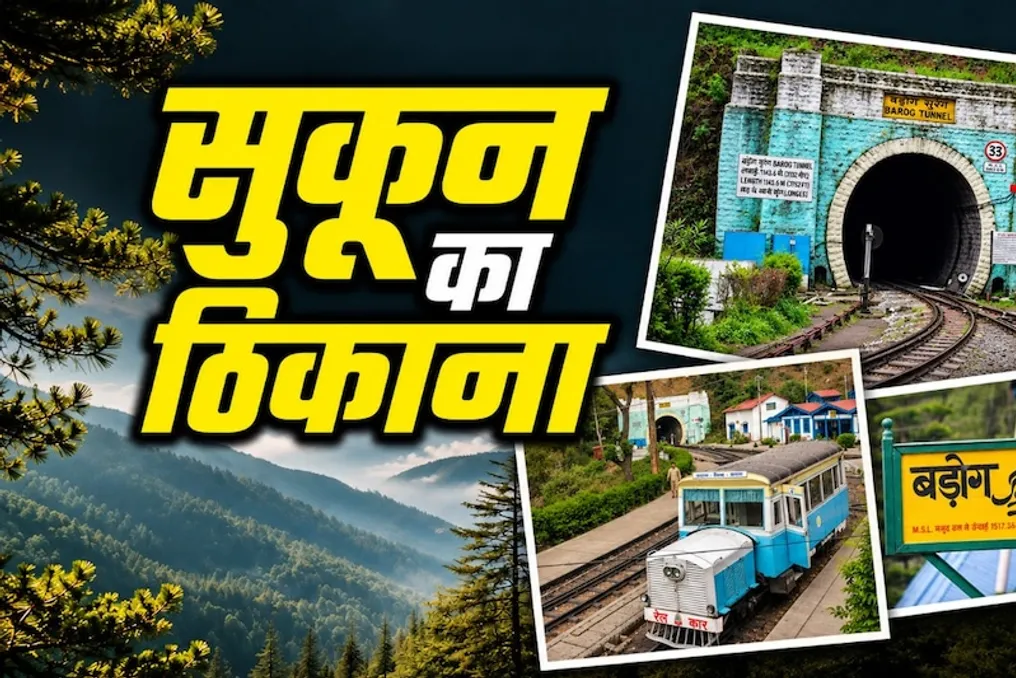
Barog in Himachal Pradesh: A picturesque destination on the route from Delhi to Shimla, ideal for a two-day trip
Read more
www.aajtak.in

Barog in Himachal Pradesh: A picturesque destination on the route from Delhi to Shimla, ideal for a two-day trip

If you want to escape the hustle and bustle of Delhi for a weekend and visit a quiet mountain location, Barog in Himachal Pradesh can be an ideal choice. Here you can enjoy high mountains, cedar and pine forests, cloud-covered valleys, and beautiful views. A distinctive feature of Barog is that it has fewer tourists compared to Shimla and Manali.

The distance from Delhi to Barog is about 290–300 kilometers. Access is possible by car or by train. It is an excellent place for a short two-day weekend trip where you can spend peaceful time with friends, family, or a partner. If you are planning a trip this weekend, you should include Barog in your list of places to visit.

Features of Barog in Himachal Pradesh

One of the most significant attractions in Barog is the historic railway station. It is a beautiful stop on the historic Kalka-Shimla railway line. The passing steam trains and magnificent mountain landscapes can charm visitors and are also interesting for photography enthusiasts.

When visiting Barog, do not miss Tunnel No. 33. This is the longest tunnel section on the Kalka-Shimla railway, stretching about 1.1 kilometers. Observing a steam train passing through this tunnel is a unique experience in itself. It is important to remember the prohibition against walking on the railway tracks.

Near Barog is Dagshai—a quiet and historic location. Here you can see buildings from the British era, a church, and a prison museum. Beautiful views of mountains and pine forests surround it. This place is suitable for those interested in history and nature.

If you want to combine a trip to Barog with shopping and tasting local cuisine, you can go to Solan. Barog is about 8 kilometers from Solan, where you can walk around the market, try local dishes, and admire the surroundings.

For lovers of tranquility, it is also recommended to visit the Bon Monastery in Dolandji. Here you can enjoy the beauty of the monastery, the serene atmosphere, and the mountain landscape. Spending time in this place will help you feel far away from the city rush.

The best time to visit Barog is from March to June and from September to November, when the weather is most pleasant for walks. It gets very cold in winter, so warm clothing must be brought. In July and August, caution should be exercised when traveling on mountain roads due to rain.

Barog can be reached by road or by train. By road, from Delhi to Barog, you can travel by car or bus, which takes about 6–8 hours depending on traffic and route. By train, you first need to reach Kalka from Delhi, and then take a steam train heading to Shimla to arrive in Barog. The steam train journey itself can be considered an unforgettable adventure, but you must check the schedule before traveling.

How to plan a weekend trip?

If you are traveling to Barog from Delhi, you can plan for two days and one night. On the first day, you can visit the Barog railway station, Tunnel No. 33, and other nearby places. On the second day, you can visit Dagshai or the Dolandji monastery, and then prepare for the return in the evening. However, for a more comfortable stay, it is better to allocate three days and two nights.

If you want to spend time in a quiet mountain location, avoiding the crowds of Shimla and Manali, be sure to include Barog in your travel list.

Procession begins in Kunda ahead of Dhirendra Shastri's discourse; participation of Raja Bhaiya's sons
Read more
www.aajtak.in

Procession begins in Kunda ahead of Dhirendra Shastri's discourse; participation of Raja Bhaiya's sons

A large-scale Maha Kalash Yatra procession has begun in the Kunda area of Pratapgarh district, starting from eight different directions in anticipation of the discourse on Shri Ram Bagneshwar Dham (Dhirendra Shastri), scheduled for November 17. This initiative was accompanied by columns of hundreds of vehicles.

Under the guidance of MLS sons Akshay Pratap Singh and MLA Raguraj Pratap Singh, the yatra commenced from eight key locations, including Hiraganj, Kalankankar, and Babaganj. The procession will cover approximately 200 villages and 50 municipal councils, concluding at Benti Rajbhavan, where an altar will be set up for the discourse the following day.

The main feature of this grand procession is its extensive and elaborate nature. Raja Bhaiya's sons, such as Shivaj Pratap Singh, along with his second son Bridraj Pratap Singh, Dr. K.N. Ojha from Kunda, and Gopal Ji from the Bihar block, are leading the yatra in various areas. These routes reach villages where representatives of all social strata offer ritual worship to sacred pots. By evening, all these paths converge at Benti Rajbhavan.

Given the enormous scale of the event, the administration and organizers have ensured extensive security measures. The entire event zone is equipped with 200 CCTV cameras, with 64 cameras concentrated around the discourse pavilion. Furthermore, a large number of police forces, including the Circle Officer (CO), have been deployed to ensure complete peace during this grand event amidst the political and religious atmosphere.

There is immense enthusiasm throughout the region regarding the upcoming discourse of Shri Ram, which will take place in Kunda. The primary goal of the organizers is to unite a large number of people through this yatra. Following the successful completion of the procession on November 16, Pandit Dhirendra Krishna Shastri's discourse will officially begin at Benti Rajbhavan on November 17. The scale and preparation for this religious event in the Kunda district are attracting significant attention and are being widely discussed.

Popular