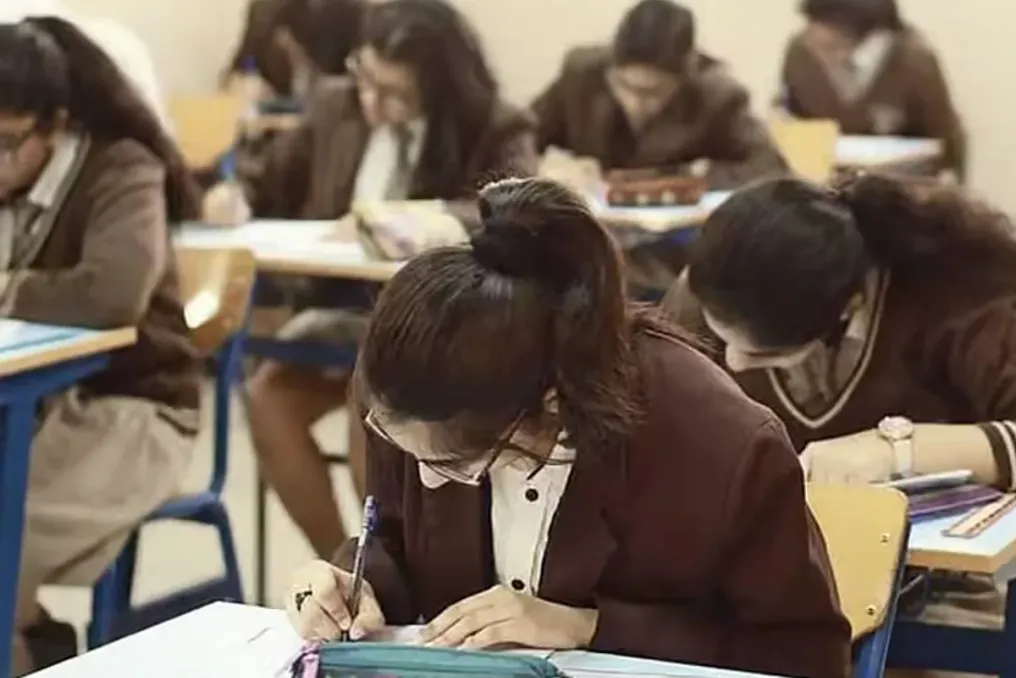
What is 'fictitious' school enrollment and how might it affect final exams?
Read more
Aaj Tak
www.aajtak.in

What is 'fictitious' school enrollment and how might it affect final exams?

There is a specific approach to learning among some students preparing for entrance exams: they are formally enrolled in school but do not attend classes daily. Instead of regular participation in lessons, they dedicate all their time to preparation in educational centers and self-study. This method is called fictitious school enrollment. Although this may seem like a way to dedicate more time to studying at first glance, students may actually face various difficulties, and problems may arise when taking final exams. Therefore, it is important to understand the council's rules and the consequences for students.

Non-attendance at regular classes while being enrolled in a fictitious school does not comply with CBSE rules. According to established regulations, a student is obliged to attend school regularly; simply having a name in school records is not enough. CBSE rules require that attendance of at least 75 percent must be ensured for participation in the 10th and 12th grade final exams. However, in certain circumstances, such as medical emergencies or participation in national and international sports competitions, an exemption may be granted upon presentation of relevant documents.

The most serious threat to students using fictitious enrollment is related to their right to participate in final exams. Schools accredited by CBSE are obliged to keep track of student attendance and ensure compliance with the rules. If during an inspection it is discovered that a student is regularly absent from school and cannot provide a valid reason for their absence, they may be recognized as a fictitious student. In such a case, the council may prohibit them from taking the exam.

Furthermore, absence from regular school life also affects other aspects of learning. Students who do not attend school lose the opportunity to communicate directly with teachers, participate in practical classes, work in groups, and take part in other school events. This negatively affects the basic understanding of subjects and the overall learning experience.

Similar stories

Rules for Filling Out OMR Sheets for Rajasthan CET Exam: Risk of Disqualification
Read more
www.aajtak.in

Rules for Filling Out OMR Sheets for Rajasthan CET Exam: Risk of Disqualification

For candidates preparing for government service in Rajasthan, it is important to know the latest updates. The Rajasthan Staff Selection Board (RSSB) has published the schedule for the Common Eligibility Test (CET Senior Secondary Level 2026). The exam will take place from December 1 to December 3, with two sessions each day.

In addition to the date and time of the examination, applicants must pay close attention to the rules for filling out OMR forms. The Board has clearly informed that a candidate may be deemed to have failed the exam if they do not fill in the circle for any question by more than 10%.

According to the schedule released by RSSB, the CET Senior Secondary Level exam will take place on December 1, 2, and 3, 2026. The examination will be conducted in two shifts. The duration of each session will be two and a half hours.

The schedule is as follows: December 1, 2026 — first shift from 10:00 to 12:30, second shift from 15:00 to 17:30. A similar schedule applies to December 2 and December 3, 2026.

The Board has also issued a series of instructions regarding the filling out of OMR forms. Each question will present five options: A, B, C, D, and E. The first four options represent possible answers to the question, and the fifth option E is intended for unanswered questions.

If an answer needs to be provided, the correct option from A, B, C, or D must be circled deeply using a blue ballpoint pen. If the candidate does not wish to answer the question, option E must be circled. If none of the five circles are filled in, one-third of the marks for that question will be deducted.

Furthermore, if more than 10% of the questions remain unmarked, the applicant will be declared as having failed the exam. To verify whether any answer option was selected for each question, applicants are given an additional time of 10 minutes.

RSSB has also provided important guidelines regarding identification documents. If the photograph in the candidate's ID is older than three years, it is recommended to update it. At the examination center, a comparison will be made between the photo on the admit card, the photo in the original ID, and the appearance of the applicant. In case of discrepancies in photographs, entry to the examination center will be prohibited.

UAE Schools Intensify Material Review Ahead of CBSE Exams Due to Compressed Subject Intervals
Read more
www.khaleejtimes.com

UAE Schools Intensify Material Review Ahead of CBSE Exams Due to Compressed Subject Intervals

The CBSE board examinations for grades 10 and 12 are less than one hundred days away, prompting educational institutions across the United Arab Emirates (UAE) to ramp up material review efforts and provide academic support to students preparing for a demanding examination schedule.

However, for some students, the concern is not only about the volume of curriculum they must master but also about the limited time between specific subjects. Subjects scheduled on consecutive days or with very short breaks cause anxiety among some students regarding the possibility of adequate revision.

The exams, conducted by the Central Board of Secondary Education (CBSE) in India, are set to begin on February 16, 2027. The Grade 10 exams will run until March 9, and the Grade 12 exams until April 9.

Following the publication of the exam schedule on November 6, schools began refining their preparation strategies. Teachers have focused on completing the syllabus, conducting mock tests, and assisting students with effective time management.

Dr. Shiba Jojo, Director of GEMS Our Own English High School, noted that the short intervals between certain exams raise concerns, particularly for students taking subjects with extensive theoretical content.

In Grade 10, English and Malayalam are scheduled for February 26 and 27, respectively, leaving little time to switch between these two disciplines. In Grade 12, Economics on March 16, Marketing on March 18, and Political Science on March 19 present a complex challenge, as all three subjects involve a large amount of theory. The short breaks between these exams make sufficient revision difficult.

Similarly, students taking Computer Practical on March 31 and then Business Research on April 1 are also worried about the necessary preparation for both subjects.

Jojo emphasized that such time lags naturally contribute to increased stress and anxiety among students who feel they cannot prepare as thoroughly as they would like.

To address these issues, the school is introducing early revision sessions and providing parents with structured study plans in advance. Mock exams and practice tests will also help students become accustomed to the exam format and boost self-confidence.

Instead of increasing the workload on students immediately before the exam, teachers are offering optional sessions to clear specific doubts and explain complex concepts. Jojo also mentioned that the school provides counseling support for students experiencing exam anxiety.

She advised students facing closely timed exams not to rely on the short intervals between tests to complete their preparation. She added: 'In cases where exams are scheduled on consecutive days, students should aim to complete preparation for both subjects significantly earlier than the first exam, rather than counting on the break between them.'

At Woodlem Park School in Al Jurf, Ajman, teachers are also working closely with students to identify areas needing extra attention. Bhanu Sharma, the school's director, stated that some students were concerned about back-to-back exam days, especially for subjects requiring significant preparation.

The school's method includes individual guidance, targeted revision sessions, and practical assignments, with teachers helping students understand which topics require more focus. Sharma said: 'We conduct a flexible revision plan with targeted classes, practical assignments, and Q&A sessions. Teachers identify students who need extra help, and our counselors are available for emotional support. Every child should feel supported, prepared, and confident.'

She also stressed the importance of the role of parents in preventing exam preparation from becoming a source of additional pressure at home. Sharma advised: 'Parents can help by remaining calm and encouraging, while avoiding comparisons and unrealistic expectations,' adding that adequate sleep, healthy eating, exercise, and regular breaks are equally important during the preparation period.

Not all schools believe that short intervals between exams necessarily cause worry. Deepika Tapar Singh, CEO of Credence High School, noted that her students are familiar with this examination model because internal assessments rarely feature more than one or two days between subjects.

She believes that students are well-adapted to the exam schedule since they are used to small breaks between subjects. She explained: 'Even in our school assessments, we rarely provide more than one or two days off, so the pattern is familiar to them.'

Singh suggests that consistent preparation throughout the academic year helps students approach exams with a tight schedule with greater confidence. She emphasized: 'A child who studies a little every day and regularly revises material should not worry about breaks; long breaks are truly unnecessary if preparation is consistent.'

The school continues to provide targeted revision guidance, and its counselor remains available for students needing support. Singh urged parents to create a supportive atmosphere at home instead of letting exam preparation become a source of tension. Her advice to students is to maintain a regular study routine, practice with sample papers, and approach each exam independently, without being overwhelmed by the entire schedule. She concluded: 'Above all, I would advise every student to trust their preparation, take one exam at a time, and enter the examination hall with confidence.'
Haribhau Bagde, Governor, raised education system issues in Alwar following low NEET-JEE results
Read more
www.aajtak.in

Haribhau Bagde, Governor, raised education system issues in Alwar following low NEET-JEE results

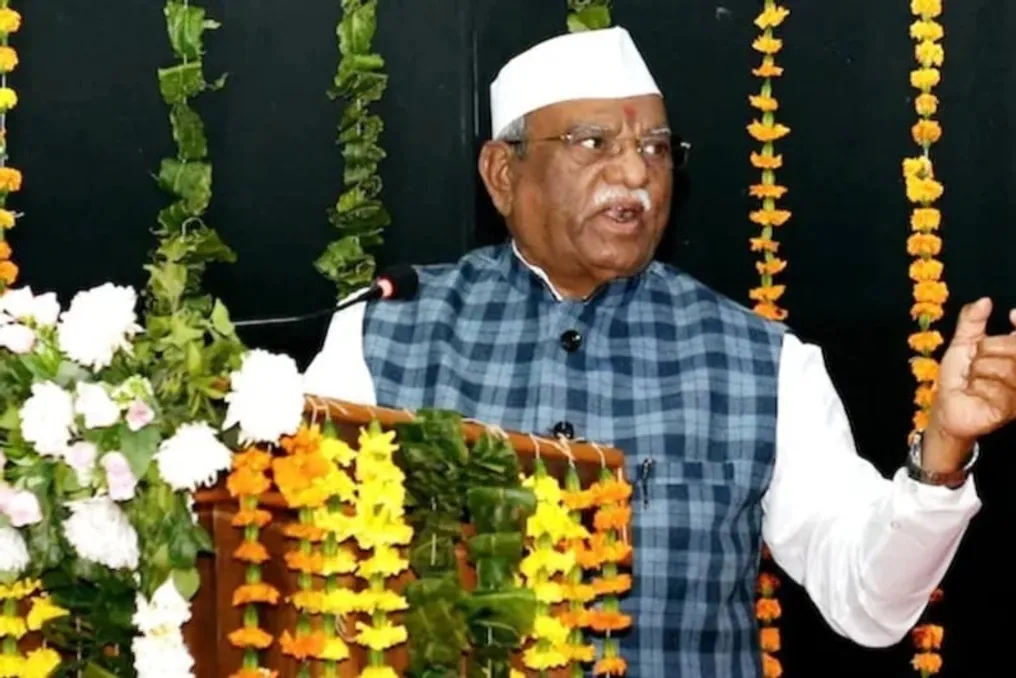
Rajasthan Governor Haribhau Bagde expressed concern over the state of the education system in Alwar. He referenced the results of competitive exams such as NEET and JEE, noting that only 14 out of approximately 18,000 participants succeeded. This figure casts doubt on the quality of education.

During a meeting with district officials, the governor emphasized the need to improve the level of education at all levels, from primary to twelfth grade. He stated that simply obtaining a secondary school certificate is not a measure of educational success. It is crucial to develop children's intellectual abilities, reasoning, and logical thinking.

Bagde noted that children possess a natural curiosity to ask questions and learn new things. Therefore, the duty of teachers is not to suppress this interest but to stimulate it. The goal of education should not be merely memorizing material for exams; students must be prepared to succeed not only in NEET-JEE but also in complex exams like RPSC and UPSC.

Sharing experiences from attending graduation ceremonies at various universities, the governor mentioned that when he asks graduates how many are willing to take the RPSC and UPSC exams, very few raise their hands. This situation demonstrates a gap between receiving a diploma and developing real academic competence.

He reported that he personally visits all districts of the state to understand the true state of affairs in education. The Education Department should focus particularly on quality learning and unlocking students' talents.

During the meeting, the governor also gave instructions to health and social sector officials. He directed the health department to intensify its campaign and take effective measures to quickly turn Alwar into a tuberculosis-free district. Furthermore, he stressed the necessity of making Alwar drug-free under the 'Narcotic Free India' campaign.

Orders were given for strict action against those involved in the illegal production and sale of alcohol. It was also mentioned that people addicted to drugs must be helped out of this situation through counseling and public awareness. The governor added that if government employees have a tendency to use drugs, the first priority should be to help them overcome this addiction so they can serve as an example to society.

Popular