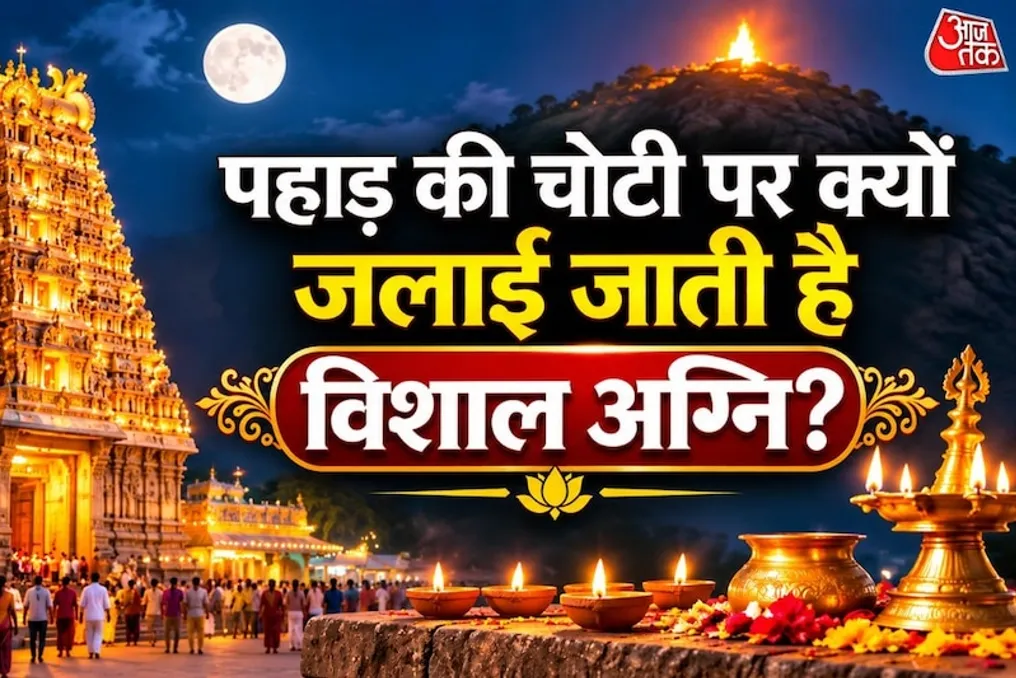
Kartikai Deepam Tradition: Explanation of the Lighting of a Large Fire on the Diptoun Pillar Linked to Shiva Legends
Read more
Aaj Tak
www.aajtak.in

Kartikai Deepam Tradition: Explanation of the Lighting of a Large Fire on the Diptoun Pillar Linked to Shiva Legends

On Saturday, November 28, the Kartikai Mahadipam lamp was lit on the Tiruparankundram hill in Madurai (Tamil Nadu). At 5:00 PM, a huge lamp was ignited on the ancient Diptoun pillar on the hill. This event held special significance as it had long been a subject of dispute, leading to the Supreme Court. The ritual was completed under enhanced security after receiving a court order, with CRPF personnel present at the site, and two former judges of the Madras High Court overseeing the entire process.

What is Kartikai Mahadipam?

Kartikai Mahadipam is one of the main and ancient festivals of South India. It is celebrated with great enthusiasm in Tamil Nadu, while in Kerala it is known as Thirukartika. This festival is observed in the month of Kartik according to the Tamil Panchangam, on the day of the full moon in the Krittika constellation. On this special day, people light clay lamps in their homes, courtyards, and temples. Additionally, in some hilltop temples, a giant fire is lit, which is called Mahadipam. It is believed that the light burning during this festival is associated with Lord Shiva. According to beliefs, this lamp carries a message of dispelling darkness and spreading the light of knowledge in life.

The Tiruparankundram hill is special because of the Diptoun pillar. A huge lamp is traditionally lit on this ancient stone pillar during Kartikai Mahadipam. For pilgrims, this place holds immense importance, as they believe that lighting the fire here is part of their long-standing religious tradition and faith.

This year, on November 28, the Mahadipam was lit specifically on this Diptoun pillar. Approximately 30 kg of ghee, 50 meters of wick, and 5 kg of sandalwood were used for this purpose. Due to safety measures, the administration allowed only 50 pilgrims to visit the hill. CRPF personnel were deployed throughout the event.

Mythological Story Associated with the Infinite Light of Lord Shiva

Kartikai Mahadipam is directly associated with the infinite light of Lord Shiva. Behind this lies a mythological story. According to this legend, once there was a dispute between the gods Brahma and Vishnu about who was supreme. In response, Lord Shiva assumed the form of a gigantic pillar of fire before both of them. He asked both gods to find the beginning and end of this fire. Lord Vishnu took the form of Varaha and descended into the earth, while Brahma ascended to the sky in the form of a swan. Both made significant efforts but could not find either the beginning or the end of this pillar of fire. It is believed that the giant fire lit during Kartikai Mahadipam is reminiscent of the infinite form of Lord Shiva. This is why followers worship this fire as the divine light of Shiva.

The Tiruparankundram hill is associated not only with Kartikai Mahadipam but also with Lord Murugan, i.e., Karthikeya. Lord Murugan is very popular in South India. According to mythology, Lord Murugan defeated the demon Surapadma, freeing the gods from his tyranny. The joyful Devaraja Indra arranged the wedding of his daughter, Goddess Devayani, with Lord Murugan. According to tradition, their wedding took place on this very hill of Tiruparankundram. Therefore, this place is considered very sacred and special for the followers of Lord Murugan.

Significance of Lighting the Fire on Kartikai Mahadipam

Lighting the fire during Kartikai Mahadipam holds special religious significance. On this day, lighting the lamp symbolizes the victory of light over darkness and knowledge over ignorance. In Tamil Nadu, people light clay lamps near their homes and perform rituals in temples during this period. Furthermore, special events are held at the Arunachaleswarar temple in Tiruvannamalai (Tamil Nadu) in honor of this festival, where a huge Mahadipam is lit on the hilltop. Pilgrims arrive from afar to witness this fire, believing that they can behold the divine form of Lord Shiva within it.
Similar stories

Fire offering tradition held in Gadmukteshwara (Hapur) on the banks of the Ganges to appease ancestral spirits, dating back to the Mahabharata era
Read more
www.aajtak.in

Fire offering tradition held in Gadmukteshwara (Hapur) on the banks of the Ganges to appease ancestral spirits, dating back to the Mahabharata era

On Monday evening, thousands of pilgrims gathered on the banks of the Ganges in Gadmukteshwara, located in the Hapur district of Uttar Pradesh, to perform the fire offering (Deepdan) for the peace of the souls of their deceased relatives and ancestors. These people arrived from various states after bathing in the Ganges, which took place a day before Kartik Snan during Chaturdashi. During this ancient tradition, which dates back to the Mahabharata era, many pilgrims were moved to tears.

The Deepdana tradition is linked to the Mahabharata era. According to religious beliefs, it was then that Lord Krishna, in the presence of the Pandavas, first performed the fire offering on the banks of the Ganges in Gadmukteshwara on Chaturdashi to pacify the souls of millions of warriors and countless heroes who died in the Mahabharata war. Since then, this tradition has continued uninterrupted. Currently, the government of Uttar Pradesh, under Yogi Adityanath, has granted this Ganga Mela state status.

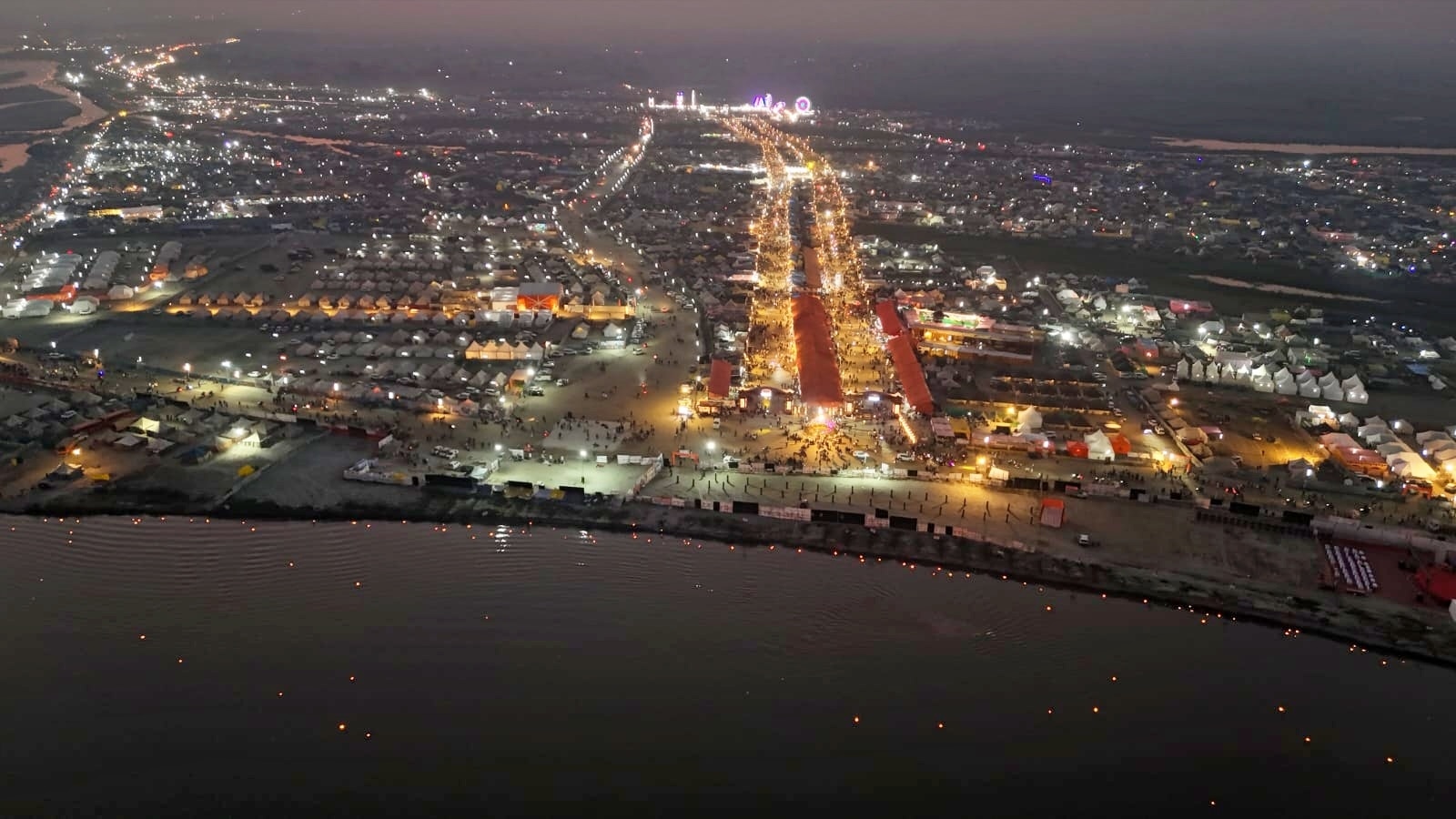
The fire offering ceremony began at sunset and continued until late at night, followed by religious rituals, including Pindadaan. Many pilgrims cried while remembering departed loved ones during the fire offering. The glimmer of lamps created the impression that stars had descended from the sky directly onto the banks of the Ganges.

Since a large number of people flocked to the banks of the Ganges both as part of the Gad Mela and to Bragdghat for the fire offering, special events were organized on all banks of the Ganges. Brahmins were also present on the banks, carrying items for worship such as materials for Pindadaan, lamps, cloves, sweets (batashe), and bamboo mats. Furthermore, a significant number of pilgrims brought candles and ghee from their homes to properly conduct the fire offering ritual.

The Significance of Kartik Purnima as Deva Diwali: The Meaning of the 84 Ghats of Kashi and the Mythological Story
Read more
www.aajtak.in

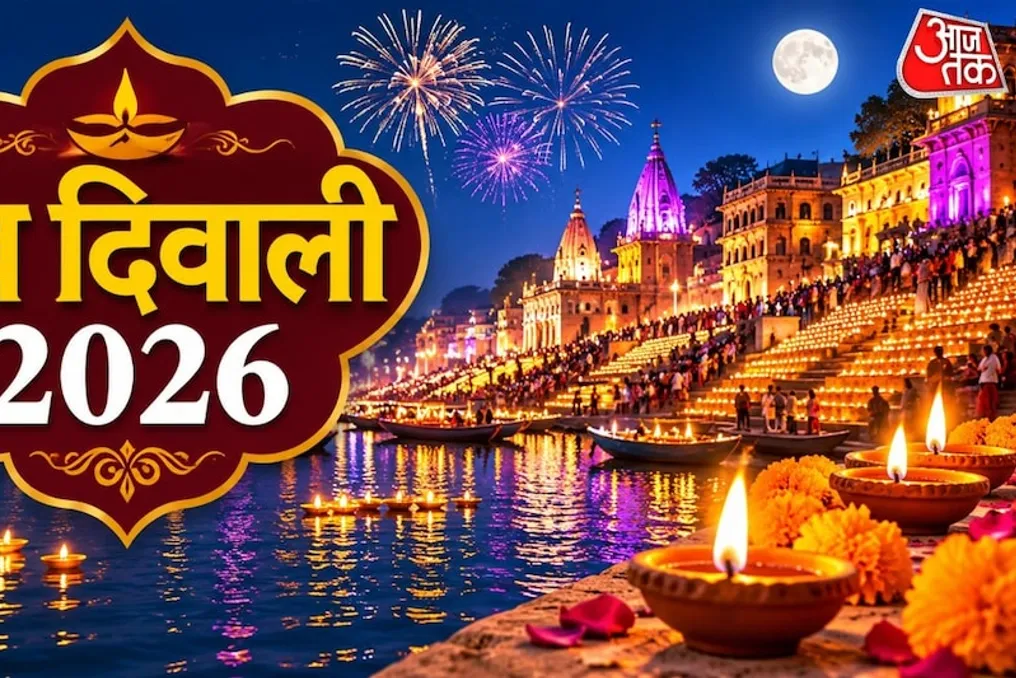
The Significance of Kartik Purnima as Deva Diwali: The Meaning of the 84 Ghats of Kashi and the Mythological Story

This year, the festival of Deva Diwali will be celebrated on November 24th. The Deva Diwali festival in Kashi is not just a celebration of lighting lamps and illuminating ghats; it is closely connected to Lord Shiva, Mother Ganga, the deities, and Vedic traditions. According to beliefs, the 84 ghats of Kashi symbolize the 84 lakh yonis.

These ghats, located along the Ganges River within a radius of about 7 kilometers, are an integral part of the religious and cultural identity of Kashi. Kartik Purnima is called Deva Diwali. It is believed that on this day, the deities descend from the heavens to Kashi and witness the act of offering light on the banks of the Ganges. This is why Deva Diwali is celebrated in Kashi with great reverence and enthusiasm.

The Diya (lamp) is considered a symbol of knowledge, light, and prosperity, and Deva Diwali is rightly called the Diwali of the deities. There is a belief that on this day, the deities come down from the heavens to Kashi to observe the ceremony of offering light on the banks of the Ganges. During this period, special reverence is paid to Lord Vishnu and Mother Ganga. On this day, people take a holy dip in the sacred rivers and then perform ritual worship of Lord Vishnu and Shiva, after which they offer lamps.

The ghats of Kashi have a special connection with Deva Diwali. It is believed that the 84 ghats of Kashi represent the symbol of 84 lakh yonis. These ghats, stretching along the Ganges within approximately 7 kilometers, form the religious and cultural identity of Kashi. Previously, Kashi was known as Anandvan, later its name became Kashi, and then Varanasi. Varanasi is located in the region between the rivers Varuna and Asi, where the Ganges flows in a northward direction (Uttaravahini).

In Kashi, situated on the bank of the Ganges flowing north, the Deva Diwali festival symbolizes the arrival and welcoming of the deities. Therefore, the tradition of offering light at the ghats is observed here with the utmost devotion.

There is an ancient legend explaining the origin of Deva Diwali, related to the destruction of Tripurasura by Lord Shiva. According to this story, Tarakasura had three sons: Tarakaksha, Kamakha, and Vidyunamali. All three underwent a severe ascetic trial and received blessings from Brahma. After this, they built three huge palaces of gold, silver, and iron, which came to be known as the three puras or Tripuras. Influenced by their power and the blessings they received, these three asuras began to inflict suffering on the deities and sages.

The deities, who suffered under the tyranny, appealed to Lord Vishnu, and then all the deities asked Lord Shiva to destroy these asuras. Accepting the deities' request, Lord Shiva destroyed the three cities with a single arrow, killing Tarakaksha, Kamakha, and Vidyunamali. Because of this, Lord Shiva earned the name Tripurantaka. After defeating Tripurasura, the deities performed special worship of Lord Shiva. This event is associated with the festival of Deva Diwali, which symbolizes the victory of Lord Shiva, the joy of the deities, and the establishment of Dharma.

Popular