
How people lived in severe frost 100 years ago without heaters and blankets: folk tricks
Read more
Aaj Tak
www.aajtak.in

How people lived in severe frost 100 years ago without heaters and blankets: folk tricks

Imagine December 1925. Two o'clock in the morning. Thick fog outside, and the temperature has dropped to 3–4 degrees Celsius. You are lying in a small mud-brick house with a straw roof, whose walls are made of clay, and an old mat hangs instead of a door. Furthermore, you have no blanket, no heater, no water heater, and no electricity, and of course, there were no mobile phones. Today we can complain about the cold in a room at 21 degrees, covered by a blanket, but about a hundred years ago millions of people survived the entire winter without these amenities.

These people worked in the fields, cared for their children, and celebrated holidays. The question arises: how did they manage to live in such cold? What measures were taken in their homes to protect against the cold? What did they eat and how did they sleep at night? What folk methods, which we have almost forgotten today, helped them survive?

This story will also mention a special heater that did not require electricity and did not bring bills. It was an integral part of life in the villages.

First of all, it is necessary to understand what life looked like in India about a hundred years ago. According to data from the Indian government census, the population of the country was about 251.3 million in 1921. Most residents lived in rural areas, including farmers, laborers, weavers, potters, blacksmiths, hairdressers, and washerwomen.

At that time, access to modern conveniences was extremely limited. Many families had only a few items of clothing. In many homes, there was only one or two blankets for the whole family. Things like electricity, fans, heaters, and hot water were unavailable to the common people.

In 1918, India also experienced a severe epidemic of Spanish flu. Despite this, people's lives were not easy; medical care was scarce, and due to poverty, many could not even afford adequate nutrition. Thus, the winter season presented a serious test for them.

In North Indian states such as Punjab, Haryana, Uttar Pradesh, Bihar, and Rajasthan, there was severe frost in December and January, and thick fog was observed in many places. At the same time, in mountainous regions such as Kashmir, Himachal Pradesh, and Uttarakhand, there were snowfalls. In Rajasthan, the sun shone during the day, but the temperature dropped sharply at night.

Nevertheless, people's lifestyle was adapted to the weather conditions. Their houses, clothing, diet, and daily activities were such that they could withstand the cold. This information was passed down to them from older generations and preserved from generation to generation.

Perhaps you think that it must be even colder in mud-brick houses. However, the method of building mud-brick houses at that time was different. Thick walls made of clay and manure prevented the external cold from penetrating directly inside. During the day, when the sun shone, the walls warmed up, and at night, this heat slowly dissipated outwards, maintaining a more comfortable temperature inside compared to the outside.

Roofs were also built in a special way: in some places, a thick straw roof was used, and in others, tiles. This reduced the impact of cold air. Additionally, windows and doors in many houses were made small to prevent direct influx of cold air. Periodically, walls and floors were covered with a layer of clay and manure, which eliminated cracks and maintained the cleanliness of the house.

In some villages, houses were located around an inner courtyard, and rooms were built along the perimeter of this courtyard. This reduced the direct influence of cold air. But these houses had another feature that greatly helped people in winter—the animals kept in the house. The presence of cows, buffaloes, and other livestock slightly warmed the surrounding space, and the heat emitted by the animals also helped combat the cold. Farmers covered their animals with sacks, straw, and old clothes to protect them from the cold.

Today, people use heaters, drink hot beverages, and spend time watching TV or using mobile phones. But a hundred years ago in the villages, as soon as evening arrived, preparations began for lighting a bonfire. Wood, dry leaves, crop residues, and manure fuel briquettes were burned in open village areas or near houses. After this, the villagers gathered around the fire. This bonfire served not only as a source of heat but also as the main place for socializing.

Elders told children old stories and fairy tales, farmers discussed agricultural issues and harvests, and women gathered there after finishing household chores. Some sang folk songs, others hummed prayers. People shared joys and sorrows with each other. Thus, by gathering around the bonfire, the entire village spent time like one big family. To get heat inside the house, people used stoves where they burned wood, coal, or manure briquettes.
Similar stories

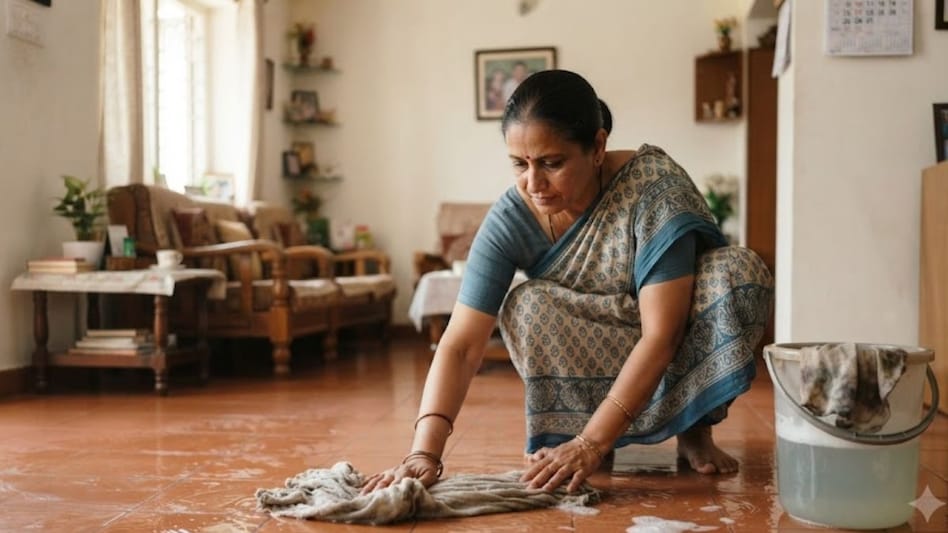
According to Vastu, using old clothes to mop the floor can negatively affect the home's well-being
Read more
www.aajtak.in

According to Vastu, using old clothes to mop the floor can negatively affect the home's well-being

When cleaning a house, items that are no longer part of daily routines are often used. Using old clothes, torn t-shirts, or unnecessary towels to mop the floor is one such habit. Although this allows for the reuse of clothing, there are specific cautions in Vastu Shastra regarding this. According to beliefs, the cleanliness of a home is related not only to removing dirt but also to maintaining a positive atmosphere. Therefore, it is important to know what types of fabrics should be used for mopping and what should be avoided.

Vastu Shastra recommends refraining from using daily worn old clothes to mop the floor. It is believed that such items accumulate old human energy and fatigue from the day. Therefore, it is better to use a separate cloth for cleaning the floor.

It is also advisable to get rid of torn and smelly clothes. Sometimes old items remain in the house for a long time, become so spoiled that they start to emit an unpleasant odor or tear. According to Vastu principles, keeping such items in the house is undesirable; it is best to dispose of very old and damaged clothing.

For cleaning, it is always recommended to have a separate cotton cloth or a quality mop. This not only improves the quality of cleaning but also eliminates the need to use everyday clothing. Vastu prescribes that cleaning items should be stored separately and be organized, which is considered an auspicious sign.

If you have old clothes that you no longer wear but are in good condition, you can donate them to those in need. In religious and Vastu beliefs, the act of charity is considered a merit. It is important, however, to ensure that the clothing is clean and wearable.

Furthermore, after use, the cleaning cloth must be thoroughly washed and dried. Leaving a damp and dirty mop in a corner of the house for a long time can lead to the development of odors and bacteria, so it should be cleaned and stored in a dry place.

Attention should also be paid to cleaning the corners and doors of the house, not just the floor itself. Dust and dirt can accumulate behind doors, under furniture, and in corners. Vastu emphasizes the importance of maintaining cleanliness and order in all parts of the house, as a positive atmosphere is preserved in such a space.

Maintaining order also applies to cleaning supplies. Mops, brooms, and other cleaning tools should not be left scattered around. A special place should be designated for them in the house. After use, all items must be cleaned and neatly put away, which helps maintain cleanliness and extends the service life of the equipment.

Eight Simple Ways to Keep Warm in the House During Winter Without Using Heaters
Read more
thebetterindia.com

Eight Simple Ways to Keep Warm in the House During Winter Without Using Heaters

The winter period is often accompanied by cold floors, cool corners, and searching for a sunny spot in the house. Many of us observed as children how our grandparents prepared for the season, taking out thick cotton blankets, laying out handwoven rugs, and opening curtains to let in the daylight.

These simple habits can still help maintain a comfortable temperature, reduce electricity bills, and make better use of existing items. Eight traditional and eco-friendly methods are presented that allow you to make your home warmer this winter without constant reliance on room heaters.

How to Maximize Winter Sunlight

It is necessary to open curtains and shutters in rooms that receive direct sunlight during the day, allowing the sun to illuminate floors, walls, and furniture. When evening comes, the curtains should be closed to reduce the feeling of cold penetrating through the windows. Thicker curtains can create an additional barrier between the room and the cold window glass. This method is a modest form of passive solar heating. Traditional houses in this country were often designed with local climate in mind, using natural light, ventilation, and local materials. Indian folk architecture offers useful examples of how traditional building structures interact with natural conditions to create comfortable living spaces.

Using Traditional Blankets and Coverings

A well-stuffed cotton blanket, wool throw, or plaid can make the bed cozy without consuming electricity. On particularly cold nights, it is recommended to place a lighter blanket under a thicker one. An extra throw should be kept near the sofa on cool evenings. Instead of changing bedding every winter, it can be aired out on a dry, sunny day and weak seams or worn covers can be repaired. It should only be stored after being completely dry, preferably in a clean cotton bag. Reusing and caring for bedding extends its lifespan and reduces unnecessary purchases.

Covering Cold Floors with Rugs and Runners

Stone and tiled floors can feel especially cold early in the morning during winter. In frequently used areas, such as near the bed, next to the sofa, and in a reading corner, cotton runners, wool rugs, or existing carpets should be placed. It is not necessary to cover the entire floor; a few strategically placed rugs can make daily spaces more comfortable. If you already have a handwoven runner, it is better to use it instead of buying a new synthetic rug. Regularly shake it outside and keep it dry to prevent dampness and unpleasant odors.

Layering Natural Fabric Clothing

A wool sweater, shawl, socks, and comfortable slippers can significantly increase comfort in a cool room. Several layers should be worn, which can be added or removed as the temperature changes. Wool items and inherited clothing can last for years with proper care. If something new is needed, it is worth considering repairing old clothes or purchasing a durable item from a local manufacturer, instead of choosing an item that may only last one season.

Using Old Fabrics to Block Cold Air

Cold air can seep through gaps under doors and around windows. Instead of buying plastic seals, old household textiles should be used. An old towel can be rolled up or sewn from leftover cotton fabric into a long cushion and placed under doors to restrict the entry of cold air from outside. Window frames must be checked for gaps, and suitable removable sealing strips should be used if necessary. However, ventilation openings should be avoided, especially in kitchens and bathrooms, as homes require adequate air exchange.

Spending More Time in One Sunny Room

Instead of trying to warm up every room equally, daily activities should be organized in the part of the house that receives the most sunlight. Move a chair, desk, or floor cushion closer to the sunny spot during the day. Close doors to unused rooms, especially those that remain noticeably colder. This helps maximize available natural heat without the need for additional appliances.

Inspiration from Traditional Himalayan Homes

Traditional dwellings in colder regions of the country offer valuable lessons in sustainable construction. Kath-Kuni type houses in Himachal Pradesh use alternating layers of stone and wood, possessing thick walls and clay plaster. Their structure promotes interior insulation and heat retention. The revival of Kath-Kuni architecture in Himachal Pradesh demonstrates how traditional building methods and local materials can preserve architectural knowledge. Similarly, Ladakh traditionally used clay, stone, willow, and poplar to withstand the region's harsh winters. Traditional building techniques in Ladakh serve as an example of how natural materials can be integrated into modern homes. Although these construction methods cannot be directly replicated in apartments, they emphasize the importance of choosing materials and design appropriate for the local climate.

Maintaining Dryness and Ventilation in the House

Damp rooms can feel colder and promote mold growth. When the weather is favorable, wet clothes should be dried outside, condensation on windows should be wiped, and extractor fans should be used in the kitchen and bathroom while cooking or bathing. Periodically open windows briefly when external conditions are suitable to ensure fresh air circulation. Keeping the house warm should not mean completely sealing it; adequate ventilation is important for maintaining a healthy indoor environment.

Creating a Warm Home Through Conscious Choice

Comfortable living during the winter does not always require expensive appliances or major renovations. Traditional architecture also teaches lessons on creating homes that harmonize with the environment. By combining these practices with conscious consumption, households can stay warm while reducing unnecessary energy consumption. These measures may not replace safe heating during severe frosts, but they can reduce the need to constantly rely on heaters.

Tradition of drying curd in China has changed: previously it was stored for years, now the preparation methods are different
Read more
www.aajtak.in

Tradition of drying curd in China has changed: previously it was stored for years, now the preparation methods are different

Chinese cuisine is known worldwide for dishes such as noodles, rice, various types of meat, and unique recipes. However, eating habits in China have undergone significant changes over time. Among the ancient culinary traditions, little known today, were methods of preserving curd by sun-drying and communal meals held while sitting on the ground.

These transformations are due not only to taste preferences but also to migration processes, social conditions, and historical events.

Nowadays, consuming yogurt from the refrigerator is the norm, but in the past, when refrigeration equipment was unavailable, people used various methods to store milk and fermented dairy products long-term. Approximately 2100 years ago, around 120 BCE, a special dry product made from curd called 'Milik' was produced in China. This product was so hard that it was difficult to chew, comparable to a very hard modern candy. Nevertheless, its main function was not only to add flavor but also to ensure the long-term storage of milk.

According to Professor Miranda Brown, a specialist in Chinese studies at the University of Michigan, winters in the northern regions of China were extremely harsh at that time. Under such conditions, it was vital to preserve food for a long period. Dried curd served as a source of protein and could be used during periods of milk shortage.

The process of making this product was quite original. In the summer, when animals produced more milk, people mixed the sour dairy product with spring water. Then, this mixture was boiled in open vessels. After most of the water evaporated, the remaining thick mass was strained through cloth. Next, it was hung to dry. When the mass turned into an earthy-dense substance, people manually formed small balls from it. These balls were carefully dried under the sun, and the prepared curd could be stored for many years. In winter, when fresh milk was hard to obtain, it was consumed.

Despite its high utility, the popularity of this product gradually declined in China. The main reason for this was population movement and changes in dietary habits. As the population of China grew, a large number of people began migrating from north to south. Other agricultural resources and products were available in the southern regions of China, leading people's diets to replace dairy products with other types of food. Nevertheless, in regions such as Xinjiang in China and Central Asia, products similar to dried curd are still consumed.

Modern Chinese eating culture is characterized by people eating together. Food is served on large plates, and all participants take what they want from the shared dishes. This is called communal dining. However, history shows that the situation was different before: in ancient times, people ate while sitting directly on the ground, and each person had their own dish and portion of food.

Evidence for this is an ancient painting found in the tomb of Tahuting during the Han Dynasty (202 BCE – 220 CE). This painting depicts people sitting on the ground and eating, with a separate plate in front of each person. Historians believe that in that era, individual dining might have served as a demonstration of social status, especially when wealthy and high-ranking individuals hosted separate meals for guests to show their standing.

The transition to the tradition of communal dining did not happen overnight. Many historical events and migrations were behind it. According to historians, the Sixteen Kingdoms period in China (304–439 CE) was a time of political instability. During this period, old social norms weakened, and traditions from people in different regions began to mix. It was then that the practice of communal dining began to spread. Culinary habits and lifestyles of people from various areas also influenced China's gastronomic culture.

Furthermore, a specific type of wooden chair for sitting, known as 'Huchuang', arrived in China from Central Asia. This chair contributed to the change in people's sitting manners. Where people previously ate sitting on the ground at low tables, the appearance of chairs stimulated the use of higher tables, which facilitated communal sitting around one table. Gradually, this method became part of daily life. Today, families and friends gather in China to enjoy various dishes placed in the center of the table.

Popular