Grupo Aeroportuario del Pacífico raises $398 million through FIBRA GAP to expand airports
Read more
Ventureburn
ventureburn.com

Grupo Aeroportuario del Pacífico raises $398 million through FIBRA GAP to expand airports

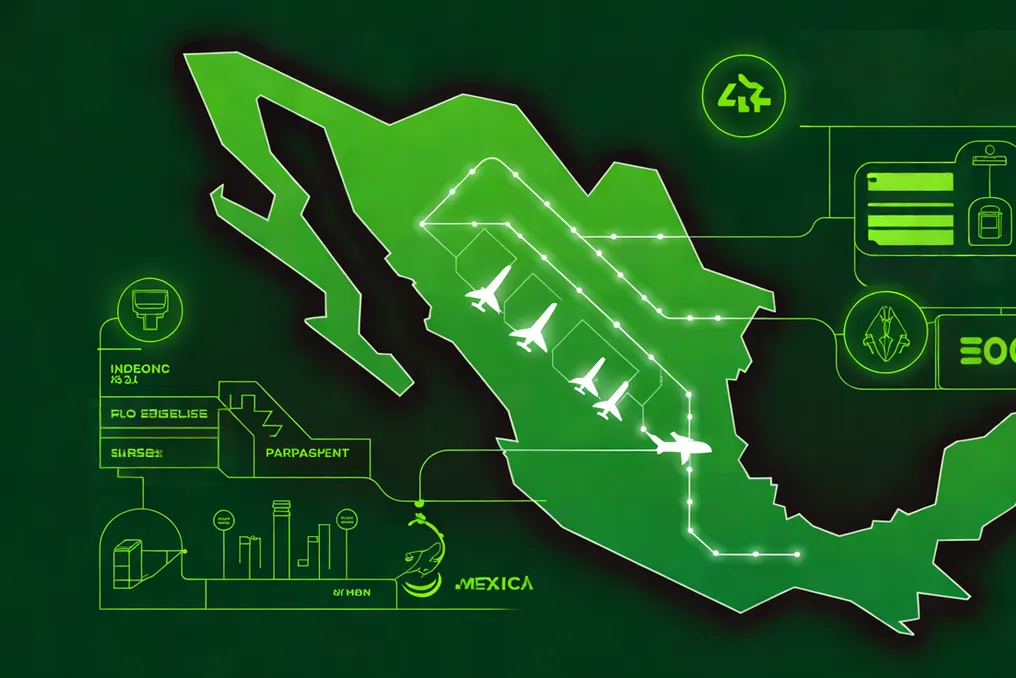
Grupo Aeroportuario del Pacífico (GAP) successfully raised 7.82 billion pesos (equivalent to approximately 398 million US dollars) through the public offering of FIBRA GAP. The airport holding company, headquartered in Guadalajara, completed this public placement on November 26.

On November 27, the sale of 391,004,247 FIBRA GAP certificates (trust certificates for investment in energy and infrastructure) was announced at a price of 20 pesos per certificate; the securities trade under the ticker FGAP26.

This deal provides GAP with an additional source of funding for its airport development plan, for which the company initially set a limit of 10.2 billion pesos. The capital raising process began in May, but the public offering was repeatedly postponed and delayed.

FIBRA GAP is an investment instrument in the energy and infrastructure sector that holds stakes in GAP's concessionary structures. After the placement was completed, this instrument acquired a 3.98% equity stake in each of the concessionary companies.

GAP noted that these proceeds will help finance investments planned for 2027. This transaction gives investors indirect access to 12 GAP airports in Mexico. This allows the operator to raise funds without relinquishing control through trust management.

FIBRA GAP will make capital contributions to the concessionary companies minus issuance expenses. As CEO Raúl Revuelta previously stated, the instrument's goal is to expand funding sources and promote better utilization of capital in airport investment plans.

The funds will be directed towards implementing the Master Development Program for the period 2025–2029. This program covers over 43 billion Mexican pesos in planned investments, and the operator intends to increase terminal area by more than 50% by 2029.

It is also planned to increase aircraft parking spaces by 26%. These improvements across the entire airport system will increase capacity, allowing it to meet expected passenger traffic growth and future operational needs. The company expects the trust's funds usage to be supplemented by debt financing.

GAP initially developed an even larger investment plan of about 52 billion Mexican pesos by 2029, and has now found an additional source of capital for these projects, although the final amount was lower than the initial offer limit.

This offering provided GAP with an alternative path to finance its capital plan. The trust structure allows investors to gain access to airport assets through an equity stake that does not imply control. The deal also demonstrates the scale of investments associated with major airport system modernizations.

Capital works related to terminal expansion and increasing aircraft capacity are capital-intensive and long-term. GAP owns and operates a portfolio of airports serving popular tourist destinations in Mexico, including Guadalajara, Tijuana, Los Cabos, and Puerto Vallarta.

The company will prioritize using the funds to fulfill its development obligations. Shareholders will likely monitor the project schedule during the period leading up to 2029. The company's shares are traded on the New York Stock Exchange under the symbol PAC and in Mexico under the symbol GAP.

Similar stories

Adani Airport Holdings attracts nearly 2790 crore rupees from 360 ONE Asset
Read more
business-standard.com

Adani Airport Holdings attracts nearly 2790 crore rupees from 360 ONE Asset

Adani Airport Holdings Ltd (AAHL), the operational subsidiary of Adani Enterprises Ltd, has signed an agreement to raise $300 million (equivalent to approximately 2790 crore rupees) from 360 ONE Asset. This new capital increases AAHL's total planned equity issuance to $1.35 billion, aimed at expanding airport infrastructure and achieving the goal of doubling passenger traffic.

This investment follows a previous commitment of $1 billion from a consortium that included Alpha Wave Global, Premji Invest, Temasek, and funds managed by BlackRock. According to the company, these two rounds value AAHL at approximately $18 billion on a pre-money basis.

Under the binding agreement, 360 ONE Alternatives Asset Management Ltd, acting through its funds and affiliated structures, will acquire newly issued AAHL shares under the same terms and valuation as the initial investors. Furthermore, the company has joined the shareholders' agreement signed with the earlier consortium of investors.

The company reported that after the completion of both deals, investors will collectively own approximately 7.01% of AAHL. The deal remains subject to standard conditions, including obtaining necessary approvals.

The fundraising marks a significant institutional investment in India's airport infrastructure sector. Growth in passenger traffic, capacity constraints, and increasing demand for airport-related commercial development are driving the need for investment in this sector.

The new capital is intended to support AAHL's ambition to nearly double its annual passenger handling capacity—from the current approximately 96 million to 200 million. The company operates a network of eight airports: Mumbai, Navi Mumbai, Ahmedabad, Lucknow, Jaipur, Guwahati, Mangaluru, and Tiruvannanthapuram. In its latest investor presentation, the company handled about 95.3 million passengers in the fiscal year 26.

The AAHL network accounts for about 23% of India's passenger traffic. This massive growth occurs against the backdrop of the steady development of India's aviation market, which served about 420 million passengers in fiscal year 26, according to government data. The country's total annual airport infrastructure capacity exceeds 580 million, highlighting the need for continuous investment in terminal infrastructure, operational efficiency, and ancillary facilities as air travel demand grows.

AAHL specified that the raised funds will be directed towards three main priority areas: modernizing and upgrading the existing airport network, developing integrated airport cities, and expanding business focused on passengers and other non-aviation segments.

The airport city strategy involves transforming airports from mere transit hubs into comprehensive commercial and urban centers, integrating aviation infrastructure with retail, hospitality, leisure, business facilities, and regional logistics. This approach also aims to increase non-aviation revenue, which can provide airport operators with additional income streams beyond passenger fees and other aviation-related services.

Thus, the investment is expected to support not only capacity expansion but also AAHL's efforts to build a broader infrastructure and commercial ecosystem around the airports. This strategy may help the company capture a larger share of the revenue generated by passengers, businesses, and logistics activities near its airports.

Commenting on the investment, Jit Adani, Non-Executive Director of AAHL, stated: 'This partnership is another milestone in building the Adani Airports platform. The presence of such large long-term investors is a testament to their confidence in the growth story of Indian aviation.' He added: 'We aim to develop a complete ecosystem around our airports, transforming them from simple transit nodes into vibrant airport cities that integrate aviation, commerce, leisure, and regional logistics to ensure sustainable national growth.'

The participation of 360 ONE Asset, alongside the previously mentioned group of investors, expands AAHL's base of institutional investors, bringing together both domestic and international financial participants. The pre-money valuation of $18 billion sets a benchmark for the airport platform at this stage of further expansion, although the company's ability to translate planned investments into higher volumes of passenger traffic, commercial revenues, and operating profit will be crucial to sustaining this valuation.

The latest agreement complements a series of capital raising initiatives by the Adani Group, as the group seeks to strengthen its infrastructure business and position its airport portfolio to benefit from long-term trends in Indian aviation and urbanization.

MEIL Group attracts $700 million from global investors, valued at 1 trillion rupees
Read more
business-standard.com

MEIL Group attracts $700 million from global investors, valued at 1 trillion rupees

Megha Engineering and Infrastructures Limited (MEIL) Group, based in Hyderabad, has attracted approximately $700 million USD. These funds were secured through an innovative financial structure that includes structured equity and the monetization of road assets.

According to information obtained from sources, three leading global investment firms participated: DK, HH, and Värde Partners. Their involvement demonstrates confidence in the group's vision, its diversified business interests, and long-term growth prospects.

This funding round is reported to be part of a family settlement between MEIL's Managing Director, P V Krishna Reddy, and his uncle, Pamireddy Pichhi Reddy, who is the founder and executive chairman of the company. Krishna Reddy is attracting these funds to finance the acquisition of his uncle P P Reddy's stake in the company.

Investors view MEIL Group as a strong platform for participating in India's infrastructure expansion and economic growth over the next decade. Their decision to partner reflects trust in the group's ambitious vision, its presence in key sectors, and one of the industry's strongest project execution capabilities.

The confidence of global investors is also evident in the business valuations. MEIL was valued at approximately 1 trillion rupees, while the group's energy transition business, EPTL, is currently valued at around 14,000 crore rupees. These valuations underscore the scale of the group's operations and the significant potential of its enterprises.

Over the last three decades, MEIL has transformed into one of India's leading engineering and infrastructure groups, executing projects in over 20 countries. Its diverse portfolio covers irrigation, transportation, energy, oil and gas, manufacturing, clean mobility, and advanced infrastructure.

The group's portfolio includes iconic national infrastructure projects such as the Zojila Tunnel, Mumbai Coastal Road, Thane-Boriwada Double Tunnel, Polavaram Project, Kaleshwaram Lift Scheme, and Palamuru-Rangareddy Lift Project. The company's road projects cover approximately 1,975 kilometers.

In the energy sector, MEIL's opportunities include hydrocarbons, power generation, renewable energy, and energy storage. The group is developing pumped storage projects with a total capacity exceeding 9,110 megawatts (MW) and implementing about 3,000 MW of solar energy. Its entry into India's nuclear energy program through the construction of two 700 MW reactors in Kaiga strengthens its position in strategic infrastructure.

The group's international activities include major stakes in the first refinery in Mongolia, while its domestic portfolio covers critical energy infrastructure and refinery projects. Beyond traditional infrastructure, the group is expanding its presence in new sectors through its ventures and subsidiaries. Olectra and EveyTrans promote electric mobility, while Drillmec and ICOMM strengthen global capabilities in drilling technologies, manufacturing, telecommunications, and strategic infrastructure. Megha Gas continues to expand its urban gas distribution network across several states.

The group's initiatives in healthcare, skill development, and social development also reflect its commitment to nation-building. As noted by a source, the $700 million deal represents a significant milestone in the development of MEIL Group, highlighting the trust of leading global investors in its vision, capabilities, and future potential, and reinforcing the group's commitment to playing a pivotal role in India's infrastructural and economic transformation.

Corma raises $125 million at $1 billion valuation to scale AI in cybersecurity
Read more
ventureburn.com

Corma raises $125 million at $1 billion valuation to scale AI in cybersecurity

Corma, an Israeli cybersecurity startup, announced it has raised $125 million in a Series A funding round with the company valued at one billion dollars. This information was disclosed on November 16, 2026.

The funding was led by NEA, with participation from existing investors including Sequoia Capital, Khosla Ventures, and Coatue. This new capital came after the company previously announced a $60 million seed round in August 2026. Thus, over three months, Corma has raised a total of $185 million.

The company plans to use the funds to develop its foundational models and computing infrastructure. Alon Pluda, CEO and co-founder of Corma, noted that the situation represents a 'battle of wits' as more large organizations demand more advanced protection. In response, the company has increased its server capacity by 24 times.

Corma develops foundational models in defensive cybersecurity. Its artificial intelligence plays a central role in the operations of modern enterprise security teams. It is important to note that the product does not replace existing security products but works alongside them, allowing organizations to maintain their current level of cybersecurity.

The company's models process vast amounts of security data, such as audit logs, security events, and network traffic. They are capable of detecting unusual behavior across various systems and correlating small signals received over long periods, enabling security teams to investigate threats more effectively.

Corma asserts that coding-oriented models are incapable of handling such tasks. Defensive cybersecurity requires continuous analysis and making immutable decisions, as well as working with contradictory sources of information in complex corporate environments.

The company's tools perform security assurance functions. Their models are trained using reinforcement learning on simulated corporate networks. These simulated networks are designed to resemble security tools, telemetry, and operational noise.

There is reported growth in application deployments within companies listed in the Fortune 100 and Fortune 500, as well as interest from companies in the Fortune Global 500. These organizations operate across various industries, including healthcare, financial services, energy, and telecommunications.

Corma's move followed cybersecurity incidents in October, which were dubbed 'Black October.' During this period, numerous errors and breaches affected popular enterprise software, exposing weaknesses in corporate security systems.

Aaron Jacobson, a partner at NEA, stated that Corma successfully combines cutting-edge AI research with cybersecurity expertise. He emphasized that the firm's technology can help organizations prevent devastating cyberattacks, and the new funding round will provide it with sufficient capital to do so.

The Corma team includes scientists from Google DeepMind and cybersecurity experts from Israel's Unit 8200. The company has offices in Tel Aviv and San Francisco, and is led by management with experience in both offensive and defensive security.

The additional capital will help Corma further scale its proprietary models. The company intends to invest in computing infrastructure and hire a new group of researchers and engineers, although hiring plans remain moderate. Corma is developing a direction toward creating autonomous cybersecurity tools.

Other companies focused on autonomous security operations platforms include 7AI, Torq, and Exaforce. All their developments focus on automating security operations using AI agents. Corma's success will depend both on adoption in large enterprises and the availability of computational resources, as it needs to demonstrate effectiveness in various complex security scenarios.

Popular