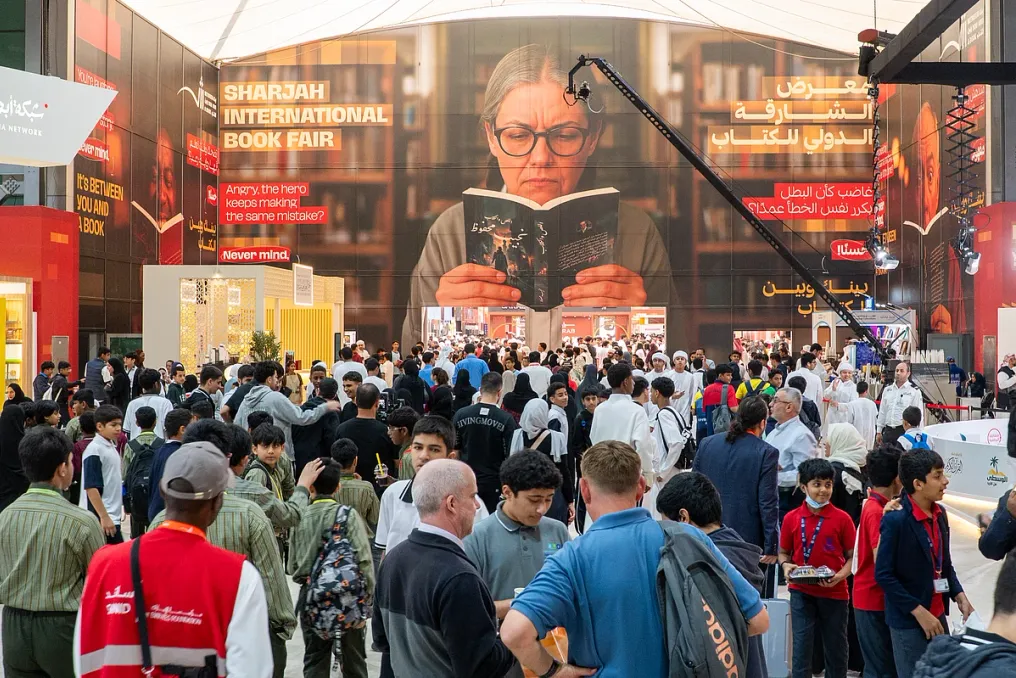
Authors Discuss the Importance of Books in the Age of Reels and Artificial Intelligence
Read more
Aaj Tak
www.aajtak.in

Authors Discuss the Importance of Books in the Age of Reels and Artificial Intelligence

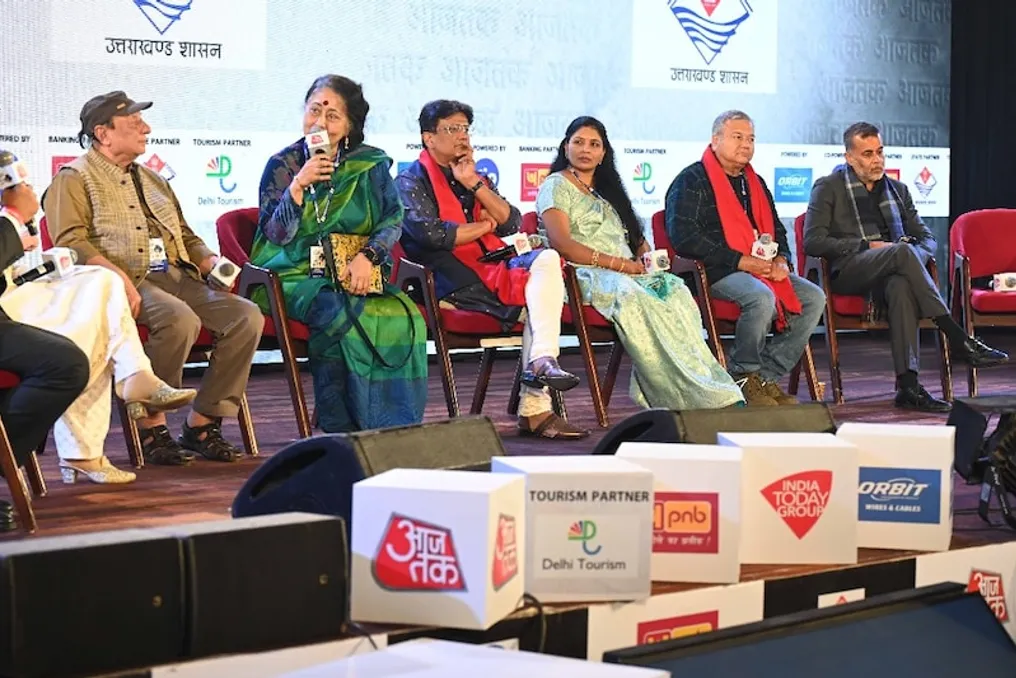
During the 'Sahitya Aajtak' 2026 event, held at the Meijer Dyanchannd Stadium in Delhi, an interesting discussion about books took place. Writers present on stage with Shweta Singh and Sanjeev Palival shared their thoughts on Reels, AI, and the habit of reading. The discussion raised the question of why one needs to find time to read a book when any information can be viewed on mobile devices in just a few seconds.

At the 'Sahitya Aajtak' venue, Shweta Singh and Sanjeev Palival conversed with writers about literature, the reading habit, and the place of literature in the modern world. Participants in the discussion included Anamika, Chetan Bhagat, Devendra Mewari, Uday Prakash, Prirna, and Pipal Baba (Ashutosh).

Chetan Bhagat emphasized that books remain relevant. He mentioned that many children started reading because of his works, noting that every book has its significance and can be the first step toward reading. He stressed that readers must not only start reading but also continue doing so.

Reels and AI were mentioned. Chetan Bhagat noted that people's attention is quickly scattered today, whereas reading requires concentration over a period of time. Although this may be difficult initially, gradual immersion in the pages helps the mind become interested in the book. He also touched upon the topic of imagination: previously, people created images by listening to or reading stories, but now everything is presented on a screen, which can reduce opportunities for independent thinking and fantasy.

The discussion also covered the significance of awards. The authors linked recognition to the confirmation and acceptance of their work. It was also noted that receiving an award can give a book a chance to reach a new audience. Prirna shared her experience as a translator, stating that she has been translating for a long time and has already published many books.

Devendra Mewari reported that he tries to write in language understandable to children. He mentioned his science fiction work 'Sabhyata ki Khoj' (Search for Civilization), which tells about creatures created in a factory. Their knowledge is depleting, so they are searching for their creator who can provide them with further knowledge.

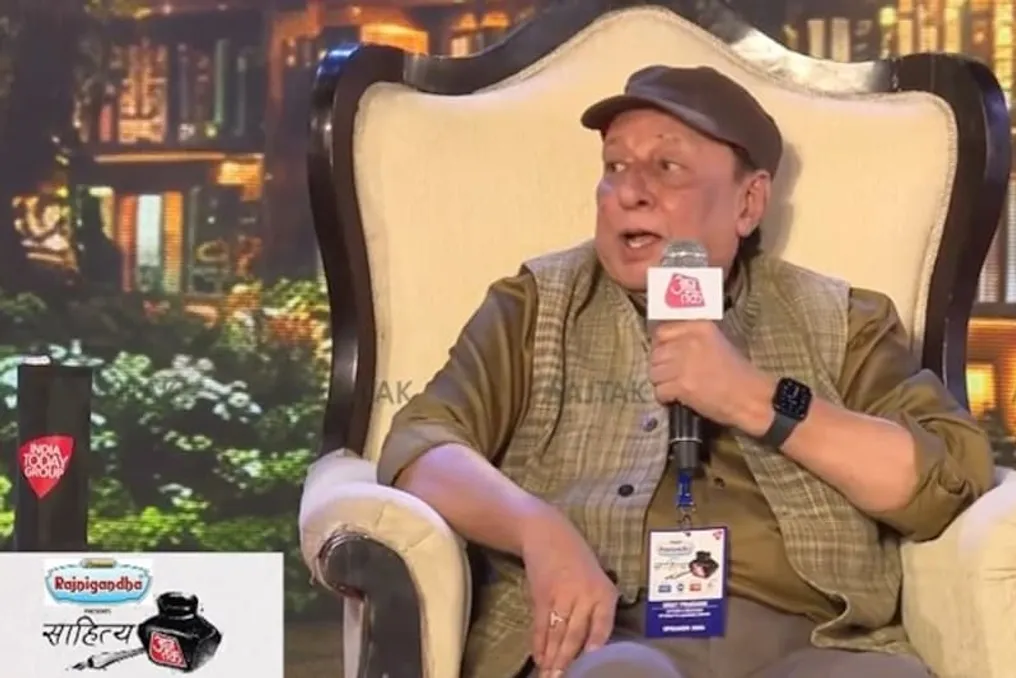
Uday Prakash spoke about the changing face of literature, how books of different genres—fiction and non-fiction—reach readers in different languages. The main takeaway from the conversation was that maintaining the reading habit is critically important, as books still give people the opportunity to think, understand, and imagine.

Similar stories

Uday Prakash discusses the main secret of writing: one must stop and find their uniqueness
Read more
www.aajtak.in

Uday Prakash discusses the main secret of writing: one must stop and find their uniqueness

During the 'Uday Prakash Masterclass' held on the 'Sahiti Aajtak' platform in 2026, renowned writer Uday Prakash shared advice for the new generation on how to become an author and where to start writing. He answered questions about rushing to achieve success in the literary world, emphasizing that being able to pause, observe the surrounding world carefully, and maintain one's unique individuality is crucial for becoming a writer.

According to Uday Prakash, every author's work is their personal fingerprint. Speaking about his childhood and the beginning of his creative journey, he mentioned that he is from a small village. There, children studied by spreading mats on empty government sheds after the livestock went outside, and in winter, classes took place under the shade of trees. Modern writing tools were unavailable in those times.

He noted that when a new technology appears, people tend to criticize it and list its shortcomings. Therefore, he advised the younger generation not to resist technologies but to strive to understand them.

Uday Prakash observed that the modern generation strives to achieve everything very quickly, much like products spread rapidly across the world. However, in this race, it is important to realize what belongs to a person. He insisted that the author must carefully preserve their originality and personality; only then can their literature endure. Instead of constant running, the author should slow down and observe, because only in a state of calm can one grasp the pace and direction of the world's movement.

Literary responsibility, according to Uday Prakash, is connected not only to humanity but also to nature. He believes that changes are necessary, but they must not lead to the disappearance of villages, rivers, trees, and air in the pursuit of development. The primary task of the writer is to preserve the possibilities and conditions for life to exist.

Referring to his story 'The Girl in the Yellow Hat,' Uday Prakash explained how significant technological changes occurred around 1999, rapidly transforming both the world and language. In this work, he depicted love as a force capable of overcoming boundaries between old social categories and computer data.

The writer also reported that attempts were later made to ban this book from sale in India. Uday Prakash stressed that the author is forced to fight for their creativity at all levels. Discussing artificial intelligence, he stated that AI is within the capabilities of the human mind. In his opinion, technologies require understanding and careful use.

Authors Discuss the Possibilities and Problems of Using Artificial Intelligence in Literary Translation
Read more
www.khaleejtimes.com

Authors Discuss the Possibilities and Problems of Using Artificial Intelligence in Literary Translation

American novelist Karen Dionne prefers that readers do not read her books at all rather than have them translated using artificial intelligence (AI). Despite her works being translated and published in 28 languages, Dionne believes that literary translation requires much more than simply converting words from one language to another.

Dionne told Khaleej Times: «I would prefer people not to read my work at all rather than read a translation created by AI. The mere thought of my work being translated by AI repels me. The very existence of awards for translation excellence proves that translation is an art, not a science.»

As AI tools simplify the quick translation of books and allow authors to reach readers in different languages, writers are questioning whether this technological progress can preserve the emotions, cultural meanings, and stylistic features that make literature unique.

Filipino poet and filmmaker Christian Sendon Cordero sees AI as an opportunity to make literature more accessible, but he insists that the human element must remain central to the process.

Cordero also told Khaleej Times: «For me, translation itself is an art. It requires not only conveying words from one language to another; it requires understanding the world from which those words originated.»

For her part, Dionne believes that even a single word can affect a reader's perception of a story. She emphasized: «Authors spend many hours choosing precisely those words to fill their work with beauty and emotion. The rhythm and meter of our sentences are important.»

Dionne recalled an instance when a German translator of her novel The Marsh King's Daughter contacted her to request scientific names of plants and animals mentioned in the book to ensure accurate translation. She noted: «I cannot imagine an AI bot demonstrating such a level of care and attention.»

For Cordero, the issue goes beyond choosing appropriate words. He believes that literature carries cultural experiences and memories that cannot always be understood solely through linguistic patterns. He explained: «A word in Bikol may carry the weight of a landscape, a religious tradition, or an entire history of relationships that cannot simply be extracted from its lexical equivalent.»

He acknowledged that AI can become increasingly sophisticated in recognizing literary styles and reproducing their effects, but questioned whether this would be enough. Adding that «pattern recognition is not necessarily equivalent to experiencing what generated it. And this difference is important to me as a writer.»

Despite his concerns, Cordero believes that AI can create opportunities for books written in smaller languages to reach an international audience. He stated: «AI can certainly expand the reach of literature and allow readers to encounter works that would otherwise remain inaccessible due to language barriers.»

However, Cordero warned that making literature accessible in more languages should not come at the expense of its cultural identity. He added: «Language is not just a set of words; it carries stories, memories, gestures, humor, beliefs, and ways of living in the world.»

Dionne agreed that AI can make a book accessible in a language where there is no human translator. Nevertheless, she believes that accessibility should not be the main priority when translating literature.

For both authors, attracting a wider audience means little if the original work loses the qualities that give it meaning.

The use of AI in literary translation also raises questions about who controls the translated works and whether authors should be compensated for it. Dionne explained that writers rarely participate directly in the translation of their books. When translation rights are sold, the publishing house acquiring those rights is responsible for maintaining quality. However, she strongly opposed the idea of having her works translated without compensation. She stated: «If 'without my direct involvement' means without compensation, then absolutely not. That is piracy.»

Cordero also expressed concern that AI-generated translations are distributed without the author's knowledge or consent. He said: «I would feel uncomfortable if my books were translated and distributed using AI without my knowledge, consent, or any form of editorial responsibility.»

While he welcomes the possibility of reaching a larger audience, he believes that technology should support human creativity, not replace the judgment and imagination embedded in literary work.

Ultimately, both authors prefer human translators, although their views on the broader possibilities of AI differ. Dionne believes that good translators approach their work with the same artistic care as writers. She said: «Good translators are artists who care about breathing life into their translation and doing everything possible to convey the author's original intent.»

Cordero, in turn, believes that translators must understand not only what the authors write but also the meanings they leave unsaid. He noted: «A translator must understand not only what the writer says but also develop a certain closeness to what the writer has left unsaid.»

For him, this human connection remains vital, no matter how advanced translation technology becomes. He stressed: «I still need to see the human face behind every work of art.»
Popular