Honda CB500 Hornet combines sporty characteristics with practicality and economy
Read more
AutoPapo
autopapo.com.br

Honda CB500 Hornet combines sporty characteristics with practicality and economy

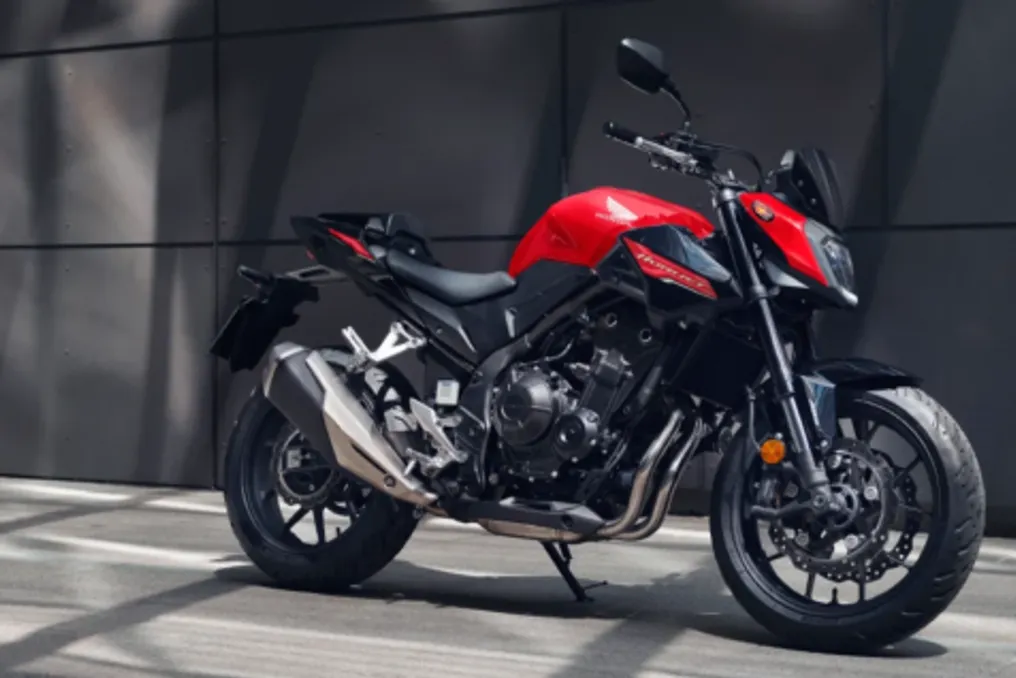
Honda has reintroduced the Hornet name to the market, presenting a complete line of motorcycles. Among the launched models are the powerful CB1000 Hornet, recently displayed in Brazil, and the classic CB750 Hornet, positioned in an intermediate category, bringing back the 'brutal' characteristic associated with the Hornet name.

However, the Hornet name was also applied to a new engine, the CB500 Hornet. In this generation, this model delivers a balance between the sportiness typical of a naked bike and the practicality of daily use, coupled with economy.

When the decision was made to apply the Hornet name to a 500cc model, it raised questions, given that the brand already had a 500 on the market. However, after testing the motorcycle, it is clear that the manufacturer got the new package right.

The new Honda CB500 Hornet was designed to be lighter and simpler to ride in daily life. Although it presents only a 1 kg difference compared to the old CB500F (totaling 175 kg), the adjustments made to structural components concentrated the weight near the engine, resulting in a more refined riding dynamic.

Regarding the engine, it is a liquid-cooled, four-stroke, DOHC twin-cylinder with a capacity of 471 cm³. This engine can generate up to 49.6 hp at 8,500 rpm and 4.5 kgfm of torque at 7,000 rpm, contributing significantly to the bike's balanced performance.

It is argued that a more compact engine is what gives efficiency to a 500cc bike, which serves as an entry point for those seeking sportiness and high performance. For more experienced riders, the new CB500 Hornet offers practicality and economy, functioning well as a versatile bike for daily use and less intense track events, as maintenance and, above all, fuel costs are lower compared to larger models.

Other advantages include the assisted and slipper clutch, which not only reduces the force required to operate it with the pedal but also prevents the rear wheel from locking during abrupt gear reductions, preventing skidding and loss of traction. The gearbox features 6 speeds.

Aesthetically, the bike maintains the identity of an aggressive urban naked bike. Its lines were inspired by the larger siblings in the line, giving the smaller version a bolder and sportier look. The available color options—red, gray, and black—allow the rider to customize the aesthetics according to their taste.

To complement the practical benefits of the CB500 Hornet, it is important to detail its technical specifications. A crucial element is the HSTC (Honda Selectable Torque Control) system, technology introduced in this new generation. It uses speed sensors to monitor wheel rotation, automatically correcting the spin and assisting the rider, especially on slippery or uneven surfaces.

In terms of safety, the system includes ABS (anti-lock braking) brakes and ESS (Emergency Stop Signal), known as automatic hazard lights, which activates during sudden braking, ensuring clear signaling to other road users.

Like the turn signals, the position lights and headlight use LED technology, providing better illumination and greater lamp durability. Near the wheel, the new CB500 Hornet is equipped with inverted front suspension, a technology aimed at increasing stability and effectiveness in sporty driving, a feature present on the old 500F since 2023.

There has been a major evolution in the model's electronic aspect. The 5-inch colored TFT display offers excellent visibility and has two backlight configurations, with automatic adjustment and different formats. Access to information such as fuel consumption and Trip A and B records is done via a joystick located on the rider's left handlebar.

All these attributes consolidate the Honda CB500 Hornet as a motorcycle that combines sportiness, practicality, and economy. Compared to other direct competing naked bikes, the 500 offers the best balance between technology and efficiency, providing a complete package to the consumer.

The Honda CB500 Hornet can be purchased at official dealerships of the Japanese manufacturer throughout Brazil for the suggested price of R$ 43,470. It comes with a 3-year warranty without mileage limit and Honda Assistance service, which covers rider assistance in various South American countries, including Brazil, Chile, Argentina, Uruguay, Paraguay, and Bolivia.

Similar stories

Chevrolet Captiva PHEV launch in Brazil, Peugeot's exit from WEC, and automotive industry news
Read more
flatout.com.br

Chevrolet Captiva PHEV launch in Brazil, Peugeot's exit from WEC, and automotive industry news

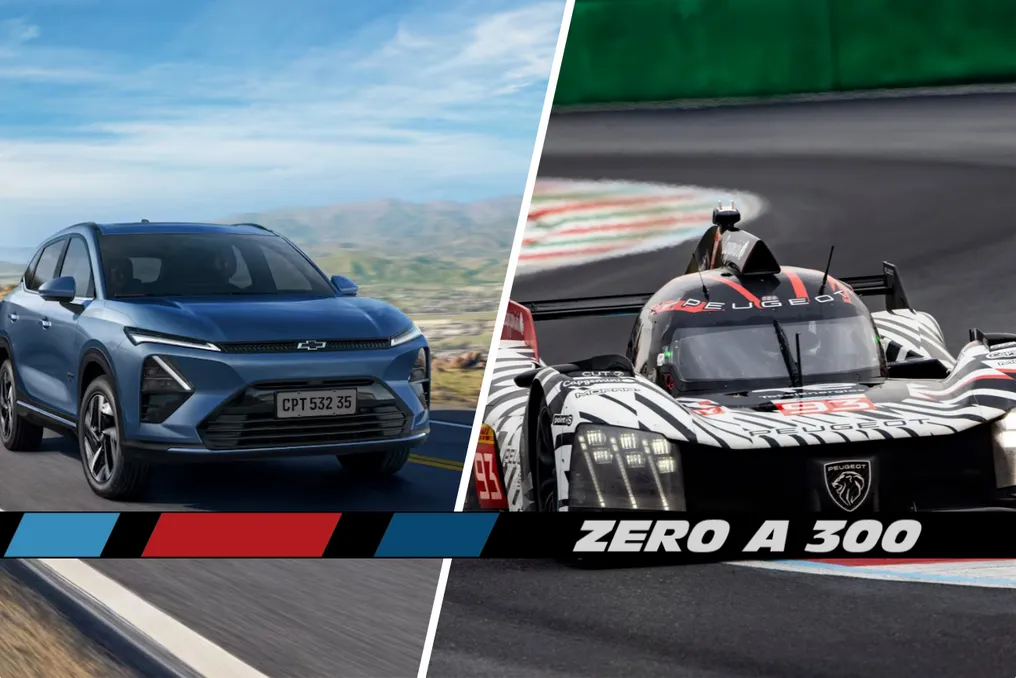
GM has introduced the Chevrolet Captiva PHEV to the Brazilian market, marking the arrival of its first hybrid vehicle in the country. This plug-in hybrid SUV has an initial price starting from R$ 199,990 and is already available for pre-order.

The Captiva PHEV features domestic assembly in Horizonte (CE), utilizing components imported from China. Its design is a collaboration with manufacturers SAIC and Wuling, known in the Chinese market as the Wuling Starlight S. The hybrid system combines a 1.5-liter naturally aspirated four-cylinder engine, operating on the Atkinson cycle, with an electric motor. Together, they generate a total power of 227 hp and 31.6 kgfm of torque, allowing it to reach 100 km/h in 8.3 seconds, with a top speed of 190 km/h. The individual power output of each powertrain was not disclosed.

The transmission used is a DHT (Dedicated Hybrid Transmission) type, characterized as a single-speed gearbox with multiple ratios. This system manages various driving modes, capable of operating in 100% electric mode (using a 20.5 kWh battery), series hybrid mode (where the combustion engine generates energy), or parallel hybrid mode (with both engines acting simultaneously).

In fully electric mode, the Captiva PHEV offers a range of 60 km, potentially reaching up to 1,069 km when using all hybrid drivetrain resources. Charging can be done at 3.3 kW via alternating current (AC) stations or at 24.6 kW via direct current (DC). Visually, the distinction between the purely electric version and the PHEV is only the inclusion of the charging port. The vehicle measures 4.74 m in length and 2.80 m in wheelbase, with a trunk capacity of 532 liters, expanding to 1,690 liters with the rear seats folded down. Standard features include a panoramic roof, a 15.6-inch multimedia center, an 8.8-inch digital dashboard, a 360° camera, and an electric tailgate. The driving assistance package includes autonomous emergency braking and adaptive cruise control.

Production takes place at the Ceará Automotive Plant (PACE) in Horizonte (CE), which also manufactures the Chevrolet Spark EUV and Captiva EV electric models.

Following meetings with employee representatives in France, Stellantis announced the termination of its official motorsport programs. Peugeot will immediately leave the WEC without a farewell season, as it did not register the 9X8 for 2027, and the registration deadline expired that Monday. The car bids farewell after 34 starts without victories, and the revised version planned for next year will not compete.

Citroën and Opel will remain in Formula E for one more season, competing in the first round of the Gen4 cars, and will leave the championship at the end of this season, in mid-2027. The Citroën team is managed by Monaco Sports Group, and Stellantis indicated that it will decide its own future, maintaining the possibility of continuity in the grid with another manufacturer.

The permanence of Lancia has not been confirmed. A Stellantis spokesperson, interviewed by DirtFish, clarified that the Lancia Corse HF is driven by PH Sport, and is not an official group team in the WRC, and therefore is not subject to the decision. Customer programs, such as Ypsilon Rally2 HF Integrale, C3 Rally2, Rally4, and Mokka GSE Rally, will continue, and plans for 2027 will be communicated soon. It is relevant to note that the Ypsilon secured the WRC2 team title upon its debut.

Stellantis also detailed the destination of financial resources, directing them towards customer competitions and street sports versions (Veloce, GTi, HF, and GSE) of brands such as Alfa Romeo, Peugeot, Lancia, and Opel, as well as exclusive models for Alfa and Maserati.

Additionally, Dodge, which was uncertain in NASCAR, maintained its participation without restrictions. Tony Sapienza, Stellantis' Vice President of Communications in North America, told RACER that there will be no changes to the region's programs.

Many enthusiasts have dreamed of owning classic cars from the 'Fast & Furious' franchise, especially in the 2000s, when modified vehicles like the orange Supra, Brian's Skyline, or Han's RX-7 Veilside were very popular. Periodically, replicas or real cars seen in the movies are announced by auctioneers and specialized stores, often reaching very high values.

However, for those seeking something more unique, an Acura Integra GS-R has emerged that, according to documentation, served as an extra in '2Fast 2Furious' (2003). This vehicle is listed in an auction on the Bring a Trailer website, with a current bid slightly over US$ 1,300 and six days remaining until closing.

It is the American version of the Honda Integra SiR, equipped with a B18 engine that originally produced 170 hp. The design reflects the aesthetic of the era, featuring custom black and red paint and a harmonized interior. The 1.8 VTEC engine was enhanced with a Jackson Racing mechanical compressor and modified intake, although the current power output was not specified. The car retains a five-speed manual transmission and front-wheel drive. Aesthetic modifications include gullwing doors and 19-inch HRE wheels, in addition to paint applied after filming, as reported by Bring a Trailer.

There is an important caveat: there is no confirmation that the car actually appeared in the movie. What exists is a charge receipt for damage to the rear bumper amounting to US$ 2,472, issued by the company responsible for filming. Nevertheless, rewatching the movie to locate this Integra can be a fun nostalgic act, and its future owner can display a movie car in the garage, even if its appearance was cut from the edit.

A composite is essentially a resistant fiber inserted into a resin matrix, and these fibers can be diverse. While race cars and supercars use carbon, old Brazilian cars from the 70s and 80s were built with fiberglass, and Kevlar is used where impact resistance is prioritized over rigidity. Volvo employs cotton textile fiber in its interior finishes.

Nissan now intends to add pineapple leaf to this list. In partnership with Food Reborn, an Okinawa-based company specializing in natural fibers, the manufacturer recently presented a plastic hood reinforced with pineapple leaf fiber, which, according to both parties, is the first body panel globally manufactured with this material.

Vegetable fibers have been used in automobiles for decades; Brazil has notable examples. Mercedes-Benz began using coconut fiber in the headrests of its trucks in 1994. Volkswagen applied curauá, an Amazonian plant related to pineapple, mixed with polypropylene, in the headliner, door trim, and trunk lid of the Fox and Polo, but always in internal applications, such as padding or lining.

Regarding external applications, Porsche pioneered in 2019 by launching the 718 Cayman GT4 Clubsport with doors and a rear wing made from a natural fiber composite, such as linen and hemp. Nissan claims to have achieved a material with tensile strength superior to linen composites, according to its own tests, but has not released data on weight, stiffness, or comparison with carbon or glass fiber.

The production process is similar to that of carbon fiber: the fibers are extracted from the leaves, transformed into a flat thread, and woven like fabric. This fabric is immersed in resin, forming what is called prepreg, and subsequently molded into the shape of the part. The difference lies in the raw material: instead of an expensive synthetic filament, an agricultural residue is used, which, according to Nissan, represents over 50 million tons discarded annually worldwide.

Currently, the focus of this material is on racetracks. According to Nissan, certain series-based categories already require natural fiber composites when external panels are altered, and executive Tatsuzo Tomita assures that the material meets motorsport requirements. The manufacturer has also licensed its technology so that Food Reborn can produce the yarn, fabric, and prepreg, and the Japanese company already plans to use it in sporting goods. There is still no concrete information about the application of pineapple fiber in road vehicles.

Since its presentation in July 2022, the N Vision 74 has gone through a period of uncertainty. In December 2023, Korean press and Car and Driver mentioned a production run of 100 units with 800 hp, with 30 destined for the tracks. In August 2024, the car appeared in a slide during Hyundai's Investor Day among future high-performance electric vehicles, leading to the belief that production was officialized.

However, Simon Loasby, Head of Hyundai's Design Center, informed The Drive that the project will not proceed at this time. Loasby explained during the presentation of the new Elantra to the press that the project progressed significantly, reaching a clay model with defined exterior and interior. The obstacle encountered was financial, as the car, evaluated in isolation in terms of sales volume and return, 'did not have a chance.' He added that including brand image value could increase the chances, but reiterated: 'for now, no.' Although Hyundai has not issued an official statement, Loasby's declaration suggests a significant postponement of the project.

For context, the N Vision 74 was a reinterpretation of the Pony Coupe designed by Giorgetto Giugiaro in 1974, a concept that gave rise to the Pony, the first car developed by Hyundai itself. Internally, the vehicle was not retro: an 85 kW hydrogen fuel cell and a 62.4 kWh battery powered two electric motors, one for each rear wheel, totaling 680 hp and 91.8 kgfm. Prototypes tested by the press used the fuel cells from the Nexo SUV.

Some elements of the original design will be preserved. Loasby mentioned that the top view, pillars, roof crease, and sides of the new Elantra (Avante in Korea) follow the 'N74 playbook,' and he himself addressed the possibility of a future N version of the sedan. Previously, in 2024, there were speculations that an affordable sports car would be more advantageous for Hyundai than a limited-edition hydrogen supercar, and it seems this is the path on which the N Vision 74 will find its survival.

Review of five motorcycles suitable for city, highway, and off-road without significant cost
Read more
autopapo.com.br

Review of five motorcycles suitable for city, highway, and off-road without significant cost

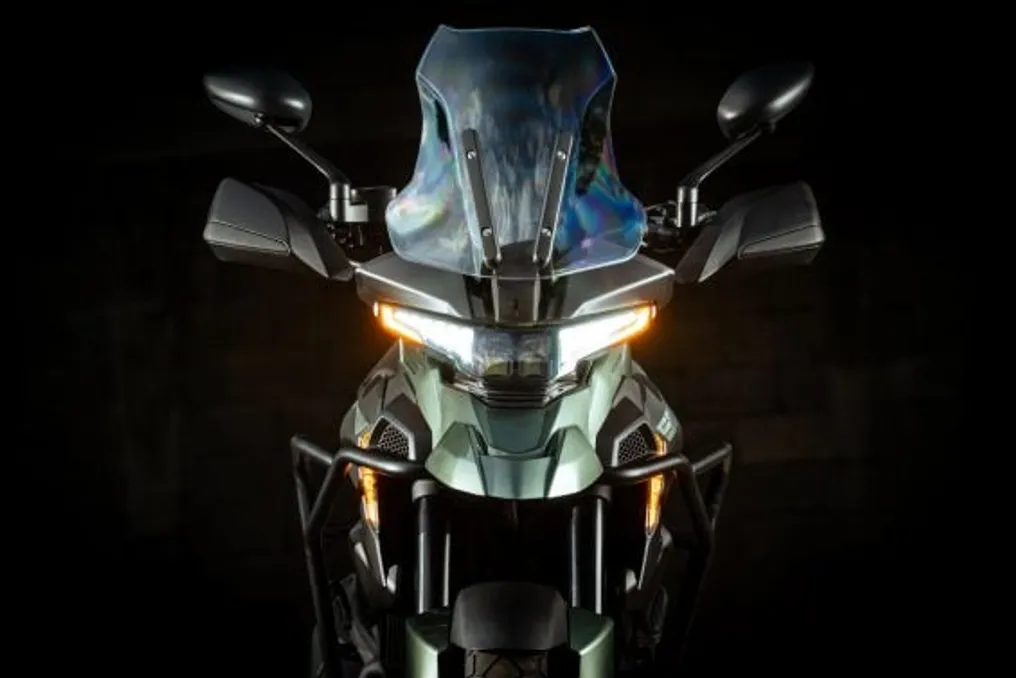
Motorcycle riders often have to choose between models oriented towards city traffic, highways, or off-road riding. The choice depends on which rider needs are best met. However, for those who need to ride in all conditions, there is a solution. Motorcycles capable of handling the city, road, trails, and even touring are included in the lineups of almost all manufacturers. These are so-called versatile models that can function in any terrain conditions. Nevertheless, it should be remembered that none of them will be the best in all functions, but they are an alternative for those who want one motorcycle for all situations.

Below is a list sorted by increasing price. All indicated prices are recommended retail prices and do not include shipping costs.

Dominar 400: the most affordable option

The Dominar 400 opens the list as the most budget-friendly option, offered at a price of 27,490 Brazilian Reais. This motorcycle arrived in Brazil in December 2022 and became Bajaj's best-selling motorcycle in the country, earning a reputation for being reliable and affordable. When the brand debuted in the country, the manufacturer conducted a durability test by sending riders from Manaus to São Paulo on this model.

In the 2027 version, it ceased to be 'almost complete' in its class. It received a ride-by-wire electronic throttle, four riding modes (Road, Rain, Off Road, and Sport), traction control, and a unique color LCD display with Bluetooth connectivity via the Bajaj Ride Connect app. Traction control prevents the rear wheel from slipping on slippery surfaces, and the Off Road mode softens power delivery for off-road use.

The mechanics remain the same: a single-cylinder engine with a displacement of 373.3 cc, DOHC with four valves, liquid cooling, producing 40 hp at 8,800 rpm and 3.56 kgm·cm of torque at 6,500 rpm. The transmission has six gears, an assisted and slipper clutch, a 43 mm diameter inverted fork, and a Nitrox rear monoshock. The overall weight is 192 kg, the tank capacity is 13 liters, and the wheelbase is 1,453 mm.

For touring, it comes from the factory equipped with a windscreen, handguards and engine/crankcase guards, a split seat, a luggage rack for side cases, a passenger footpeg, a USB port, and full LED lighting. Cruise control and a full navigation system are absent, as navigation works by turns and does not display a map.

Despite having traversed the Transamazonian land, its limits are revealed when the asphalt ends. The 17-inch wheels with road tires provide comfort on gravel roads but struggle in more complex low-adhesion conditions. Thus, it is the cheapest motorcycle on the list, but not the most capable off-road.

Royal Enfield Himalayan 450: off-road preparation

The Royal Enfield Himalayan 450 starts from 29,990 Brazilian Reais in Salt and Slate Poppy Blue colors, rising to 30,990 Brazilian Reais in Hanle Black, and reaching 31,990 Brazilian Reais in top versions. Being slightly more expensive than the Dominar, it is the most off-road ready in this group.

The reason lies in its running gear. Spoked wheels measuring 21 inches in the front and 19 inches in the rear form a structure that easily navigates uneven and potholed surfaces. The model won the Indian Motorcycle of the Year (IMOTY) award in 2024 and confirmed much of its claims after over 500 km traveled by AutoPapo between Betim (Minas Gerais) and Tiradentes.

It also performs well in the city. The seat, adjustable from 82.5 cm to 84.5 cm, suits riders of different heights, and the width at the widest point, 85.2 cm, facilitates maneuvering between cars, provided side cases are not installed. The 452 cc single-cylinder engine produces 40.02 hp at 8,000 rpm and 4.07 kgm·cm of torque at 5,500 rpm and surprisingly does not vibrate much at high speeds, which is rare for a cylinder of this size. At low RPMs, it also does not jerk.

There are drawbacks, and they are known. The nearly 200 kg weight creates discomfort when stopping or reversing. The levers and grips remain stiff, although less so than on the 350 models of this brand. At high speed, wind pressure on the chest is felt due to the low front fairing. Furthermore, the technology promises more than it delivers: the TFT display is complete, but phone mirroring works incorrectly. Motorcycle navigation also shuts down when the smartphone is locked.

Scrambler 400X: refined build

Starting from 31,990 Brazilian Reais, the Scrambler 400X offers the most refined finish in the list, despite the project being developed in partnership with Bajaj. It is manufactured in India, at the Chakan plant, and assembled only in Manaus using the CKD system. Its TR-Series engine is a 398 cc single-cylinder, liquid-cooled engine that produces 40 hp at 8,000 rpm and 3.82 kgm·cm of torque at 6,500 rpm, paired with a six-speed gearbox. The electronic package is pleasant for this price segment: it includes traction control, electronic throttle, assisted and slipper clutch, dual-channel ABS with rear disablement capability, full LED lighting, LCD display, USB-C port, and immobilizer. The ability to disable rear ABS provides a real advantage when braking on off-road surfaces.

However, its main advantage is lightness. The weight is 179 kg, the seat height is 835 mm, the wheels are 19 and 17 inches, already equipped with factory tubeless tires, and both suspension travel is 150 mm. The 13-liter tank provides a good range, as fuel consumption easily reaches 25 km/L. All this makes it the most maneuverable in the group in the city, while still handling dirt roads and light trails.

The maintenance interval also plays in its favor. The plan for the 400 series stipulates the first service at 1,000 km, the second at 16,000 km, and the third at 32,000 km or two years after purchase. On the other hand, there are frequent owner reports of engine problems and chain tensioner noise, which Triumph considers an 'improvement' rather than a recall. Since most parts are imported, waiting time in service may increase.

T501: new player in the market

Presented on November 12, 2026, the T501 will start selling in December at a price of 39,970 Brazilian Reais. Since it has just been released, practical aspects such as real performance, fuel consumption, and durability are yet to be determined. However, the technical specifications and price match the concept of this list.

Developed to order by the Brazilian importer Grupo J. Toledo, the T501 is an evolution of the T350X. The single-cylinder engine was increased from 348 cc to 499 cc, with four-valve DOHC, producing 47.45 hp at 7,500 rpm and 4.9 kgm·cm of torque at 6,500 rpm. The most significant improvement is the torque, which surpasses even the Honda NX500, which costs 6,290 Reais more.

Despite being a single-cylinder engine, reviews from those who tested the model indicate a well-tuned engine for the stated purposes. The equipment is a strong point: the list features a Marzocchi inverted fork with 150 mm travel, a monoshock with progressive linkages and preload adjustment, a 320 mm front brake with a four-piston radial caliper, rear ABS with disablement capability, 19 and 17-inch wheels with external spokes and tubeless tires, TFT display, key fob, electrically adjustable windscreen, handguards and engine guards, USB port, and luggage rack. Traction control and quickshifter are absent.

The concept aims for a compromise: a seat height of 830 mm, upright riding position, a 17-liter tank, a ground clearance of 195 mm, and an overall weight of 211 kg, which is the heaviest in the list. The rear tire, 160/60R17 with a road profile and 150 mm of front travel, suggests good performance on light trails, dirt roads, and private property access, but it will not qualify as a pure off-roader.

The drawback lies in support. Zontes does not have its own network in Brazil, and its motorcycles are sold and serviced at Grupo J. Toledo dealerships, which are combined with Suzuki, Haojue, Kymco, and Hisun. They have about 100 stores nationwide, concentrated in the South and Southeast. The number is growing: 10 openings are planned for 2025 and 13 new locations by August 2026, but those traveling in the North, Northeast, or Central-West should check the location of the nearest authorized service before purchasing.

Honda NX500: closing the list

The NX500, priced at 46,260 Brazilian Reais in the 2027 version, closes the list as the most expensive motorcycle and the one that causes the least concern regarding after-sales service. Honda is the largest motorcycle manufacturer in the country and possesses the most extensive service network, guaranteeing the availability of spare parts, trained personnel, and a known resale value. The warranty is three years without mileage restriction, and Honda Assistance covers this entire period.

Its purpose is more geared towards the highway than its competitors, approximately 80% road and 20% off-road. The 471 cc twin-cylinder, liquid-cooled engine produces 49.6 hp at 8,500 rpm and 4.5 kgm·cm of torque at 7,000 rpm, with a six-speed gearbox and an assisted slipper clutch. It is the only twin-cylinder engine among the five presented, making long trips smoother.

The chassis uses Diamond steel, the front suspension is a 41 mm Showa SFF-BP inverted fork, and the rear system is a Pro-Link with an adjustable monoshock. The front wheels, 19 inches, and the rear, 17 inches, are fitted with Dunlop Trailmax Mixtour mixed tires, which support mixed use without sacrificing asphalt performance.

Electronically, it is equipped with HSTC disableable traction control, ESS emergency braking warning system, PGM-FI injection, and a 5-inch color TFT display. For touring, it features a high windscreen, a two-level seat, luggage mounts, and full LED lighting.

The Kawasaki Versys-X 300 costs 34,990 Brazilian Reais and would rank third if ranked by price. It is presented as a bonus because, although it does not perform all tasks perfectly, it is a very beloved model among motorcyclists. In Brazil since 2017, it has been a time-tested motorcycle, known for its reliability, simple maintenance, and fair price. The engine is a parallel twin-cylinder of 296 cc, DOHC with eight valves, producing 39 hp at 11,500 rpm and 2.7 kgm·cm of torque at 10,000 rpm. Its power requires high revs, but it is smooth. The weight is 167 kg, the lowest on the list; the seat is low at 815 mm, and the tank holds 17 liters—a combination that will appeal to a beginner or shorter rider.

A small downside to its concept is its intended use. It is a crossover, and its trail capability is quite modest, with 19 and 17-inch spoked wheels, a traditional telescopic fork, and a two-channel ABS that cannot be disabled. It handles dirt roads but not technical off-roading. The analog-digital display without connectivity and the halogen headlight also speak to the age of the project.
Ten Best SUVs Under 150 Thousand Reals
Read more
autopapo.com.br

Ten Best SUVs Under 150 Thousand Reals

The popularity and diversity of sport utility vehicles have grown so much that it is now easy to find the best SUVs priced under 150 thousand reals. The market has created various subcategories for the body style that is most in demand in the country and worldwide.

This review presents 10 top SUVs under 150 thousand reals, including crossovers, compact entry-level models, more equipped compact models, and mid-size sport utility vehicles. You can choose the one that best suits your lifestyle, garage, and budget.

The first Jeep, built on a French platform, is among the best SUVs under 150 thousand reals. It features good dynamics and smart performance thanks to its 1.0 turbo engine with a Mild Hybrid Electric Vehicle (MHEV) system, 21 cm ground clearance, ADAS systems, and is the only compact crossover with a five-year warranty.

The main features of the Longitude version include six airbags, ACC, forward collision warning with automatic emergency braking, lane centering, road sign recognition, blind spot detection, driver fatigue detector, camera, and parking sensor, hill start assist and hill descent control, tire monitoring, Auto Hold, a 10-inch multimedia system with wireless mirroring, automatic air conditioning, proximity key fob with start button, inductive phone charging, a 7-inch digital instrument cluster, electronic parking brake, driving mode selector, rain sensor, two USB-A and USB-C ports, LED headlights, and 17-inch alloy wheels.

The WR-V has returned in its second, larger generation, boasting a more robust design and excellent value for money. Even the most affordable version under 150 thousand reals is equipped with the Honda Sensing package featuring ADAS functions. Furthermore, it has six airbags and one of the largest trunks in its class—458 liters.

The main options of the EX version include six airbags, ACC, forward collision warning with automatic emergency braking, lane centering, automatic high beams, camera and parking sensor, hill control, 10-inch multimedia with wireless mirroring, automatic air conditioning, proximity key fob with start button, 7-inch digital instrument cluster, two USB ports, LED headlights, and 17-inch alloy wheels.

The Tera recently introduced versions with a more powerful 1.0 turbo engine, and one of them is included in the list of best SUVs under 150 thousand reals. This compact crossover from Volkswagen received new mechanical equipment and stands out with the brand's solid exterior, well-designed platform, and sufficient features.

The main specifications of the Comfort version include six airbags, ACC, forward collision warning with automatic emergency braking, camera and parking sensor, hill control, driver fatigue detector, tire monitoring, 10.1-inch multimedia with mirroring, air conditioning, proximity key fob with start button, 7-inch digital instrument cluster, USB-C ports, LED headlights, and 16-inch alloy wheels.

The Kardian is also among the best SUVs under 150 thousand reals, and it is one of the few where the most spirited version differs from the automatic (although the latter is not bad). Let's look at the new Vibe configuration, released in the 2027 lineup for less than 100 thousand reals. It lacks electronic parking brake and alloy wheels but retains a responsive engine and a 358-liter trunk.

The main options of the Comfort version include six airbags, parking sensor, hill control, tire monitoring, 8-inch multimedia with wireless mirroring, automatic air conditioning, scissor key, and LED headlights.

This SUV is one of the most spacious and powerful available for under 150 thousand reals. The model from the new Sino-Brazilian brand arrives from China with a 180 hp turbocharged flex-fuel engine, a seven-year warranty, a transparent chassis feature, and a 525-liter trunk. Additionally, it is equipped with numerous conveniences, and the instrument panel with tools and multimedia is integrated into a huge 24.9-inch screen, although the base version may lack such complex ADAS systems.

The main options of the Prime version include six airbags, 540 camera with transparent chassis function, parking sensor, hill start and hill descent control, Auto Hold, 14.6-inch multimedia with wireless mirroring, GPS and Pioneer audio system, electrically adjustable driver seat, electric folding mirrors with heating, air conditioning, proximity key fob with start button, inductive phone charging with cooling, 10.3-inch digital instrument cluster, electronic parking brake, three USB ports, LED headlights, and 19-inch alloy wheels.

The SUV coupe is a good choice, especially with a turbocharged engine and a 490-liter trunk. It is also known for its simple maintenance scheme with repairs below competitors' prices and uses a good mechanical complex used in other Stellantis vehicles, which combines a turbocharged engine and a CVT.

The main options of the Shine version include four airbags, camera and parking sensor, hill control, 10-inch multimedia with wireless mirroring, automatic air conditioning, proximity key fob, 7-inch digital instrument cluster, three USB ports, and 16-inch alloy wheels.

Another option among the best SUVs under 150 thousand reals is an instance with a manual transmission and a lower price. This base Pulse version uses an atmospheric engine that surprises with performance and fuel economy, making it a practical car for daily city use.

The main options of the Drive 1.3 version include four airbags, hill control, tire monitoring, temporary front differential lock, 8.4-inch multimedia with wireless mirroring, automatic air conditioning, scissor key, 7-inch digital instrument cluster, three USB ports, and LED headlights.

The new compact SUV uses the Onix base and a turbocharged engine focused on economy and comfort. A distinguishing feature is the 392-liter trunk and a new five-year General Motors warranty on its models. The Premier version attracts attention with its level of standard equipment, including important ADAS functions.

The main options of the Premier version include six airbags, forward collision warning with automatic emergency braking, lane keeping assist, blind spot detection, camera and parking sensor, hill control, tire monitoring, 11-inch multimedia with mirroring, air conditioning, proximity key fob with start button, 8-inch digital instrument cluster, OnStar system, USB ports, LED headlights, and 17-inch alloy wheels.

The Creta occupies the niche of a compact sport utility vehicle, but with efficient use of interior space. However, only the base Action version can make the list of best SUVs under 150 thousand reals, as it lacks ADAS and multimedia functions, but offers a 422-liter trunk, a five-year warranty, and one of the most competitive maintenance costs in the segment.

The main options of the Action version include six airbags, hill control, parking sensor, tire monitoring, air conditioning, rear camera preparation, push-button start fob, 10-inch digital instrument cluster, dusk sensor, USB ports, LED headlights, and 16-inch alloy wheels.

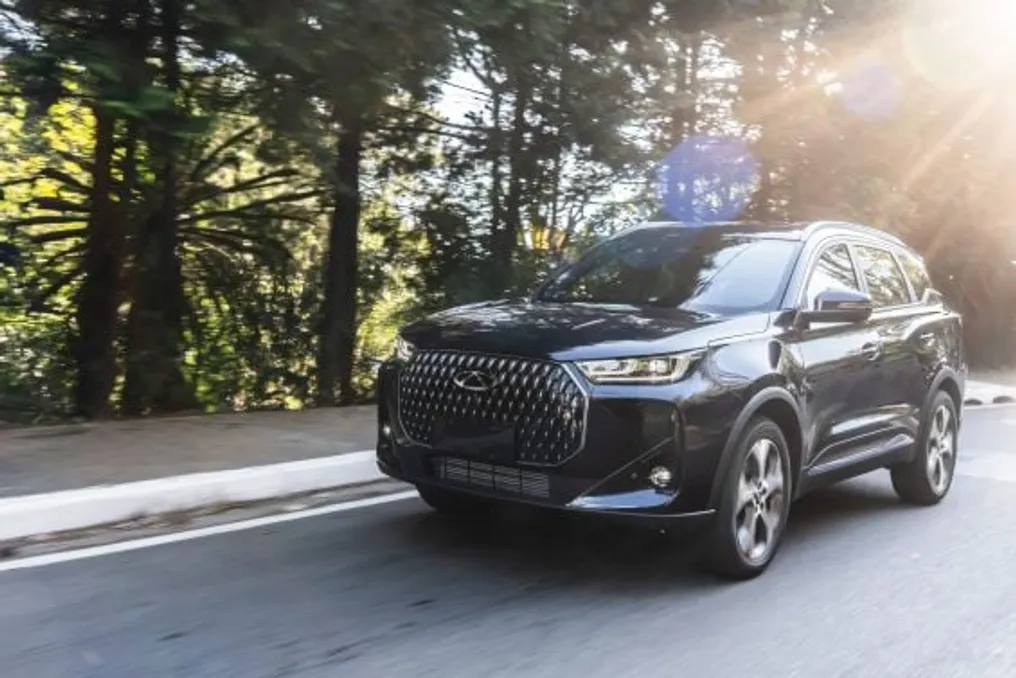
The fact that the Tiggo 7 belongs to the mid-size class but at a compact price makes it one of the best SUVs to buy under 150 thousand reals. Starting from the Sport version, the model produced in Anapoli (GO) offers an interesting set of features, a 565-liter trunk, integrated screens, competent and comfortable performance, and a seven-year factory warranty.

The main options of the Sport version include seven airbags, hill start and hill descent control, parking sensor, tire monitoring, 12.3-inch central multimedia display with wireless mirroring, automatic air conditioning, push-button start fob, inductive phone charging, electronic parking brake, 12.3-inch digital instrument cluster, USB ports, LED headlights, and 18-inch alloy wheels.

Popular