Poets Presented Works Touching on Themes of Life and Creativity at Mushaira in Delhi
Read more
Aaj Tak
www.aajtak.in

Poets Presented Works Touching on Themes of Life and Creativity at Mushaira in Delhi

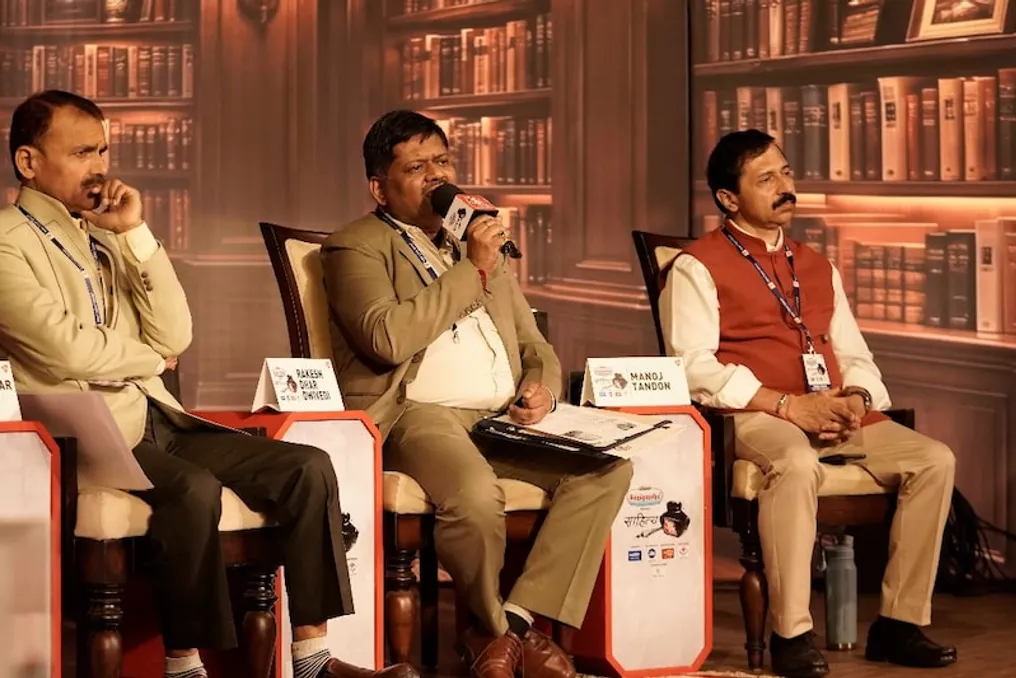
The evening of the second day of the literary event 'Sahitya Aaj Tak 2026' at the Major Dhyan Chand Stadium in Delhi was filled with performances by poets during the session 'Hum Shayar Aur Hamari Nazmein'. As part of this event, poets and writers presented their poems and poetry, many of which are related to the work of government departments.

Three poets and writers participated in this poetic gathering. Among them was Nitishwar Kumar, an Indian Civil Service (IAS) employee who is well-known in literary circles. He wrote a book titled 'Kah Do Na'.

Rakesh Dhari Dwivedi, an author and poet, also performed on stage. His book is called 'Concrete Ka Jangal'. Rakesh Dhari Dwivedi is also a civil servant. Additionally, the event featured the poet and writer Manjoy Tandan, who is also a civil servant and has a deep interest in literature. He wrote a collection of poems titled 'Ravanian'.

Nitishwar Kumar gave the first performance in the session, reading a poem imbued with romantic feelings. He recited the following lines: 'A long night of desires was with you / The sun rose after a brief rain / The mirror reads the truth, now it is impossible / Enjoy the light, loneliness is the moon / Who stops after a meeting today / Don't ask me what I gained in love / I loved, became dust, who knows'.

After Nitishwar Kumar, Rakesh Dhari Dwivedi took the microphone. He stated that he is a poet of longing and pain. He read several poems that, in his opinion, are written from the depths of the soul and can resonate in the hearts of the listeners. He then presented lines filled with similar pain: 'Today, seeing you, tears flowed from my eyes / Words that lived in my eyes slowly began to sob / In this journey of life, we burned, becoming moths... / Lips could not say anything, and eyes remained embarrassed / The longing and pain that was in the tears, I recorded / We cried all night, and in the morning stood smiling'.

Next, Manjoy Tandan spoke. He posed questions about the stories behind the poems, the current underlying these poems, the beauty of every word, and his youth. He noted that people ask him about his life journey. After these remarks, Manjoy Tandan greeted everyone and mentioned that he currently works in the technology sector, dealing with telecommunications and other fields. He acknowledged that this leaves him little time. When asked by people how he manages to write amidst all this, he answered by turning these questions into poetry.

He continued by saying that some people ask him about the reason for writing daily, when this urge arose, sometimes politely, and sometimes boldly. He stated: 'Naive are those who ask a poet about the religion of his pen.' When asked this question, he smiles and replies: 'I do not write new every day; I live new every day and present it to you in the form of poetry.' He added that sometimes there are old debts or obligations, sometimes pleasant illnesses or pains, sometimes reality, and sometimes joyful dreams. New reasons always arise for him to take up the pen.

He then shared that when it comes to dreams, people from villages and small towns come to big cities like Delhi and settle here. However, they miss their fields, ploughed lands, and meadows they left behind. Therefore, he invited the audience to briefly return to where they came from. The poem is titled 'Woh Ghar Bahut Matwale Hua Karte The' (That house used to be very joyful).

He quoted a part of the poem: 'There were many bright delicacies in the house / There were tastes of colorful delicacies... / Life was adorned in houses with courtyards, / That house used to be very joyful... / There was great brightness in the morning sun, / In the evening there was a desire to play outside... / The winter sun was like gold. / There were countless cups of tea, / That house used to be very joyful... / They eagerly awaited the postman's knock, / There were strange traditions of preserving letters. / Even though cobwebs hung on the walls, / That house used to be very joyful...'
Similar stories

Poetic performances held at the 'Sahitya Aajtak' event in Delhi gathered the audience
Read more
www.aajtak.in

Poetic performances held at the 'Sahitya Aajtak' event in Delhi gathered the audience

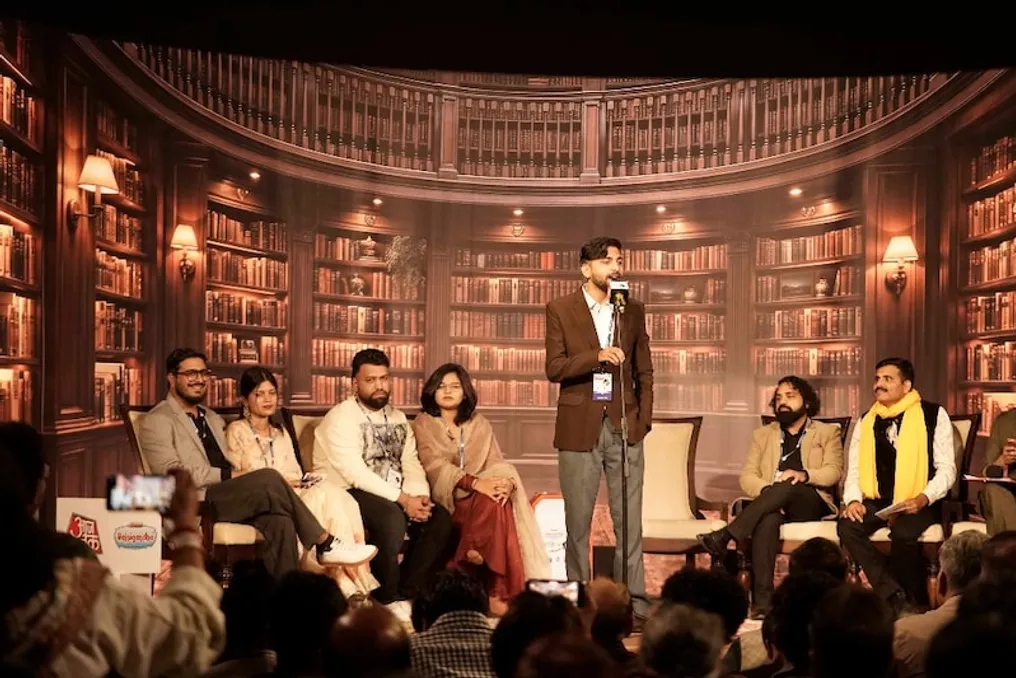
On the second day of the 'Sahitya Aajtak 2026' event at the Meijer Dyanchannd Stadium in Delhi, a 'Kavi Sammelan' (poetic gathering) session took place. During this event, poets presented their works in various styles. Themes related to humor, emotions, and daily life attracted the attention of the spectators, who expressed their support with applause.

The program began with a performance by Vikas Bairagi from Madhya Pradesh. The host noted that he is a poet who gained fame at an early age. Following him, Rishabh Sharma took the stage. The host praised his literary talent and urged the audience to applaud, which was met with enthusiasm from the audience during his performance.

Ragini Ja Dhriti, a student studying Sanskrit at Delhi University, also shared her creations. The host mentioned that her poems combine elements of sensuality and spirituality. She writes in forms such as chhand, muktak, and ghit.

Among the participants were representatives from law enforcement agencies and journalists. Bhishek Gita Shukla is active in the theater field and is known for his writing. Next on stage was Dharma Raj Upadhyay, who is a police inspector from Uttar Pradesh. The audience got to know both his work and his poetic style.

Ayushi Rahecha presented poems dedicated to love, compassion, humor, and satire. She has previously performed poetry at major educational institutions such as IIT, IIM, and AIIMS. To conclude the evening, senior journalist and poet Pankaj Sharma was invited to the stage. Thus, the poetic gathering on Stage 7 made the evening special thanks to the performances of authors of different ages and with diverse experiences.

Sonia Gandhi's book discussed at literary forum: Comments by Chief Minister Himanta Biswa Sarma
Read more
www.aajtak.in

Sonia Gandhi's book discussed at literary forum: Comments by Chief Minister Himanta Biswa Sarma

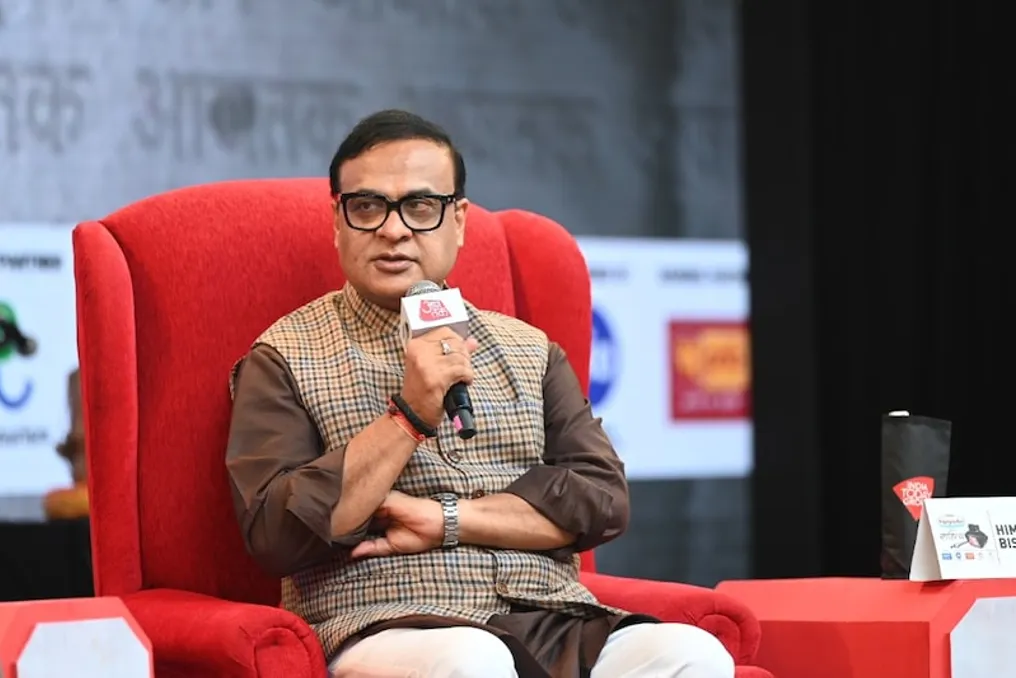
At the 'Sahitya Aajtak' 2026 event, there was a discussion with Assam Chief Minister Himanta Biswa Sarma about political memoirs and autobiographies. The question of the degree of truthfulness when politicians write about their lives was raised, as well as whether a memoir is used to improve one's image or advance a political agenda. Sonia Gandhi's memoirs were also mentioned during the discussion.

On this matter, Chief Minister Himanta Biswa Sarma noted that there are two possible motives for writing memoirs. The first is promoting one's own ideology and agenda to gain an advantage in someone's future political life. The second is presenting the truth about one's own life to the public. In his opinion, it is crucial for someone writing an autobiography to have the courage to speak the truth about themselves.

'It is not enough just to write about the good things'

Himanta emphasized that every person's life contains both positive and negative aspects, and no one always acts correctly. Therefore, when compiling an autobiography, the author must have the courage to reveal their mistakes and weaknesses. He stated that a book in which the author presents themselves as flawless has little value. Memoirs are considered acceptable only when they reflect both sides of life.

Himanta's comments on Sonia Gandhi's book

Commenting on Sonia Gandhi's memoirs, Chief Minister Himanta Sarma stated: 'This is my personal opinion, but many questions remain unanswered in it.' He added that when writing about one's life, a person must think completely impartially and objectively. If the author is guided by the thought that their book will help gain votes in the next election or ease their son's path in politics, then they cannot write true memoirs.

According to Himanta, the author of an autobiography needs the courage to write the truth about their life, separate from their current political or personal interests.

Unique aspects of culture presented through poetry and painting at the literature festival in Delhi
Read more
www.aajtak.in

Unique aspects of culture presented through poetry and painting at the literature festival in Delhi

A major literary festival, 'Sahitya Aajtak' 2026, is taking place at the Major Dyan Chand Stadium in the capital city of Delhi. This forum organizes numerous special sessions aimed at uniting the country through waves of art and literature.

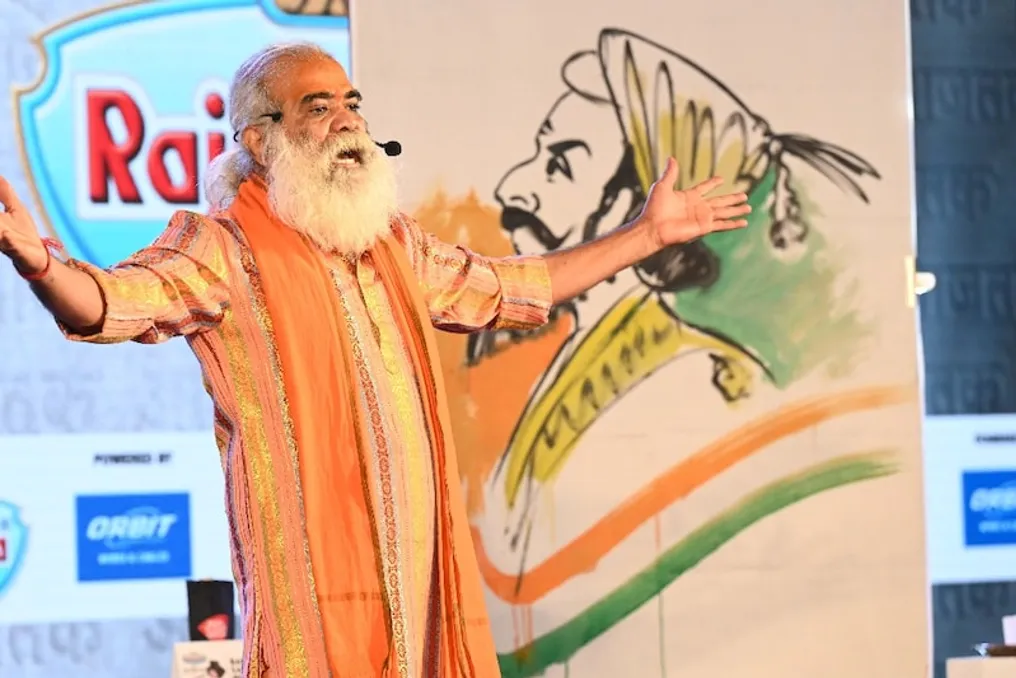
As part of the events, a special session titled 'Poetry, Canvas, and Narrative: Unique Colors of Culture' was held, featuring the renowned poet, artist, and storyteller Baba Satyanarayan Maurya. During this event, Baba Satyanarayan showcased both his poetry and his talent for painting.

He meticulously translated the feelings of words into paintings and created an image of Chhatrapati Maharaj Shivaji on canvas live on stage. Listening to his simple, patriotic verses and witnessing his talent, the audience felt immersed in the colors of the nation.

On the 'Sahitya Aajtak' platform, Baba Satyanarayan Maurya, a celebrated artist, poet, writer, and musician, spoke about Vedic religion, Indian culture, and traditions. The founder of the Institute of Devotion to India, Maurya stated that if people do not stand up for their society today, who will stand up for the country in the future. He also emphasized the importance of asking questions and maintaining curiosity, urging people to question wherever injustice is observed.

Popular