
During the second day of the 'Sahitya Aajtak 2026' event, writer and YouTuber Chetan Bhagat participated in a session titled 'From Novel Idea to AI Algorithms'. During this presentation, he discussed in detail the growing popularity of watching Reels among youth. Furthermore, Chetan Bhagat shared his thoughts regarding the difficulties associated with writing in the age of artificial intelligence.
Similar stories

Uday Prakash discusses the main secret of writing: one must stop and find their uniqueness
During the 'Uday Prakash Masterclass' held on the 'Sahiti Aajtak' platform in 2026, renowned writer Uday Prakash shared advice for the new generation on how to become an author and where to start writing. He answered questions about rushing to achieve success in the literary world, emphasizing that being able to pause, observe the surrounding world carefully, and maintain one's unique individuality is crucial for becoming a writer.
According to Uday Prakash, every author's work is their personal fingerprint. Speaking about his childhood and the beginning of his creative journey, he mentioned that he is from a small village. There, children studied by spreading mats on empty government sheds after the livestock went outside, and in winter, classes took place under the shade of trees. Modern writing tools were unavailable in those times.
He noted that when a new technology appears, people tend to criticize it and list its shortcomings. Therefore, he advised the younger generation not to resist technologies but to strive to understand them.
Uday Prakash observed that the modern generation strives to achieve everything very quickly, much like products spread rapidly across the world. However, in this race, it is important to realize what belongs to a person. He insisted that the author must carefully preserve their originality and personality; only then can their literature endure. Instead of constant running, the author should slow down and observe, because only in a state of calm can one grasp the pace and direction of the world's movement.
Literary responsibility, according to Uday Prakash, is connected not only to humanity but also to nature. He believes that changes are necessary, but they must not lead to the disappearance of villages, rivers, trees, and air in the pursuit of development. The primary task of the writer is to preserve the possibilities and conditions for life to exist.
Referring to his story 'The Girl in the Yellow Hat,' Uday Prakash explained how significant technological changes occurred around 1999, rapidly transforming both the world and language. In this work, he depicted love as a force capable of overcoming boundaries between old social categories and computer data.
The writer also reported that attempts were later made to ban this book from sale in India. Uday Prakash stressed that the author is forced to fight for their creativity at all levels. Discussing artificial intelligence, he stated that AI is within the capabilities of the human mind. In his opinion, technologies require understanding and careful use.
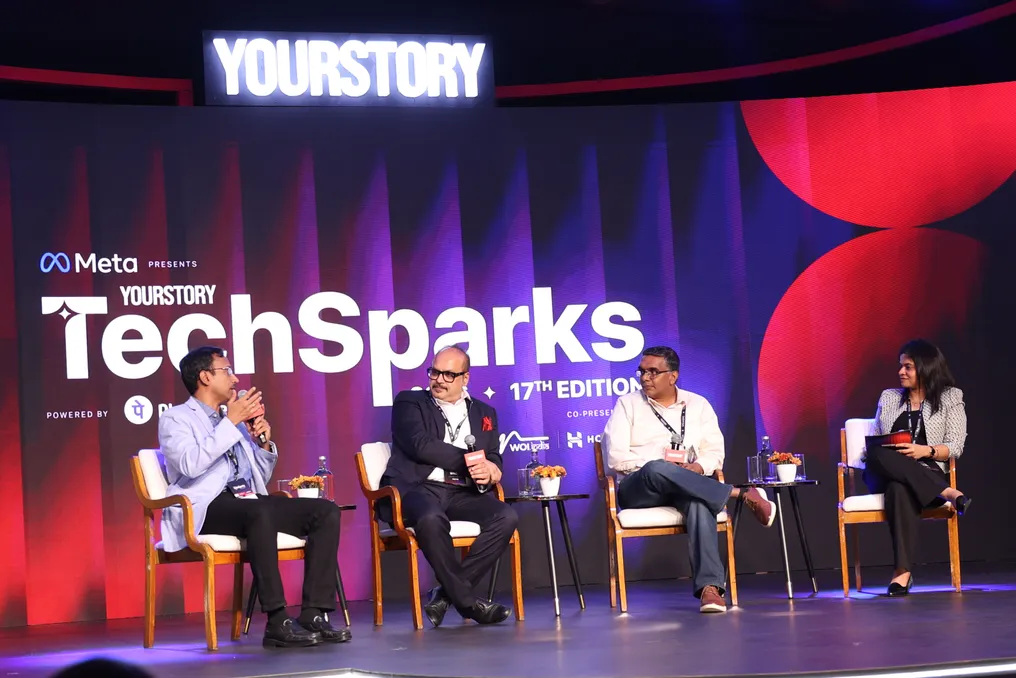
Despite AI's ability to write code, knowledge of which products to develop remains critically important
Artificial intelligence simplifies the software creation process, allowing product managers, designers, and subject matter experts to turn ideas into prototypes even without deep coding skills. Nevertheless, transforming these prototypes into reliable products that solve real problems remains a complex task.
During the TechSparks 2026 event, a panel discussion titled 'From Who Can Code to Who Can Build' highlighted these changes. Participants included Srinivas Chamarthy, Senior Vice President of Engineering, Site Head, and Country Head at Diligent India; Madhusudan N. Murthy, Head of Digital Engineering and Technology Strategy at EY GDS; and Arun Kalyanaraman, VP of Engineering at Target in India. The discussion was moderated by Chhavi Mahajan, Content Director at YourStory.
AI-driven development allows business teams to test concepts, demonstrate ideas, and gather feedback much earlier. However, a prototype demonstrating an idea's functionality is not yet ready for full production. Applications must still meet requirements for security, scalability, and reliability.
Murthy noted that while AI facilitates experimentation, companies must clearly distinguish between a proof-of-concept and a production-ready application. Engineering teams still need to identify vulnerabilities, implement safeguards, and ensure systems can handle real-world load. He emphasized: 'This is good, it's a very positive development, but it also needs its limitations.'
Kalyanaraman stated that AI can not only accelerate code writing for developers but also optimize the entire development cycle—from problem definition and solution testing to stakeholder approval. He stressed that fundamental engineering knowledge, architectural thinking, and technical depth will remain indispensable, even as AI changes how solutions are built.
He gave an example where a product owner, engineer, and UX specialist used AI tools and large language models to create a prototype of a complex concept and present it to management in just one week. Without these tools, this process could have taken anywhere from six weeks to two months. The advantage lay not only in faster coding but also in the ability to validate the idea and make decisions more quickly.
Chamarthy observed that in the era of generative AI, coding is becoming a commodity, shortening the path from prototype to customer feedback and subsequent production launch from a potential nine-month cycle to one or two months. As speed increases, he believes that knowing what *not* to build gains greater value, meaning ideas must be tested in a sandbox while experienced engineers strengthen them in terms of security, scalability, and confidentiality.
As companies transition from using AI to assist developers to implementing agents capable of performing tasks with limited supervision, they must define the level of autonomy. Chamarthy advised that this should depend on associated risks, the potential impact of the solution, and the ability to reverse the outcome. He suggested organizations consider whether a solution is a 'two-way door' or a 'one-way door,' noting that significant financial or strategic decisions require human oversight and contextual judgment.
Chamarthy warned that access to AI-based coding tools cannot replace engineering expertise. Experienced engineers understand architectural decisions that affect long-term maintenance, security, and scalability, including risks that may not be obvious in a prototype. His advice was to encourage experimentation, but in a controlled environment: 'Don't stop the code. Test it in the sandbox.'
This allows a larger number of employees to test ideas, giving engineering teams the opportunity to analyze applications, fix weaknesses, and prepare them for release.
Since AI simplifies code generation and answer retrieval, the importance of understanding precisely which problems are worth solving increases. Kalyanaraman compared using AI to consulting a genie who grants only three wishes. Obtaining a useful result depends on the ability to ask the right questions and understand the limitations. He stated: 'In a world where answers can be easily obtained, the ability to ask the right questions will become a truly critical skill.'
People who understand customer needs, business processes, and operational requirements are better equipped to identify solutions that create real value. Engineering teams will also need systemic thinking and platform expertise to help non-engineers develop applications without risking production systems.
This shift also has implications for talent development. Murthy reported that EY GDS is preparing employees for an AI-managed workplace by combining experienced specialists and young talent. Existing employees bring knowledge of clients and systems, while new team members offer fresh approaches and develop new technical skills.
Chamarthy added that teams need a balance of strengths: organizations should upskill existing employees familiar with their products and customers while simultaneously attracting recent graduates capable of working with AI tools. He also noted that engineer effectiveness should be measured by the problems teams solve for clients, not just by metrics like lines of code written or tickets closed. Since AI handles routine work, the results delivered by engineering teams become a more telling measure of their contribution.
The panelists expect employees and AI agents to work even more closely. As agents take on more complex tasks, companies will have to rethink workflows, accountability, and performance expectations. They must also ensure that safeguards keep pace with technological capabilities.
Murthy described a future where managers will oversee AI agents alongside humans. He said: 'The future I see is getting accustomed to agents reporting to you, not just people.'
Kalyanaraman concluded that the New Technological Order is not just about what AI can do for us, but how we evolve in our thinking, engineering practices, and decision-making processes to maximize its potential. While AI simplifies software creation, companies will still require engineering expertise, industry knowledge, and human judgment to determine which ideas are worth developing and which prototypes are ready for production.
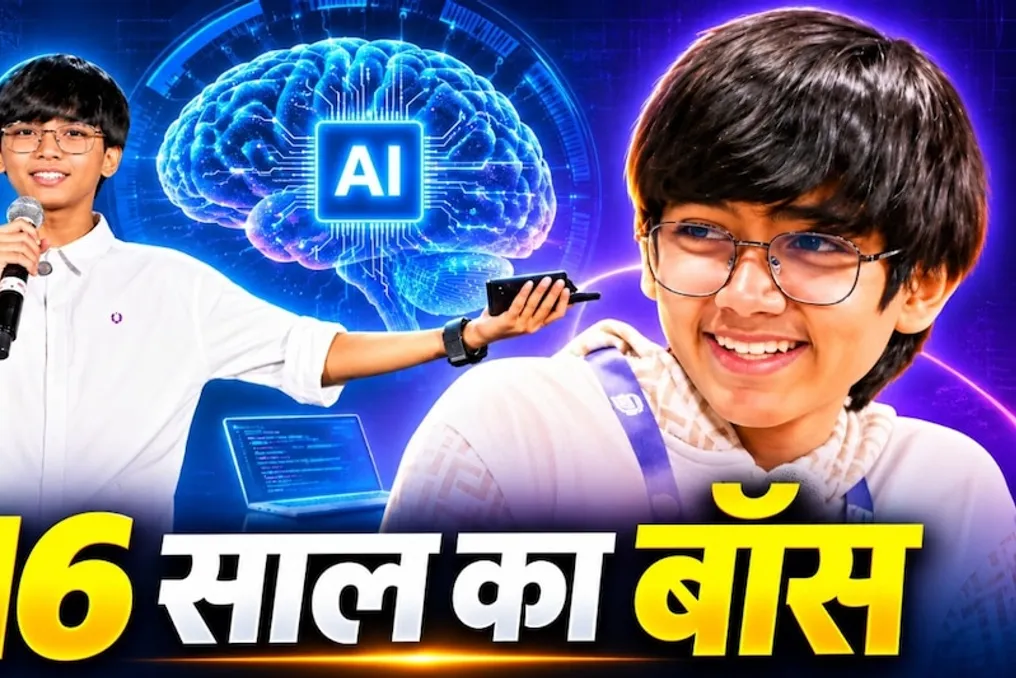
16-year-old from Kerala founded an AI company and hired his father with a salary of 2 lakh
Generation Z teenagers are demonstrating their uniqueness in all spheres, including sports, cinema, and business. Young people of this generation are achieving success in the fields they choose, engaging in activities that often seem unimaginable to the older generation at such an early age. For instance, a sixteen-year-old guy from Kerala started his own artificial intelligence startup.
Furthermore, through his endeavors, he was able to employ his father.
Rahul John Ahu began studying AI at the age of nine. At twelve, he created his first robot. By sixteen, he opened his AI company while continuing his 12th-grade studies. He currently leads a team of 15 people in his startup and has developed over 15 AI-based tools.
For many, the idea of hiring one's own father into a company and paying him a salary of two lakhs at such a young age seems like a dream. However, the most interesting part of John Ahu's story is not just the number of AI tools he has created, the people he has trained, or the major venues he has visited. The most exciting thing is that despite all his achievements at such a young age, he understands that there are many things he cannot master alone.
A notable detail in John's story is that at 16, he is not just managing his company but also providing employment to his father. His father, Ahu Joseph, has extensive experience working in large corporations such as Amazon, Adobe, Wipro, and IBM. John believes that learning only through a phone is insufficient to understand the world of business and technology; a person with extensive experience in this field is necessary. This is why he gave his father the opportunity to work in his company. John jokingly notes that his father's presence in the company positively affects its marketing.
John's path is no longer limited to school and classes in Kerala. His work in AI has made him a participant in important discussions related to technology, education, and public services. He has also contributed to some initiatives launched in Kerala and Dubai. In 2026, John participated in the AI Influence Summit in New Delhi. There, he delivered a speech during a session dedicated to child safety and AI, organized by the United Nations (UN). During the event, he met with UN Special Envoy Amandeep Gill and also had the opportunity to speak with UN Secretary-General António Guterres.
Rahul John Ahu's story is not limited to achieving recognition in the world of billion-dollar businesses or AI at the age of 16. His journey demonstrates that to start any venture, it is not necessary to wait for a certain age or degree. Rahul, who started studying AI at the age of 9, has already created over 15 AI tools and trained about 500,000 people. He believes that the drive to learn new things, ask questions, and attempt to create something new is more important than quantity or a diploma. His story serves as an example for Generation Z youth who wish to bring their ideas to life.