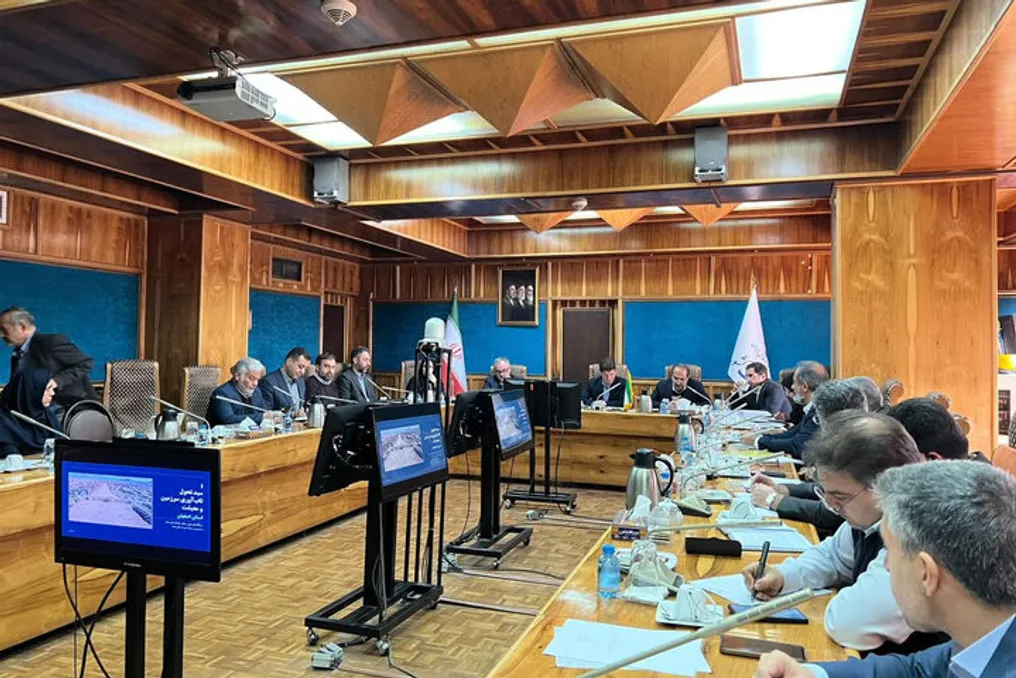
A meeting was held in the city of Isfahan where UNESCO representatives and high-ranking provincial officials reviewed the damage inflicted upon the city's historical monuments as a result of military actions and natural disasters. This was reported by the Iranian Ministry of Cultural Heritage, Tourism, and Handicrafts.
As reported by Miras Ayra on Saturday, the meeting included the director general of the provincial cultural heritage department, Amir Karamazadeh, Deputy Governor for Political and Social Affairs Ayyoub Darvishi, UNESCO representatives, and heads of several provincial government departments.
Karamazadeh stated that historical sites near Isfahan province sustained serious damage during attacks in March. Specifically, an explosion caused by a strike on the provincial administration building affected UNESCO World Heritage sites such as Naqsh-e Jahan Square and Chehel Sotoun, as well as the Safavid Government Complex known as Dovlatkhaneh.
He emphasized the necessity of conducting specialized damage assessments and coordinated actions to protect the city's historical buildings from threats related to armed conflicts, shockwaves, and natural catastrophes.
The official noted that the high concentration of valuable historical monuments in urban areas and their proximity to various infrastructure facilities makes assessing their vulnerability to such dangers critically important.
The meeting provided an opportunity for local authorities and UNESCO representatives to discuss the risks threatening Isfahan's cultural heritage, as well as the need for protective measures. Karamazadeh added that the city's historical monuments are part of Iran's civilizational heritage and humanity's valuable heritage, and their protection during crises requires technical planning and cooperation between relevant state agencies and international organizations.
According to data from the Iranian Ministry of Cultural Heritage, Tourism, and Handicrafts, the recent war involving the United States and Israel has led to damage to 149 historical sites across 20 provinces. Among the affected sites are five UNESCO World Heritage sites: Golestan Palace in Tehran, the Naqsh-e Jahan Square complex and Imam Mosque in Isfahan, and the Trans-Iranian Railway.