Eurasian Development Bank to Support Uzbekistan's Artificial Intelligence Cluster
Read more
UzDaily
uzdaily.uz

Eurasian Development Bank to Support Uzbekistan's Artificial Intelligence Cluster

The Eurasian Development Bank (EDB) will provide technical assistance for the creation of an artificial intelligence cluster for the Ministry of Investment, Industry and Trade of Uzbekistan. This was formalized by a memorandum of understanding signed on November 27, 2026, as reported by the organization itself.

The project will be implemented in two stages. The first stage involves creating the ministry's computing infrastructure and an internal artificial intelligence platform for monitoring investment projects. The second stage aims to form a unified digital ecosystem for the Ministry of Investment, Industry and Trade, as well as an external platform for entrepreneurs, exporters, and investors.

The Bank noted that implementing these solutions should contribute to improving data analysis, accelerating information processing, and strengthening interdepartmental cooperation.

Discussion on Financing and Cooperation

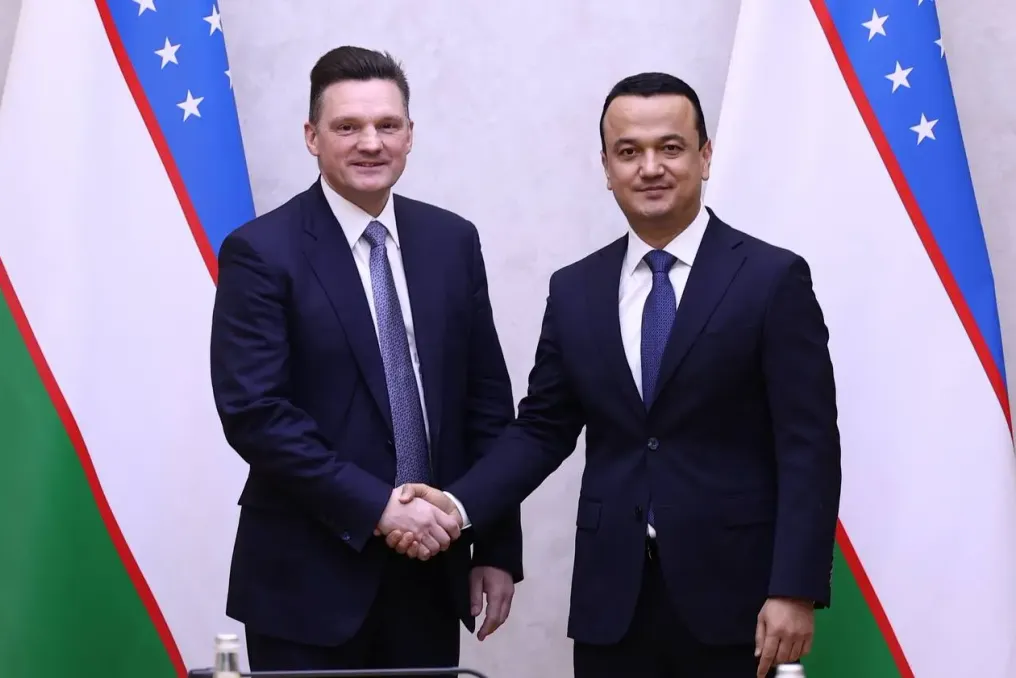
The memorandum was signed following a meeting between EDB Board Chairman Nikolay Podguzov and Minister of Investment, Industry and Trade Laziz Kudratov. During the negotiations, issues regarding industrial project financing, export support, and expanding investment cooperation were also discussed.

EDB reported that in 2026, it concluded non-sovereign financing deals worth 200 million US dollars in Uzbekistan and plans to increase this amount to 300 million dollars by the end of the current year. Projects valued over 1 billion dollars are being considered for possible financing in 2027, as well as allocating up to 200 million dollars to support export operations.

The parties discussed the use of debt, equity, and syndicated financing instruments, as well as public-private partnership mechanisms.

Podguzov stated that EDB intends to allocate no less than 500 million dollars to finance projects in Uzbekistan in 2027. By 2031, the bank's investment portfolio in the country could reach nearly 3 billion dollars. He emphasized: "Uzbekistan is the third-largest shareholder of EDB, and we intend to steadily increase the scale of our activities in the country. In 2027, we plan to allocate no less than 500 million dollars for project financing, and by 2031, we aim to create an investment portfolio that can reach almost 3 billion dollars. Our priorities will include attracting private and international capital, developing non-sovereign financing, and supporting projects that promote technological modernization of the economy."

During the visit, EDB also signed cooperation agreements with JSC 'Uzbek Airports' and the Azerbaijan-Uzbek Investment Company. These documents are intended to develop investment interaction and expand opportunities for joint venture financing.

As of the end of June 2026, EDB's accumulated portfolio included 348 projects totaling 22.1 billion dollars. The Bank has been operating in the Eurasian region for 20 years.

Similar stories

Uzbekistan plans to launch an artificial intelligence cluster with a capacity of 7 exaflops by 2027
Read more
uzdaily.uz

Uzbekistan plans to launch an artificial intelligence cluster with a capacity of 7 exaflops by 2027

The Ministry of Digital Technologies reported that Uzbekistan intends to commission a new computing cluster with a capacity exceeding 7 exaflops by 2027 to support the development of artificial intelligence (AI).

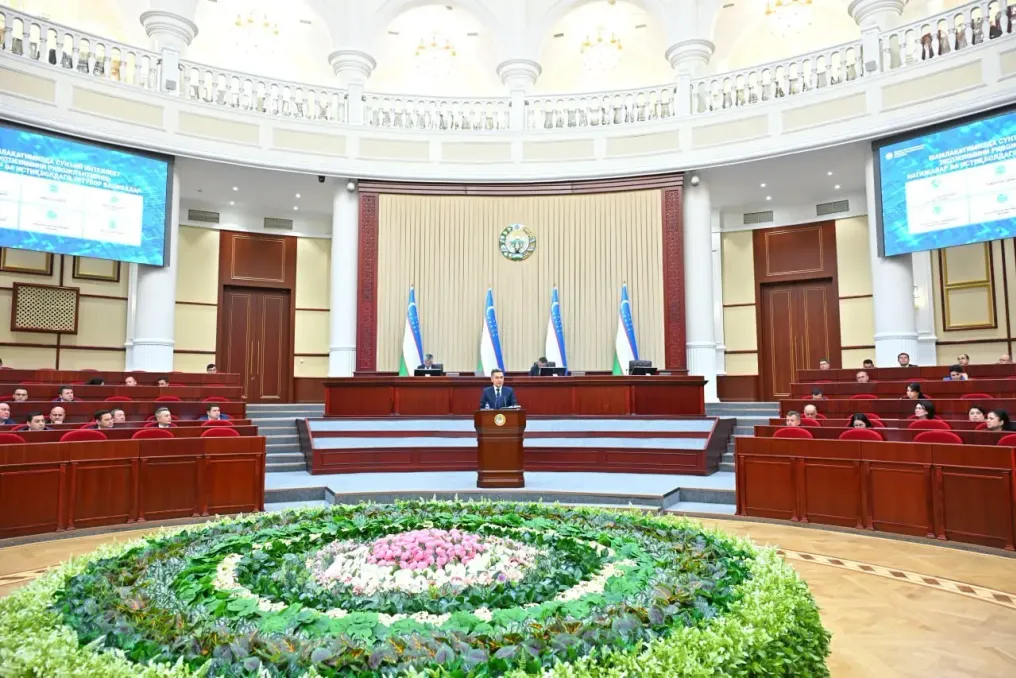
This information was announced following a session of the Legislative Chamber of the Oliy Majlis, where on November 24, lawmakers heard a report from the Minister of Digital Technologies, Sherzod Shermatov, on AI development, its implementation in priority sectors, and the realization of relevant projects.

The Minister presented a report on the progress of implementing the Strategy for the Development of Artificial Intelligence Technologies until 2030. This strategy envisions the use of AI in public administration, the economy, and social services, as well as the development of national computing infrastructure and the expansion of international cooperation.

In July 2026, modern computing infrastructure was launched in the e-government system's data center. Additionally, a more compact computing cluster began operating to serve the healthcare sector.

Currently, over one hundred AI projects are being implemented with the support of the Reconstruction and Development Fund. These projects cover areas such as digital government, workforce training, healthcare, social services, public safety, legal protection, agriculture, and ecology.

A national Uzbek language corpus has also been created, which includes 6.5 million documents, 6.1 billion words, and 20 billion tokens. The aileaders.uz platform was launched to train specialists. Under the 'Five Million AI Leaders' project, over 1.6 million young people have completed training and received certificates.

Seven textbooks on AI have been developed for general education in schools, and three for universities. These textbooks were included in curricula starting from the 2026/2027 academic year. Three AI laboratories have been opened at higher educational institutions.

According to the ministry, the number of employees in the IT park engaged in AI has reached 240 people. Their total service volume amounted to 895 billion soms, and exports reached 75 million US dollars.

Thanks to these efforts, Uzbekistan has risen eight positions, ranking 62nd out of 195 countries in the Oxford Insights Index of Readiness for Using AI in Public Administration.

On July 16, 2026, Uzbekistan also became one of 29 countries that signed the foundational agreement on the World Organization for AI Cooperation (WAICO).

Further Tasks and Goals

During the discussion, lawmakers identified additional tasks. By the end of 2026, the number of servers is expected to increase to 24, and the number of graphics processing units to 192. The government also aims to increase the number of AI laboratories in universities to 21 by the end of the year to solve practical problems in various economic sectors.

Special attention was paid to ensuring that research organizations, startups, and regional consultants have preferential access to GPU clusters and large databases. The Legislative Chamber took note of the minister's report.

Uzbekistan advocates for a balanced approach to artificial intelligence regulation
Read more
uzdaily.uz

Uzbekistan advocates for a balanced approach to artificial intelligence regulation

Uzbekistan does not plan to follow the European or any other existing model of artificial intelligence regulation, preferring a more balanced approach, stated Zukhreiddin Shadmanov, Deputy Director of the Center for AI and Digital Economy Development.

Speaking at the FINNEXT Asia 2026 forum in Tashkent on November 19, Shadmanov warned that excessive regulation could slow down the development of the domestic AI market and reduce the level of competition.

He emphasized that regulatory policy must take into account national priorities, market development, and competition while also considering the country's technological progress. Earlier this year, a law on the use of AI was adopted, which includes its application in making legal decisions; however, Shadmanov noted that decisions generated by AI should not be used exclusively for drawing conclusions and findings.

A document on AI ethics has also been approved, outlining aspects that require attention. Another law is expected to be adopted, which should be flexible enough not to hinder the development of sectors such as banking. The government plans to consult with stakeholders and rely on international experience.

According to Shadmanov, the Center was reorganized into the Center for AI and Digital Economy Development based on documents from the President and the Cabinet of Ministers. Its task is to implement AI in the public sector and the economy of Uzbekistan. Furthermore, Uzbekistan adopted an AI development strategy until 2030, which provides for measures to introduce and scale financial services in the banking sector.

The Center functions as the country's main project office for AI implementation. The forum program indicated that Resolution No. PP-359 defined a course oriented towards venture capital, banking ecosystems, and artificial intelligence.

One of the session moderators mentioned that he worked with Shadmanov for three days in a target group preparing the first resolution on AI. He added that two or three years ago, it was unclear how to measure such tools.

In another session, Sodir Melibaev, advisor to the Chairman of Microcreditbank on IT and AI development, noted that gaps remain in the regulatory framework for AI. Despite the adoption of laws, many practical issues remain unresolved, and some projects require amendments to rules to eliminate existing limitations.

Melibaev also stated that individual banks cannot solve these problems independently and must submit proposals jointly. When asked about plans for 2027, Shadmanov replied that countries in the region strive to develop their own capabilities in AI, making cooperation necessary. Joint projects are planned for development in accordance with international standards and documents, covering data processing, including personal data, as well as data governance and AI governance. The ultimate goal is to turn Central Asia into a regional IT and AI hub.

Central Bank of Uzbekistan is developing its own artificial intelligence solutions
Read more
uzdaily.uz

Central Bank of Uzbekistan is developing its own artificial intelligence solutions

The Central Bank of Uzbekistan is engaged in creating its own small-scale artificial intelligence solutions and is also studying ways to reduce dependence on global providers of such services.

Deputy Chairman of the Central Bank, Nodirbek Achilov, announced this during the presentation of the International Monetary Fund's (IMF) regional economic forecast for the Caucasus and Central Asia. According to Achilov, many countries in the region, as well as their neighbors and trading partners, are heavily reliant on several large international AI platforms.

He emphasized the need to consider issues related to reducing this dependence. The Deputy Chairman noted that developing internal capabilities will require significant investment in local servers and infrastructure. Furthermore, reliance on one or two providers creates additional risks for uninterrupted service operation.

Specifically, access to platforms may be restricted by decisions made in the provider's country, and servers might become unavailable when needed. Achilov stressed that expected results should include scenarios for abandoning dependence on two or three global providers of these AI services.

While acknowledging the Central Bank's use of external AI services, the regulator is simultaneously developing its own tools to perform specific tasks. The Deputy Chairman clarified that the goal is not to create a very large super-AI system, but rather the ability to independently solve smaller tasks.

AI Investments and Risks for the Region

Roberto Cardarelli, Assistant Director of the IMF Department for the Middle East and Central Asia, mentioned that the issue of dependence on computing power for artificial intelligence was covered in a separate IMF report. He stated that the economic return from large investments in AI, especially in Gulf countries, will largely depend on demand from foreign clients, including the possibility of exporting computing power to other states.

The IMF's regional economic forecast also analyzes a scenario of a sharp correction in the artificial intelligence market, assessing the potential consequences for the countries of the Caucasus and Central Asia. According to the IMF, the impact of such a scenario on oil-importing countries, including Uzbekistan, will be limited, as the region is not yet deeply integrated into the AI development cycle, and the main channel of impact is the decline in global oil prices.

Popular