Tips for UAE Drivers on Safe Driving Near Trucks and Buses
Read more
Khaleej Times
www.khaleejtimes.com

Tips for UAE Drivers on Safe Driving Near Trucks and Buses

As long weekends approach and family trips increase in the later hours, drivers in the United Arab Emirates (UAE) may encounter trucks, lorries, and buses on the roads.

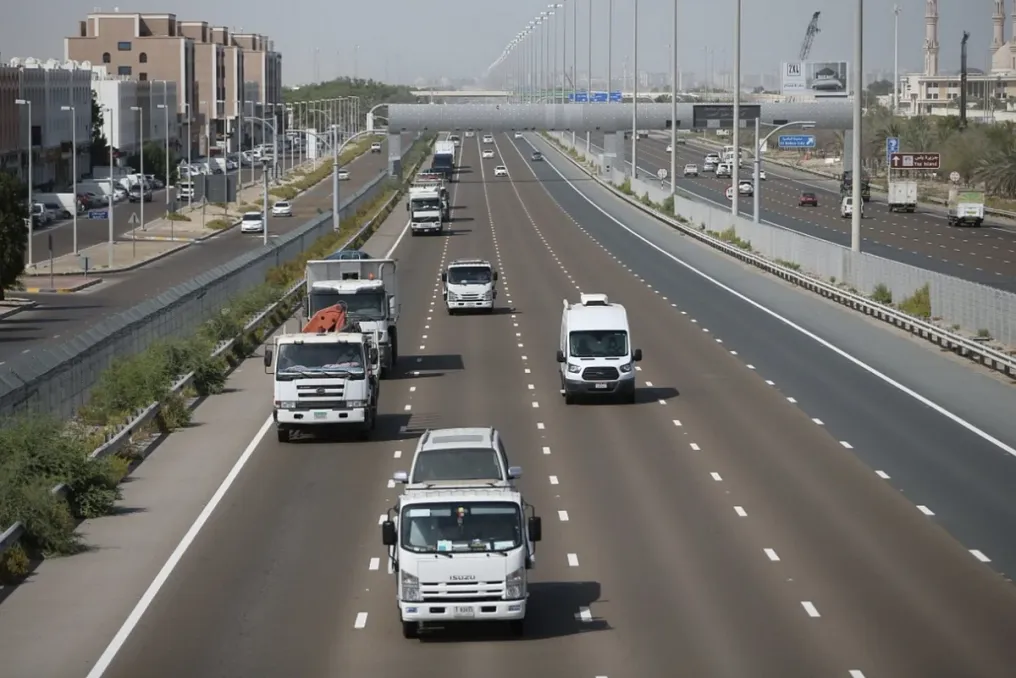
Driving within the emirate during the day can be challenging due to peak hour traffic, but traveling between emirates on major highways presents unique difficulties. The UAE has various regulations allowing trucks and lorries to use certain roads at specified times, with some routes having a complete 24-hour ban to regulate traffic and ensure road safety. Nevertheless, if drivers find themselves near such large vehicles, they should exercise extra caution for their own safety.

When large trucks and buses are on the road, they have several operational limitations. These large vehicles typically have extensive blind spots, meaning they may not see a smaller vehicle in an adjacent lane. Furthermore, they require more time and distance to come to a complete stop, and they exhibit limited maneuverability, making it difficult to turn, steer, or move through traffic as easily as smaller cars do.

Dubai Police, in a consultative message published on Friday, presented four ways that can help drivers be especially attentive when driving near large vehicles.

The first rule is to avoid blind spots. Trucks and buses have very large blind spots in the front, sides, and rear. A quick way to check if your vehicle is in a blind spot is to try to see the truck driver; if you cannot do this, your vehicle is likely in that zone.

The second is to stay in your lane. Since large vehicles require more time and greater distance to brake, sudden lane changes by the driver can create difficulties for the truck when stopping.

The third is not to drive next to trucks. Driving directly alongside a truck can place your vehicle in its blind spot, making the journey extremely dangerous for any smaller vehicle nearby.

The fourth is not to attempt unsafe overtaking. Although patience may be required when driving behind a large vehicle, overtaking is not a simple task. Before starting to overtake, ensure that the truck driver sees you. You must use the turn signal, move into the left lane, and accelerate to avoid entering the blind spot. After completing the maneuver, ensure the truck is visible in your rearview mirror before returning to your lane.
Similar stories

New roads between Dubai and Sharjah improve daily commutes, residents note
Read more
www.khaleejtimes.com

New roads between Dubai and Sharjah improve daily commutes, residents note

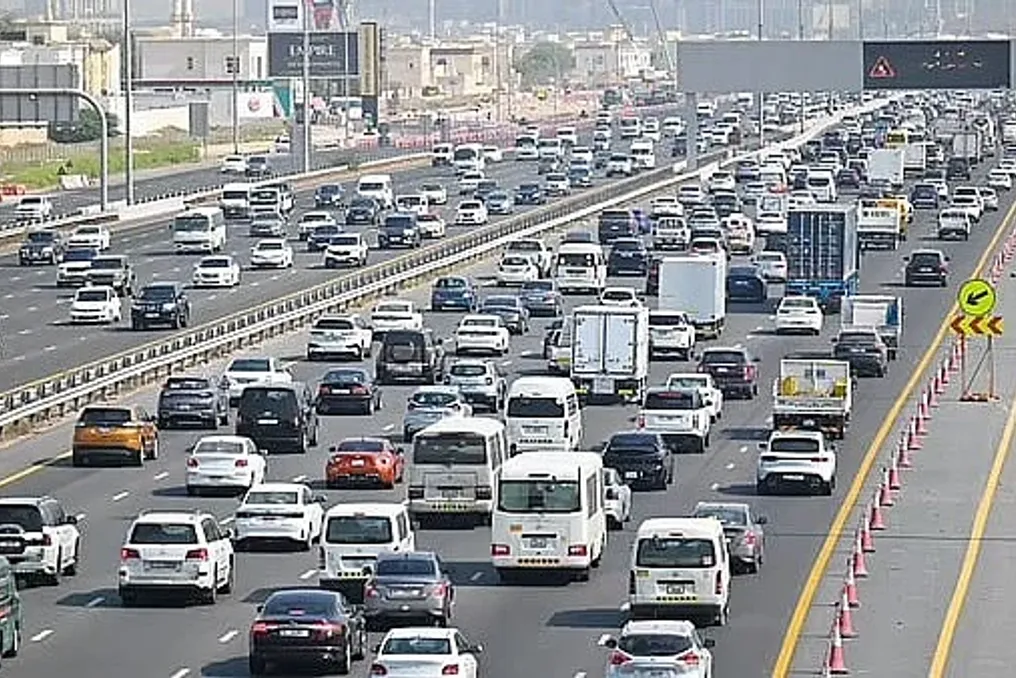
A few months ago, Nabil Mansour, an expatriate from Egypt living in Al Nahda, faced the issue of his commute home from his office in Al Quoz taking almost two hours due to road detours, long queues, and slow traffic. However, in recent weeks, the situation has started to change, and he has begun returning home earlier.

This outdoor sales employee reported that his evening commute time has decreased from nearly two hours when construction began to about an hour and a half. He noted that morning trips to the Corniche bridge are still slowed down by detours along the Corniche, but the evening journey through the new tunnel on the Corniche road and the new connection towards Al Nahda saves him 20 to 25 minutes.

For Mansour, the timing is also important: being able to pass through heavily congested sections near the Dubai-Sharjah border earlier contributes to a smoother journey further on. Nevertheless, getting stuck in queues in these areas can still significantly increase travel time.

Mansour is one of many drivers who have noticed improved traffic between Dubai and Sharjah after the opening of new road connections at the beginning of this month. However, their experience shows that the relief depends not only on the route and direction of travel but also on the time of departure from home or work.

Ashif K, an Indian accountant living in Al Majaz 3, also noted that the evening trip from Abu Hail to Dubai has become easier, although congestion has not completely disappeared. During construction, his evening commute took about an hour, but now it takes approximately 40–45 minutes.

He explained that since he starts work late, the morning hours are never the most difficult. The main change occurred in the evening when he returns to Sharjah, where difficulties now arise. Ashif usually leaves at 10:20 AM, avoiding the early morning rush hour when thousands of drivers head to Dubai. However, his return journey starts around 8:00 PM, when many roads leading into Sharjah are very busy. He added that evening traffic towards Al Taawun from Dubai remains heavy.

One of the main bottlenecks is the point where traffic splits into three directions: towards Al Nahda, Al Taawun, and the Buhaira area.

For Nasima Ahmed, a teacher living near the Sahara Centre in Al Nahda, the improvements are minor but welcome. Nasima starts her journey much earlier. Every morning, her husband drives her to work in Al Garhoud before heading to his office. Since classes start at 7:00 AM, they leave home at 6:00 AM to avoid the morning rush. Two months ago, the trip took about 45–50 minutes in the morning, but now it takes approximately 35 minutes.

She noted that ten to fifteen minutes may seem like a small amount, but at this time, it is the difference between starting the day calmly and starting it in a hurry. Nasima reported that managing traffic at the junction near the Dubai-Sharjah border has become easier thanks to the opening of some new links. Nevertheless, for her, leaving early remains important, as even a small delay can lead to getting caught in more intense traffic. She also completely avoids evening drives.

After finishing work around 3:00 PM, she uses the Dubai Metro from Al Garhoud, transfers from the Red Line to the Green Line at Union Station, and then goes to Stadium Station. From there, she takes a short bus and walks home. She concluded: 'Car in the morning, metro in the evening—that's how we manage.'

These improvements became possible after the opening of the first phase of the new Sharjah road network on November 4th. The project includes the partial opening of the Al Taawun interchange, as well as new bridges and intersections connecting major roads towards Dubai. The first phase provides one-way traffic from Sheikh Mohammed bin Zayed Road towards Expo Centre Sharjah. However, several connections are still under development, including the Al Taawun tunnel and other intersection improvements.

Another major project is planned along Al Ittihad Road, one of the main routes between Dubai and Sharjah. The Ministry of Energy and Infrastructure recently announced a tender for improvements at the Al Nahda interchange and Al Ittihad Road. This project involves eight bridges with a total length of four kilometers and 4.5 kilometers of service roads. Although these changes are expected to improve traffic flow, confirmation of the construction of the new Al Ittihad road project has not yet been received.

Sheikh Zayed Road and three other streets in Dubai will be temporarily closed for Dubai Run 2026
Read more
www.khaleejtimes.com

Sheikh Zayed Road and three other streets in Dubai will be temporarily closed for Dubai Run 2026

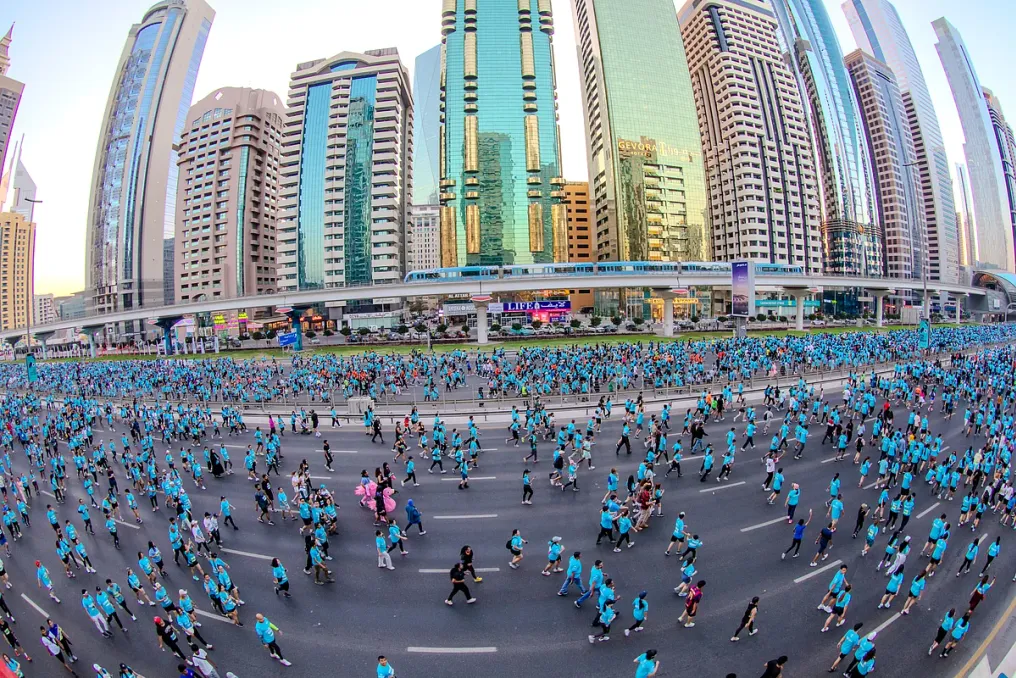
Drivers in Dubai are advised to plan their routes in advance, as four roads, including the famous Sheikh Zayed Road, will be temporarily closed for the annual fitness event Dubai Run 2026. The closure is scheduled for November 22.

Among the streets that will be closed on that day are Sheikh Mohammed Bin Rashid Boulevard, Lower Financial Centre Street, and Al Sukook Street. Authorities have urged drivers to use alternative routes such as Upper Financial Centre Street, Zabeel Palace Road, Al Wasl Road, and Al Khail Road.

The road closures will last from 3:00 AM to 10:00 AM on Sunday. Additionally, the Dubai Metro schedule will be extended to allow runners to reach the starting line on time. RTA has announced that shuttle buses will be provided to ensure a more comfortable journey.

Salik has published updated information on toll tariffs for Dubai Run participants. The fee will be 6 dirhams from 6:00 AM to 10:00 AM, and 4 dirhams from 4:00 PM to 8:00 PM. During off-peak hours (from 10:00 AM to 4:00 PM and from 8:00 PM to 1:00 AM), the tariff will also be 4 dirhams. As usual, Salik gates will be free from 1:00 AM to 6:00 AM.

On Thursday, RTA announced that sufficient parking spaces will be available for participants arriving by car at the annual fitness event. Approximately 15,000 parking spots will be available at Dubai Mall, Dubai Mall Zabeel, and Dubai World Trade Centre.

Every year, Dubai Run, the world's largest race, transforms Sheikh Zayed Road into a giant running track where people of all ages run, jog, or simply walk. This event is the central event of the Dubai Fitness Challenge.

How autonomous capsules in Dubai can operate non-stop and be shared
Read more
www.khaleejtimes.com

How autonomous capsules in Dubai can operate non-stop and be shared

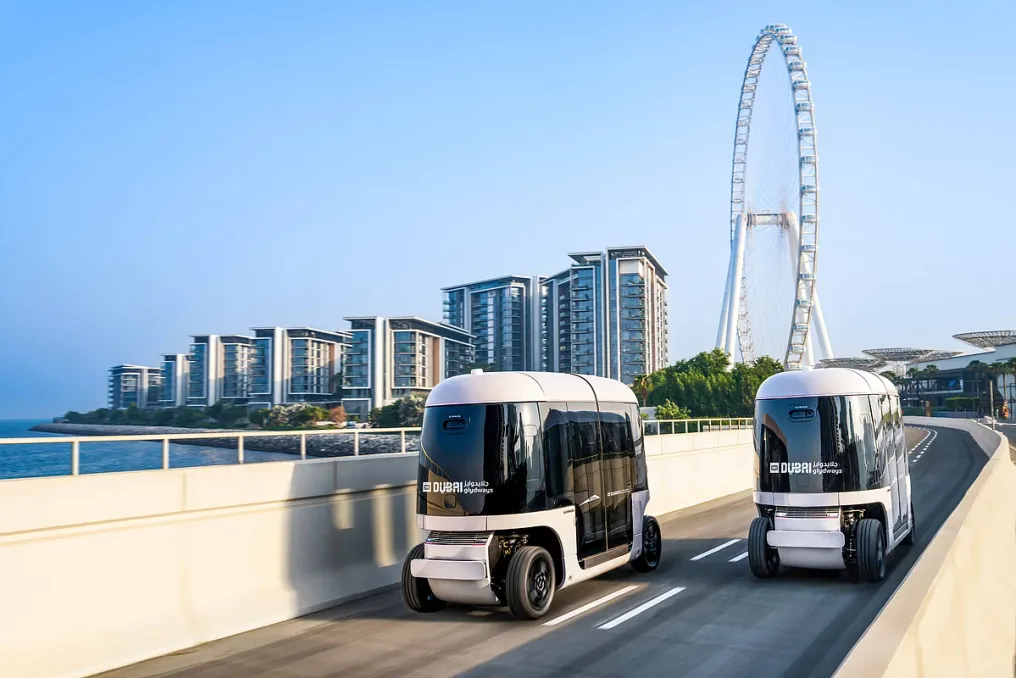
Imagine exiting the Dubai Metro and selecting your destination via a kiosk or app, then boarding a small driverless vehicle that takes you directly to your final point, without needing to share the ride with strangers or wait at intermediate stations.

This experience is being developed by Glydways for Dubai, while the Roads and Transport Authority (RTA) studies potential routes to bridge the gap between metro stations and residential buildings, offices, shops, and attractions.

The company's demonstration at Bluewaters has concluded, but the launch date for the public, fare costs, or the final route have not yet been announced.

Mark Sieger, co-founder and co-CEO of Glydways, noted that the project's goal is to eliminate the part of the public transport journey that often forces people back to using private cars.

Sieger told Khaleej Times: 'A small gap at the beginning or end of a trip can determine whether a person uses public transport at all. If the last leg of the journey involves a long walk in the heat or another lengthy wait, driving might become a more convenient option.'

Within Bluewaters, the RTA is considering a proposed connection spanning 2.8 km from the National Paints Metro Station to the island. However, the final route, station locations, and number of vehicles have not yet been confirmed.

Sieger explained that the proposed system would allow a passenger to transfer from the metro to a climate-controlled Glydcar—the company's autonomous electric vehicle—and continue to the Access Point located near their destination.

He emphasized: 'Our goal is to make this connection simple: exit the metro, get into a climate-controlled Glydcar, and go directly to the Access Point close to where you need to go.'

Unlike buses, shuttles, or metro trains, Glydways stated that its vehicles will not make intermediate stops to pick up other passengers. Each passenger, family, or group of friends will have their own vehicle for the trip.

According to Sieger, 'Passengers will travel directly from their starting Access Point to their chosen destination, without intermediate stops for picking up or dropping off other passengers. Each individual or group of travelers will have their own Glydcar.'

The system is designed to carry four to six passengers, although this depends on cabin layout and the space required for luggage, strollers, or mobility aids. The company asserts that the vehicles and stations are designed to accommodate battery-powered wheelchairs and ensure level boarding.

During the demonstration at Bluewaters, the vehicles traveled at a speed of about 24 km/h. Sieger added that the broader system is designed for speeds up to 50 km/h, though the actual travel time on any Dubai route will depend on the final routing, number of stations, and operational plan.

For the commercial network, Glydways aims for near-immediate boarding in most cases. If a vehicle is not already waiting at an Access Point, the company aims to provide a wait time of about 30–60 seconds, depending on passenger demand and network design.

Sieger concluded: 'The proposed experience is very simple: arrive at the Access Point, select a destination, board a Glydcar, and head there directly.'

Destination selection can be made via a mobile application or a kiosk, allowing users without smartphones to utilize the service. The company reported that its systems can support integration with local payment solutions, although the RTA will decide whether this includes Nol.

Glydways also hopes the service will operate around the clock and offer fares comparable to a metro or bus ticket. Sieger noted: 'Final operating hours and fares will be set by the RTA as part of the commercial plan.'

In conclusion, he reiterated: 'The service is designed to provide each group of travelers with their own Glydcar. You can travel alone, with family, or with friends, directly to your destination, without sharing with strangers.'

Popular