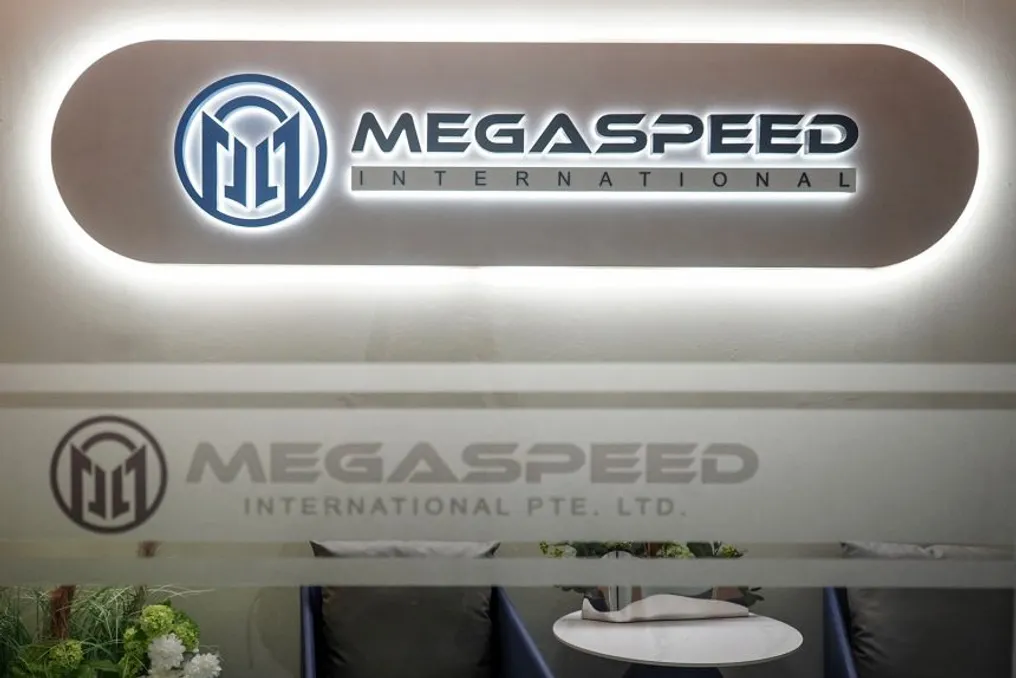
Advanced Nvidia Chips Located in Chinese Data Center Associated with Megaspeed
Read more
Olhar Digital
olhardigital.com.br

Advanced Nvidia Chips Located in Chinese Data Center Associated with Megaspeed

Top-tier Nvidia chips were detected in a data center located in Shanghai, China, which has ties to the company Alice Huang, founder of Megaspeed. This discovery was made based on documents provided by Chinese companies for obtaining bank financing, according to Bloomberg.

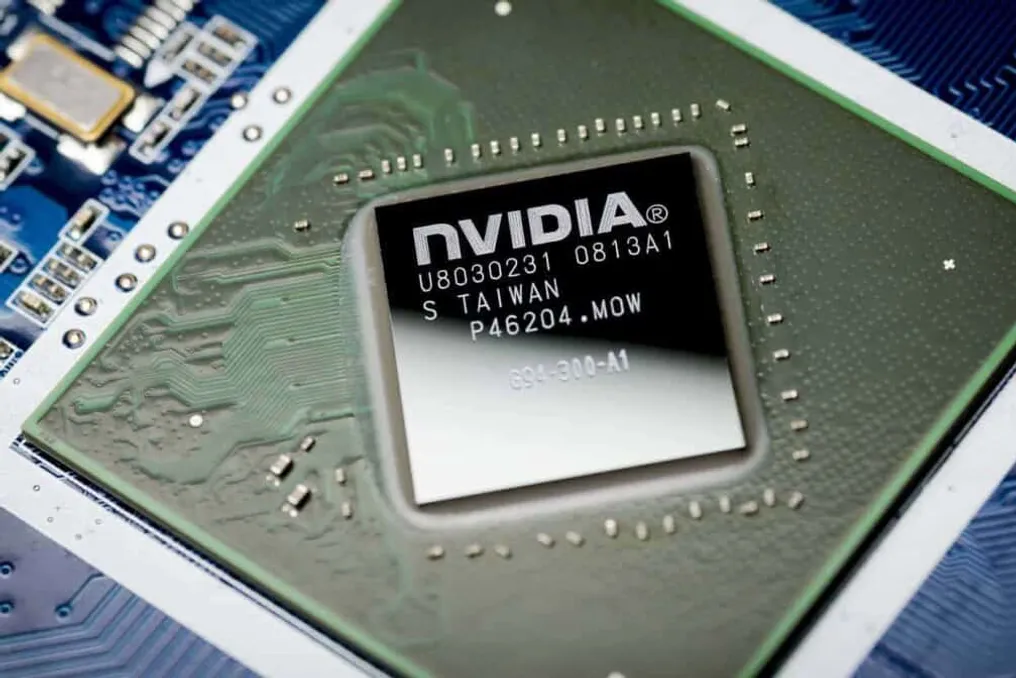
Among the identified equipment was a GB300 NVL72 rack, composed of 72 Blackwell Ultra chips and 36 Grace processors. This technology represents one of Nvidia's most recent advancements, and its export to China is subject to limitations imposed by the United States government.

The data center maintains a connection with Megaspeed through a project. The company, founded by Alice Huang, is currently under scrutiny by American agencies, investigated for alleged involvement in diverting Nvidia semiconductors to the Chinese market. Recently, the company was included in a list of U.S. trade restrictions.

The identification of the servers was possible due to the serial numbers present in the documents examined by Bloomberg. However, the agency could not determine who initially acquired the equipment or how it reached China. Furthermore, there is no proof that Megaspeed itself shipped the chips to the data center; the company's possible involvement remains speculative, and it denies any irregularities.

This incident intensifies American authorities' concerns about potential loopholes in export restrictions on sophisticated semiconductors, given that these components are crucial for the advancement of artificial intelligence (AI) systems.

Similar stories

Former Nvidia executive involved in scandal over illegal shipment of AI chips to China
Read more
www.aajtak.in

Former Nvidia executive involved in scandal over illegal shipment of AI chips to China

The name of former high-ranking Nvidia employee, Ajay 'Jay' Puri, has appeared in proceedings concerning the alleged illegal shipment of AI chips and servers worth approximately $2.5 billion (equivalent to about 20,000 crore rupees) to China. This scandal came to light following a report published by the short-selling firm 'Muddy Waters'. However, there is currently no evidence confirming Jay Puri's involvement in this alleged scheme.

Jay Puri served as Executive Vice President at Nvidia until June 2026, where he was responsible for the company's global operations, including sales and other major divisions. He was considered one of Nvidia's top three executives after CEO Jensen Huang. Although he left this position in June, he continued to collaborate with the company as a senior advisor.

'Muddy Waters' released a report titled 'Nvidia: More China' on November 17. It raised questions based on photographs from public events regarding a woman who appeared alongside Jay Puri. The suggestion was made that this woman is Senli Chen, a former Super Micro employee. The report referenced photos from an event at Opera in San Francisco in 2024 and another ceremony in April 2026. 'Muddy Waters' requested comments from Senli Chen's current company, ChronoScale, but received no response. Furthermore, the report did not definitively establish whether the woman in the photos was indeed Senli Chen.

This dispute is also linked to a lawsuit filed in October 2026 against Super Micro Computer. Within this lawsuit, Senli Chen's role as a former employee of the company is being questioned. Chen's position at Super Micro was Head of Growth. The lawsuit alleges that Chen played a key role in decision-making related to the purchase and delivery of Nvidia GPUs, i.e., AI chips, to end customers. An accusation is also made regarding her close business ties with Nvidia and conducting meetings about chip shipments with Nvidia co-founder Liang. The lawsuit contains a claim that Chen may have possessed information about the alleged illegal shipment of chips to China, but these accusations have not yet been proven in court.

The U.S. Department of Justice took action in March 2026 against three individuals connected to Super Micro. They are accused of participating in a conspiracy to ship Nvidia GPU servers to China through a Southeast Asian company. According to American officials, this scheme planned to deliver servers worth approximately $2.5 billion to China. The purchase of these servers was conducted through the Bangkok-based company OBON Corp between 2024 and 2025. It is alleged that servers worth about $510 million were shipped to China in April and May 2025. Investigators suspect that counterfeit servers were used at the warehouse for this activity; original devices were repackaged in the manufacturer's factory packaging with labels and serial numbers replaced to conceal their true identity.

In this case, one of the defendants pleaded guilty, while another denies the charges, and the third defendant is at large.

Super Micro has denied all allegations against Senli Chen. The company states that Chen did not oversee the business relationship between Nvidia and Super Micro, nor did she make decisions about which customers would receive Nvidia GPUs. According to the company, Chen resigned herself in early 2026 after 18 years of service. Subsequently, she became the CEO of the AI infrastructure company ChronoScale.

Nvidia launches desktop supercomputer with 512 GB of RAM for AI and simulations
Read more
tecnoblog.net

Nvidia launches desktop supercomputer with 512 GB of RAM for AI and simulations

Nvidia has launched a desktop supercomputer composed of four DGX Spark units, resulting in a total of 512 GB of RAM memory. The company is targeting this equipment towards researchers, universities, and professionals involved in artificial intelligence and scientific simulations.

The main objective of this solution is to enable the execution of complex computational processes locally, eliminating the need to rely on cloud computing. This set has been named the DGX Spark HPC Developer Kit and was presented at the SC26 supercomputing conference, held in Chicago, USA, on Monday, November 16th.

The new kit is already available for purchase through commercial partners. Manufacturers such as Acer, Asus, Dell, HP, Lenovo, and MSI are part of the participating companies. However, Nvidia has not yet disclosed the cost of the four-machine set nor specific details about its commercialization in Brazil.

This new configuration utilizes the original DGX Spark hardware, which was introduced in 2025. Unlike a single computer with 512 GB of RAM, this solution interconnects four machines, each with 128 GB of RAM, allowing for the division of processing.

Each module employs the GB10 Grace Blackwell processor, developed by Nvidia in collaboration with MediaTek. This chip integrates a 20-core Arm CPU with a GPU based on the Blackwell architecture, promising a theoretical performance of up to 1 petaflop in FP4 operations, a format used in AI applications.

LPDDR5X memory is shared by both the CPU and the GPU within each unit. Although the four machines are connected by Nvidia ConnectX-7 technology, they operate while maintaining their functional independence. Furthermore, Nvidia stated that the set offers 20 TB of NVMe storage and supports the local execution of AI models with up to 700 billion parameters, using the NVFP4 format to optimize memory usage.

Beyond AI models, the DGX Spark HPC Developer Kit was designed for various high-performance computing applications. Examples include material and molecular dynamics simulations, which are crucial in research areas of physics, chemistry, and biology. The intention is to allow scientists to develop and test their applications in laboratory environments before submitting them to heavier tasks on dedicated supercomputers.

This initiative expands the utilization capabilities of DGX Spark, which is already employed in locally running AI solutions. Perplexity, for instance, uses this equipment as one of the platforms compatible with the Portable Computer, a system capable of operating AI agents without continuous dependence on cloud infrastructure.

Nvidia scandal reveals loophole allowing China access to US chips
Read more
www.egyptindependent.com

Nvidia scandal reveals loophole allowing China access to US chips

Megaspeed International, a company based in a skyscraper overlooking the Marina Bay area in Singapore, exemplifies a rapidly growing tech startup attracting the wealthy Asian city-state. In three years, this corporation has transformed from an inactive Chinese gaming division into one of the largest purchasers of advanced semiconductors from the United States.

However, its rapid growth has drawn attention to an alleged espionage scandal that now involves Nvidia, a $4 trillion company producing the world's most advanced chips. Simultaneously, suspicions that Megaspeed is exploiting a loophole in US export controls are intensifying disagreements within the US government regarding the best way to prevent China from accessing its most sensitive technologies.

Nvidia CEO Jensen Huang resigned on Thursday after admitting involvement in an affair. Congress also demanded that he testify in closed session about his romantic relationship with Alice Huang, who American officials allege is an agent of Chinese intelligence. Beijing stated that this claim is an 'unfounded' attempt to smear China.

According to corporate documents and media reports, the 43-year-old Chinese executive, also known as Huang Le, played a key role in establishing Megaspeed. The company began discreetly supplying billions of Nvidia chips to data centers across Southeast Asia, drawing the attention of the Singaporean government and US officials concerned that the company was passing these chips to unauthorized Chinese buyers.

Alex Capri, a senior lecturer at the National University of Singapore's business school, noted that 'chips are the absolute starting point for all other technologies' and that 'the appetite for Nvidia chips in China is absolutely insatiable.' Despite US export controls limiting China's access to the most advanced semiconductor technologies, this has spawned a shadow industry of complex deals, shell companies, and chip smuggling, in which Megaspeed is now suspected of facilitating.

On Thursday, Megaspeed CEO Tan Yong Pong stated in a release that the company is cooperating with investigations by the US Department of Commerce and has hired an American law firm to conduct an independent review of export control compliance. The statement emphasized that Megaspeed takes its obligations under US export control laws very seriously and is ready to work constructively and transparently with the US government.

In a new statement on Sunday, Megaspeed announced that Huang left the company on August 30, 2025, and currently holds no position there. The company stated that it is aware of recent media reports containing claims about its business, supply chain, and global operations that are unsubstantiated by verifiable evidence.

In 2022, the US began restricting semiconductor sales to China, including the most advanced Nvidia models. While these measures were aimed at curbing China's technology sector, they also created opportunities for intermediaries willing to help circumvent these restrictions. US officials believe Megaspeed may be one such intermediary.

The company, founded in 2015 as 7Road International, a subsidiary of a Chinese gaming company, changed its name to Megaspeed in March 2023, and Alice Huang became a director by November of the same year. Since then, trade records show that Megaspeed has purchased over $4 billion worth of chips and equipment from Nvidia.

Capri also noted that Megaspeed's business model, which involves building data centers and leasing computing services, provides Chinese companies with another channel to access advanced US chips. He compared this to a situation where someone blacklisted from buying a Ferrari is allowed to rent a car from a dealership.

Corporate documents demonstrate links between Megaspeed's subsidiaries and the Chinese e-commerce giant Alibaba, including providing collateral. The research institute Epoch AI estimates that last year, between 290,000 and 1.6 million advanced US semiconductors were sent to China in violation of export controls.

Trade data investor William George told CNN that there is an established channel that benefits from minimal oversight of US air freight data, allowing goods to enter Singapore, Malaysia, Central, and Southeast Asia, and then be rerouted, sometimes through Thailand, into China. He concluded that this looks like an 'incredibly complex' state-sponsored Chinese network to bypass US export control systems.

Singapore has also launched an investigation into Megaspeed and its executives, including Alice Huang, regarding possible false declarations concerning the company's server purchases and their end destinations. The Singaporean Ministry of Home Affairs stated that there was insufficient evidence of Huang's guilt, but she was barred from re-entering the country after providing misleading information to 'reduce her role' in Megaspeed. Other investigations are ongoing.

The exact scale of China's chip smuggling cannot be measured, but its existence has become an open secret in the industry and an indicator of fundamental flaws in US efforts to prevent adversaries from obtaining high-risk technologies. A May report from short seller Culper Research claimed that despite tightened trade restrictions, Chinese end-users still account for about 20% of Nvidia chip sales through illegal diversion and intermediaries in Southeast Asia.

Jensen Huang, who accompanied US President Donald Trump twice on events with Chinese leader Xi Jinping this year, lobbied for the easing of US controls on chip imports into China. The US government ultimately approved several buyers of less advanced Nvidia chips, known as H200, taking a quarter of the revenue. Nevertheless, companies on the blacklist continued to receive sensitive semiconductors.

Among them is Northwestern Polytechnical University in Xi'an, the capital of Shaanxi province in China, one of the country's leading universities with military ties known as the 'Seven Sons of National Defense.' This university has been on the US Department of Commerce's Entity List since 2001 but purchased four H200 chips for $250,000 last month, according to procurement records published on its own website, which were subsequently deleted.

Despite the US investigation, Megaspeed has not been declared a national security threat or subjected to chip purchasing restrictions—a decision made by Commerce Secretary Howard Lutnick that caused friction with Treasury Secretary Scott Bessent last week, according to two sources familiar with the matter. Meanwhile, Democratic lawmakers, whose party recently gained control of the House of Representatives and Senate, are calling for greater oversight of US advanced chip exports ahead of the Trump-Xi meeting in Shenzhen.

The growing number of chip smuggling cases fuels calls for stricter enforcement outside the US. The Taiwanese government aims to criminalize the unauthorized export of advanced AI chips to China, as prosecutors there have charged nine individuals in a scheme to secretly import Nvidia chips into China via Japan, Indonesia, and Hong Kong.

Popular