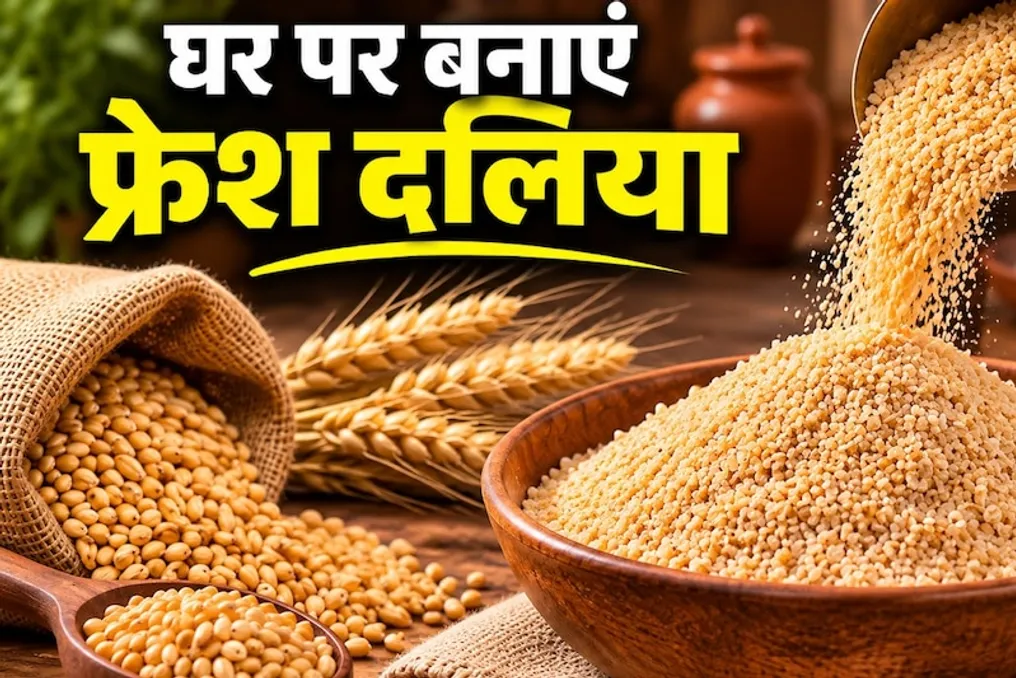
How to make fresh and pure whole wheat dalia at home
Read more
Aaj Tak
www.aajtak.in

How to make fresh and pure whole wheat dalia at home

Dalia is a product recommended by doctors. It is beneficial for the body in various aspects: whether it is weight loss, health recovery, or giving the body strength. However, most people buy dalia in stores, whereas packaged or open products may be old or contain impurities. Therefore, preparing fresh and pure dalia at home from whole wheat is a more reliable choice from a health perspective.

Dalia made from whole wheat is rich in fiber, promotes normal digestion, and maintains energy levels throughout the day. You can easily and quickly prepare clean and fresh dalia right at home.

How to make dalia:

Ingredients:

  • Whole wheat: 500 grams (well cleaned and dry)
  • Food processor or blender: for grinding the wheat into coarse crumbs
  • Sieve: for separating fine flour or husks
  • Airtight container: for storing the dalia

Preparation instructions:

  1. Carefully select the whole wheat to remove stones or dirt. If the wheat has dust, wipe it with a dry cloth and, if necessary, expose it to a small amount of sunlight.
  2. Gradually add the cleaned wheat to the food processor bowl and grind in pulses. It is important not to turn it into fine flour.
  3. Sift the ground wheat through a sieve to separate overly fine flour or excess material and obtain grainy dalia.
  4. After the finished fresh dalia has completely cooled, transfer it to a clean and dry airtight container to maintain its freshness.
Similar stories

How to make pure jowar atta at home: avoid impurities in store-bought flour
Read more
www.aajtak.in

How to make pure jowar atta at home: avoid impurities in store-bought flour

If you regularly consume bread made from multi-grain mixtures such as jowar or ragi, and are accustomed to buying flour in stores, you should stop. This article presents a method for preparing jowar atta at home.

Currently, there are frequent complaints about the presence of additives, preservatives, and starch in packaged flours sold in stores. Furthermore, due to the long shelf life, packaged flour loses its natural nutrients. If you suffer from diabetes, weight gain, or digestive problems and want to include gluten-free jowar atta in your diet, making it at home is the safest and healthiest option compared to buying it in a store.

Homemade jowar flour not only guarantees 100% purity and freshness but also allows you to bake very soft flatbreads. Below is a detailed description of the complete method and secret tips for easily obtaining fine flour from whole jowar.

For preparation, you will need:

  • Whole jowar grains: 500 grams or 1 kilogram (of good quality)
  • Water: for washing the jowar
  • Cotton cloth: for drying
  • Blender bowl/mixer (or the nearest flour mill)
  • Fine sieve for sifting the flour

Before grinding the whole jowar, be sure to thoroughly clean it of stones, dust, or husks. Then, wash the jowar with clean water two or three times to remove accumulated dirt. After that, spread it on cotton cloth and dry completely in bright sunlight for 5-6 hours. It is crucial that no moisture remains in the jowar, otherwise, the flour will spoil quickly.

If there is insufficient sunlight, after drying, you can roast the grains in a pot over low heat for 2-3 minutes. This will make the grains crunchy and allow them to be ground very finely in a blender. When working in the mixer, try not to run the bowl continuously, but rather do it intermittently. This approach will prevent the bowl from overheating and preserve the nutrients in the flour.

The ground flour should be sifted through a very fine sieve (made of linen or a thin mesh sieve). The remaining larger, coarse part needs to be put back into the mixer and ground again.

First, wash the cleaned jowar and dry it completely in the sun. Then, fill the dry mixer bowl halfway with the completely dried grains and grind until a fine powder is obtained. The finished powder must be sifted through a fine sieve so that the flour does not crumble when making flatbreads. Store the finished pure jowar flour in a glass or airtight steel jar; this flour remains fresh and does not spoil for 1-2 months.

How to make suji at home: replace store-bought mix with pure, grainy wheat
Read more
www.aajtak.in

How to make suji at home: replace store-bought mix with pure, grainy wheat

If you frequently use suji at home and usually buy it in stores, it is recommended to stop doing so. This article presents a simple method for preparing fresh and grainy suji at home.

Suji (rava) is used in almost every Indian household to prepare dishes such as halwa, upma, chila, or uttapam. However, there is a risk that the packaged suji bought from the store may be old, contain impurities, or spoil. Therefore, it is suggested to prepare clean and fresh suji yourself. Homemade suji is not only clean but also gives dishes a richer taste and texture.

To prepare, you will need 1 kilogram of good quality, clean, and dry wheat; large or medium grain wheat is best. For storage, you can optionally use 2–3 bay leaves or 1–2 dried red peppers to protect against moisture and insects.

First, you must sort the wheat, removing stones, dust, or damaged grains. If the wheat was washed, it should be dried in the sun or in the shade until completely dry.

The dried wheat should be gradually added to the bowl of a food processor and ground in pulse mode to obtain coarse crumbs. It is important not to overload the processor or work too long, otherwise, fine flour will result. For large volumes, a grain mill can be used.

The resulting mixture should be sifted through a fine sieve. The grainy part that remains on the sieve is the suji/rava, while the finer part that passes through the sieve is regular flour.

If the grains seem too large, they can be lightly ground in pulses and sifted again to achieve the desired texture for halwa or upma. After this, the suji should be lightly roasted in a pan over low heat for 3–4 minutes, and then cooled. Once completely cooled, the suji should be transferred to an airtight container, adding bay leaves or dried red pepper, and stored in a dry place.

Recipe for Crispy and Spicy Muthi made from Chickpea Flour, served with Bread or Rice
Read more
www.aajtak.in

Recipe for Crispy and Spicy Muthi made from Chickpea Flour, served with Bread or Rice

If you are tired of eating dal or vegetable dishes every day, we suggest a recipe for delicious muthi made from chickpea flour, which is very easy to prepare and has an excellent taste. A distinctive feature of this dish is that it can be used not only as a side dish for vegetables but also enjoyed as a dry snack during tea time.

People often get bored with a monotonous diet consisting of dal, rice, and simple vegetables. In such cases, muthi made from chickpea flour is an ideal option because it turns out very tasty and spicy, while being quick to prepare and requiring minimal oil. This popular traditional snack from Gujarat is not only light and easily digestible for the stomach but also extremely simple to make. It can be served for breakfast, with evening tea, or instead of a main vegetable dish.

Below is a simple way to prepare soft and spicy muthi using just one cup of chickpea flour.

For the muthi dough:

Chickpea flour (Besan): 1 cup

Freshly chopped mint or dried mint (Kasuri Methi): half a cup (optional)

Yogurt: 2 tablespoons

Oil (for greasing): 1 tablespoon

Ginger and green chili paste: 1 teaspoon

Ajwain, cardamom, and white cumin: half a teaspoon each

Turmeric, red chili, and coriander powder: half a teaspoon each

Baking powder (sweet soda): a pinch

Salt to taste

For tempering (Tadka):

Oil: 1-2 tablespoons

Rai (mustard seeds) and white cumin: 1 teaspoon each

Hing (asafoetida): a pinch

Curry leaves: 8-10

Finely chopped green coriander and grated fresh coconut

Take a large bowl and pour in one cup of chickpea flour. Add the chopped mint, yogurt, 1 teaspoon of oil, ginger and chili paste, ajwain, cumin, all dry spices, baking powder, and salt. Mix, adding a little water (if necessary, 1-2 teaspoons) to form a soft dough (dough).

Grease your hands with a little oil and form long rolls (muthi), squeezing the dough in your fist. Heat water in a steamer or pot. Grease the sieve with oil and place the formed rolls on it. Steam covered for 12-15 minutes.

After the muthi cools down, cut them into round pieces using a knife. Heat 2 tablespoons of oil in a pan. Fry the rai, white cumin, hing, and curry leaves in it until fragrant. Then add the cut muthi and fry on low heat for 2-3 minutes until slightly crispy. Sprinkle with finely chopped green coriander and grated coconut on top.

The finished hot, soft, and spicy muthi is ready. It can be served with green chutney or tea.

Popular