
Emirates Dubai 7s Competition Prepares for New Stage Amid Regional Conflict
Read more
Khaleej Times
www.khaleejtimes.com

Emirates Dubai 7s Competition Prepares for New Stage Amid Regional Conflict

Despite the ongoing conflict in the region, the United Arab Emirates continues to shine on the world stage, highlighting the vision and resilience of a young country that openly welcomes people from all over the world.

In the field of sports, a key example of UAE ambition is the Emirates Dubai 7s tournament—a leading rugby event. This tournament, launched in 1970, is the longest sporting event on the Middle East.

Dubai is currently preparing to host the 56th edition of this iconic rugby competition, which will take place from November 27 to 29 at the Sevens Stadium. Matthew Tate, a former England rugby star and current director of the Emirates Dubai 7s festival, noted that hosting the annual event despite the war in Iran brings great pride.

Tate told Khaleej Times that while challenges always exist for a festival of this scale, Emirates Dubai 7s aims to unite people from different walks of life. He added that this becomes even more important this year.

He also emphasized that the season of sporting events in the UAE is in full swing, with recent weeks marked by fantastic sporting events, and even more are expected in the coming months. In his opinion, this in itself speaks to the country's resilience, stability, and determination to continue welcoming the international sporting community.

As part of the World Rugby Sevens Series in men's and women's categories, Dubai 7s annually attracts the best teams from around the world. Organizers combine top-tier sporting events with entertainment activities for fans and concerts featuring global stars.

Last year, New Zealand claimed the title of 'big double,' winning both the men's and women's tournaments. Fans can expect another weekend of high-intensity sevens rugby, as well as a musical performance featuring superstar Akon on Saturday.

Thanks to the perfect combination of sport and entertainment, Dubai 7s has left an indelible mark on the world stage. According to Tate, the tournament has become more than just a rugby championship; it is the largest sports and entertainment festival in the Middle East, attracting over 85,000 visitors from the UAE and around the world.

Speaking about the event's most significant contribution to the development of sports in the UAE, Tate mentioned many key milestones. However, becoming the starting point of the World Rugby Sevens Series in 1999 was a huge moment. He also stressed that the ability for people of different ages and abilities to gather to play sports, socialize with friends and family, and enjoy the festival's attractions makes Emirates Dubai 7s a unique offering.

This rugby tournament, in Tate's view, laid the foundation for the UAE to become one of the world's major sporting destinations, hosting tournaments in tennis, golf, cricket, MMA, and Formula 1 Grand Prix.

The former England Rugby World Cup player believes that the long duration of Emirates Dubai 7s and the large audience formed around it have played a role in creating the conditions for the many elite sporting events held in the UAE recently. He added that it was the first sporting event in Dubai to host international stars from all over the world, and now they are available for fans to see up close weekly, especially during this time of year, thanks to events like the DP World Tour golf and the Formula 1 Grand Prix.

As a well-established and long-running event, Emirates Dubai 7s is something the city of Dubai should be proud of. The festival was developed here under the guidance and investment of Emirates, and considering that 85,000 spectators pass through its gates every year, the impact on the broader Dubai economy is evident.

Tate believes that the tournament, which also includes cricket, необбол (unspecified sport), padel, Gaelic football, and the WODON3 fitness competition over the weekend at Sevens Stadium, will continue to grow in the future. He noted that what was once exclusively a rugby tournament now unites six sports along with music, entertainment, and family experiences. An interesting aspect is what happens when these communities connect: someone might come to play padel and watch international rugby for the first time.
Similar stories

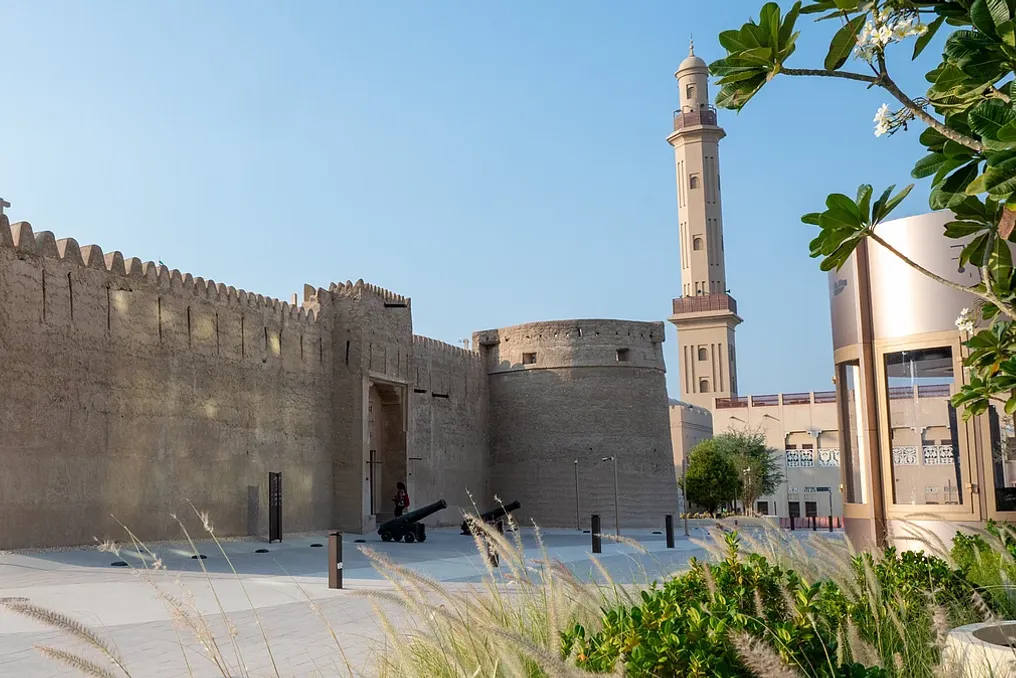
Dubai's Oldest Fortress Reopens After Six Years of Renovation with Updated Look and Interactive Exhibits
Read more
www.khaleejtimes.com

Dubai's Oldest Fortress Reopens After Six Years of Renovation with Updated Look and Interactive Exhibits

Al Fahidi Fort, the oldest in Dubai, has reopened its doors to visitors after a six-year period of renovation. It now offers a fresh perspective on Dubai's history through rare artifacts, unpublished stories, and immersive museum experiences.

Built in 1787, this fortress witnessed Dubai's transformation from a small coastal settlement into a global metropolis. Throughout its history, it served as a defensive outpost, a residence for the ruling family, a center of government administration, and in 1971, was converted into Dubai's first museum.

Following a massive overhaul, the historical site has entered a new chapter, merging its original architecture with modern exhibition spaces to narrate the emirate and the people who shaped it.

The new museum houses over 700 historical and cultural items, distributed across six main galleries. Exhibits include archaeological finds, rare weaponry, Islamic armor, archival materials, oral traditions, as well as digital displays and interactive zones.

Mariam Muzaffar Ahli, Director of Collections and Art Appraisal at Al Fahidi Fort, told Khaleej Times that the museum was conceived as a way to tell Dubai's story through the various roles the fort played over the centuries. She emphasized that the exhibitions focus on Dubai's defensive history, covering both Islamic and social heritage, as well as extensive oral heritage.

Ahli recalled that before becoming the emirate's first museum in 1971, the fort served as a residence for the ruling family, a city administration center, and a defensive fortification. The museum's opening coincides with its 55th anniversary.

A special feature of the new exhibition is the weapons collection, which provides insight into the region's history and its connections with the outside world. This collection includes pre-Islamic specimens, the oldest of which date back over 8000 years, as well as previously unseen Islamic weaponry and items from the 19th and 20th centuries.

The exhibits also explore the weaponry used to defend the fort and the entire region, demonstrating Dubai's history's connection to events beyond its borders.

The redevelopment work presented a significant challenge: modernizing the visitor experience without compromising the historical structure. Ahli reported that during construction around the fort and in the adjacent historic area, special monitoring devices were installed to detect vibrations and identify potential structural damage. This technology helped complete the project without harming the original building.

Furthermore, new underground exhibition spaces were developed, allowing the museum to expand while keeping the fort's historical architecture as the central focus. Ahli added that international archaeological consultants participated in the restoration plans, and the monitoring system received an international award for innovation.

In addition to the exhibits, the fort is preparing an event program aimed at attracting tourists, residents, families, and the younger generation. Aisha Hansaheb, Director of Al Fahidi Fort and Specialized Museums at Dubai Culture, stated that visitors can take tours in Arabic and English led by trained guides, and participate in seminars and educational programs.

She predicts that tourists will form a significant part of the visitors, noting that before closing for renovation six years ago, the museum attracted thousands of tourists daily. The museum also plans to strengthen cooperation with schools and universities, offering educational visits and opportunities for students to study the collections.

Architecture students, in particular, are expected to show great interest, as they can study the fort's construction methods and historical features. Interactive sessions, seasonal programs, and winter camps will also be part of the museum's offerings, where technology will play a vital role in engaging youth with history.

Hansaheb also stressed that the collections demonstrate Dubai's long-standing ties with neighboring regions and diverse cultures. She noted that the museum's goal is to highlight values such as tolerance and cultural exchange, showing that Dubai has never been isolated from the outside world.

Despite the significant changes, the original architectural elements remain central to the experience. Thick walls, defensive towers, inner courtyards, and traditional passages reflect the building techniques used by local communities centuries ago. One of the most notable elements is the Murabba tower, whose walls, about two meters thick, are built from coral stone and gypsum, testifying to the traditional craftsmanship and practical knowledge of that era.

The renovation also added new exhibition areas and amenities for visitors, and the underground spaces provided additional space without overshadowing the historic building. The surrounding area was also incorporated into the overall visitor experience, reconnecting the fort with neighboring historic streets, markets, and landmarks of Old Dubai. Today, by opening its doors, Al Fahidi Fort offers guests more than just a journey into the city's past; it serves as a reminder of how Dubai has evolved while preserving the histories and legacies that continue to shape its identity.

Popular