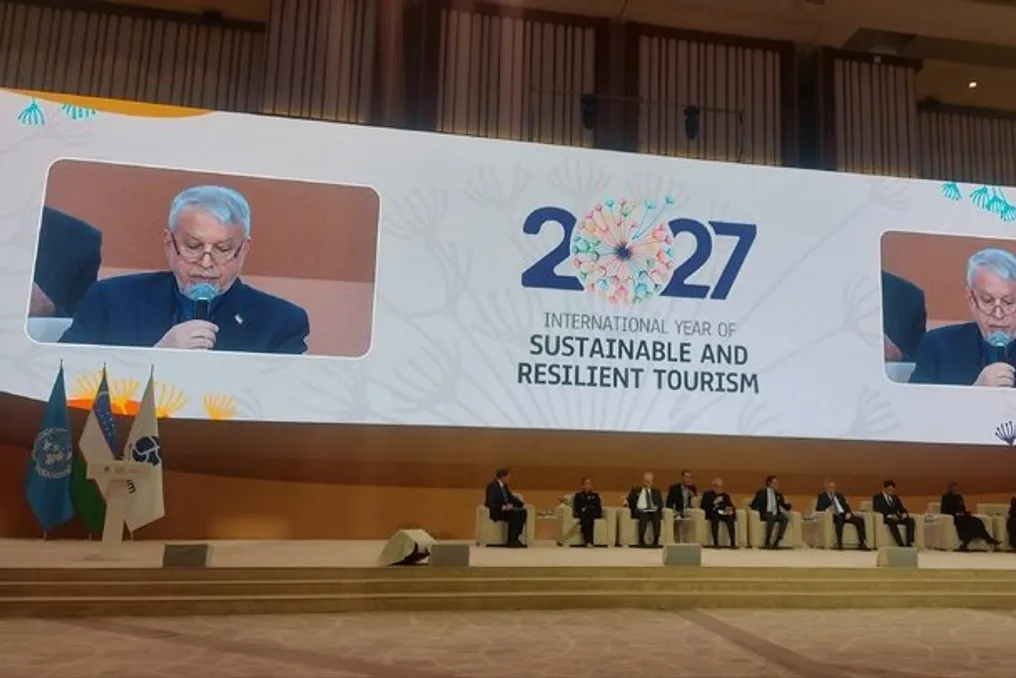
The Iranian Minister of Cultural Heritage, Tourism and Handicrafts, Seyed Reza Salehi-Amiri, presented his country's efforts to promote sustainable tourism, expand rural tourism infrastructure, and stimulate the use of renewable energy. These statements were made at the International Conference on Sustainable and Resilient Tourism held in Tashkent, Uzbekistan.
Speaking before a specialized group at the conference on Friday, Salehi-Amiri discussed how Iran is working towards a more even distribution of tourist flows across the country and involving local communities in the economic benefits of this industry, according to CHTN. The Minister emphasized that one of Iran's priorities is distributing tourists among various geographical zones, especially by directing some tourism potential to rural areas.
This approach is being implemented through the development of traditional rural accommodation facilities known as eco-lodges, as well as through improving tourism infrastructure in villages. According to Salehi-Amiri, there are currently about 3,000 eco-lodges operating in Iran, and one of the country's development goals is to create at least one such facility in every village. He noted that this initiative will help local residents earn income from tourism and create jobs outside major urban centers and established tourist destinations.
Furthermore, the minister mentioned Iran's overall tourism infrastructure, noting that the country has about 25,000 tourist sites, including hotels, tourist villages, and wellness tourism service providers.
Addressing environmental sustainability, Salehi-Amiri highlighted measures to support green tourism and renewable energy, particularly solar energy. He reported that the use of solar energy in some tourist facilities was encouraged as part of measures to reduce the industry's environmental impact.
Administrative mechanisms have also been established to coordinate sustainable tourism policy at both national and provincial levels. Provincial working groups operate under the leadership of the directors of cultural heritage, tourism, and handicrafts of the respective provinces, while a national working group, headed by the Deputy Minister of Tourism, is responsible for coordinating and monitoring related initiatives. The Minister concluded that the development of rural tourism, investment in sustainable infrastructure, the use of renewable energy, and institutional coordination are part of Iran's efforts to transition to a more sustainable tourism model.
Regional Cooperation in Tourism
Parallel to the events in Tashkent, Salehi-Amiri held separate meetings with representatives of the tourism agencies of Tajikistan, Pakistan, and the Republic of Azerbaijan to discuss ways to strengthen regional interaction. Participating in these meetings were Juma Khanzoda, Chairman of the Tourism Committee of Tajikistan; Rana Aftab, Head of the Tourism Development Agency of Pakistan; and Fuad Nagiyev, Chairman of the State Tourism Agency of Azerbaijan. Discussions focused on common tourism potential, facilitating communication among tourism industry specialists, and expanding practical cooperation between Iran and the three neighboring countries. Participants also stressed the importance of effectively utilizing existing opportunities and strengthening institutional ties between tourism bodies. These meetings provided Iran with an opportunity to conduct its tourism diplomacy and explore new avenues for bilateral and regional interaction within the framework of the international event. Salehi-Amiri arrived in Uzbekistan at the invitation of the country's Tourism Committee Chairman to participate in the international tourism meeting, attend related programs, and hold talks with officials from various countries. His visit coincides with the 31st International Tourism Fair 'Tourism on the Silk Road' and the official opening ceremony of the International Year of Sustainable and Resilient Tourism 2027, organized in cooperation with UN Tourism.