How to organize a wardrobe: 5 simple ways to increase closet capacity in a small space
Read more
Aaj Tak
www.aajtak.in

How to organize a wardrobe: 5 simple ways to increase closet capacity in a small space

If your closet is overflowing and you cannot find the clothes you need on time, this can cause significant inconvenience. Often, clothes are scattered so haphazardly that searching for a single shirt or suit results in the entire closet becoming untidy. This problem is particularly acute in small living spaces where storage space is limited, making proper wardrobe organization extremely important.

If you also lack space to store clothes in your closet, you can use several simple methods to fit more items into a smaller volume. This does not necessarily require purchasing expensive organizers.

Socks, scarves, underwear, and various small accessories are often stored together in drawer compartments. In such cases, it can be difficult to quickly find the desired item. To avoid this problem, you can install small dividers or organizer boxes in the drawers. A separate place should be allocated for each item. This way, socks, belts, scarves, and other small things will remain organized. You can also use old small containers.

If there is insufficient space to hang clothes in your closet, you can install an additional hanger. It can be placed under the existing rail. This will provide space to hang shirts, tops, trousers, and small clothing items separately. This technique is especially useful in closets where there is a lot of free space at the top, as it creates additional storage space for clothes.

Clothes worn at different times of the year—for example, summer clothes in winter or sweaters, jackets, and shawls in summer—take up a lot of space in the closet. Such items can be placed in separate collapsible baskets. Each basket should have a label attached so that the desired item can be easily found. They are best placed on the upper empty shelves of the closet, freeing up more space below for everyday clothes.

If T-shirts, leggings, and casual wear are stacked on top of each other, they can lose their neat shape when removed. To avoid this, it is recommended to fold the clothes using the file storage method and stand them vertically in the drawers. With this method, each item is visible separately, which allows you to easily retrieve the needed item without emptying the entire drawer.

The space behind the closet door is often unused. Here, you can attach Velcro strips or hanging organizers. Belts, scarves, shawls, and small handbags can be hung on them. This will free up space on the closet shelves, and accessories will not be lying around everywhere.

With these small tricks, you can organize your closet without large expenses. This will not only simplify finding clothes but also create extra free space in the wardrobe.
Similar stories

How to organize items under the kitchen sink without installing new furniture
Read more
www.aajtak.in

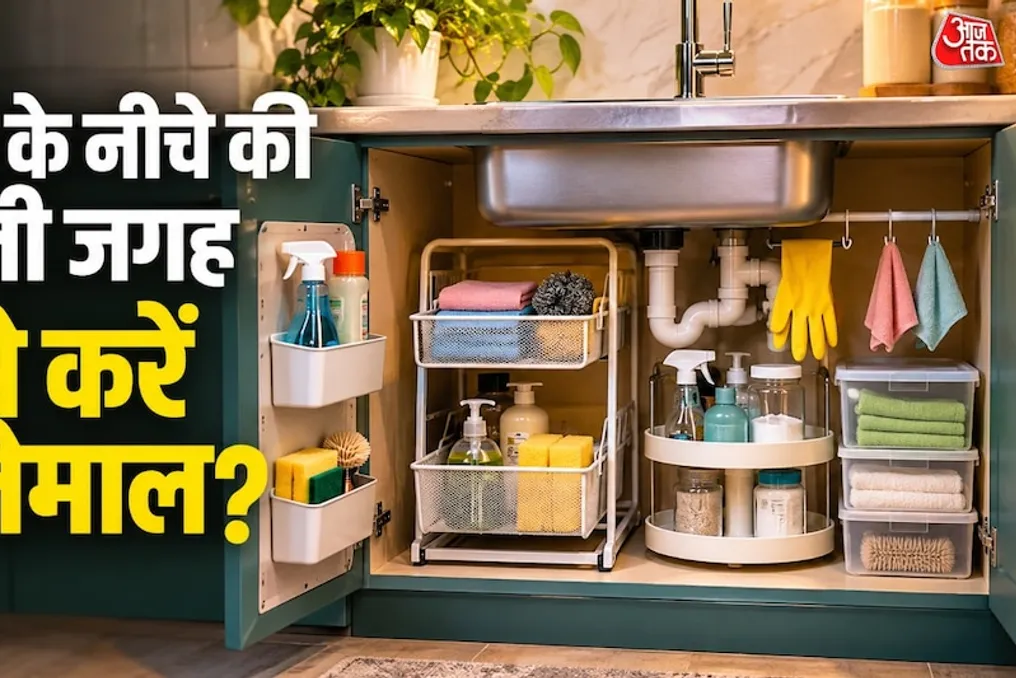
How to organize items under the kitchen sink without installing new furniture

Even the cleanest kitchen can have a cabinet under the sink that turns into a storage of clutter. Detergents, sponges, finishers, trash bags, and other small items often accumulate there. Sometimes necessary items are inaccessible, forcing you to completely empty the entire cabinet.

However, this small area under the kitchen sink can be very useful. With some ingenuity and smart storage solutions, you can organize a large number of things there without building new cabinets or spending a lot of money. Eight simple methods are presented below that will help make the cluttered space under the sink clean and tidy.

The main problem with storing items under the sink is access to items located in the back. Often, to retrieve one bottle, you have to move all the other things. To avoid this, you can install a pull-out basket or drawer. You can place liquid dish soap, sponges, scrubbers, and other cleaning supplies in them. When needed, the entire basket is pulled out, and the items are easily accessible.

If the space under the sink is limited, stacks of organizers are perfect. In them, you can separately store scrubbers, rubber gloves, cleaning rags, and additional accessories. It is advisable to choose transparent containers so that you can see the contents without opening them. This will allow you to maximize the height of the cabinet.

Storing spray bottles under the sink takes up a lot of space. A good solution is to install a tension rod on the inside wall of the cabinet. On this rod, you can hang sprays by their trigger part. This frees up the lower space, which can be used to place buckets, cleaning cloths, and larger items.

People often use the cabinet door under the sink only for opening and closing. However, this surface can also be functional. Small hooks, shelves, or organizers can be installed inside the door. Here you can store scrubbers, brushes, trash bags, and light cleaning supplies. This frees up space on the inner shelf for other items.

Sometimes it is difficult to reach bottles standing deep in the cabinet. To solve this problem, you can use a rotating stand, known as a 'lazy Susan'. You can place cleaning liquids, small bottles, and dishwashing detergents on it. Just turn the stand, and the items at the back become accessible. This eliminates the need to constantly move things.

If you want your cleaning supplies to always be in one place, use small plastic containers with handles. You can gather scrubbers, dishwashing liquid, brushes, and rags in them. The advantage of such containers is that they can be lifted and moved to another place when necessary, which simplifies kitchen cleaning.

Instead of throwing away old folders, they can be used under the sink. You can vertically place trash bags, reusable shopping bags, rolls of paper towels, and cleaning rags in them. This prevents them from being scattered randomly and ensures easy access while being a budget-friendly way to organize space.

If the cabinet under the sink is tall but has only one shelf for storage, you can use adjustable shelves. This allows you to create two levels of storage in one place. Small and frequently used items should be placed on the top shelf, and large bottles, containers, and spare items on the bottom. This way, you can increase storage space without buying new furniture.

How to make a mop from an old wool sweater: A practical guide
Read more
www.aajtak.in

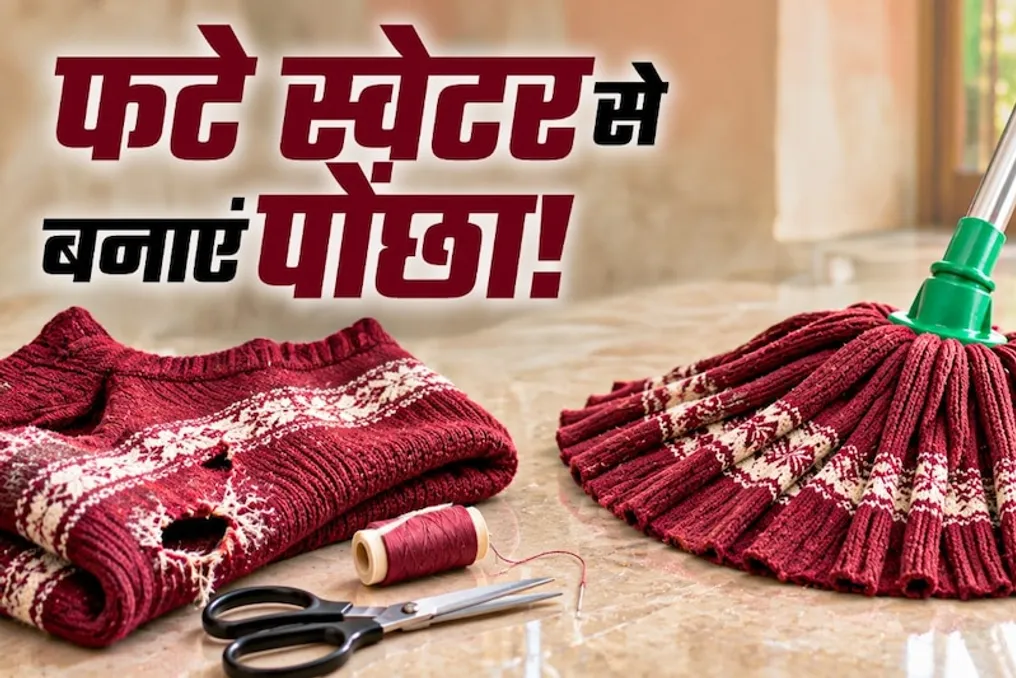
How to make a mop from an old wool sweater: A practical guide

Old or torn wool sweaters should not be thrown away as useless items. With a little effort and using household items, they can be turned into a durable and dense mop. The article describes a simple way to reuse old sweaters and lists the necessary materials.

When the cold weather arrives, people take out sweaters and jerseys stored in closets and beds. Among these old warm items are often sweaters that have become too small or have holes. Usually, such items are thrown away, considered trash. However, as mentioned, a sweater that seems unnecessary can become a useful item capable of tidying up the house. A torn old wool sweater can be used for household cleaning, allowing you to create a sturdy and thick mop right at home.

It is important to note that using an old sweater does not require buying anything from a store or exerting much effort. It only requires some ingenuity to make the old sweater suitable for reuse. If the sweater is thick and strong, the mop can last for many years. Below is a simple method for making it.

The main advantage of this folk trick is that it does not require many materials; just a few things you already have at home. To make a mop, you will need:

  • An old or torn wool sweater
  • Sharp scissors
  • Needle and strong thread
  • An old mop handle or broom

You should choose a sweater that is not too thin or weak, as a mop made from a thick and strong wool sweater will be more durable.

  1. Cutting the sweater: First, lay the old sweater completely flat on a level surface. Then, use scissors to separate the sleeves, collar, and parts with buttons or zippers.
  2. Cutting the desired shape: The main remaining part of the sweater needs to be cut into a square or rectangular shape. The fabric size should be such that it can be easily held in the hand or attached to the mop handle.
  3. Sewing the edges: After cutting the sweater, wool fuzz may appear along the edges. To prevent this, the fabric needs to be slightly folded inward along the entire perimeter and sewn. If you do not have a sewing machine, you can use strong hand stitches.
  4. Giving the mop thickness and strength: If you have two old pieces of sweater, you can stack them and sew them together. This will make the mop thicker, which will facilitate its use for floor cleaning.
  5. Using with a mop handle: Now your old sweater has turned into a new mop. It can be attached to an old mop handle or used for washing the floor by holding it in your hands.

After the mop is ready, it should be soaked in clean water and lightly squeezed before first use. After that, it can be used to remove dust and dirt settled on tile, marble, or stone floors. After cleaning, the mop must be thoroughly washed in clean water. If necessary, a little detergent can be added, and then it should be dried completely in the sun. It is important never to leave a wet mop in a closed place or bucket, as this can lead to odors and bacteria.

Instead of throwing away old clothes, you can find ways to reuse them. Especially a mop made from a wool sweater can be useful for daily cleaning. This allows you to use old clothes and save money on buying a new mop. However, its durability and service life will depend on the quality of the sweater and the quality of the stitching.

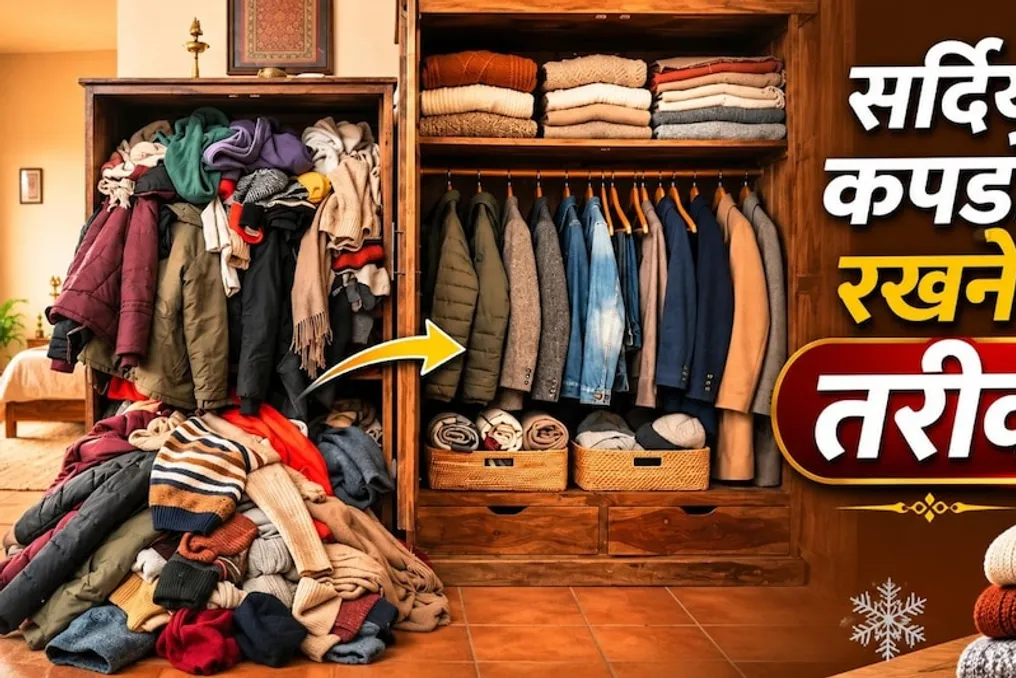
Tips for Storing Winter Clothes: 5 Ways to Optimize Closet Space
Read more
www.aajtak.in

Tips for Storing Winter Clothes: 5 Ways to Optimize Closet Space

As the cold weather arrives, the need for warm clothing increases. Consequently, sweaters, jackets, shawls, scarves, and other winter accessories begin to accumulate in the wardrobe. Bulky items quickly fill the closet, making it difficult to find everyday clothes. Furthermore, stacking clothes on top of each other can lead to damage to their shape or harm woolen items.

If you are concerned about the lack of space for storing winter items, there are simple methods that can alleviate this situation. Proper organization not only saves space in the closet but also simplifies the process of finding necessary items.

5 Simple Ways to Organize Winter Clothing in Small Spaces

Here are five accessible methods for neatly storing winter clothing in limited volume.

1. Fold Sweaters Instead of Hanging Them

Although sweaters are often worn in cold weather, it is advisable to avoid hanging them on hangers. Hanging bulky and wool sweaters can lead to shoulder weakening or deformation of the garment itself. Therefore, it is recommended to carefully fold the sweater and place it on a shelf in the closet. Alternatively, you can roll the sweater to fit more items into a smaller space while keeping each item visible.

2. Dedicate a Separate Area for Jackets and Coats

Jackets, coats, and blazers are bulky items, and folding them takes up a lot of space. They should always be hung on a hanger in a specific part of the closet. If you have a large number of jackets, place frequently used items at the front and the rest at the back. This will help prevent clutter and ensure easy access to clothes when needed.

3. Store Shawls and Scarves in Boxes

Small winter accessories, such as shawls, scarves, hats, and gloves, which are used most often, often remain scattered throughout the closet. Instead of leaving them disorganized, it is better to place them in a small box, basket, or organizer. You can designate separate sections for different items. This will save time searching and maintain order in the closet.

4. Use Vacuum Bags for Storage

If closet space is critically limited, vacuum bags can be a useful solution. You can pack jackets, shawls, and other clothing that you do not plan to use daily into them. Removing the air from the bag significantly reduces the volume occupied by the clothing. However, before long-term storage of wool and delicate items, you must read the care instructions.

5. Organize Clothes by Category

Storing all types of clothing together leads to the rapid filling of space. It is much more effective to create separate zones for sweaters, jackets, shawls, and thermal underwear. Clothes that are worn regularly should be kept closer to the front, and the least used ones should be placed higher or further back. This approach will help save space and prevent large piles of clothes from forming.

To maintain order during the winter period, it is not necessary to purchase expensive organizers. A wardrobe can be easily organized using boxes, baskets, and old fabric bags that you already have at home.

Popular