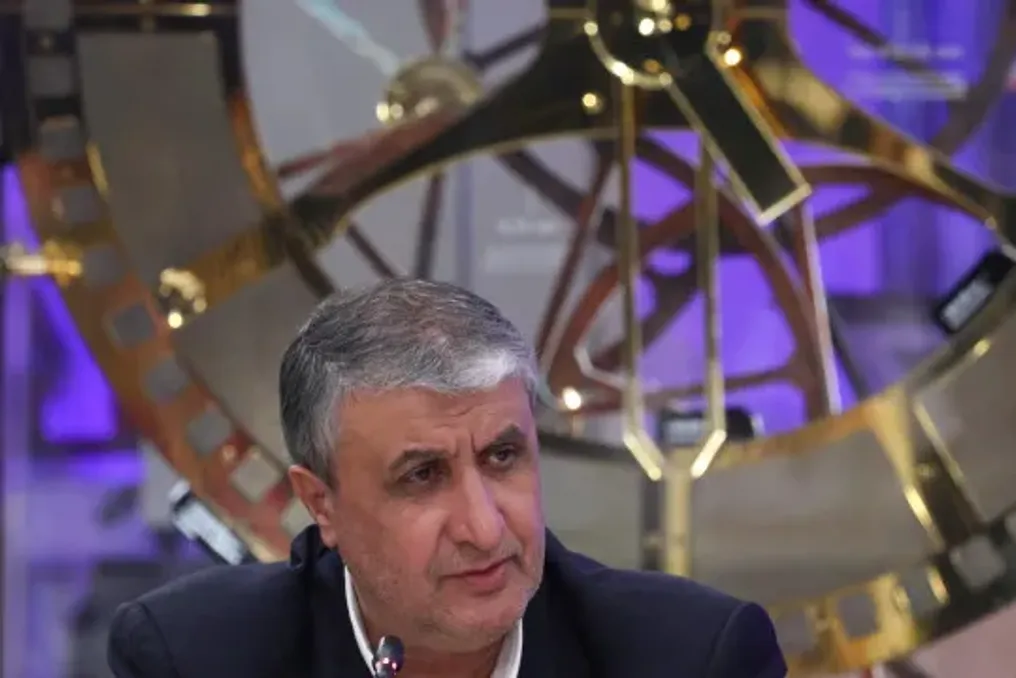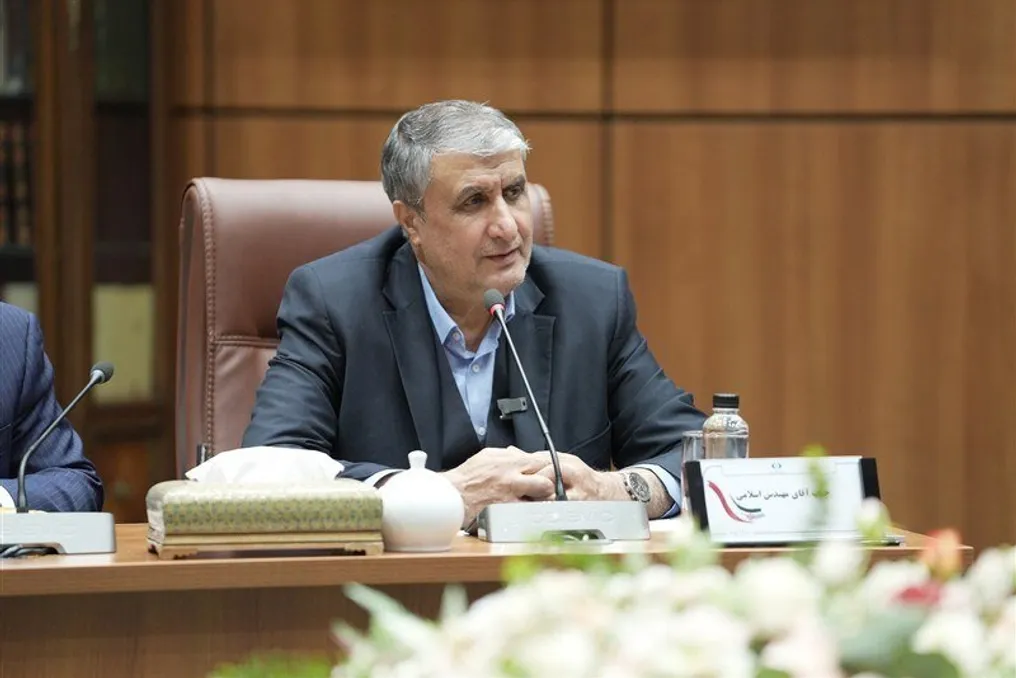
Mohammad Eslami, head of the Iranian Atomic Energy Organization (AEOI), confirmed that Iran's development in the field of nuclear technologies will continue despite attempts by opponents to hinder the country's scientific and technological progress.
Speaking at a ceremony on Thursday dedicated to the opening of the northern radiation processing center in Rasht, the capital of Gilan province, Eslami noted that the completion of the first stage of this facility was another milestone in Iran's pursuit of advanced technologies.
He emphasized that Iran's progress in the nuclear sphere is unstoppable, stating: 'The first stage of this complex is completed, and this achievement is part of the country's path to growth and advancement in advanced technologies.'
According to Eslami, Iran's opponents impede the development of advanced technologies because scientific capabilities are transforming into national power and strength that they do not want the Iranian people to possess.
The head of AEOI pointed to the long-standing efforts of major world powers to restrict independent countries' access to advanced technologies, noting that such policies are even reflected in US legislation.
He added: 'This history is long, and even US laws and policies, including Congressional legislation dating back to 1950, reflect attempts to limit certain countries' access to these technologies.'
Eslami also stated that successive US administrations have tried to prevent the Islamic Republic from entering the field of nuclear technology, stressing that nuclear technology is one of humanity's greatest scientific achievements, and all countries have the right to use it within established international norms and rules.
He criticized the political approach of some powers to Iran's nuclear activities, arguing that unsubstantiated accusations are used as a pretext to block the country's scientific progress.
'When the other side lacks logic or substantiated evidence, it resorts to fabricating cases and making accusations, such as claiming that Iran seeks to develop nuclear weapons, in an attempt to stop the country's progress,' said Eslami.
Referring to information and documents disclosed in recent years, he noted that the disclosure of data by intelligence services and other parties has shed light on the motives behind the efforts to create an atmosphere of suspicion around Iran's nuclear program.
These efforts, he said, were aimed at preventing Iran's advancement, despite the fact that the country's nuclear activities are based on knowledge, research, technical capabilities, and scientific expertise.
The radiation processing center, located in Lakane, Rasht, has an initial annual processing capacity of 10,000 tons, with infrastructure allowing this figure to be doubled to 20,000 tons. It operates under the auspices of the AEOI Radiation Applications Development Company and utilizes gamma radiation systems and electromagnetic wave technology.
The establishment of this center in Gilan province is particularly important given the province's annual agricultural output of about 3.6 million tons. The center is designed to improve the quality and safety of agricultural products by destroying pests, extending shelf life, and reducing post-harvest losses. These capabilities are expected to help minimize agricultural waste and strengthen the export potential of the province's produce, especially rice.